
The question “When was Texas made a state?” delves into a fascinating and often turbulent chapter of American history, a story rich with tales of independence, conflict, and the forging of a unique cultural identity. For travelers and history enthusiasts alike, understanding this pivotal moment on December 29, 1845, not only provides a date but also unlocks the very soul of the Lone Star State, informing everything from its iconic landmarks to its vibrant lifestyle and culinary traditions. This historic event marked the culmination of decades of struggle, first for independence from Mexico and then for integration into the United States, profoundly shaping the destination we know and love today.
Understanding Texas’ journey to statehood is essential for anyone looking to truly experience its depth. It explains why its cities pulse with a distinct blend of Southern charm, Western grit, and Mexican influence, why its cuisine is so diverse, and why its historical sites resonate with such powerful stories. From the hallowed grounds of the Alamo to the bustling streets of modern Houston and Dallas, every facet of Texas offers a piece of its storied past, inviting visitors to explore a legacy that makes it one of the most compelling travel destinations in the U.S..
The Lone Star State’s Formative Years: A Journey Through Independence
The path to Texas’ statehood was anything but straightforward. It was a crucible of cultures, ambitions, and conflicts that transformed a remote frontier into an independent republic before its eventual absorption into the United States. This journey laid the groundwork for the diverse and resilient state we see today, a narrative that is beautifully preserved in its historical sites and celebrated through its local culture.
From Spanish Colony to Mexican Province
Before it was even a glimmer in the eyes of American settlers, Texas was a vast, contested territory under Spanish rule. Starting in the late 17th century, Spain established missions and presidios, primarily to assert its claim against French incursions and to convert indigenous populations. Settlements like San Antonio – home to the now-famous Alamo – began as a complex of missions and a presidio, serving as crucial outposts of Spanish civilization in the wilderness. The legacy of this era is still palpable today, with stunning Spanish colonial architecture and a vibrant Hispanic culture deeply woven into the fabric of cities across the state.
However, Spain’s hold on its North American territories weakened, culminating in Mexico’s successful war for independence in 1821. Texas then became part of the new Republic of Mexico, specifically as a component of the large state of Coahuila y Tejas. Eager to populate and develop its northern frontier, Mexico adopted a policy that encouraged Anglo-American immigration, offering vast land grants to settlers known as empressarios. The most prominent among them was Stephen F. Austin, who led the “Old Three Hundred” families to settle along the Brazos River. These settlers, largely from the southern United States, brought with them their own cultural norms, agricultural practices (including slavery, which was at odds with Mexican law), and a desire for greater autonomy. The cultural and political clashes that arose from this influx of Anglo settlers, combined with Mexico’s increasingly centralized government under General Antonio López de Santa Anna, set the stage for revolution.
The Texas Revolution and the Birth of a Republic
The growing tensions between American settlers and the Mexican government ignited in 1835. What began as skirmishes over local grievances escalated into a full-blown revolution. Key events that shaped this period, and which draw countless tourists today, include:
- The Siege and Battle of the Alamo (February 23 – March 6, 1836): Though a devastating defeat for the Texan defenders, including legendary figures like Davy Crockett and James Bowie, the sacrifice at the Alamo became a rallying cry: “Remember the Alamo!” Today, the Alamo in San Antonio is the most visited landmark in Texas, a solemn reminder of courage and sacrifice.
- The Goliad Massacre (March 27, 1836): Another brutal loss for the Texans, where hundreds of Texan prisoners of war were executed by order of Santa Anna. This further fueled the Texans’ resolve for independence.
- The Battle of San Jacinto (April 21, 1836): Led by General Sam Houston, the Texan army decisively defeated Santa Anna’s forces in a mere 18 minutes, capturing the general himself. This victory secured Texas’ independence. The site of this battle, marked by the towering San Jacinto Monument near Houston, is another powerful historical landmark.
On March 2, 1836, even as the Alamo was under siege, delegates meeting at Washington-on-the-Brazos declared Texas an independent republic. The newly formed Republic of Texas elected Sam Houston as its first president. For nearly a decade, from 1836 to 1845, Texas existed as an independent nation, recognized by several world powers but constantly facing threats from Mexico and internal struggles. Its capital shifted from Houston to Austin, both of which flourished as centers of government and commerce. This period of independence cemented the unique “Lone Star” identity that Texans cherish to this day, a spirit of self-reliance and pride that is palpable in every corner of the state.
Annexation and Statehood: Joining the Union
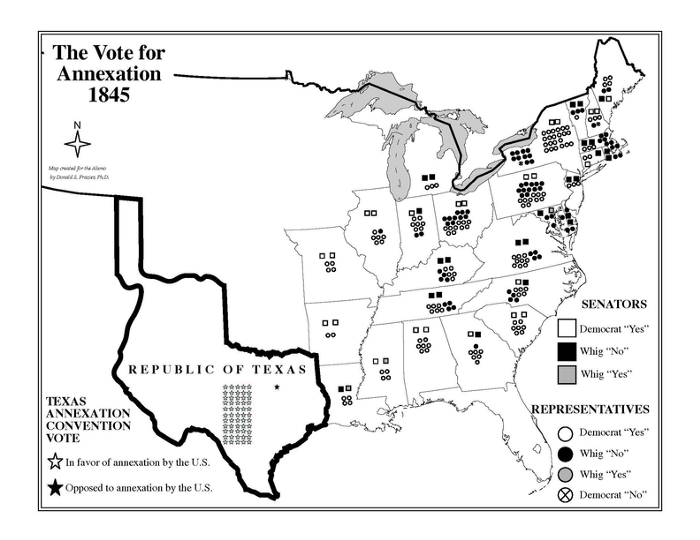
The nine years of the Republic of Texas were marked by ongoing challenges, including financial instability, border disputes with Mexico, and persistent raids from Native American tribes. From its very inception, many Texans, including Sam Houston, advocated for annexation by the United States. However, the path to statehood was fraught with political complexity and national debate within the U.S..
The primary obstacle was the issue of slavery. As a large slave-holding territory, admitting Texas to the Union would upset the delicate balance between free and slave states in Congress, fiercely opposed by abolitionists and Northern politicians. Furthermore, Mexico still considered Texas a rebellious province and warned that annexation by the United States would be an act of war. For several years, successive American administrations hesitated to annex Texas due to these controversies.
The political landscape shifted dramatically with the concept of Manifest Destiny, the widely held belief in the 19th century that American settlers were destined to expand across North America. This idea gained significant traction, particularly with the election of President James K. Polk in 1844, who was a staunch advocate of westward expansion and the annexation of Texas.

Finally, after years of deliberation, the United States Congress passed a joint resolution for the annexation of Texas. On December 29, 1845, President Polk signed the resolution, officially admitting Texas as the 28th state of the United States. This momentous occasion formally ended the independent Republic of Texas and ushered in a new era. As predicted, annexation immediately led to heightened tensions with Mexico, eventually culminating in the Mexican-American War (1846-1848), which significantly reshaped the map of North America.
The act of statehood profoundly impacted Texas’ development. It brought stability and investment, fostering rapid population growth and economic expansion, particularly in agriculture. The state’s vast lands and resources, coupled with its unique blend of Southern and Western influences, began to forge the distinctive Texan identity that continues to evolve and fascinate visitors today.
Texas Today: A Legacy of History and a Hub for Tourism
The echoes of Texas’ journey to statehood resonate deeply in its present-day landscape, culture, and thriving tourism industry. This rich history provides a compelling backdrop for diverse travel experiences, from exploring ancient battlefields to indulging in world-class cuisine and soaking in vibrant city life.
Iconic Landmarks and Historical Sites
For travelers, the historical narrative of Texas is brought to life through its many landmarks. A visit to San Antonio is indispensable, where the solemn grounds of the Alamo stand as a testament to its revolutionary spirit. Beyond the mission walls, the San Antonio Riverwalk (often simply called The Riverwalk) offers a picturesque urban oasis, lined with historic buildings, charming cafes, and vibrant shops, blending history with modern leisure. The city’s other Spanish colonial missions – Mission Concepcion, Mission San José, Mission San Juan Capistrano, and Mission Espada – collectively a UNESCO World Heritage Site, offer deeper insights into its early European heritage.
In Austin, the impressive Texas State Capitol building, taller than the U.S. Capitol, symbolizes the state’s grandeur and independent spirit, standing majestically amidst the bustling city. History buffs can also visit the San Jacinto Monument and Battleship Texas State Historic Site near Houston, commemorating the decisive battle for independence and offering a glimpse into naval history. Beyond revolutionary sites, Texas also boasts incredible natural landmarks. The rugged beauty of Big Bend National Park offers stunning desert landscapes and outdoor adventures, while the scenic Hill Country provides charming small towns, vineyards, and opportunities for river activities. Even modern marvels like the NASA Johnson Space Center in Houston contribute to the state’s enduring legacy of pioneering spirit and innovation.
Experiencing Texan Culture: Food, Festivals, and Southern Hospitality
Texas’ unique history has forged a culture that is as expansive and diverse as its landscape. The culinary scene alone is a major draw, with famous Tex-Mex cuisine offering a delicious blend of Mexican and American flavors, exemplified by sizzling fajitas and savory enchiladas. Barbecue is practically a religion, with countless legendary smokehouses across the state, particularly in the Central Texas region, serving up succulent brisket and ribs that draw visitors from around the globe.
Beyond food, Texas boasts a vibrant arts and music scene. Austin proudly wears its “Live Music Capital of the World” title, hosting renowned events like South by Southwest (SXSW) and the Austin City Limits Music Festival. Traditional country and western music thrive, but so do blues, rock, and indie genres, reflecting the state’s diverse population. Rodeos and cowboy culture remain strong, particularly in smaller towns and during annual events like the Houston Livestock Show and Rodeo.
The “Texan lifestyle” itself is an attraction. From the upscale shopping and cosmopolitan flair of Dallas to the laid-back, quirky vibe of Austin and the global diversity of Houston, each major city offers a distinct experience. Throughout it all, a strong sense of Southern hospitality and pride permeates interactions, making visitors feel welcome and eager to explore.
Planning Your Texas Getaway: Hotels and Accommodation
Given Texas’ vast size and diverse attractions, planning your accommodation is key to an unforgettable trip. The state offers an incredible array of options to suit every travel style and budget, from luxurious resorts to charming boutique hotels and family-friendly stays.
In major cities like Houston, Dallas, San Antonio, and Austin, you’ll find a wealth of world-class hotels. Houston and Dallas cater to both business and luxury travelers with renowned brands like the Four Seasons, Ritz-Carlton, and Hyatt Regency, offering impeccable service and state-of-the-art amenities. For a taste of historic elegance, consider properties like The Driskill Hotel in Austin, a grand landmark offering luxurious comfort and a rich past, or Hotel Emma in San Antonio’s Pearl District, a former brewery transformed into an exquisite boutique hotel reflecting the city’s unique industrial heritage and vibrant culture.
For those exploring the Hill Country or coastal areas like the Gulf Coast, charming bed and breakfasts, rustic cabins, and resort properties offer a more intimate or nature-focused experience. From sprawling ranch resorts that offer true cowboy experiences to cozy inns nestled in picturesque towns like Fredericksburg, there are accommodations to complement every itinerary. When booking, consider proximity to the specific attractions or experiences you prioritize, whether it’s easy access to the San Antonio Riverwalk, the music venues of Austin, or the historical sites that mark Texas’ journey to statehood. Many hotels offer guided tours or concierge services that can help you delve deeper into the local history and culture, making your stay an even more enriching experience.
In conclusion, Texas’ statehood on December 29, 1845, was not merely a political formality but a pivotal moment that shaped its identity as a fiercely independent, culturally rich, and historically significant destination. From its Spanish colonial roots and revolutionary fervor to its vibrant modern cities and breathtaking natural wonders, Texas offers a compelling blend of past and present. Whether you’re drawn by the echoes of history, the allure of diverse cultures, or the promise of adventure, a journey to the Lone Star State promises a travel experience as grand and unforgettable as its storied past.
LifeOutOfTheBox is a participant in the Amazon Services LLC Associates Program, an affiliate advertising program designed to provide a means for sites to earn advertising fees by advertising and linking to Amazon.com. Amazon, the Amazon logo, AmazonSupply, and the AmazonSupply logo are trademarks of Amazon.com, Inc. or its affiliates. As an Amazon Associate we earn affiliate commissions from qualifying purchases.