
The story of Texas‘s integration into the United States is a compelling narrative woven from threads of revolution, independence, and eventual annexation. It’s a tale that spans several decades, involving pivotal moments, influential figures, and a complex interplay of political and economic forces. Understanding how the “Lone Star State” earned its place in the American union offers a deeper appreciation for its rich history and its unique cultural identity, which continues to draw millions of travelers and history enthusiasts to its diverse landscapes, from the bustling streets of Austin to the historic missions of San Antonio.
This journey was far from a simple handoff. It was a hard-fought process, marked by periods of self-governance and intense debate within both Texas and the burgeoning United States. For those exploring the landmarks and tourism offerings of Texas, understanding its path to statehood provides crucial context for the historical sites they visit and the culture they experience. The legacy of its independent past is evident in everything from its distinct cuisine to its proud spirit, making it a truly unique destination for travel and lifestyle exploration.
The Seeds of Independence: From Spanish Colony to Mexican State
The origins of Texas as a distinct territory can be traced back to the early 17th century when Spanish explorers and missionaries first ventured into the region. For over three centuries, Texas remained under Spanish rule, a vast and sparsely populated territory characterized by its challenging geography and rich natural resources. The Spanish established a network of missions, presidios, and ranches, laying the groundwork for future settlements. This period, while formative, was largely defined by a frontier existence, with limited direct governance from Spain.
The early 19th century brought significant geopolitical shifts. Following the Mexican War of Independence from Spain, which concluded in 1821, Texas became part of the newly formed Mexican nation. Mexico, eager to populate its northern territories and develop its economy, began encouraging immigration. This policy proved to be a catalyst for change, as it opened the doors to a wave of settlers from the United States, who were attracted by the promise of cheap land and economic opportunity. These American settlers, often referred to as “empresarios,” were granted large tracts of land by the Mexican government under specific conditions, including adopting Mexican citizenship and adhering to Mexican laws, which notably included the prohibition of slavery.
However, the cultural and political differences between the American settlers and the Mexican government soon began to surface. The settlers, accustomed to the democratic principles and legal frameworks of the United States, found the Mexican system increasingly restrictive. Disagreements over issues such as representation, legal systems, and, most significantly, slavery, created growing friction. The Mexican government, in an attempt to assert greater control and stem the influx of American immigrants, began to enact policies that further alienated the settlers. These included imposing stricter customs duties and attempting to enforce Mexican laws more vigorously.
The growing dissent culminated in the Texas Revolution. Key events, such as the Battle of Gonzales in October 1835, marked the outbreak of open hostilities. The revolutionaries, a mix of Tejanos (Texans of Mexican descent) and American immigrants, fought for greater autonomy and, ultimately, independence. Despite facing a numerically superior Mexican army led by General Antonio López de Santa Anna, the spirit of the revolutionaries, fueled by a desire for self-determination, was a powerful force. The Alamo, a former Spanish mission in San Antonio, became a potent symbol of Texan resistance, even though its defenders were ultimately defeated. However, the sacrifice at the Alamo galvanized the revolutionary cause, inspiring further action. The decisive victory for the Texans came at the Battle of San Jacinto in April 1836, where Sam Houston’s forces captured General Santa Anna, effectively securing Texas‘s independence.
The Republic of Texas: A Decade of Self-Governance
On March 2, 1836, the delegates at the Convention of 1836 in Washington-on-the-Brazos declared Texas an independent republic. The newly formed Republic of Texas faced immense challenges. It had to establish its own government, secure its borders, manage its finances, and gain international recognition. Sam Houston was elected the first president of the Republic of Texas, followed by Mirabeau B. Lamar.
During its nearly ten-year existence as an independent nation, the Republic of Texas navigated a complex diplomatic landscape. It sought recognition from other nations, particularly the United States and European powers, to legitimize its sovereignty. While the United States was initially hesitant due to concerns about potential conflict with Mexico and the expansion of slavery, sentiment in favor of annexation began to grow. Mexico, however, never fully relinquished its claim to Texas and viewed annexation by the United States as an act of aggression. This ongoing dispute over territorial claims posed a significant obstacle to Texas’s aspirations for statehood within the United States.
The Republic of Texas also grappled with internal issues, including economic instability and the constant threat of Mexican incursions. Despite these challenges, Texas developed its own identity, its unique blend of American and Spanish influences shaping its culture and institutions. Many of the landmarks and historical sites that attract travel and tourism today, such as the Texas State Capitol in Austin, are testaments to this era of independent governance. The legacy of this period is deeply ingrained in the Texas psyche, contributing to the state’s reputation for independence and self-reliance.
The Path to Annexation: Political Debates and Manifest Destiny
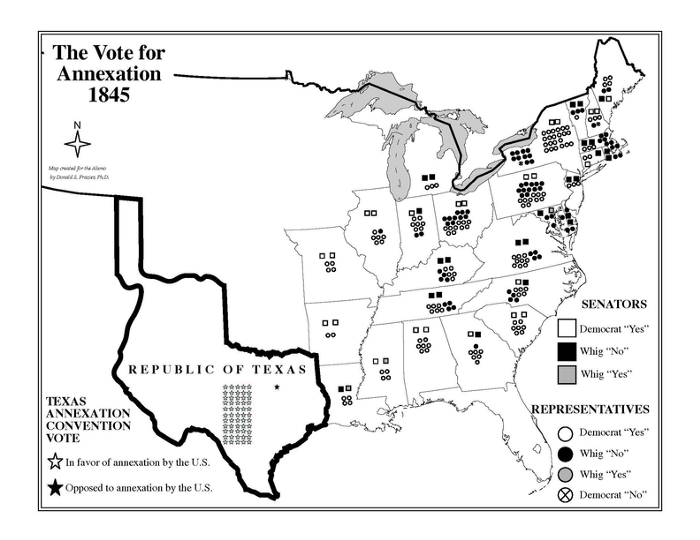
The idea of Texas joining the United States was a persistent one from the moment of its independence. However, the issue of annexation was fraught with political controversy, primarily centered on the expansion of slavery. Texas, as a slaveholding republic, presented a significant challenge to the delicate balance of power between free and slave states in the United States. Northern abolitionists vehemently opposed the admission of another slave state, fearing it would strengthen the political influence of the South. Conversely, pro-slavery advocates in the South saw annexation as a crucial step in preserving and expanding their way of life and economic interests.
This debate intensified with the concept of “Manifest Destiny,” a widely held belief in the 19th century that American settlers were destined to expand across the North American continent. Proponents of Manifest Destiny saw Texas as a natural and inevitable addition to the growing United States. The election of James K. Polk in 1844, who ran on a platform advocating for the annexation of Texas and the expansion of American territory, marked a turning point. Polk’s victory signaled a renewed commitment to the idea of expansion.
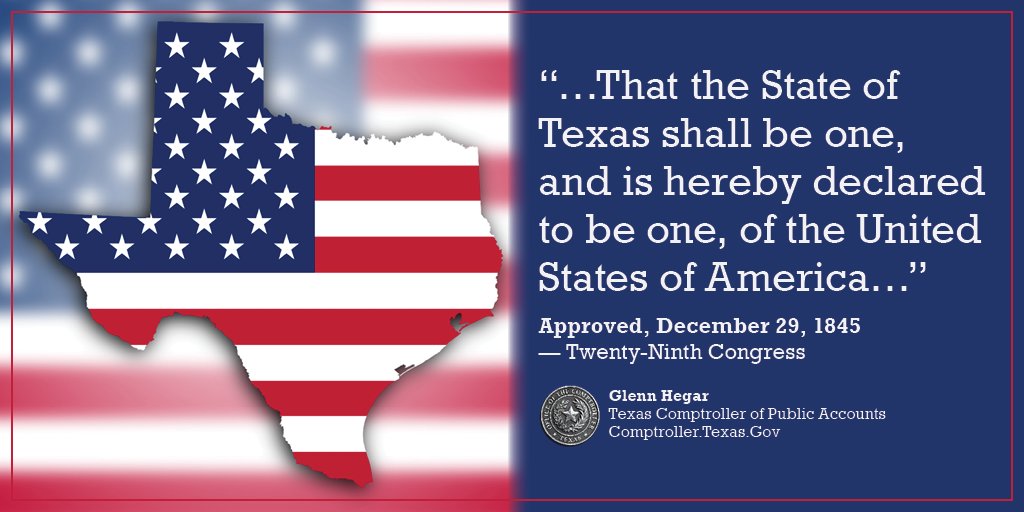
Despite significant opposition, the annexation bill for Texas was passed by the U.S. Congress in February 1845. Texas officially accepted the terms of annexation on July 4, 1845, and was formally admitted as the 28th state in the Union on December 29, 1845. This act, however, did not resolve the tensions with Mexico.

The Mexican-American War and Final Borders
The annexation of Texas by the United States was a direct cause of the Mexican–American War (1846-1848). Mexico viewed the annexation as an infringement on its sovereignty and territorial integrity. The United States, under President Polk, pushed for the recognition of the Rio Grande as the southern border of Texas, a claim that Mexico contested, asserting that the border lay further north at the Nueces River. This border dispute provided the immediate spark for the conflict.
The Mexican–American War was a relatively short but decisive conflict. American forces, under generals such as Zachary Taylor and Winfield Scott, achieved significant victories on multiple fronts. The war concluded with the Treaty of Guadalupe Hidalgo, signed in February 1848. Under the terms of this treaty, Mexico ceded a vast territory to the United States, including present-day California, Nevada, Utah, Arizona, and parts of Colorado, Wyoming, and New Mexico, in addition to recognizing the Rio Grande as the southern border of Texas. In return, the United States paid Mexico $15 million and assumed responsibility for approximately $3.25 million in debts owed by the Mexican government to American citizens.
The Mexican–American War solidified Texas‘s position within the United States and dramatically reshaped the map of North America. The territories gained from this conflict would continue to fuel debates about slavery and statehood in the coming years, ultimately contributing to the tensions that led to the American Civil War. For Texas, the war marked the final chapter in its journey from an independent republic to an integral part of the United States, securing its borders and establishing its place in the nation’s expansionist narrative. The historical significance of this period is palpable throughout the state, visible in the architecture, landmarks, and the enduring spirit of its people, making Texas a captivating destination for those interested in history, culture, and the unfolding story of the United States.
LifeOutOfTheBox is a participant in the Amazon Services LLC Associates Program, an affiliate advertising program designed to provide a means for sites to earn advertising fees by advertising and linking to Amazon.com. Amazon, the Amazon logo, AmazonSupply, and the AmazonSupply logo are trademarks of Amazon.com, Inc. or its affiliates. As an Amazon Associate we earn affiliate commissions from qualifying purchases.