
Embarking on the journey to apply for homestead in Texas is a significant step towards homeownership and potentially substantial savings on property taxes. Texas is renowned for its generous homestead exemptions, which offer a vital financial benefit to homeowners. Understanding the process, eligibility requirements, and nuances of filing is crucial for any new or existing homeowner looking to leverage this valuable provision. This guide will walk you through the essential steps, ensuring you can navigate the application with confidence.
Understanding Homestead Exemptions in Texas
A homestead exemption in Texas is a legal provision that protects a portion of a homeowner’s property value from being taxed. It essentially reduces the taxable value of your home, thereby lowering your annual property tax bill. This is particularly beneficial in a state like Texas, where property taxes can be a considerable expense. Beyond the financial advantage, the homestead designation also offers some protection against creditors in certain situations, providing an added layer of security for your primary residence.
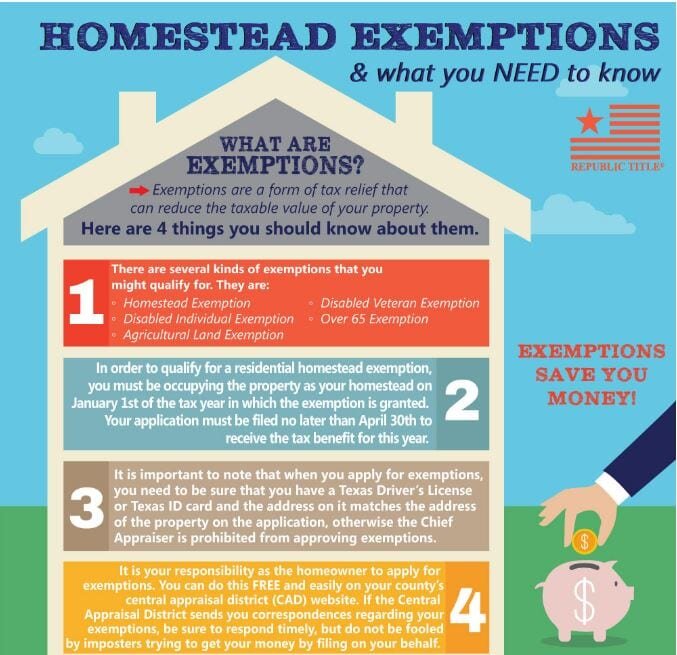
There are several types of homestead exemptions available, each with its own specific benefits and eligibility criteria:
- General Homestead Exemption: This is the most common type of exemption. It allows homeowners to deduct a certain amount from the appraised value of their home for tax purposes. The amount of this exemption is set by the state legislature and can change over time.
- Additional Homestead Exemptions: Beyond the general exemption, homeowners may qualify for additional exemptions based on specific circumstances. These can include exemptions for:
- Age 65 or Older: Homeowners who are 65 or older can claim an additional exemption, further reducing their tax liability.
- Disabled: Individuals with a disability, as defined by Texas law, are also eligible for an additional homestead exemption.
- Disabled Veteran: Texas offers robust exemptions for disabled veterans, with the amount of the exemption varying based on the percentage of disability.
- Spouse of a Deceased Public Service Member: In certain cases, the surviving spouse of a fallen first responder or military member may be eligible for an exemption.
It is important to note that you can only claim one homestead exemption per person and per residence. This exemption must apply to your primary residence – the home where you live for the majority of the year. You cannot claim homestead on a vacation home, an investment property, or a property where you do not reside.
Eligibility Requirements for Homestead in Texas
To successfully apply for a homestead exemption in Texas, you must meet several key eligibility requirements:
- Ownership: You must own the property. This can be through outright ownership, joint ownership, or ownership via a trust.
- Residency: The property must be your primary residence. This means it’s the place where you live most of the time. If you own multiple properties, you must designate one as your homestead. The Texas Constitution specifies that a homestead can be a “family homestead” or a “single adult homestead.”
- Filing Deadline: Applications must be filed by a specific deadline each year. Typically, this is April 30th, but it’s always wise to confirm the exact date with your local appraisal district.
- No Prior Homesteads: You cannot have claimed a homestead exemption on another property in Texas for the same tax year.
Proving residency can involve various forms of documentation. While not always required for the initial application, it’s good to have these readily available if requested by the appraisal district. Examples include:
- Driver’s License or ID Card: With the address of the property.
- Voter Registration: Registered to vote at the property’s address.
- Utility Bills: In your name and at the property’s address.
- Vehicle Registration: Listing the property’s address.
- Bank Statements: Showing the property’s address.
It’s crucial to understand that the appraisal district has the right to request additional information to verify your residency if they have any doubts.
The Application Process: Step-by-Step
Applying for a homestead exemption in Texas is a relatively straightforward process, but it requires attention to detail and adherence to deadlines. The primary entity you’ll interact with is your local county appraisal district.
Step 1: Identify Your Local County Appraisal District
The first step is to determine which appraisal district serves your county. Texas has 254 counties, and each has its own appraisal district responsible for appraising property values and administering exemptions. A quick online search for “[Your County Name] County Appraisal District” will provide you with the correct contact information and website. For instance, if you live in Dallas County, you would look for the Dallas Central Appraisal District.
Step 2: Obtain the Homestead Exemption Application Form
Once you’ve identified your appraisal district, you’ll need to find the homestead exemption application form. Most appraisal districts make these forms available for download directly from their websites. You can usually find them in a “Forms,” “Exemptions,” or “Homestead” section. Alternatively, you can often request a form by mail or pick one up in person.
Step 3: Complete the Application Form Accurately

Carefully fill out the application form. It will typically ask for:
- Your Name(s): As they appear on the property deed.
- Property Address: The full address of your homestead.
- Property Identification Number (PID) or Account Number: This unique number can be found on your property tax statement or by searching your appraisal district’s online property records.
- Social Security Number (SSN) or Individual Taxpayer Identification Number (ITIN): This is often required for identification purposes.
- Date of Occupancy: The date you began residing in the home.
- Marital Status and Information about Spouse: If applicable.
- Information about any other homesteads claimed: To ensure compliance with Texas law.
For additional exemptions (age, disability, veteran status), there will be separate sections or separate forms to complete. These will likely require supporting documentation, such as proof of age (birth certificate), a disability determination letter from the Social Security Administration or Veterans Affairs, or proof of military service and disability rating for veterans.
Step 4: Submit the Application and Supporting Documentation
After completing the form, submit it to your county appraisal district. Most districts accept applications via mail, fax, in person, or through their online portal if available. It is highly recommended to submit your application well before the deadline to avoid any last-minute issues. If you are applying for an additional exemption, ensure you include all the necessary supporting documents as specified by the appraisal district. Keep copies of everything you submit for your records.
Step 5: Confirmation and Annual Renewal
Once your application is processed, you will receive a notice from the appraisal district confirming whether your homestead exemption has been granted. For the general homestead exemption, once granted, it typically renews automatically each year, provided you continue to reside in the property. However, if your circumstances change (e.g., you move, sell the property, or a qualifying event for an additional exemption ceases), you must notify the appraisal district promptly. For additional exemptions related to age or disability, you may need to re-certify periodically or provide updated documentation.
Special Considerations and Common Pitfalls
Navigating the homestead application process can sometimes present unique challenges or lead to common oversights. Being aware of these can help prevent delays or denial of your exemption.
Moving to Texas and Applying for Homestead
If you are new to Texas and have recently purchased a home, you can apply for homestead exemption in the year you establish residency. The key is to occupy the home as your primary residence and file the application by the deadline, typically April 30th of the year following your purchase or move-in, or even in the same year if you meet occupancy requirements by January 1st. Ensure you have officially moved your residence and established Texas as your domicile.
Deadlines and Timeliness
As mentioned, the deadline for filing is crucial. Missing this deadline means you will likely have to wait until the following tax year to claim the exemption. Proactive filing is always the best approach. If you file late due to extenuating circumstances, contact your appraisal district to inquire about any provisions for late filing, though this is not guaranteed.
Denials and Appeals
If your homestead exemption application is denied, the appraisal district will send you a notice explaining the reason for the denial. You have the right to appeal this decision. The notice will outline the process and deadlines for filing an appeal with the appraisal review board (ARB). It’s essential to thoroughly review the denial reason and gather any additional evidence or documentation that might support your claim before proceeding with an appeal. Understanding the specific reasons for denial, whether it’s a residency issue, ownership discrepancy, or incomplete documentation, is the first step in a successful appeal.
Impact on Property Value and Taxes
It’s important to remember that the homestead exemption reduces the taxable value of your home, not necessarily the market value. Your property will still be appraised at its market value, but the exemption will deduct a portion of that value before the tax rate is applied. This can lead to significant savings, especially in areas with high property values and tax rates. For example, a $15,000 general homestead exemption on a property with a $200,000 appraised value would mean taxes are calculated on $185,000, not the full $200,000. The exact savings will depend on your local tax rates.

Specific Scenarios: New Construction, Manufactured Homes, and Trusts
- New Construction: If you have a newly built home, you can apply for homestead exemption once the home is your primary residence. The exemption would apply to the value of the home as of January 1st of the tax year.
- Manufactured Homes: Manufactured homes can also qualify for homestead exemption if they are your primary residence and you own the land the home is situated on. There are specific requirements regarding the permanent affixation of the home to the land.
- Trusts: If your property is held in a trust, you can still claim homestead exemption as long as you are the beneficiary of the trust and occupy the property as your primary residence. You will need to provide documentation from the trust agreement to the appraisal district to prove your eligibility.
By understanding these facets of the homestead exemption process in Texas, homeowners can effectively secure this valuable financial benefit and protect their primary residence. Always refer to your local county appraisal district for the most current forms, deadlines, and specific requirements.
LifeOutOfTheBox is a participant in the Amazon Services LLC Associates Program, an affiliate advertising program designed to provide a means for sites to earn advertising fees by advertising and linking to Amazon.com. Amazon, the Amazon logo, AmazonSupply, and the AmazonSupply logo are trademarks of Amazon.com, Inc. or its affiliates. As an Amazon Associate we earn affiliate commissions from qualifying purchases.