
Navigating the intricacies of official documentation can sometimes feel like planning a complex trip, especially when it pertains to something as crucial as your driving record. In Texas, your driving record is a vital document that serves as a comprehensive history of your driving behavior, encompassing everything from traffic violations and accidents to licensing information. Whether you’re looking to rent a car for a scenic drive through the Texas Hill Country, applying for insurance, or even undergoing a background check for employment, having a clear understanding of how to obtain your official Texas driving record is essential. This guide will walk you through the process, ensuring you can acquire this important document efficiently and effectively, much like planning your next adventure to a new destination.
Understanding Your Texas Driving Record
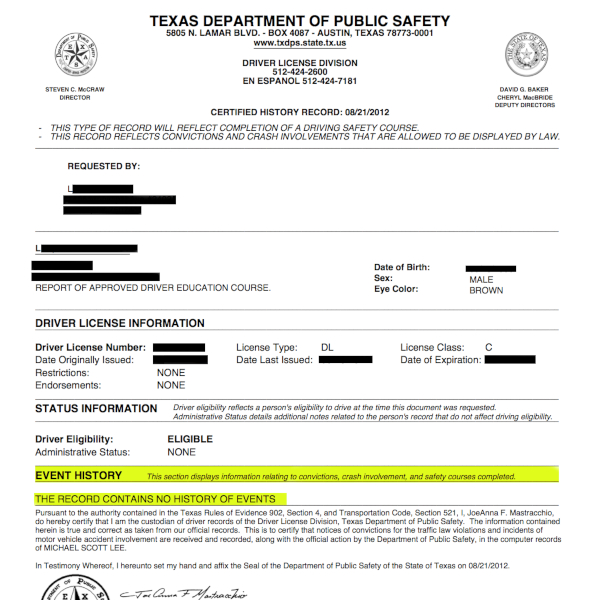
Before diving into the “how-to,” it’s beneficial to understand what a Texas driving record actually contains and why it’s so important. Officially known as a “driver history record” (DHR) or “Texas driving record,” this document is maintained by the Texas Department of Public Safety (DPS). It’s essentially a chronological account of your interactions with law enforcement and the Texas court system as a licensed driver.
The information typically found on a Texas driving record includes:
- Personal Information: Your name, date of birth, driver’s license number, and address.
- License Status: Current status of your driver’s license, including any suspensions, revocations, or cancellations.
- Traffic Violations: Details of any moving violations you’ve received, such as speeding tickets, running red lights, or improper lane changes. This often includes the date of the violation, the location, and the disposition (e.g., paid fine, court appearance).
- Accident Information: Records of any reported motor vehicle accidents you were involved in, including the date and a brief description if available.
- Points System: Texas utilizes a Driver Responsibility Program, which assesses points for certain traffic convictions. Your record will reflect any points accrued.
- CDL Information: If you hold a Commercial Driver’s License (CDL), your record will also include relevant endorsements and any disqualifications.
Possessing an accurate driving record is not just about compliance; it’s about transparency and preparedness. For instance, when planning a road trip, knowing your record can help you anticipate potential insurance premium increases if you have a history of violations, much like knowing the weather forecast helps you pack appropriately for a trip to the Grand Canyon. Similarly, employers often review driving records for positions that involve driving, and insurance companies use them to assess risk and determine premiums. Having this document readily available can streamline these processes significantly.
Types of Texas Driving Records
The Texas DPS offers different types of driving records, catering to various needs. Understanding these distinctions is crucial to requesting the correct one.
Certified vs. Uncertified Driving Records
The primary distinction lies between certified and uncertified driving records.
Certified Driving Record
A certified driving record is an official document that has been authenticated by the Texas DPS with a seal or stamp, verifying its accuracy and authenticity. This type of record is typically required for official purposes such as:
- Court Proceedings: If you are involved in a legal matter related to your driving, a certified record may be required as evidence.
- Employer Background Checks: Many employers need a certified record to ensure the validity of an applicant’s driving history.
- Insurance Company Requirements: Some insurance companies might request a certified record for policy applications or renewals.
- Legal and Immigration Matters: Certain legal or immigration processes may necessitate a certified driving record.
Because of its official status, obtaining a certified driving record usually involves a slightly different process and potentially a higher fee than an uncertified version.
Uncertified Driving Record
An uncertified driving record, while still accurate, does not carry the official seal or authentication of a certified record. It is often used for personal review, to check for errors, or for informal purposes. For example, if you’re curious about your driving history or want to see what your insurance company might be seeing, an uncertified record is sufficient. It’s a more accessible and often less expensive option for informational purposes.
Different Timeframes
When requesting your driving record, you may also have the option to specify the timeframe for which you want the record to cover. This could range from a shorter period, such as the last three years, to your entire driving history in Texas. The specific options available will be detailed when you go through the request process. For most standard requests, like insurance or personal review, a three-year or five-year record is often sufficient. However, for more comprehensive reviews, such as those required by some employers or for specific legal situations, a longer timeframe might be necessary.
How to Obtain Your Driving Record in Texas
The Texas Department of Public Safety (DPS) provides several convenient methods for you to obtain your driving record. The most common ways include online requests, mail-in requests, and in-person visits. Each method has its own set of requirements and timelines, so it’s important to choose the one that best suits your needs and preferences.
Requesting Your Driving Record Online
The quickest and most convenient way to get your Texas driving record is often through the Texas DPS website. This method allows you to access your record from anywhere with an internet connection, making it ideal for those who are short on time or prefer a digital approach.
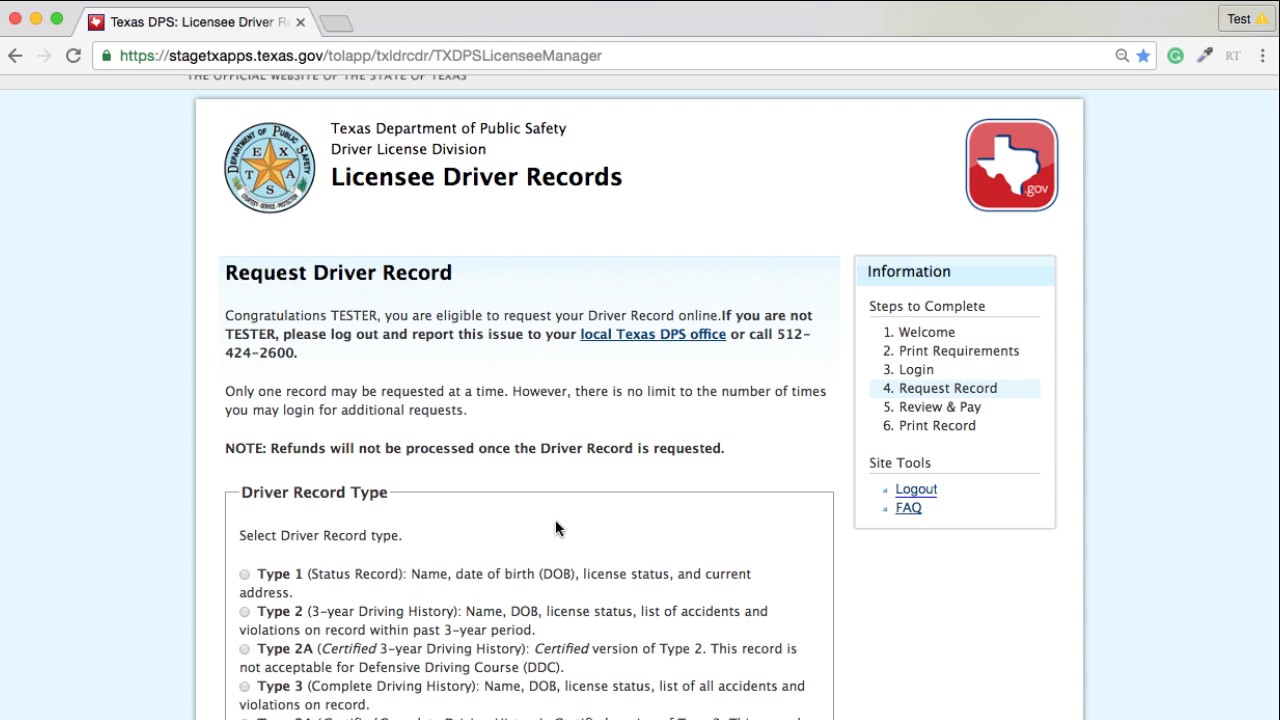
- Visit the Official Texas DPS Website: Navigate to the official Texas Department of Public Safety website. Look for the section related to driver services or driving records.
- Locate the Online Request Portal: The DPS typically has a dedicated online portal or form for requesting driving records.
- Provide Necessary Information: You will be asked to provide personal information to verify your identity. This usually includes your driver’s license number, date of birth, and potentially your Social Security number. Be prepared to answer security questions based on your driving history.
- Select Record Type and Timeframe: Choose whether you need a certified or uncertified record and specify the timeframe you wish to cover.
- Payment: There will be a fee associated with obtaining your driving record. The website will guide you through the secure online payment process. Credit or debit cards are typically accepted.
- Download or Receive Your Record: Once your request is processed and payment is confirmed, you will usually be able to download your driving record immediately as a PDF file, or it may be emailed to you. This digital format is convenient for saving and sharing.
Important Note: Ensure you are on the official Texas DPS website to avoid fraudulent sites. Look for URLs that end in “.gov” for government-issued services.
Requesting Your Driving Record by Mail
If you prefer a more traditional approach or if you encounter issues with the online system, you can also request your driving record by mail. This method requires a bit more patience due to processing and mail delivery times.
- Download the Request Form: Visit the Texas DPS website and download the “Request for Driving Record Information” form (Form CR-109).
- Complete the Form: Fill out the form accurately and completely. Ensure all required fields are populated, including your full name, driver’s license number, date of birth, mailing address, and the type of record you are requesting (certified or uncertified).
- Include Payment: The form will specify the required fee. You will need to include a check or money order payable to the “Texas Department of Public Safety” for the correct amount. Do not send cash.
- Mail the Form and Payment: Send the completed form and your payment to the address provided on the form, which is typically the Texas DPS Driver Records Section.
- Processing Time: Once received, the DPS will process your request. This can take several business days or even weeks, depending on their workload. Your driving record will then be mailed to the address you provided on the form.
Requesting Your Driving Record In Person
For those who prefer face-to-face interaction or need their record immediately, visiting a Texas DPS Driver License office is an option. However, it’s crucial to note that not all DPS offices process driving record requests, and availability can vary. It’s highly recommended to call ahead or check the DPS website to confirm that the office you plan to visit offers this service.
- Locate a DPS Office: Find a Texas DPS Driver License office that handles driving record requests.
- Bring Identification and Payment: You will need to present a valid government-issued photo ID (such as a Texas driver’s license or Texas ID card). Be prepared to pay the required fee, usually accepted in cash, check, money order, or sometimes by credit/debit card depending on the office’s capabilities.
- Complete the Request: You will likely fill out a request form at the office.
- Receive Your Record: If the office can process your request on-site, you may receive your driving record immediately.
Considerations and Tips for Obtaining Your Driving Record
Acquiring your driving record in Texas is a straightforward process, but keeping a few key considerations in mind can make it even smoother. These tips are akin to having insider knowledge before embarking on a journey, helping you avoid potential detours.
Fees and Payment Methods
As mentioned, there is a fee associated with obtaining your driving record. The exact cost can vary slightly, so it’s best to check the current fee schedule on the Texas DPS website.
- Online Requests: Typically accept credit or debit cards.
- Mail-In Requests: Require a check or money order.
- In-Person Requests: May accept cash, checks, money orders, and sometimes credit/debit cards.
Always verify accepted payment methods for the specific request method you choose to avoid delays.
Processing Times
Be aware of the estimated processing times for each method.
- Online: Usually the fastest, with instant or same-day access.
- Mail: Can take anywhere from two to six weeks, including mail delivery time.
- In-Person: May offer immediate retrieval, but this is dependent on the specific office and their workload.
If you have a time-sensitive need, the online method is generally the most reliable for a quick turnaround. Planning ahead is crucial, much like booking flights and accommodations in advance for popular travel seasons.
Accuracy and Discrepancies
It is always a good practice to review your driving record carefully once you receive it. Check for any errors, such as incorrect personal information, mistaken violations, or inaccurate dates. If you find any discrepancies, you will need to contact the Texas DPS Driver Records Section directly to initiate a correction process. The DPS website usually provides contact information and instructions for disputing information on your record.

Using Third-Party Services
While you can obtain your driving record directly from the Texas DPS, you might encounter third-party services that offer to retrieve your driving record for you. Be cautious when using these services. While some may be legitimate, others might charge excessive fees or not be authorized to access official records. It is always safest and most cost-effective to go directly through the Texas DPS. This ensures you are getting an official and accurate record without unnecessary markups or potential privacy risks.
By understanding the types of records available, the different request methods, and these essential tips, you can confidently obtain your Texas driving record. This empowers you with accurate information for various personal and professional needs, ensuring you are well-prepared, much like a seasoned traveler with all their travel documents in order.
LifeOutOfTheBox is a participant in the Amazon Services LLC Associates Program, an affiliate advertising program designed to provide a means for sites to earn advertising fees by advertising and linking to Amazon.com. Amazon, the Amazon logo, AmazonSupply, and the AmazonSupply logo are trademarks of Amazon.com, Inc. or its affiliates. As an Amazon Associate we earn affiliate commissions from qualifying purchases.