
Navigating the vast and vibrant landscape of Texas involves more than just knowing the best spots for barbecue or where to find the most breathtaking landmarks. For many, especially newcomers, understanding the process of obtaining a Texas driver’s license is a crucial step towards fully embracing the Texas lifestyle. Whether you’re planning an extended stay in Austin for a business trip, embarking on a family trip through the Hill Country, or seeking a permanent residence in Dallas, a valid driver’s license is often your key to mobility and independence. This guide aims to demystify the requirements and procedures for getting your Texas driver’s license, ensuring your transition into the Lone Star State is as smooth as possible.
The Department of Public Safety (DPS) in Texas oversees the issuance of driver’s licenses. The process can seem a bit daunting at first, with various documentation and testing requirements. However, by breaking it down into manageable steps, you can efficiently obtain the necessary credentials to drive legally and confidently across Texas. This process is designed to ensure all drivers are adequately prepared and knowledgeable about Texas traffic laws and safe driving practices, contributing to the overall safety of the state’s roadways, which are as diverse as its attractions, from the bustling streets of Houston to the scenic routes along the Gulf Coast.
Understanding the Eligibility and Initial Requirements
Before you even think about scheduling an appointment or hitting the Texas Department of Public Safety (DPS) office, it’s essential to confirm your eligibility and gather the foundational documents. Texas has specific criteria that must be met, and understanding these upfront will save you valuable time and potential frustration. The state prioritizes safety and ensures that all drivers possess the necessary knowledge and physical capabilities to operate a vehicle.
Proving Your Identity and Legal Status
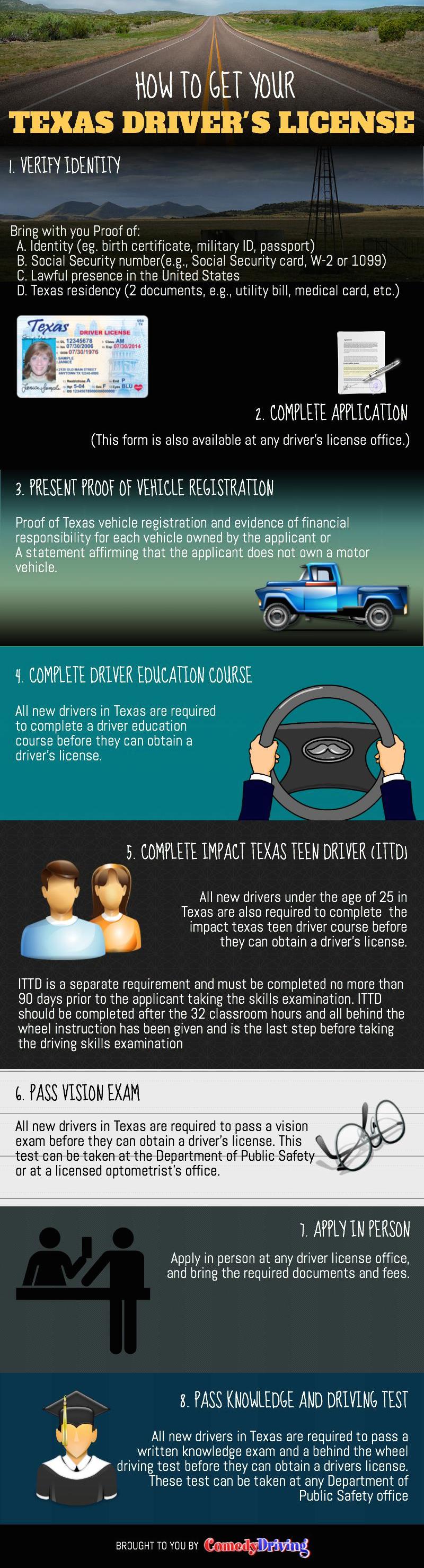
The cornerstone of obtaining any official document in the United States, including a Texas driver’s license, is proving your identity and your legal right to be in the country. This involves presenting a specific set of documents to the DPS. Failure to provide the correct documentation can lead to delays or outright denial of your application.
- Proof of Identity: You will need to present at least one primary document that clearly shows your full legal name and date of birth. Acceptable primary documents typically include:
- A U.S. Passport or Passport Card.
- A certified birth certificate issued by a U.S. state, territory, or the District of Columbia.
- A Consular Report of Birth Abroad.
- A Certificate of Citizenship or Certificate of Naturalization.
- A U.S. Permanent Resident Card.
- An Employment Authorization Document issued by the U.S. Citizenship and Immigration Services.
- For non-U.S. citizens, a valid foreign passport with a valid I-94 form or other valid immigration document.
- Proof of Social Security Number: You must also provide proof of your Social Security number. This can be a Social Security card, a W-2 form from the past year, or a pay stub that includes your full name and Social Security number. If you do not have a Social Security number, you will need to provide documentation from the Social Security Administration indicating ineligibility.
- Proof of Texas Residency: As you are applying for a Texas driver’s license, you need to demonstrate that you are a resident of Texas. You will typically need two different documents to prove this. These documents must show your full legal name and your Texas residential address. Examples include:
- Utility bills (electricity, gas, water, or internet) from within the last 90 days.
- Lease agreements or mortgage statements.
- Bank statements or canceled checks.
- Current homeowner’s or renter’s insurance policy.
- Vehicle registration or title.
- Mail from a Texas educational institution.
- Voter registration confirmation.
It is crucial to ensure that the name and date of birth on all your documents match exactly. If there are discrepancies, you may need to obtain official amendments or additional documentation to resolve them before you can proceed. The DPS website provides a comprehensive list of all acceptable documents, and it’s advisable to review this list carefully before your visit.
Age and Special Requirements for Minors
Texas has specific provisions for younger drivers, recognizing that their driving experience and maturity levels differ from those of adults. These provisions are designed to promote safe driving habits from the outset.
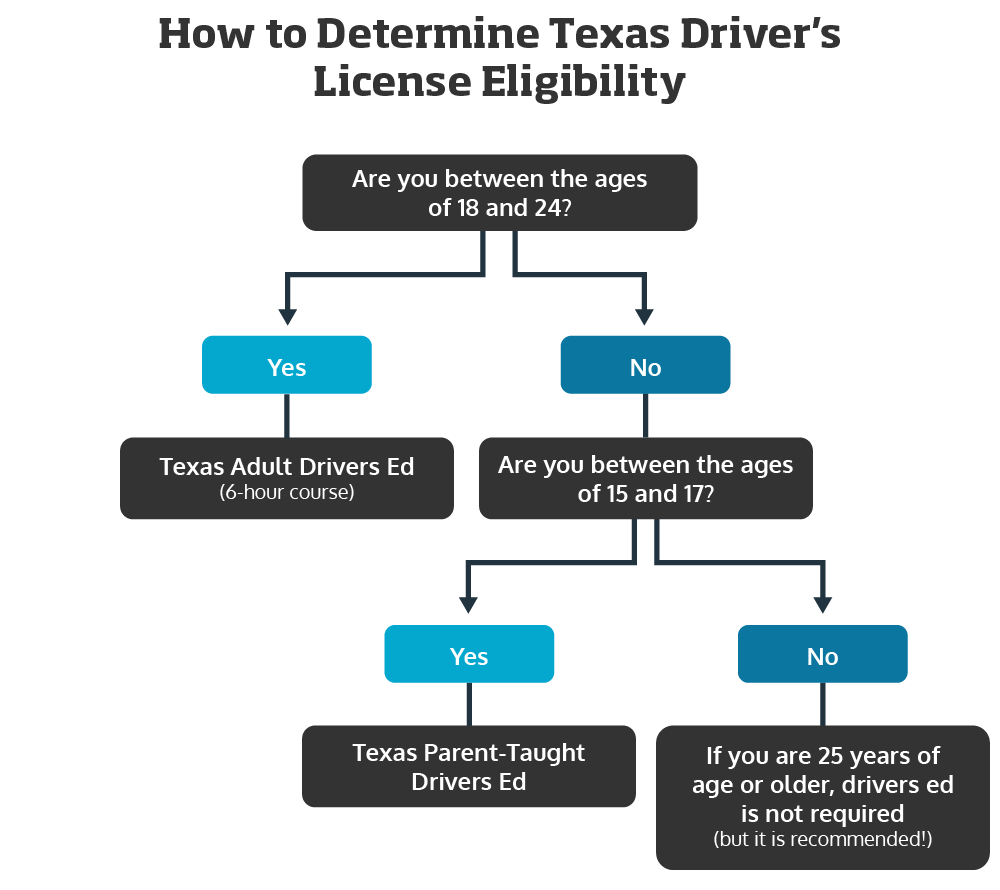
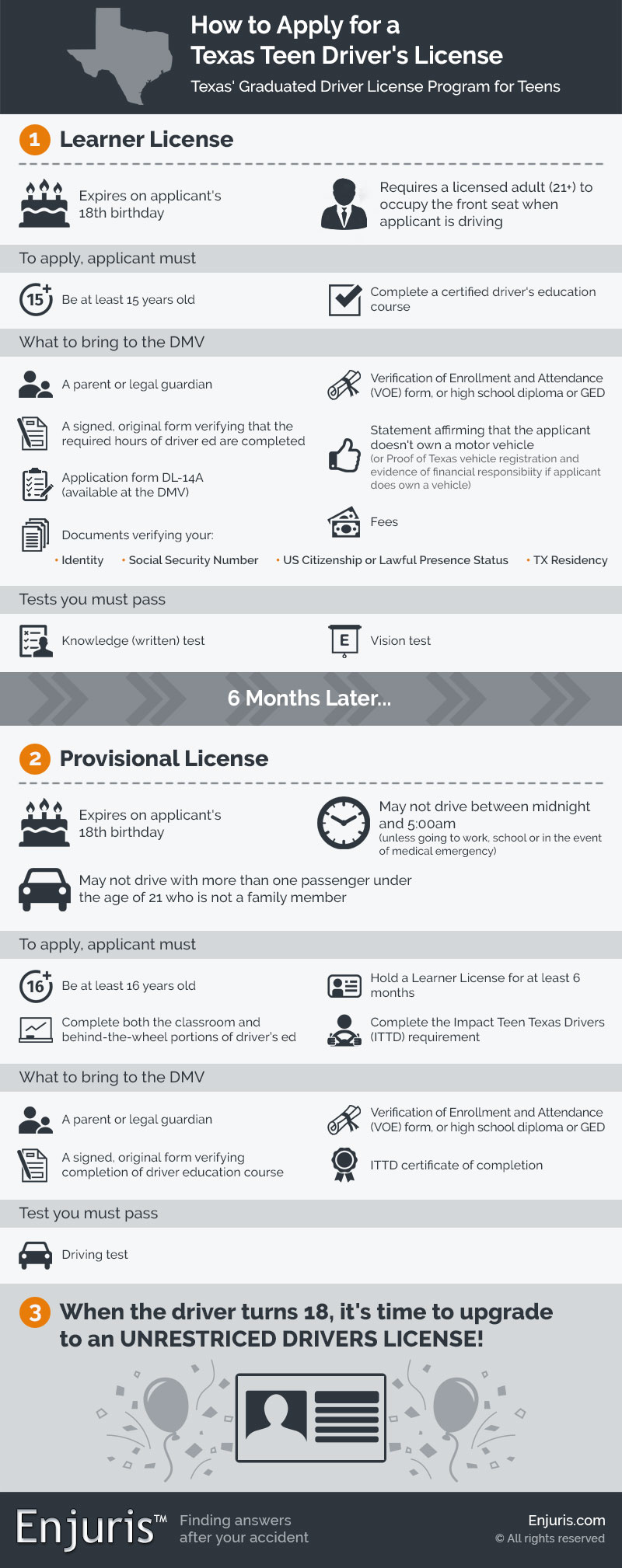
- Instruction Permit (Learner’s Permit): For individuals under 18 years of age, the first step is typically obtaining an instruction permit, commonly known as a learner’s permit. To be eligible, applicants must be at least 15 years old and under 18. They must also have completed an approved driver education course or be enrolled in one. This permit allows them to practice driving under the supervision of a licensed adult who is at least 21 years old and seated in the front passenger seat.
- Driver Education: All applicants under 18 must complete a state-approved driver education program. This program includes both classroom instruction and behind-the-wheel training. Proof of completion is required to move forward with the licensing process.
- Provisional Driver’s License: Once an applicant under 18 has held their instruction permit for at least six months and has met all other requirements, including passing the driving test, they may be eligible for a provisional driver’s license. This license has certain restrictions, such as limits on driving between midnight and 5 a.m. unless accompanied by a licensed adult or driving to or from school or work. These restrictions are in place until the driver turns 18, offering a structured transition into full driving privileges.
For adults applying for their first driver’s license, the requirements are generally more straightforward but still necessitate proving identity, residency, and completing any required knowledge and skills testing.
The Testing and Application Process
Once you have confirmed your eligibility and gathered all the necessary documentation, the next phase involves the application and testing at a Texas Department of Public Safety (DPS) driver license office. This stage is where you will officially apply, pay fees, and demonstrate your knowledge of Texas traffic laws and your ability to drive safely.
Applying at the Driver License Office
Visiting a DPS driver license office is a critical step. It’s here that your documents will be verified, your photograph will be taken, and you will undergo the required tests.
- Completing the Application Form: You will need to complete the official Texas Driver License Application form. This form will ask for personal information, including your name, address, date of birth, and other identifying details. It’s best to download this form from the DPS website and fill it out in advance to save time.
- Vision Test: A vision test is a mandatory part of the application process. This test ensures that your eyesight is adequate for driving. You will be asked to read letters on a chart. If you wear corrective lenses, bring them with you, as you will need to take the test with them.
- Knowledge Test: This is a written or computerized test that assesses your understanding of Texas traffic laws, road signs, and safe driving practices. The Texas Driver Handbook is your primary resource for studying for this test. It covers everything from speed limits and right-of-way rules to defensive driving techniques. The test typically consists of multiple-choice questions.
- Application Fee: There is a fee associated with applying for a driver’s license. The exact amount can vary, so it’s best to check the current fee schedule on the DPS website. You can usually pay with cash, check, or money order. Some offices may accept credit or debit cards.
It is highly recommended to schedule an appointment online through the DPS website. Walk-ins are often accommodated, but wait times can be significantly longer, especially in larger cities like San Antonio or El Paso.
The Driving Test (Road Test)
The driving test, also known as the road test, is the practical assessment of your driving skills. It’s designed to ensure you can operate a vehicle safely and in compliance with Texas traffic laws in real-world driving conditions.
- Vehicle Requirements: You must provide a safe, registered, and insured vehicle for the driving test. The vehicle must have working lights, turn signals, brakes, and a horn. The license plates must be current. The examiner will likely perform a basic safety check of the vehicle before the test begins.
- Skills Assessed: The examiner will evaluate your ability to perform various driving maneuvers, including:
- Starting and stopping smoothly.
- Making turns, including proper signaling and speed control.
- Changing lanes safely.
- Parallel parking.
- Backing up.
- Observing traffic signals and signs.
- Maintaining proper speed and following distance.
- Awareness of your surroundings.
- What to Bring: In addition to your completed application and any required learner’s permit documentation, you should have proof of vehicle insurance and registration for the vehicle you will be using.
- Passing the Test: If you pass the driving test, the examiner will inform you, and you will then be able to proceed with receiving your temporary license. If you do not pass, you will be given feedback on the areas where you need improvement, and you will be allowed to retake the test after a waiting period.
For those who have completed a driver education program that includes a behind-the-wheel component, the skills test may be waived in some instances. However, this is not always the case, and it’s essential to confirm the specific requirements with the DPS.
Obtaining Your License and Beyond
After successfully navigating the application and testing phases, you are on the cusp of officially becoming a licensed driver in Texas. The final steps involve receiving your temporary license and then your permanent card, along with understanding the responsibilities that come with it.
Receiving Your Temporary and Permanent License
Once you have passed all the required tests and submitted all necessary documentation, you will be issued a temporary driver’s license.
- Temporary License: This temporary document is valid for a specific period, usually 60 or 90 days, and serves as your legal proof of a driver’s license while your permanent card is being processed and mailed. You can use this temporary license to drive legally within Texas and, in most cases, outside the state.
- Permanent License Mail: Your permanent Texas driver’s license will be mailed to the address you provided on your application. This can take several weeks. It’s crucial to ensure your mailing address is correct and that you can receive mail at that location. If you move after applying, you may need to update your address with the DPS.
The Texas driver’s license is a key piece of identification and is often required for various activities, from renting a car for a road trip along the Texas coast to proving your identity when checking into a hotel in Galveston.
Maintaining Your License and Responsibilities
Having a Texas driver’s license comes with responsibilities. It’s not just about the freedom to explore the diverse Texas landscape, from the Big Bend National Park to the charming towns of the Texas Wine Country.
- Renewal: Driver’s licenses are valid for a set period, typically eight years for most adults. You will receive a renewal notice by mail, but it is your responsibility to ensure your license is renewed before it expires. Online renewals are often available for eligible drivers, making the process convenient.
- Address Changes: If you move, you are required by law to notify the DPS of your change of address within a specified timeframe. This ensures you receive important correspondence, such as renewal notices.
- Traffic Laws: Adhering to Texas traffic laws is paramount. This includes obeying speed limits, wearing seatbelts, never driving under the influence of alcohol or drugs, and practicing defensive driving. Responsible driving contributes to the safety and enjoyment of Texas for everyone, whether they are tourists exploring Kerrville or locals commuting to work.
- Penalties: Failure to comply with Texas driving laws and licensing regulations can result in fines, license suspension, or even revocation. It’s essential to stay informed about the laws and to drive responsibly at all times.
Obtaining a Texas driver’s license is a significant step towards integrating into life in Texas. By understanding the requirements, preparing thoroughly, and approaching the process with diligence, you can successfully obtain your license and confidently explore all that the Lone Star State has to offer, from its vibrant cities to its stunning natural beauty.
LifeOutOfTheBox is a participant in the Amazon Services LLC Associates Program, an affiliate advertising program designed to provide a means for sites to earn advertising fees by advertising and linking to Amazon.com. Amazon, the Amazon logo, AmazonSupply, and the AmazonSupply logo are trademarks of Amazon.com, Inc. or its affiliates. As an Amazon Associate we earn affiliate commissions from qualifying purchases.