
Navigating the temporal landscape of a state as vast and diverse as Texas can be surprisingly complex. While the question “What time zone in [Texas]?” might seem straightforward, the answer involves a bit more nuance than a simple designation. Understanding the prevailing time zones is crucial for anyone planning a trip to the Lone Star State, whether for business, leisure, or a bit of both. This guide aims to demystify the time zone situation in Texas, offering insights relevant to travelers, those seeking accommodation, and anyone interested in the state’s unique lifestyle.
The vast majority of Texas operates under Central Standard Time (CST). This covers most of the state’s major cities and popular destinations. For those planning to explore Dallas, Houston, Austin, or San Antonio, you’ll be observing CST. This means that during standard time, Texas is six hours behind Coordinated Universal Time (UTC-6). When Daylight Saving Time (DST) is in effect, the state switches to Central Daylight Time (CDT), moving one hour ahead to UTC-5. This transition typically occurs on the second Sunday in March and ends on the first Sunday in November, aligning with the rest of the United States that observes DST.
Navigating Texas’s Time Zones: A Closer Look
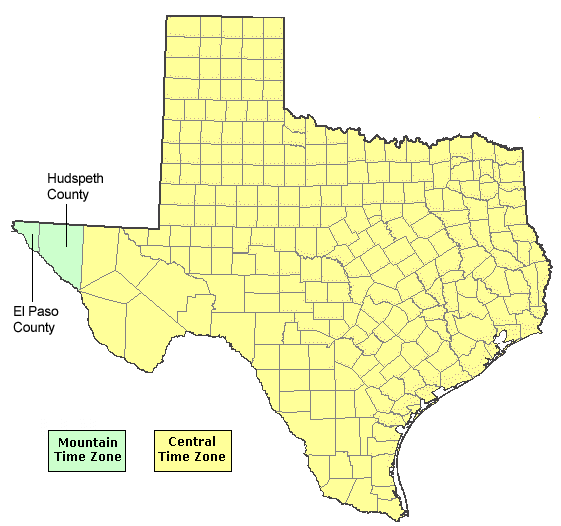
While Central Time is the dominant standard, a small portion of Texas observes a different time zone. This geographical quirk, while not affecting most travelers, is an interesting facet of the state’s temporal organization. Understanding these nuances can be particularly helpful for those venturing into more remote or specific areas of Texas.
The Western Exception: Mountain Time in El Paso
The far western tip of Texas, specifically the area encompassing El Paso and surrounding counties, falls under the Mountain Time Zone. This means that for most of the year, El Paso is one hour behind the rest of Texas. During standard time, this zone observes Mountain Standard Time (MST), which is UTC-7. When DST is active, it shifts to Mountain Daylight Time (MDT), becoming UTC-6.
This geographical division is a remnant of historical railway and postal needs, and it continues to define the timekeeping in this unique region of Texas. For visitors arriving in El Paso, it’s essential to be aware of this one-hour difference, especially when coordinating with individuals or businesses located in the Central Time Zone. This can impact flight schedules, meeting times, and even dinner reservations, particularly if you’re accustomed to the Central Time standard.
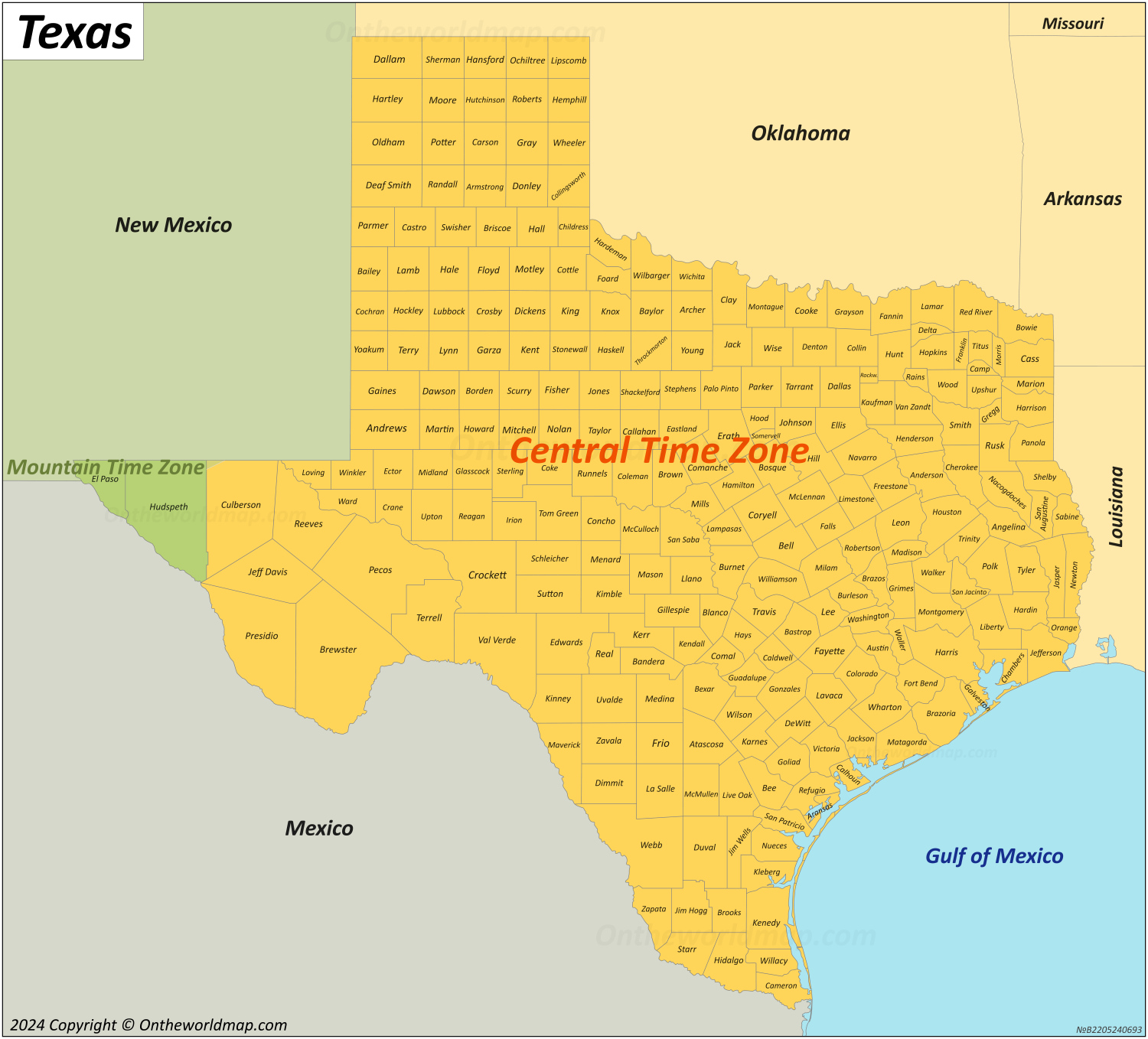
The decision to place El Paso in the Mountain Time Zone is primarily due to its proximity and economic ties with New Mexico, which largely observes Mountain Time, and neighboring Ciudad Juárez in Mexico, which also operates on Mountain Time. This creates a more cohesive temporal alignment for daily commerce and social interactions across the border.
Implications for Travel and Accommodation
For travelers, understanding the time zone in Texas is fundamental to a smooth and enjoyable experience. When booking flights into airports like Dallas/Fort Worth International Airport or Houston George Bush Intercontinental Airport, the departure and arrival times will be listed according to the local time zone of each airport. However, if you are flying from El Paso International Airport to Dallas, remember the one-hour shift.
When considering accommodation options, such as hotels in Austin or resorts near the Gulf Coast, the time zone will be consistent with the surrounding area. For instance, a stay at the JW Marriott Austin will operate on Central Time, as will a secluded villa in the Hill Country. However, if your plans include exploring the western reaches, such as a stay at a ranch near Fort Stockton that borders the Mountain Time Zone, it’s always wise to confirm local timekeeping.
The state’s rich tourism landscape offers a plethora of attractions and activities. Whether you’re planning to visit the Alamo in San Antonio, explore the Big Bend National Park (which falls within the Central Time Zone, despite its western location), or delve into the history of the Texas State Capitol in Austin, knowing the local time is essential for itinerary planning. For example, tours and opening hours for landmarks will be based on the prevailing time zone of their location.

Understanding Daylight Saving Time in Texas
Like most of the United States, Texas observes Daylight Saving Time (DST). This means that clocks are advanced by one hour during the warmer months, typically from early March to early November. The state as a whole, encompassing both the Central and Mountain Time Zones, participates in this annual time shift. Therefore, the distinction between Central Daylight Time (CDT) and Mountain Daylight Time (MDT) remains consistent with their standard time counterparts, with Mountain Time always being one hour behind Central Time.
The implementation of DST is a familiar rhythm for many residents and visitors alike. However, for those traveling between different states or even different time zones within the same state, it’s a crucial detail to remember. The exact dates for the commencement and conclusion of DST can be found on official calendars, and most digital devices and online platforms automatically adjust for these changes. Nevertheless, when making arrangements, particularly for business meetings or travel involving multiple locations, it’s prudent to confirm the current time and factor in DST if applicable.
The decision on whether to observe DST has been a topic of discussion in various states, but Texas has consistently remained a participant. This uniformity within the state, apart from the western edge’s time zone designation, simplifies many logistical aspects of life and business. For those exploring the diverse Texas lifestyle, from the bustling nightlife of Houston to the serene landscapes of the Texas Hill Country, understanding these temporal nuances ensures a seamless and enjoyable journey. Whether you are booking a room at the luxurious Hotel Emma in San Antonio or planning a family trip to the Space Center Houston, having a clear grasp of the time zone in Texas is an invaluable piece of information for any visitor or resident.
LifeOutOfTheBox is a participant in the Amazon Services LLC Associates Program, an affiliate advertising program designed to provide a means for sites to earn advertising fees by advertising and linking to Amazon.com. Amazon, the Amazon logo, AmazonSupply, and the AmazonSupply logo are trademarks of Amazon.com, Inc. or its affiliates. As an Amazon Associate we earn affiliate commissions from qualifying purchases.