
The Texas Declaration of Independence stands as a monumental document in the history of the Lone Star State. It’s a testament to the courage and conviction of a people yearning for self-determination, a rallying cry that echoed across the plains of Texas and resonated with the spirit of liberty. While the document itself is a powerful statement, the story behind its creation, particularly the individuals who penned its impassioned words, adds a rich layer to its historical significance. It wasn’t a singular voice but a collaborative effort, a product of minds united by a shared vision for a new nation. Understanding who wrote this pivotal declaration offers a deeper appreciation for the founding of Texas and the ideals it represents.

The journey to the declaration was fraught with challenges, born out of a growing chasm between the settlers in Texas and the centralist government of Mexico. Issues surrounding governance, rights, and a sense of being marginalized fueled a desire for independence. As tensions escalated, the need for a formal declaration became paramount. This document would not only announce their break from Mexico but also articulate the fundamental principles upon which their new republic would be founded. The selection of individuals to draft this crucial text was a critical decision, requiring intellect, rhetorical skill, and a profound understanding of the grievances and aspirations of the Texian people.
The Genesis of a Nation: The Convention of 1836 and its Architects
The momentous task of crafting the Texas Declaration of Independence fell to the delegates of the Convention of 1836, assembled at Washington-on-the-Brazos. This gathering was more than just a political assembly; it was the crucible in which the future of Texas was forged. Amidst the unfolding Texas Revolution, with Mexican forces under General Santa Anna advancing, the delegates understood the urgency and the gravity of their undertaking. The convention formally declared independence on March 2, 1836, a date now celebrated as Texas Independence Day.
Within this assembly, a committee was appointed to draft the declaration. This committee, tasked with the immense responsibility of articulating the reasons for secession and the principles of the new republic, comprised several distinguished individuals. However, it is crucial to highlight the primary author, the one whose pen most eloquently captured the spirit and the justifications for independence.
George Childress: The Penman of Texas Independence
While the committee’s collective input was valuable, the primary credit for drafting the Texas Declaration of Independence is overwhelmingly attributed to George Childress. A lawyer, planter, and politician from Tennessee, Childress had arrived in Texas only a few months prior to the convention. His sharp intellect and powerful oratorical skills quickly made him a prominent figure among the delegates.
Childress was born in Tennessee in 1808 and received a legal education. He was deeply impressed by the ideals of liberty and self-governance, principles that would guide his actions in Texas. Upon his arrival in Texas in late 1835, he became an advocate for independence, recognizing the oppressive nature of Mexican rule. His impassioned speeches and unwavering belief in the cause made him a natural choice to lead the drafting committee.
The committee, officially appointed on March 1, 1836, included Childress along with Lorenzo de Zavala, David G. Burnet, Col. James Nash, and Col. Edwin Wall. However, it was Childress who took the lead, drawing upon his legal background and his understanding of historical declarations of independence, particularly the United States Declaration of Independence. He worked tirelessly, pouring his conviction and the collective grievances of the Texian people into the document. The result was a declaration that was both a powerful indictment of Mexican tyranny and a bold affirmation of Texas‘s right to exist as a sovereign nation.
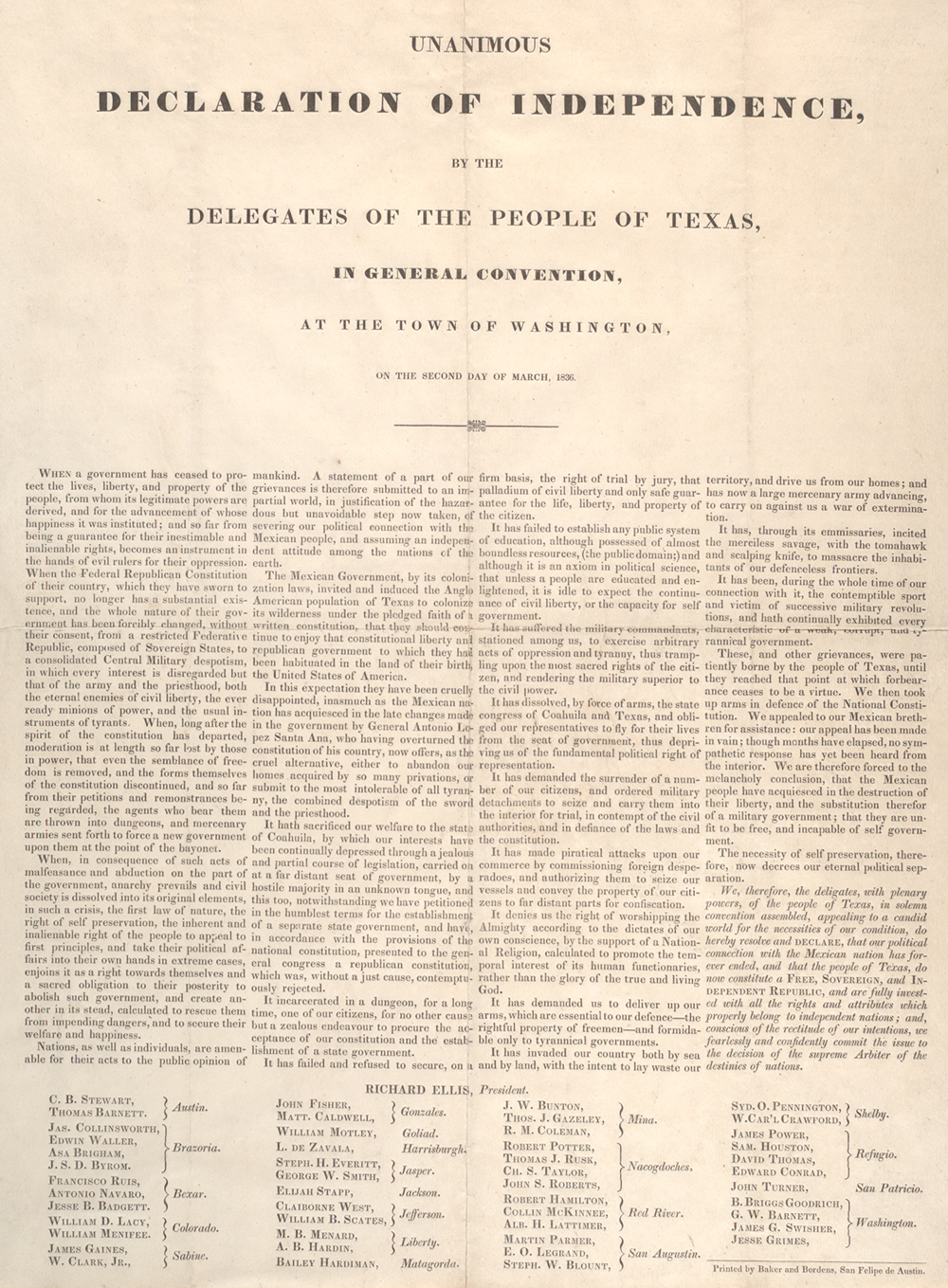
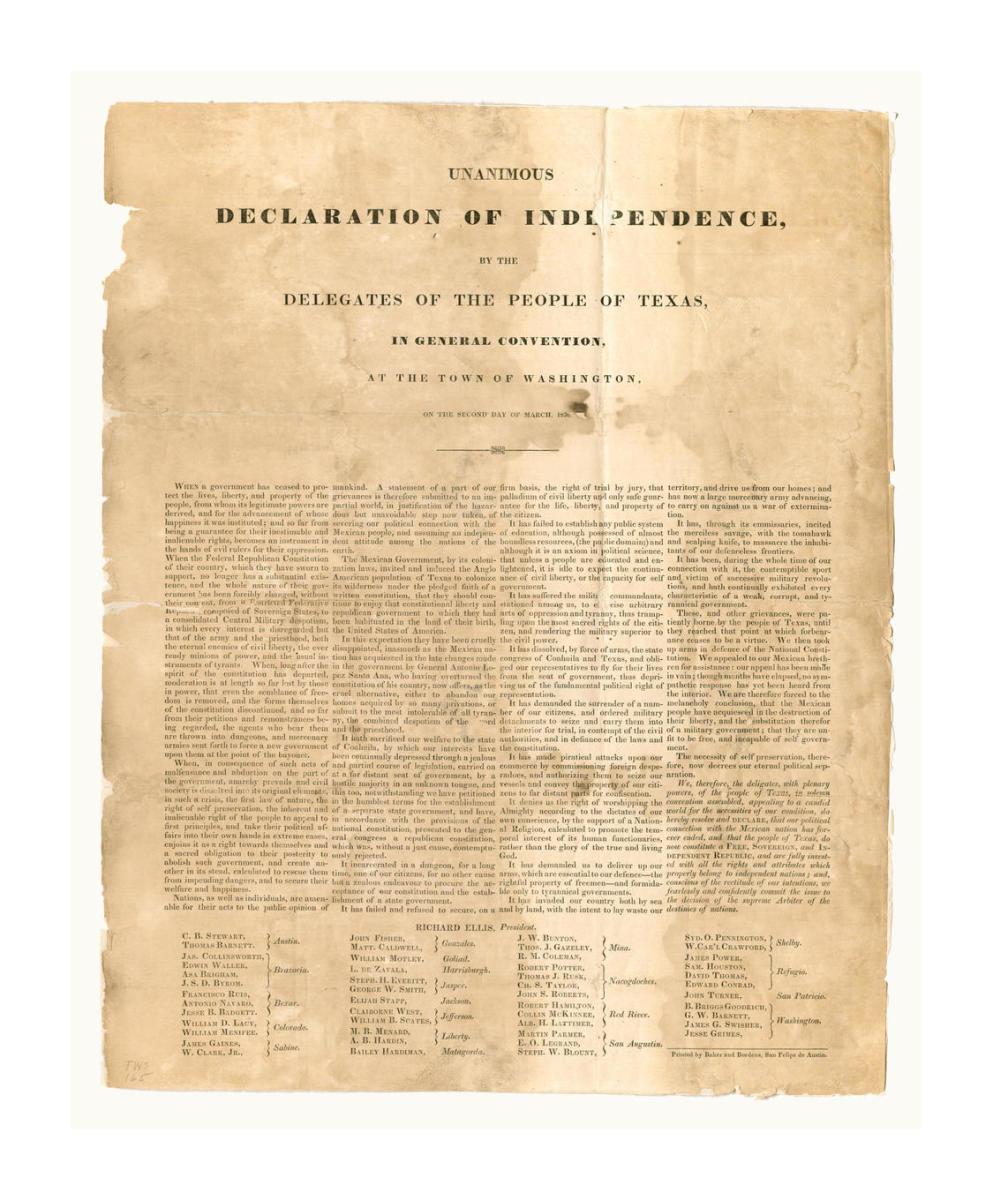
The document, penned largely by Childress, meticulously outlined the grievances against President Santa Anna‘s administration. These grievances included the abrogation of the federal constitution of 1824, the denial of trial by jury, the prohibition of public education, the imposition of martial law, and the encouragement of invasion by hostile indigenous tribes. It spoke of the “oppressive and arbitrary power” of the Mexican government and the denial of fundamental rights. Childress’s prose was direct, forceful, and imbued with a sense of moral righteousness. He articulated the colonists’ desire for a republican government and their right to defend themselves against tyranny, echoing the sentiments of revolutionaries past.
The Broader Context: The Convention of 1836 and its Significance
The Texas Declaration of Independence was not an isolated act but a crucial component of a larger revolutionary movement. The Convention of 1836, where it was drafted and adopted, was a pivotal moment. This convention brought together delegates from across Texas, representing diverse backgrounds but united by a common desire for independence. The convention also drafted the Constitution of the Republic of Texas, laying the legal and governmental framework for the new nation.
Key Figures and Their Contributions
While George Childress is recognized as the primary author, the contributions of other delegates to the convention and the drafting committee should not be overlooked.
- Lorenzo de Zavala: A prominent figure in Mexican politics before immigrating to Texas, de Zavala was a fervent advocate for liberal reforms. His experience in Mexican governance provided valuable insights into the political landscape and the flaws of the existing regime. He served as the first provisional president of Texas after independence, showcasing his continued dedication to the cause.
- David G. Burnet: Another significant leader, Burnet would later serve as the first provisional president of the Republic of Texas. His leadership and commitment to the revolutionary cause were instrumental in galvanizing support and guiding the nascent republic through its early challenges.
- Col. James Nash and Col. Edwin Wall: Though their individual contributions to the drafting process are less detailed in historical records compared to Childress, their presence on the committee signifies the collaborative nature of the undertaking. They brought their own perspectives and experiences to bear, ensuring the declaration represented a broad consensus among the delegates.
The deliberations at the convention were intense, reflecting the high stakes involved. The delegates were aware that their actions would have profound consequences, potentially leading to prolonged conflict and bloodshed. Yet, the spirit of determination and the shared belief in the justice of their cause prevailed. The adoption of the declaration was a bold statement, a defiant act of self-determination that irrevocably set Texas on its path to becoming an independent republic.
Legacy and Enduring Impact
The Texas Declaration of Independence, penned primarily by George Childress, is more than just a historical document; it is a cornerstone of Texas identity. It embodies the enduring spirit of independence and the pursuit of liberty that continues to define the state. The principles enshrined within it – the rights to life, liberty, and the pursuit of happiness – resonate with the fundamental ideals of self-governance.
Visiting Washington-on-the-Brazos today, the site of this momentous declaration, offers a tangible connection to this pivotal period. The Texas State Park there preserves the history of the convention, allowing visitors to walk in the footsteps of the founding fathers. Historical reenactments and interpretive programs bring the past to life, providing a deeper understanding of the struggles and triumphs of those who fought for Texas independence. Exploring these landmarks allows for an appreciation of the sacrifices made and the vision that guided the creation of the republic.
The legacy of the declaration also extends to the cultural landscape of Texas. Its influence can be seen in the state’s motto, “Friendship,” and its enduring sense of independence. For those interested in Texas tourism and its rich history, understanding the authorship and context of the Texas Declaration of Independence is an essential element of any exploration. Whether you are visiting historic sites, enjoying the local culture, or simply learning about the state’s origins, the story of this declaration and its author is central to comprehending the heart and soul of Texas. It serves as a reminder that profound change often begins with courageous individuals and a collective voice raised in the pursuit of freedom.
LifeOutOfTheBox is a participant in the Amazon Services LLC Associates Program, an affiliate advertising program designed to provide a means for sites to earn advertising fees by advertising and linking to Amazon.com. Amazon, the Amazon logo, AmazonSupply, and the AmazonSupply logo are trademarks of Amazon.com, Inc. or its affiliates. As an Amazon Associate we earn affiliate commissions from qualifying purchases.