
Planning a trip often involves meticulous attention to detail, from booking accommodations to mapping out itineraries. Among the practical considerations that can significantly impact your travel experience is understanding the local time zone. For those setting their sights on the captivating landscapes and rich history of Alabama, a common question arises: “Is Alabama on Central Time?” The straightforward answer, for the vast majority of the state, is yes. Alabama predominantly observes Central Time, specifically Central Standard Time (CST) during the fall and winter months, and Central Daylight Time (CDT) in spring and summer. However, as with many geographical and administrative divisions, there’s a nuanced exception that savvy travelers should be aware of.

This guide delves into the specifics of Alabama’s time zones, explains the singular exception, and provides invaluable insights into how this information can help you plan a smooth, enjoyable, and time-optimized journey through the Heart of Dixie. Understanding these temporal intricacies is not just about avoiding missed appointments; it’s about fully immersing yourself in the rhythm of your destination, ensuring every moment of your travel is spent exploring and experiencing, rather than deciphering clocks.
Navigating Alabama’s Time Zones: A Traveler’s Guide
For most travelers, the concept of a single time zone for an entire state seems logical. While Alabama largely adheres to this, a unique situation on its eastern border necessitates a closer look.
The Predominant Time Zone: Central Standard Time (CST) / Central Daylight Time (CDT)
The overwhelming majority of Alabama falls within the Central Time Zone. This means that cities like Birmingham, the state’s largest city; Montgomery, the state capital; coastal Mobile; and the technological hub of Huntsville all observe Central Time.
- Central Standard Time (CST): During the non-Daylight Saving Time period, Alabama operates on CST, which is 6 hours behind Coordinated Universal Time (UTC-6). This typically runs from early November to early March.
- Central Daylight Time (CDT): When Daylight Saving Time (DST) is in effect, from early March to early November, clocks in Central Time shift forward by one hour, making it CDT (UTC-5). This adjustment allows for more daylight in the evenings during the warmer months.
For travelers, this means that if your itinerary keeps you within these primary regions of Alabama, your time zone experience will be consistent and straightforward.
The Eastern Time Exception: Phenix City and Russell County
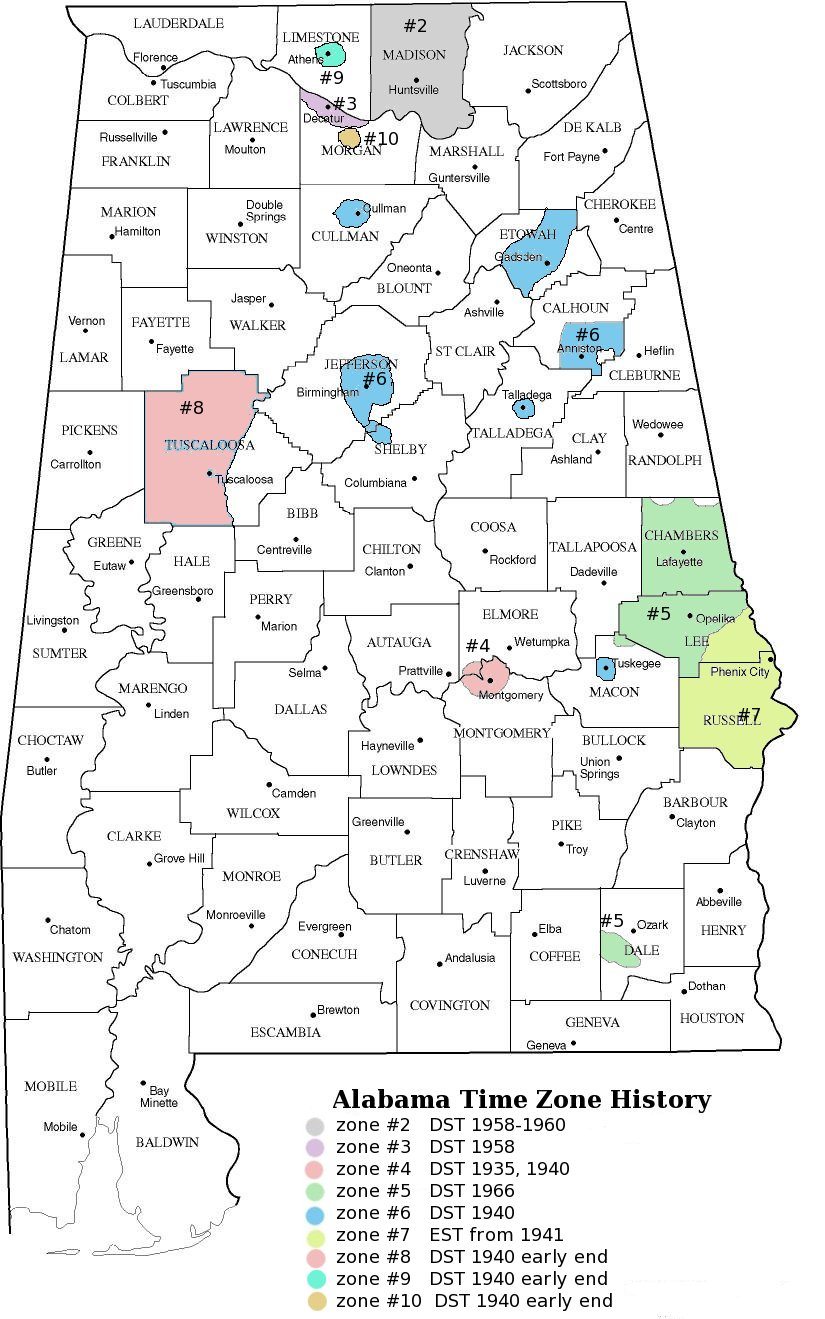
Here’s where the unique geographic and social dynamics come into play. While officially part of the Central Time Zone, Phenix City, located in Russell County on Alabama’s eastern border, often unofficially observes Eastern Time. This phenomenon is due to its close proximity and strong economic ties to Columbus, Georgia, which is firmly in the Eastern Time Zone.
- Eastern Standard Time (EST) / Eastern Daylight Time (EDT): Eastern Time is 5 hours behind UTC during standard time (EST, UTC-5) and 4 hours behind UTC during Daylight Saving Time (EDT, UTC-4). This means that Phenix City effectively operates one hour ahead of the rest of Alabama that is observing Central Time.
For travelers heading to Phenix City or the surrounding Russell County area, it is absolutely critical to verify the local time for any appointments, reservations, or events. While their official designation is Central Time, the practical reality for businesses and residents often leans towards Eastern Time to synchronize with Columbus, Georgia. This is a prime example of how local customs can supersede official classifications, especially in border communities.
The Impact of Time Zones on Your Alabama Travel Itinerary
Understanding Alabama’s time zone, including its exception, is more than just a trivial fact; it’s a vital component of successful travel planning that can prevent significant logistical headaches.
Planning Flights and Transportation
When booking flights to or from Alabama, always pay close attention to the time zone listed for departure and arrival. Many travelers flying into Alabama might connect through major hubs like Atlanta Hartsfield-Jackson International Airport in Georgia, which operates on Eastern Time. This means a one-hour time difference between your connecting flight and your final destination in Alabama (unless you’re heading to Phenix City!).
- Arrivals: If arriving from an Eastern Time location, you will effectively “gain” an hour when landing in most of Alabama. From a Mountain Time or Pacific Time location, you will “lose” hours. Account for this mental adjustment to avoid scheduling conflicts upon arrival.
- Departures: Similarly, when departing from Alabama to an Eastern Time destination, you will “lose” an hour, making it essential to factor this into travel times and connection windows. Double-check gate times and boarding schedules, particularly for early morning flights where a miscalculation could mean a missed flight.
Scheduling Activities and Reservations
From dining reservations to guided tours, museum visits, and business meetings, nearly every activity on your itinerary is time-sensitive. A simple miscalculation of one hour can lead to frustration and missed opportunities.
- Dining: Imagine missing a prime dinner reservation or showing up an hour late for a popular brunch spot. Confirm reservation times, especially if you’re traveling between distinct time zones within the same day or have just arrived from a different time zone.
- Tours and Attractions: Many popular attractions, historical sites along the Civil Rights Trail, or the U.S. Space & Rocket Center have strict operating hours and tour schedules. Arriving at the correct time ensures you don’t miss out on planned experiences.
- Meetings and Events: For business travelers, punctual attendance at meetings, conferences, or presentations is paramount. Always confirm the local time for any scheduled event.
Daylight Saving Time Considerations
Both the Central Time and Eastern Time zones observe Daylight Saving Time (DST). This annual shift means that during specific periods (typically from the second Sunday in March to the first Sunday in November), clocks are moved forward by one hour.
- “Spring Forward”: In March, when DST begins, CST becomes CDT, and EST becomes EDT.
- “Fall Back”: In November, when DST ends, CDT reverts to CST, and EDT reverts to EST.
These shifts occur simultaneously across the country’s observing time zones, maintaining the one-hour difference between Central and Eastern Time. However, for travelers who might be in transit or crossing state lines around these dates, it’s an additional layer of consideration to ensure your devices update correctly and your internal clock adjusts.
Practical Tips for Seamless Time Zone Transitions in Alabama
A successful travel experience often hinges on preparedness. By following a few simple tips, you can navigate Alabama’s time zones without a hitch.
Syncing Your Devices
Modern technology is a traveler’s best friend when it comes to time zones.
- Smartphones and Laptops: Most smartphones, tablets, and laptops automatically update to the local time zone when connected to cellular networks or Wi-Fi. Ensure your device’s settings are configured for automatic time and date updates.
- Smartwatches and Car Navigation: Similarly, many smartwatches and in-car navigation systems also have automatic time zone adjustment features. Verify these are enabled before your trip.
- Manual Checks: While automation is reliable, it’s a good habit to manually cross-reference your device’s time with a known local source (like a hotel lobby clock or a local business) upon arrival, especially if you’ve recently traveled through areas with spotty network coverage.
Double-Checking Local Times
When in doubt, always confirm. This is particularly important for the Phenix City area.
- Before You Go: When making reservations or scheduling activities from afar, confirm whether the listed times refer to Central Time or Eastern Time. A quick call or email can save much confusion.
- Upon Arrival: Ask your hotel concierge, a local business owner, or event organizers about the official and practical time zone being observed. This simple step can clarify any ambiguities.
- Itinerary Review: Before each day of your travel, quickly review your itinerary, noting down the scheduled times for all activities and keeping the local time zone in mind.
Adjusting to the Time Difference
Even a one-hour time change can impact your internal clock, leading to minor fatigue or jet lag.
- Gradual Adjustment: If possible, try to adjust your sleep schedule by an hour or so a few days before your trip.
- Hydration and Rest: Stay well-hydrated and ensure you get adequate rest, especially on travel days.
- Embrace Daylight: Spend time outdoors in natural light to help reset your body’s circadian rhythm.
- Plan Buffer Time: Avoid scheduling critical appointments immediately after arrival. Give yourself a buffer to settle in and adjust.
Beyond the Clock: Enhancing Your Alabama Experience
While the practicalities of time zones are crucial, remember that they are merely a framework for your travel adventures. Alabama offers a wealth of experiences, from the sun-drenched beaches of Gulf Shores to its pivotal role in American history.
Embrace the Local Pace
The Central Time Zone often evokes a sense of being in the heartland, and indeed, Alabama’s pace reflects the famed Southern hospitality and a more relaxed lifestyle compared to some of the bustling metropolises on the coasts. Embrace this rhythm. Don’t rush; take the time to savor local cuisine, engage in conversations with friendly locals, and truly absorb the unique culture. Your understanding of the time zone contributes to this immersion, allowing you to synchronize with the local flow rather than fighting against it.

Discovering Alabama’s Diverse Attractions
From outdoor adventures to cultural landmarks, Alabama beckons with diverse attractions. Knowing the correct time ensures you maximize your visit, whether you’re exploring the historic sites of Montgomery, experiencing the vibrant music scene in Florence, or embarking on a scenic drive along the Natchez Trace Parkway. Every hour counts when you’re making memories.
In conclusion, for the vast majority of your journey through Alabama, you will be operating on Central Time. Keep the Phenix City exception in mind for eastern border travel, double-check times, and let technology be your ally. With this knowledge, you are well-equipped to enjoy a seamless and unforgettable travel experience in Alabama, making every moment count in the Heart of Dixie.
LifeOutOfTheBox is a participant in the Amazon Services LLC Associates Program, an affiliate advertising program designed to provide a means for sites to earn advertising fees by advertising and linking to Amazon.com. Amazon, the Amazon logo, AmazonSupply, and the AmazonSupply logo are trademarks of Amazon.com, Inc. or its affiliates. As an Amazon Associate we earn affiliate commissions from qualifying purchases.