
The allure of an epic overland journey is a powerful draw for adventurers and dreamers alike. Among the most intriguing and frequently pondered routes is the hypothetical drive from Alaska, the vast American frontier, to Russia, its colossal Eastern neighbor. The question “Can you drive from Alaska to Russia?” conjures images of rugged wilderness, intrepid exploration, and perhaps even a seamless bridge connecting continents. However, the reality of geography, engineering, and geopolitics paints a far more complex picture. While the concept sparks the imagination, a continuous overland route connecting these two landmasses simply does not exist for the general traveler today. This article delves into why such a drive remains a fascinating impossibility, exploring the geographical barriers, historical ambitions, and the sheer logistical challenges involved.

The Bering Strait: Nature’s Formidable Divide
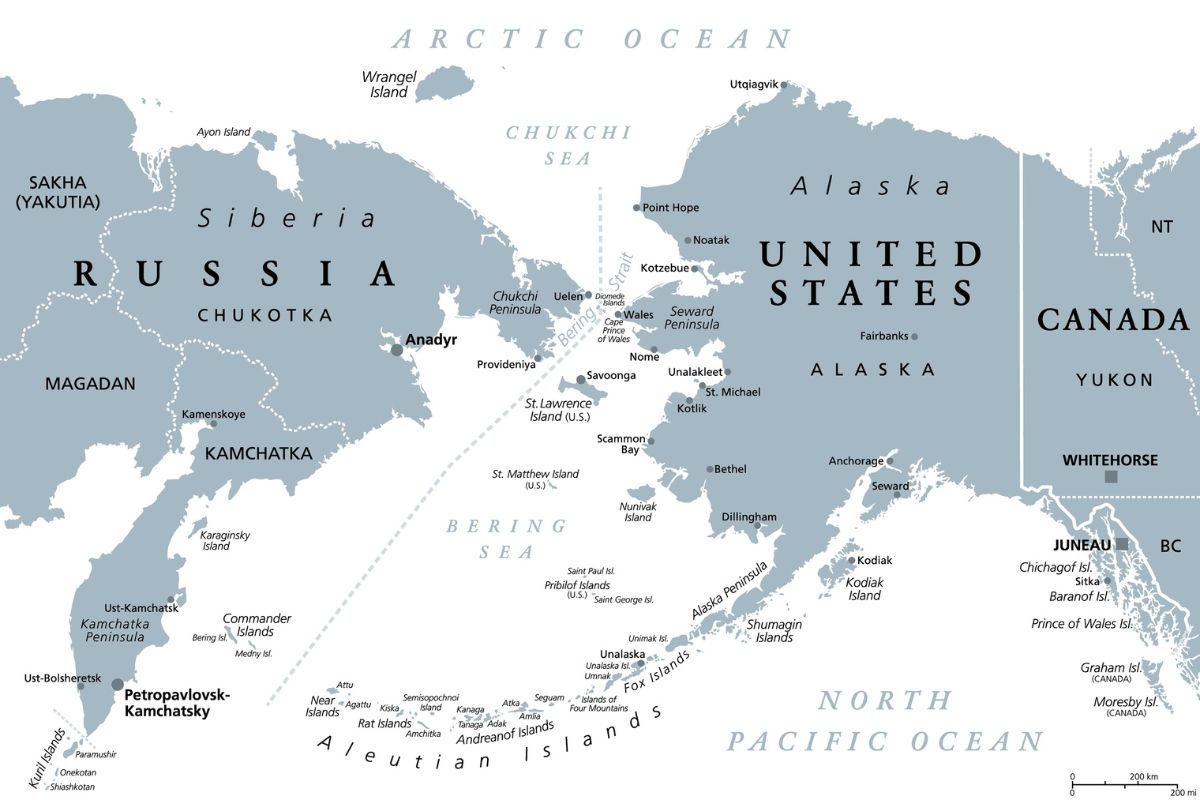
The primary impediment to driving from Alaska to Russia lies in the Bering Strait, a narrow stretch of ocean that separates the two continents. This is where the dream of an uninterrupted drive hits an insurmountable wall of water and ice.
Geographical Reality
The Bering Strait is an average of 82 kilometers (51 miles) wide at its narrowest point between Cape Dezhnev, Russia, and Cape Prince of Wales, Alaska. While this might seem a manageable distance on a map, the strait is anything but benign. It is relatively shallow, with an average depth of 30-50 meters (100-160 feet), but experiences strong currents, extreme weather conditions, and seasonal sea ice. During winter, the strait does freeze over, but this ice is far from a stable, reliable surface suitable for vehicle traffic. It’s dynamic, constantly shifting, and riddled with pressure ridges and open leads, making it an incredibly treacherous environment.
The Absence of a Bridge or Tunnel
For centuries, visionaries have pondered bridging or tunneling across the Bering Strait. Ideas range from ambitious rail tunnels to multi-lane highways. One of the earliest proponents was Tsar Nicholas II in the early 20th century, who reportedly considered a transcontinental railway. More recently, proposals like the “Intercontinental Peace Bridge” or the “Global Link” have captured headlines, suggesting tunnels or bridges combining road and rail.
However, the sheer scale of such an engineering project is monumental. The challenges include:
- Cost: Estimates for a bridge or tunnel run into the hundreds of billions of dollars, making it one of the most expensive infrastructure projects ever conceived.
- Logistics: Constructing such a massive structure in one of the world’s most remote and hostile environments presents unprecedented logistical hurdles. Extreme cold, strong winds, deep water, and seismic activity add layers of complexity.
- Environmental Impact: The sensitive Arctic ecosystem, home to diverse marine life and indigenous populations, would face significant disruption from construction.
- Political Will: Beyond the technical and financial aspects, obtaining sustained political will and international cooperation between the United States and Russia for such a joint venture has proven elusive. The political landscape frequently shifts, and grand collaborations of this magnitude require unwavering commitment from both sides.
Given these obstacles, no active, funded project exists to build a permanent overland connection across the Bering Strait.
Overland Routes to the Edge: Reaching the Shores of Impossibility
Even if a crossing existed, reaching the edges of the Bering Strait by conventional vehicle is an epic journey in itself, fraught with challenges due to extreme remoteness and undeveloped infrastructure on both continents.
Driving Through Alaska
On the North American side, the journey to the Alaskan coast facing Russia is an adventure in isolation. The road network in Alaska is sparse, especially in the western regions.
- Lack of Roads to the West Coast: There are no public roads that connect directly to the westernmost points of Alaska that border the Bering Strait. Cities like Nome or Kotzebue, which are relatively close to the strait, are not accessible by road from the main Alaskan highway system. Travelers typically reach these communities by air or, in summer, by sea.
- Rugged Terrain and Wilderness: Much of western Alaska is vast, untouched wilderness, characterized by tundra, mountains, and numerous rivers. Building and maintaining roads in such an environment is incredibly difficult and expensive, and largely unnecessary for the sparse population.
- Seasonal Accessibility: Even where rudimentary tracks exist, they are often seasonal, passable only in winter when the ground is frozen or in summer for off-road vehicles.
Driving Through Russia’s Far East
The Russian side presents an even more daunting challenge. The easternmost part of Russia, particularly the Chukotka Autonomous Okrug, is one of the most sparsely populated and least accessible regions on Earth.
- Non-existent Road Infrastructure: There is virtually no developed road network in Chukotka that would allow for a continuous drive to the Bering Strait. The region is characterized by immense distances, permafrost, and a lack of resources for road construction. Settlements like Anadyr (the administrative center) or the even more remote Uelen (the easternmost settlement in Russia) are primarily accessed by air or sea.
- Extreme Climate and Terrain: The climate is subarctic and arctic, with brutal winters, short, cool summers, and vast expanses of tundra and mountains. Vehicle travel, even with specialized off-road vehicles, is extremely challenging and often restricted to winter ice roads on frozen rivers or specific overland expeditions.
- Permit Requirements: Chukotka is a border zone, and special permits are required for foreign nationals to visit, adding another layer of complexity to any travel plans.
The Myth of the Ice Road: Arctic Expeditions, Not Overland Drives
While the Bering Strait does freeze in winter, the idea of simply “driving across the ice” is a dangerous misconception born from a misunderstanding of Arctic sea ice dynamics.
Winter Conditions and Arctic Travel

The sea ice in the Bering Strait is not a monolithic, stable sheet. It is dynamic, constantly moving with currents, winds, and tides. This movement creates:
- Pressure Ridges: Massive formations of piled-up ice, sometimes dozens of feet high, impassable for vehicles.
- Leads and Polynyas: Open water channels that can appear suddenly, even in the coldest temperatures, posing an immediate and fatal threat to anyone attempting to cross.
- Variable Thickness: The ice thickness is inconsistent, and areas of thinner ice, undetectable from the surface, can collapse under the weight of a vehicle.
- Fast-Moving Currents: Strong currents in the strait can rapidly shift large ice floes, making any crossing unpredictable and highly perilous.
For these reasons, attempting to drive a conventional vehicle across the Bering Strait on the ice is not only impossible but also an act of extreme folly.
Specialized Arctic Expeditions
It’s important to distinguish between attempting to drive a regular vehicle and highly specialized Arctic expeditions. Over the years, a handful of intrepid explorers have successfully traversed the Bering Strait or its vicinity in winter, but never by conventional car. These ventures involve:
- Amphibious Vehicles: Custom-built vehicles designed to operate on both land and water (and sometimes ice), often with hovercraft capabilities.
- Dog Sleds: Traditional methods, such as dog sleds, have been used by indigenous people and explorers for centuries.
- Skiing/Walking: Some individuals have traversed the ice on skis or by foot, often requiring extensive support and safety measures.
- Submarines or Icebreakers: These are the only reliable ways to cross the strait beneath or through the ice.
These are not “drives” in the conventional sense and are certainly not accessible to the average traveler. They are meticulously planned, multi-million-dollar expeditions undertaken by highly experienced teams with specialized equipment.
Alternative Crossings and Future Prospects
While driving remains impossible, other means of crossing the Bering Strait exist, and the dream of a land link persists in long-term infrastructure proposals.
Ferry Services and Air Travel
Currently, there are no regular ferry services for private vehicles or passengers directly connecting Alaska and Russia across the Bering Strait. Travelers wishing to move between the two countries typically do so by air, usually involving multiple flights and transit points through major hubs like Anchorage, Seattle, or Moscow. This route is practical but underscores the lack of direct transport.
The “World’s First Intercontinental Highway”
The idea of connecting continents by road continues to surface in discussions about infrastructure development. On the Russian side, there have been ongoing efforts to extend the existing road network in the Far East. The Kolyma Highway, famously known as the “Road of Bones,” is being slowly upgraded and extended. While ambitious plans occasionally surface to extend a road to the easternmost reaches of Chukotka, these are decades away from completion, if ever realized. Even if roads eventually reach the respective coasts, the fundamental issue of the water crossing remains.
The Bering Strait Tunnel Project
The concept of a Bering Strait tunnel periodically resurfaces. Proponents envision a complex system of tunnels and bridges connecting the two continents via the Diomede Islands (Big Diomede, Russia, and Little Diomede, United States). Such a project would be an engineering marvel, dwarfing the Channel Tunnel in length and complexity, facing unprecedented challenges from geology, climate, and the sheer scale of the undertaking. While technologically feasible in theory, the immense financial cost, environmental concerns, and geopolitical complexities mean it is likely to remain a futuristic dream for the foreseeable future.
The Spirit of Arctic Adventure
While driving from Alaska to Russia is currently impossible, the spirit of adventure that fuels such a question can be channeled into other incredible travel experiences in the Arctic region.
What You Can Do
For those drawn to the mystique of the far north and the idea of exploring these remote frontiers, numerous alternatives offer profound experiences:
- Explore Alaska’s Wilderness: Drive the scenic highways of Alaska, visit national parks like Denali, explore the Interior by plane, or take a cruise along its spectacular coastline.
- Arctic Cruises: Embark on an expedition cruise through the Bering Sea or further into the Arctic Ocean, offering unique perspectives of the strait, wildlife, and indigenous communities (though not typically stopping in Russia from Alaska due to border restrictions).
- Specialized Tours to Chukotka: For the truly intrepid, highly specialized and expensive tours (often by icebreaker, plane, or helicopter) can be arranged to visit remote parts of Russian Chukotka, offering a glimpse into its unique culture and pristine landscapes. These require significant planning and permits.
- Fly Between Continents: The most practical way to experience both regions is to fly, allowing for separate, immersive trips into the distinct cultures and environments of each country.
Embrace the Journey, Not Just the Destination
The impossibility of driving from Alaska to Russia adds to the mystique of the Bering Strait and the surrounding Arctic. It reminds us that some natural barriers are simply too grand to be overcome by conventional means, forcing us to appreciate the planet’s vastness and the unique challenges it presents. The dream of connecting continents continues to inspire engineers and adventurers, but for now, the Bering Strait remains a powerful testament to nature’s enduring power and a boundary that defines separate, yet equally captivating, travel destinations.
In conclusion, while the question “Can you drive from Alaska to Russia?” ignites a flicker of adventure in many, the definitive answer today is no. The geographical reality of the Bering Strait, coupled with the monumental engineering and political challenges of creating a crossing, ensures that this journey remains a captivating thought experiment rather than a tangible travel plan. However, the region itself offers a wealth of unparalleled travel experiences for those willing to embrace its wild beauty and unique challenges through alternative means.
LifeOutOfTheBox is a participant in the Amazon Services LLC Associates Program, an affiliate advertising program designed to provide a means for sites to earn advertising fees by advertising and linking to Amazon.com. Amazon, the Amazon logo, AmazonSupply, and the AmazonSupply logo are trademarks of Amazon.com, Inc. or its affiliates. As an Amazon Associate we earn affiliate commissions from qualifying purchases.