
The question of “how far apart is Russia and Alaska?” often conjures images of vast, impenetrable distances, yet the reality is far more astonishing. These two colossal landmasses, representing the United States and Russia at their extremes, are separated by a mere sliver of water, making the notion of a journey between them less about immense separation and more about navigating one of the planet’s most unique and challenging travel frontiers. For the adventurous traveler, understanding this proximity unveils a realm of extraordinary destinations, rich cultural tapestries, and unparalleled natural wonders waiting to be explored at the very edge of the world.

The Geographical Reality: A Stone’s Throw Away
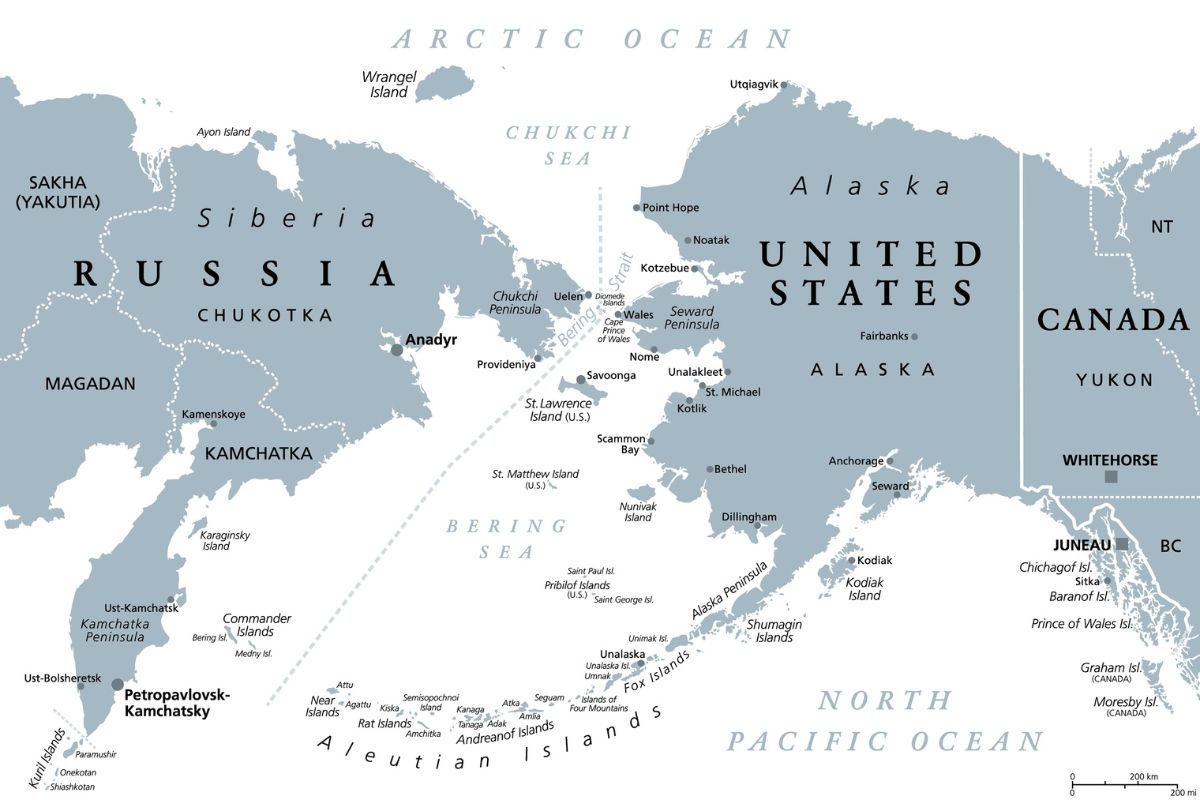
At its closest point, the distance between Russia (specifically the Chukotka Autonomous Okrug) and Alaska is a stunningly modest 55 miles (88 kilometers). This narrow stretch of ocean, known as the Bering Strait, is one of the world’s most strategically important and biologically diverse marine passageways. This geographical fact has profound implications for understanding the interconnectedness of these regions, both historically and for potential future travel.
The Bering Strait: A Narrow Divide
The Bering Strait is an oceanic strait that separates Cape Dezhnev, the easternmost point of the Asian continent, from Cape Prince of Wales, the westernmost point of the North American continent. Despite its immense global significance, the strait averages only about 30 to 50 meters (100 to 160 feet) in depth, making it a relatively shallow waterway. Its waters are notoriously cold and often ice-covered for much of the year, presenting significant navigational challenges. Yet, it is this very remoteness and harshness that lend an air of extraordinary adventure to any travel experience here. The strait isn’t just a geographical boundary; it’s a vibrant ecosystem, a historical crossroads, and a powerful symbol of the tenuous connection between East and West.
Big Diomede (Russia) and Little Diomede (USA): The Closest Points
The true marvel of this proximity lies with the Diomede Islands. These two small, rocky islands are situated almost precisely in the middle of the Bering Strait. Big Diomede, also known as Ratmanov Island, belongs to Russia, while Little Diomede, or Krusenstern Island, is part of Alaska, United States. The distance between these two islands is just 2.4 miles (3.8 kilometers). On a clear day, it is entirely possible to stand on one island and clearly see the other, making them tangible symbols of the world’s continental divide. For travelers, the sight of two different nations, separated by such a minimal distance, offers a truly unique perspective on global geography and geopolitical realities.
The International Date Line and Time Zones: Traveling Through Time
Adding another layer of intrigue to the Diomede Islands and the Bering Strait is the path of the International Date Line. This imaginary line, which roughly follows the 180° longitude, serves as the demarcation between one calendar day and the next. Crucially, the International Date Line passes directly between Big Diomede and Little Diomede. This means that despite being less than three miles apart, the islands are separated by 21 hours in time. When it is, for example, 9 AM on Tuesday on Little Diomede (United States), it is 6 AM on Wednesday on Big Diomede (Russia). This incredible temporal juxtaposition allows travelers to literally look “into tomorrow” from Alaska’s shore, creating an unparalleled travel experience that transcends mere geography into the realm of time itself.
Historical and Cultural Connections Across the Bering Strait
The physical closeness of Russia and Alaska is not merely a modern curiosity; it is a fundamental aspect of their shared history and cultural heritage. The Bering Strait region has served as a crucial bridge for human migration, cultural exchange, and early exploration for millennia, leaving an indelible mark on the identities of the peoples and lands on both sides.
Ancient Land Bridges: Tracing Human Migration
Tens of thousands of years ago, during the Last Glacial Maximum, vast quantities of Earth’s water were locked up in immense ice sheets, causing global sea levels to drop significantly. This exposed a vast land bridge, known as Beringia, which connected what is now Alaska to Siberia. This prehistoric landmass, now submerged beneath the Bering Strait and Bering Sea, played a pivotal role in human history. It served as the primary route by which early humans migrated from Asia into North America, becoming the ancestors of indigenous peoples across the Americas. For travelers interested in anthropology, prehistory, and the origins of human populations, the concept of Beringia offers a profound narrative, making the Bering Strait a veritable cradle of civilization for the Western Hemisphere.
Indigenous Peoples: Shared Heritage and Traditions
Despite the political division, the indigenous communities on both sides of the Bering Strait share deep linguistic, cultural, and genetic ties. Peoples such as the Siberian Yupik, Inupiat, and Chukchi have lived in this Arctic environment for thousands of years, developing sophisticated ways of life adapted to the harsh climate. Historically, these communities engaged in regular contact, trade, and even intermarriage across the strait. Their traditions, subsistence practices (hunting marine mammals), storytelling, and artistry often reflect a shared heritage that predates modern nation-states. Visiting these remote communities, where possible, offers travelers an invaluable opportunity to witness living cultures deeply connected to the land and sea, and to understand the enduring human spirit in extreme environments.
Early Explorations and Encounters
The European “discovery” of the Bering Strait further cemented its historical significance. In 1728, Danish navigator Vitus Bering, sailing for the Russian Empire, became the first European to definitively sail through the strait, proving that Asia and North America were indeed separate continents. Later, in 1778, British explorer Captain James Cook further mapped the region, adding to the growing knowledge of its geography. These expeditions were crucial steps in global cartography and opened the door for later Russian colonization of Alaska, which lasted until its sale to the United States in 1867. For history enthusiasts, tracing these exploratory routes and understanding the impacts of these encounters adds a rich layer to any Arctic journey.
Travel Opportunities and Challenges: Bridging the Gap
While the physical distance between Russia and Alaska is small, bridging the gap for travel is complex. The Bering Strait region remains one of the world’s most remote and politically sensitive areas, offering unique travel experiences balanced by significant logistical hurdles.
The Dream of a Bering Strait Bridge or Tunnel
For over a century, the idea of constructing a physical link across the Bering Strait – either a bridge or a tunnel – has captured the imagination of engineers, politicians, and visionaries. Such a colossal project, often dubbed the “Intercontinental Peace Bridge” or the “Global Link,” would connect the global road and rail networks, potentially revolutionizing trade and travel between continents. While the engineering challenges are immense (deep waters, extreme weather, seismic activity) and the political will sporadic, the concept itself highlights the profound implications of this narrow divide. For now, it remains a fascinating “what if” for travelers, underscoring the remoteness that makes current journeys so exceptional.
Expedition Cruises: A Unique Way to Experience the Proximity
Given the harsh conditions and restricted access, expedition cruises are arguably the most practical and popular way for travelers to experience the Bering Strait region. These specialized voyages typically operate during the short Arctic summer (July to September), utilizing ice-strengthened vessels and expert naturalists and cultural guides. Cruises often depart from Nome, Alaska, or sometimes Anadyr, Russia, venturing into the strait, circling the Diomede Islands, and exploring various coastal communities and wildlife hotspots in both Chukotka and Western Alaska. They offer unparalleled opportunities for wildlife viewing (whales, walruses, polar bears, myriad seabirds), zodiac excursions to remote shores, and cultural encounters with indigenous villagers. This form of travel provides a safe, comfortable, and comprehensive way to delve into this extraordinary part of the world.
Restricted Access and Border Complexities: Why Cross-Border Travel Isn’t Simple
Despite the geographical closeness, direct, independent cross-border travel between Alaska and Russia via the Bering Strait is extremely difficult, if not impossible, for regular tourists. Political tensions, stringent visa requirements for both countries, and strict border regulations for these sensitive frontier zones mean that land or sea crossings are not permitted for casual travel. Furthermore, many areas within Chukotka require special permits from Russian authorities, even for organized tours. Therefore, for most travelers, visiting the edges of both continents typically involves two separate trips or a highly specialized expedition cruise that has secured all necessary permits and adheres to international maritime regulations, often with port calls in specific authorized locations like Provideniya, Russia.
Exploring the Edges: Destinations on Either Side
For travelers drawn to the allure of the Bering Strait, exploring the coastal regions of Alaska and Russia offers distinct yet equally captivating experiences, each promising an adventure at the world’s northern frontier.
Alaska’s Bering Sea Coast: Wild Frontier Travel
Western Alaska is a vast, largely undeveloped wilderness, characterized by tundra, immense rivers, and a rugged coastline along the Bering Sea. Destinations like Nome, famous as the finish line of the Iditarod Trail Sled Dog Race, offer a glimpse into frontier life, gold rush history, and a vibrant Inupiat culture. Further north, Kotzebue and Utqiagvik (formerly Barrow), the northernmost city in the United States, provide opportunities to witness polar bears, experience the midnight sun, and learn about traditional whaling communities. Travel here is often by small aircraft, and accommodation options range from rustic hotels to local guesthouses. These destinations are ideal for travelers seeking authentic cultural immersion, incredible wildlife photography, and the raw beauty of the Arctic.
Russia’s Chukotka Autonomous Okrug: Untamed Wilderness and Cultural Immersion
The Chukotka Autonomous Okrug in Russia is one of the most remote and least-visited regions on Earth, a land of vast tundra, towering volcanoes, and a coastline teeming with marine life. Its capital, Anadyr, is a colorful port city, often the starting or ending point for expedition cruises. Beyond Anadyr, the region offers encounters with nomadic reindeer herders, visits to ancient whale bone alley sites, and opportunities to explore Wrangel Island, a UNESCO World Heritage site renowned for its polar bear and walrus populations. Travel within Chukotka is highly regulated and best undertaken with specialized tour operators. This region appeals to the ultimate adventure seeker, offering a truly untamed wilderness experience and a rare insight into the lives of indigenous peoples far removed from modern civilization.
The Allure of the Bering Strait for Travelers
The draw of the Bering Strait extends beyond its geographical quirk; it represents an ultimate frontier for travelers. It’s a place where continents converge, history whispers, and nature asserts its raw power, offering an unparalleled tapestry of experiences for those willing to venture to its icy embrace.
A Bucket List Destination: Standing at the Edge of Continents
For many, reaching the Bering Strait and witnessing the proximity of Russia and Alaska is a profound bucket-list achievement. It’s a moment of geographical enlightenment, standing at a crossroads of continents and time zones, an experience that few get to share. The bragging rights alone, of having gazed from one continent to another across mere miles, make the journey unforgettable.
Wildlife Wonders: Marine Mammals and Migratory Birds
The rich, cold waters of the Bering Strait and Bering Sea are a feeding ground for an astonishing array of marine mammals. Travelers on expedition cruises frequently encounter gray whales, bowhead whales, belugas, walruses, seals, and the occasional polar bear. The towering cliffs of the Diomede Islands and other coastal areas are also critical nesting sites for millions of migratory seabirds, including puffins, murres, and kittiwakes. This makes the region a prime destination for wildlife enthusiasts and photographers.
Cultural Encounters: Connecting with Arctic Communities
One of the most enriching aspects of travel to the Bering Strait is the opportunity to engage with the indigenous communities. Learning about their resilient cultures, traditional art forms, and deep connection to the Arctic environment offers a perspective rarely found in mainstream travel. These encounters often provide a humbling insight into human adaptability and the importance of preserving ancient traditions.

The Ultimate Remote Adventure: Beyond the Tourist Trail
Ultimately, the Bering Strait region offers the ultimate remote adventure. It’s not a destination for the faint of heart or those seeking luxury resorts, but rather for those who crave genuine exploration, challenging logistics, and the rewards of venturing far beyond the well-trodden tourist trails. It’s a journey that promises not just sights, but profound experiences that redefine one’s understanding of geography, history, and the indomitable spirit of both nature and humanity.
LifeOutOfTheBox is a participant in the Amazon Services LLC Associates Program, an affiliate advertising program designed to provide a means for sites to earn advertising fees by advertising and linking to Amazon.com. Amazon, the Amazon logo, AmazonSupply, and the AmazonSupply logo are trademarks of Amazon.com, Inc. or its affiliates. As an Amazon Associate we earn affiliate commissions from qualifying purchases.