
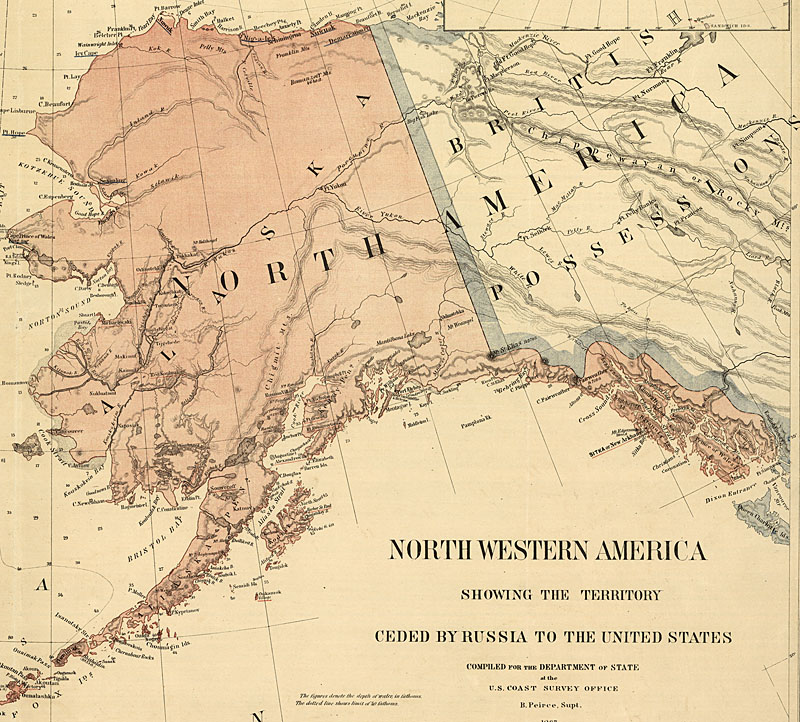
The acquisition of Alaska by the United States from Russia in 1867 remains one of history’s most fascinating real estate deals. Often dubbed “Seward’s Folly” by contemporary critics, this momentous purchase for a mere $7.2 million (approximately $130 million in today’s currency) was initially met with widespread skepticism. Yet, over time, Alaska has proven to be an invaluable asset, not just strategically and economically, but also as a breathtaking testament to nature’s grandeur, drawing millions of visitors seeking unparalleled travel experiences. Its story is a captivating blend of geopolitical foresight, economic necessity, and the enduring human quest for exploration, perfectly aligning with the spirit of modern travel and the discovery of new destinations.
A Cold Bargain: The Genesis of the Alaska Purchase
The mid-19th century was a period of intense global shifts, with empires rising and falling, and new nations asserting their influence. For Russia, its vast North American holdings in Alaska had become a considerable burden, while for the United States, the idea of continental expansion was a powerful, driving force. The convergence of these two distinct perspectives paved the way for a deal that would forever alter the map of North America.
Russia’s Reluctance: Why They Wanted to Sell
For centuries, Russia had maintained a presence in Alaska, primarily through fur trading outposts established by the Russian-American Company. However, by the 1860s, several factors compelled Tsar Alexander II to consider offloading the territory:
- Financial Difficulties Post-Crimean War: Russia had suffered a devastating defeat in the Crimean War (1853-1856), leaving its treasury severely depleted. Selling Alaska offered a much-needed influx of cash, even if the amount was relatively modest in the grand scheme of state finances. The war also exposed the inefficiencies and technological backwardness of the Russian Empire, prompting a period of internal reforms and a desire to consolidate resources.
- Logistical Nightmares and Defense Concerns: Administering and defending such a remote and expansive territory was an immense challenge for Russia. The sheer distance from St. Petersburg, the imperial capital, meant that communication and supply lines were tenuous at best. With a sparsely distributed population and limited military presence, Alaska was highly vulnerable to foreign invasion, particularly from Great Britain, whose growing North American colonies (British Columbia) bordered Russian America. Russia preferred to see the territory in friendly American hands rather than potentially fall to their long-standing rival, the British.
- Declining Resource Profits: The once-booming fur trade, particularly for sea otter pelts, had significantly declined due to overhunting. The Russian-American Company, which effectively governed Alaska, was no longer a profitable venture, exacerbating Russia’s financial woes associated with the territory. Prospecting for other resources hadn’t yielded significant discoveries to offset the decline.
- Focus on Siberian Expansion: Russia was increasingly turning its attention eastward, focusing on the development and colonization of Siberia and its Far Eastern territories. This shift in strategic priorities made holding onto distant and unprofitable Alaska seem less appealing.
Seward’s Strategic Vision: America’s Motivations
On the American side, the drive for expansion was championed by Secretary of State William H. Seward, a visionary politician who firmly believed in the nation’s “Manifest Destiny” – the idea that the United States was destined to expand across the North American continent. Despite emerging from the devastating Civil War, Seward saw the acquisition of Alaska as a crucial step in America’s global ascendancy.
- Manifest Destiny and Continental Expansion: The concept of “Manifest Destiny” had propelled American expansion westward throughout the 19th century, leading to the acquisition of vast territories. Seward viewed Alaska as the final, logical piece in the puzzle of American continental domination, extending its reach all the way to the Arctic and providing a gateway to Asia.
- Geopolitical and Strategic Advantages: Seward recognized Alaska’s immense strategic value. Its location offered potential naval bases in the Pacific Ocean, allowing the United States to project power across the Northern Pacific and into the lucrative Asian markets. It also ensured that Great Britain would not acquire the territory, further solidifying American control over its northern borders. The purchase, therefore, served both defensive and offensive strategic purposes.
- Untapped Resource Potential: While the full extent of Alaska’s natural resources was largely unknown in 1867, Seward had an intuitive belief in its potential. He speculated about the presence of valuable minerals, timber, and abundant fisheries, anticipating a future where these resources would contribute significantly to American wealth. His foresight, initially mocked, would later be spectacularly validated.
- Strengthening US-Russia Ties: The purchase was also seen as a gesture of goodwill towards Russia, which had remained largely friendly to the Union during the Civil War. By relieving Russia of a financial and administrative burden, the United States strengthened a diplomatic relationship that could serve as a counterweight to British influence.
The negotiations were swift and secretive, primarily handled by Seward and the Russian ambassador, Eduard de Stoeckl, culminating in the signing of the treaty in the early hours of March 30, 1867, in Washington D.C..
From “Seward’s Folly” to a Treasure Trove
Despite Seward’s grand vision, the initial reception of the Alaska Purchase was anything but celebratory. Critics derided it as “Seward’s Folly,” “Seward’s Icebox,” and President Andrew Johnson’s “polar bear garden.” Many Americans questioned the wisdom of spending millions on a remote, frozen wasteland. However, history would soon prove the naysayers wrong.
The Immediate Aftermath and Public Skepticism
Following the treaty signing, the United States Senate ratified the agreement, albeit with significant debate. The formal transfer ceremony took place on October 18, 1867, in Sitka, then the capital of Russian America. The Russian flag was lowered, and the American flag was raised, symbolizing the peaceful transition of sovereignty. This historic site in Sitka is today a landmark for visitors interested in the region’s rich past.
For years, Alaska remained largely undeveloped and sparsely populated by non-indigenous settlers. It was initially administered by the military, then as a district, and finally as a territory. The lack of immediate economic returns fueled the public’s skepticism, making it difficult for the federal government to allocate resources for its development. The territory was seen more as a strategic outpost than a place for settlement or tourism.
Unlocking Alaska’s Potential: Gold, Oil, and Statehood
The true value of Alaska began to unfold nearly three decades after its purchase, dramatically changing public perception and sparking unprecedented interest:
- The Klondike Gold Rush (1896-1899): The discovery of gold in the Klondike region of Canada, accessible primarily through Alaska via the Chilkoot Pass and Skagway, ignited one of the greatest gold rushes in history. Thousands of prospectors flocked to the region, creating boomtowns and injecting much-needed capital and infrastructure into Alaska. While much of the gold was found just across the border, Alaska itself also yielded significant discoveries, firmly establishing its reputation as a land of immense natural wealth.
- Vast Resource Discoveries: Beyond gold, Alaska’s vast reserves of other minerals, timber, and particularly oil, were gradually discovered. The discovery of oil at Prudhoe Bay in 1968, leading to the construction of the Trans-Alaska Pipeline System, transformed Alaska’s economy and made it a crucial energy producer for the United States. These resources continue to be a cornerstone of Alaska’s economic output.
- Modern Strategic Importance: In the 20th century, particularly during World War II and the Cold War, Alaska’s strategic importance became undeniable. Its proximity to Asia and Russia made it a vital outpost for defense and surveillance, hosting numerous military bases that continue to play a critical role in national security.
- Statehood: On January 3, 1959, Alaska officially became the 49th state of the United States, a testament to its growth, strategic importance, and the increasing recognition of its unique identity and value.
The legacy of the Alaska Purchase thus evolved from a ridiculed “folly” into one of the most successful diplomatic and economic triumphs in American history, fulfilling Seward’s prescient vision beyond his wildest dreams.
Alaska Today: A World-Class Destination
Today, Alaska is synonymous with wild beauty, adventure, and unspoiled wilderness, making it a dream destination for travelers from around the globe. Its rugged landscapes, abundant wildlife, and vibrant cultural heritage offer a diverse range of experiences, catering to every type of explorer. The original justification for its purchase has been overshadowed by its modern appeal as a premier tourism hotspot.
Experiencing the Last Frontier: Travel and Tourism
Alaska’s unique allure lies in its ability to offer truly unforgettable journeys into the heart of the “Last Frontier.”
- Natural Landmarks and National Parks: The state is home to some of the most iconic natural landmarks and national parks in the United States. Denali National Park and Preserve boasts Mount Denali, North America’s highest peak, offering breathtaking vistas and incredible wildlife viewing opportunities for grizzlies, moose, caribou, and wolves. Glacier Bay National Park and Preserve, a UNESCO World Heritage Site, is famous for its massive tidewater glaciers that calve into the sea, creating dramatic displays. The scenic Inside Passage is a popular route for cruise ships, winding through thousands of islands and fjords, offering glimpses of marine life and lush temperate rainforests. Other notable natural attractions include Kenai Fjords National Park, with its active icefields, and the volcanic landscapes of the Katmai National Park and Preserve, famous for its brown bears.
- Adventure Sports and Activities: For the adventure enthusiast, Alaska is a playground. Popular activities include hiking and backpacking across vast wilderness trails, kayaking or rafting through glacial rivers, fishing for salmon and halibut, and dog sledding – a truly iconic Alaskan experience. Winter sports like skiing, snowboarding, and viewing the spectacular Northern Lights (Aurora Borealis) also draw crowds. Flightseeing tours provide unparalleled aerial views of mountains, glaciers, and remote valleys, showcasing the sheer scale of the landscape.
- Cultural Immersion: Beyond natural beauty, Alaska offers rich cultural experiences. Visitors can learn about the vibrant history and traditions of Native Alaskan communities through art, storytelling, and dance. Cities like Juneau, the state capital, and Anchorage, the largest city, offer museums and cultural centers that delve into the indigenous heritage, the gold rush era, and the territory’s Russian past. Sitka, with its Russian Bishop’s House and St. Michael’s Cathedral, provides a tangible link to the days before American ownership.
Accommodation and Lifestyle: Planning Your Alaskan Adventure
When planning an Alaskan adventure, visitors have a wide array of accommodation options and travel styles to choose from, catering to every budget and preference.
- From Luxury Resorts to Budget-Friendly Stays: For those seeking a luxury travel experience, Alaska offers exquisite wilderness lodges and resorts in remote settings, providing unparalleled comfort amidst stunning natural beauty. These often include gourmet dining, guided excursions, and private suites. In larger cities like Anchorage and Juneau, visitors can find a range of hotels, from international brands offering modern amenities and suites to charming boutique inns. For budget travelers and backpackers, there are hostels, campgrounds, and more affordable motels, particularly outside the peak cruise season.
- Tailoring Your Trip: Diverse Lifestyles: Alaska truly offers something for everyone, regardless of their travel lifestyle.
- Family Trips: Many family vacations opt for cruise ship itineraries, which offer convenient access to coastal towns and glaciers, with activities designed for all ages. Land tours often include wildlife viewing and educational experiences.
- Solo Exploration: For the intrepid solo traveler, Alaska provides endless opportunities for self-discovery through hiking, camping, and wilderness expeditions.
- Luxury and Expedition Cruises: Beyond traditional cruises, expedition cruises offer a more immersive and intimate exploration of remote areas, often with expert naturalists on board.
- Business Stays: Major cities like Anchorage and Fairbanks also cater to business travelers with well-appointed hotels and conference facilities, often blending business with opportunities for local excursions.
- Food Experiences: No trip to Alaska would be complete without indulging in its incredible food scene, particularly its world-renowned fresh seafood. From wild-caught Alaskan salmon, halibut, and crab to locally sourced game meats and berries, the culinary landscape reflects the state’s natural bounty. Many restaurants offer a “tide-to-table” experience, ensuring the freshest ingredients.
From the bustling streets of Anchorage with its diverse attractions and amenities, to the remote serenity of a wilderness lodge overlooking a fjord, Alaska promises a journey of discovery. Its infrastructure for booking accommodations, guided tours, and comparing reviews has evolved to support the growing number of visitors seeking to experience this incredible state.
The purchase of Alaska was far more than a simple land transaction; it was a gamble on an unknown future that paid off in ways no one could have fully foreseen. It transformed the geopolitical landscape of North America, secured vital resources, and ultimately gifted the United States with a region of unparalleled natural beauty and cultural richness. Today, as travelers flock to this magnificent state, they are not just witnessing glaciers and wildlife; they are stepping into a legacy forged by vision, daring, and the enduring allure of the unknown. The “Last Frontier” continues to captivate, offering a constant reminder of the profound impact of that historic bargain.
LifeOutOfTheBox is a participant in the Amazon Services LLC Associates Program, an affiliate advertising program designed to provide a means for sites to earn advertising fees by advertising and linking to Amazon.com. Amazon, the Amazon logo, AmazonSupply, and the AmazonSupply logo are trademarks of Amazon.com, Inc. or its affiliates. As an Amazon Associate we earn affiliate commissions from qualifying purchases.