
The question “Is Alaska in Canada?” is a surprisingly common query that speaks to the unique geographical position of this vast and captivating land. While its isolation from the contiguous United States might suggest an affiliation with its northern neighbor, Alaska is unequivocally a state of the United States of America. Its proximity to Canada, however, imbues it with a distinctive character, creating a fascinating blend of cultures, landscapes, and travel opportunities that straddle two nations. For travelers contemplating an adventure to the “Last Frontier,” understanding this geopolitical reality is not just a matter of trivia; it’s fundamental to planning an unforgettable journey. From the epic drives through Canadian wilderness to the shared ecosystems that define much of the region, the relationship between Alaska and Canada is one of crucial interconnectedness, shaping everything from transportation logistics to wildlife migration patterns. This article aims to clarify Alaska’s identity, explore its intricate travel connections with Canada, and highlight why this U.S. state remains a top-tier destination for adventurers worldwide.

Dispelling the Myth: Alaska’s True Geography
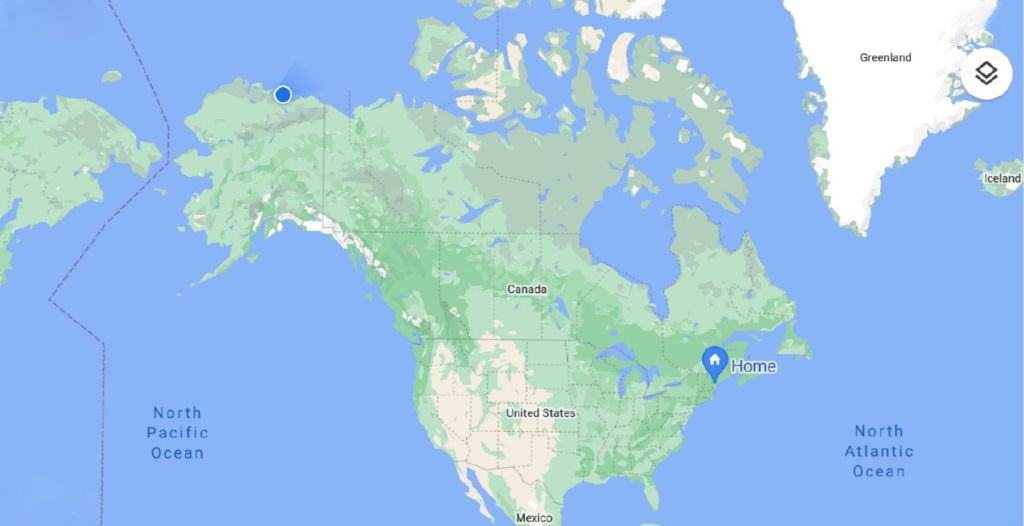
The misconception that Alaska might be part of Canada likely stems from its geographical separation from the rest of the United States. Known as an exclave, Alaska is physically bordered by Canada to the east and south-east, the Arctic Ocean to the north, and the Pacific Ocean to the west and southwest. Across the Bering Strait to the west lies Russia, making Alaska a geopolitical crossroads.
The Historical Context of Russian America
To truly understand Alaska’s place on the map, one must delve into its rich history. Prior to 1867, Alaska was known as Russian America, a vast colonial territory of the Russian Empire primarily exploited for its abundant fur resources. The region, rich in natural beauty and strategic importance, became a point of interest for the burgeoning United States in the mid-19th century. In a landmark transaction that would later be dubbed “Seward’s Folly,” U.S. Secretary of State William Seward negotiated the purchase of Alaska from Russia for $7.2 million, an act signed into law by President Andrew Johnson. This acquisition, initially met with skepticism, proved to be one of the greatest land deals in history, securing an enormous territory rich in minerals, timber, and oil, as well as providing a strategic foothold in the Arctic. It officially became the 49th state of the United States on January 3, 1959.
Bordering Canada: A Unique Geopolitical Landscape
The border between Alaska and Canada is one of the longest international land borders in the world, stretching over 1,500 miles. To the east, Alaska shares a border with the Yukon Territory and British Columbia in Canada. This shared boundary creates a continuous natural environment, fostering unique challenges and opportunities for conservation, resource management, and tourism. The geographic reality means that travel to and from much of Alaska by land often necessitates transiting through Canadian territory, a detail that heavily influences travel planning for visitors. This intertwining of landscapes and cultures makes the border region an area of significant interest for travelers seeking to experience the best of both nations’ wilderness and heritage.
The United States of America’s 49th State
Despite its distinct geography, Alaska functions fully as a U.S. state, complete with its own state government, representation in Congress, and adherence to federal laws. Its capital, Juneau, is unique among U.S. state capitals in that it is only accessible by air or sea, owing to the rugged mountainous terrain of the Alaska Panhandle. Major cities like Anchorage and Fairbanks serve as critical hubs for tourism, commerce, and transportation, connecting the vast wilderness to the modern world. For travelers, understanding Alaska as a U.S. state means familiarity with U.S. currency, customs, and travel regulations, even as the proximity to Canada adds an additional layer of international travel considerations.
Navigating the “Panhandle”: Travel Between Alaska and Canada
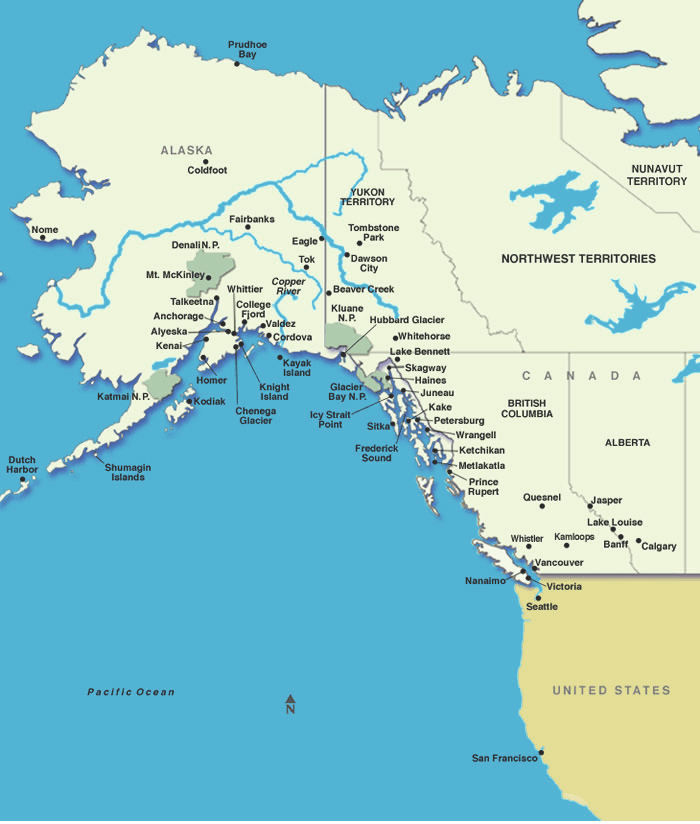
The “panhandle” region of Alaska, officially known as Southeast Alaska, is a narrow strip of land along the coast, wedged between the Pacific Ocean and British Columbia. This geographical feature, along with the sheer vastness of the interior, makes travel between Alaska and Canada a significant aspect of any journey to the north. Travelers often find themselves crossing international borders, whether by land, sea, or air, each mode offering unique perspectives and experiences.
Overland Routes: The Alaska Highway
For those embarking on an epic road trip, the Alaska Highway is the quintessential overland route. Originally constructed during World War II to connect the contiguous United States with Alaska through Canada, this historic thoroughfare spans approximately 1,387 miles (2,232 kilometers). Starting in Dawson Creek, British Columbia, it winds its way through the Yukon Territory, including cities like Whitehorse, before crossing into Alaska near Beaver Creek. This journey is an adventure in itself, offering unparalleled views of pristine wilderness, opportunities for wildlife spotting, and access to charming small towns along the way. Travelers undertaking this route must ensure they have all necessary documentation for crossing the U.S.-Canadian border multiple times.
Marine Journeys: The Inside Passage
The Inside Passage is another iconic route, primarily accessed via cruise ships and the Alaska Marine Highway System (the state’s ferry service). This protected network of waterways winds through thousands of islands and fjords along the coast of British Columbia and Southeast Alaska. Cruise itineraries often embark from Seattle, Vancouver, or Prince Rupert, providing a seamless international journey. Passengers on these voyages experience the majestic beauty of glacial landscapes, abundant marine life, and stops in picturesque Alaskan port towns such as Ketchikan, Juneau, Sitka, and Skagway. This method of travel highlights the deep geographical and environmental connections between Alaska and coastal Canada.
Air Travel: Direct Connections and Gateways
For quicker transit, air travel offers direct connections from major U.S. and Canadian cities to Alaska’s main airports in Anchorage (Ted Stevens Anchorage International Airport) and Fairbanks (Fairbanks International Airport). While most international flights connect through Seattle, Minneapolis, or other major U.S. hubs, there are also seasonal flights from Canadian cities, particularly Vancouver and Calgary, during the peak summer travel season. Air travel significantly reduces transit time, making it ideal for those with limited schedules, though it separates the traveler from the immersive experience of overland or marine journeys.
The Allure of the Last Frontier: What Makes Alaska a Premier Travel Destination
Regardless of its geographical quirks, Alaska stands as a world-class travel destination. Its reputation as the “Last Frontier” is well-earned, promising unparalleled wilderness, vibrant cultures, and adventures unlike anywhere else on Earth. Travelers flock to Alaska seeking to connect with nature on an epic scale and immerse themselves in a land shaped by extremes.
Breathtaking Natural Wonders: Parks and Wildlife
Alaska is home to an astonishing array of natural wonders, many protected within its numerous national parks and wildlife refuges. Denali National Park and Preserve, dominated by Denali (formerly Mount McKinley), the highest peak in North America, offers incredible opportunities for wildlife viewing, from grizzly bears and moose to caribou and wolves. Other iconic parks like Kenai Fjords National Park boast dramatic coastal landscapes, tidewater glaciers, and rich marine ecosystems teeming with whales, seals, and sea otters. The sheer scale and untouched beauty of Alaska’s wilderness provide endless opportunities for hiking, kayaking, fishing, and photography, making it a paradise for outdoor enthusiasts.
Cultural Richness: Indigenous Heritage and Gold Rush History
Beyond its natural splendor, Alaska offers a deep dive into compelling human history and vibrant cultures. The state is rich in indigenous heritage, with numerous Native Alaskan cultures each contributing unique traditions, art forms, and languages. Visitors can explore these rich histories through cultural centers, museums, and village tours, gaining insights into thousands of years of human adaptation to this challenging environment. Additionally, the lure of gold profoundly shaped Alaska’s history, most famously during the Klondike Gold Rush of the late 19th century. Towns like Skagway and Nome preserve this rugged frontier past, offering historical sites, railway journeys, and re-enactments that transport visitors back to the days of prospectors and pioneers.
Unique Activities: From Cruising to Dog Sledding
Alaska’s diverse landscape lends itself to a wide array of unique activities. Cruising the Inside Passage or Prince William Sound remains one of the most popular ways to experience the coastal beauty and glacial majesty. For the more adventurous, opportunities abound for dog sledding (even in summer on glacier tours), flightseeing over rugged mountains, heli-hiking in remote wilderness, and salmon fishing in world-renowned rivers. In winter, the state transforms into a wonderland for skiing, snowmobiling, and perhaps most notably, chasing the ethereal glow of the Northern Lights (Aurora Borealis), particularly around Fairbanks.
Planning Your Alaskan Adventure: Essential Travel Tips
A trip to Alaska requires careful planning, especially given its unique geography and the cross-border considerations if traveling via Canada. Ensuring all logistics are squared away will pave the way for a smooth and enjoyable experience in this vast land.
Best Time to Visit
The peak travel season for Alaska is typically from mid-May to mid-September. During these summer months, the weather is milder, daylight hours are long (sometimes almost 24 hours in the far north), and all attractions and services are fully operational. This is the best time for cruises, hiking, wildlife viewing, and experiencing the lush green landscapes. However, shoulder seasons (late April/early May and late September/early October) can offer fewer crowds, lower prices, and unique experiences like early spring blooms or autumn foliage, though some services might be limited. Winter travel (October to March) is ideal for those seeking winter sports, dog sledding, and the Northern Lights, but requires preparation for extreme cold and limited daylight.
Entry Requirements and Cross-Border Considerations
As Alaska is a U.S. state, U.S. citizens do not need a passport to enter Alaska directly from other U.S. states. However, if your itinerary involves driving through Canada (e.g., via the Alaska Highway) or taking a cruise that departs from a Canadian port, a valid passport is essential for all travelers, regardless of nationality. Non-U.S. citizens will need to meet U.S. entry requirements (e.g., ESTA or visa) and, if transiting Canada, Canadian entry requirements (e.g., eTA or visa). It’s crucial to check the latest travel advisories and border regulations well in advance of your trip.
Accommodation and Logistics
Accommodation options in Alaska range from luxury lodges and hotels in urban centers like Anchorage and Fairbanks, to cozy bed and breakfasts in smaller towns, and rustic cabins or campgrounds in national parks. Given the popularity of the state, especially during summer, booking accommodations, tours, and transportation well in advance is highly recommended. Rental cars are popular for independent exploration, but consider the vast distances and potential for unpaved roads. Internal flights, ferries, and the Alaska Railroad also offer excellent ways to traverse the state, often providing scenic journeys that are attractions in themselves.
In conclusion, the answer to “Is Alaska in Canada?” is a resounding no. Alaska is proudly the 49th state of the United States, a land of unparalleled beauty, rich history, and thrilling adventures. However, its unique geographical relationship with Canada undeniably shapes the travel experience, creating a seamless blend of North American wilderness and culture. Understanding this dynamic is key to unlocking the full potential of an Alaskan journey, allowing travelers to navigate its majestic landscapes and embrace the spirit of the Last Frontier.
LifeOutOfTheBox is a participant in the Amazon Services LLC Associates Program, an affiliate advertising program designed to provide a means for sites to earn advertising fees by advertising and linking to Amazon.com. Amazon, the Amazon logo, AmazonSupply, and the AmazonSupply logo are trademarks of Amazon.com, Inc. or its affiliates. As an Amazon Associate we earn affiliate commissions from qualifying purchases.