
The Boston Massacre, a pivotal event in American history, stands as a stark reminder of the escalating tensions that ultimately ignited the American Revolution. On the frigid evening of March 5, 1770, a confrontation between British soldiers and a crowd of Boston colonists erupted into violence, leaving five people dead. This tragic incident, often depicted as a catalyst for independence, sent shockwaves through the colonies and solidified anti-British sentiment. For travelers exploring the rich tapestry of American history, understanding the full scope of the Boston Massacre is essential, offering a profound glimpse into the sacrifices made and the landmarks that bear witness to a nation’s birth.
This article delves into the circumstances surrounding this defining moment, identifies the individuals who lost their lives, explores the immediate and long-term consequences, and guides visitors on how to experience these historic sites in modern-day Boston. From the cobblestone streets where the shots were fired to the hallowed grounds where the victims rest, the story of the Boston Massacre is an enduring narrative of courage, conflict, and the enduring quest for liberty.
The Fateful Night: Unraveling the Events of March 5, 1770
The events of that cold March evening did not occur in a vacuum. They were the culmination of years of growing resentment, economic grievances, and a simmering hostility between the British Crown and its American colonies, particularly in a rebellious hub like Boston, Massachusetts. Understanding this backdrop is crucial to grasping the volatility of the situation that night.
Tensions Boiling Over in Colonial Boston
By 1770, Boston was a city under occupation. British troops had been quartered there since 1768, largely in response to colonial protests against acts like the Townshend Acts, which imposed duties on goods imported into the colonies. The presence of redcoats, often poorly paid and competing with colonists for odd jobs, fueled daily friction. Soldiers were a visible symbol of British authority, an unwelcome reminder of taxes without representation, and a constant source of irritation for the proud and independent-minded citizens of Boston.
The animosity was palpable. Street brawls between soldiers and civilians were common. Propaganda, spearheaded by figures like Samuel Adams and Paul Revere, consistently painted the British soldiers as aggressors and occupiers. The colonists, for their part, often taunted and harassed the troops, making their presence in the city a living hell. On March 2, 1770, a serious brawl broke out between rope-makers and British soldiers, setting a tense precedent for the days to come. The city was a powder keg, waiting for a spark.
The Spark and the Shots Fired
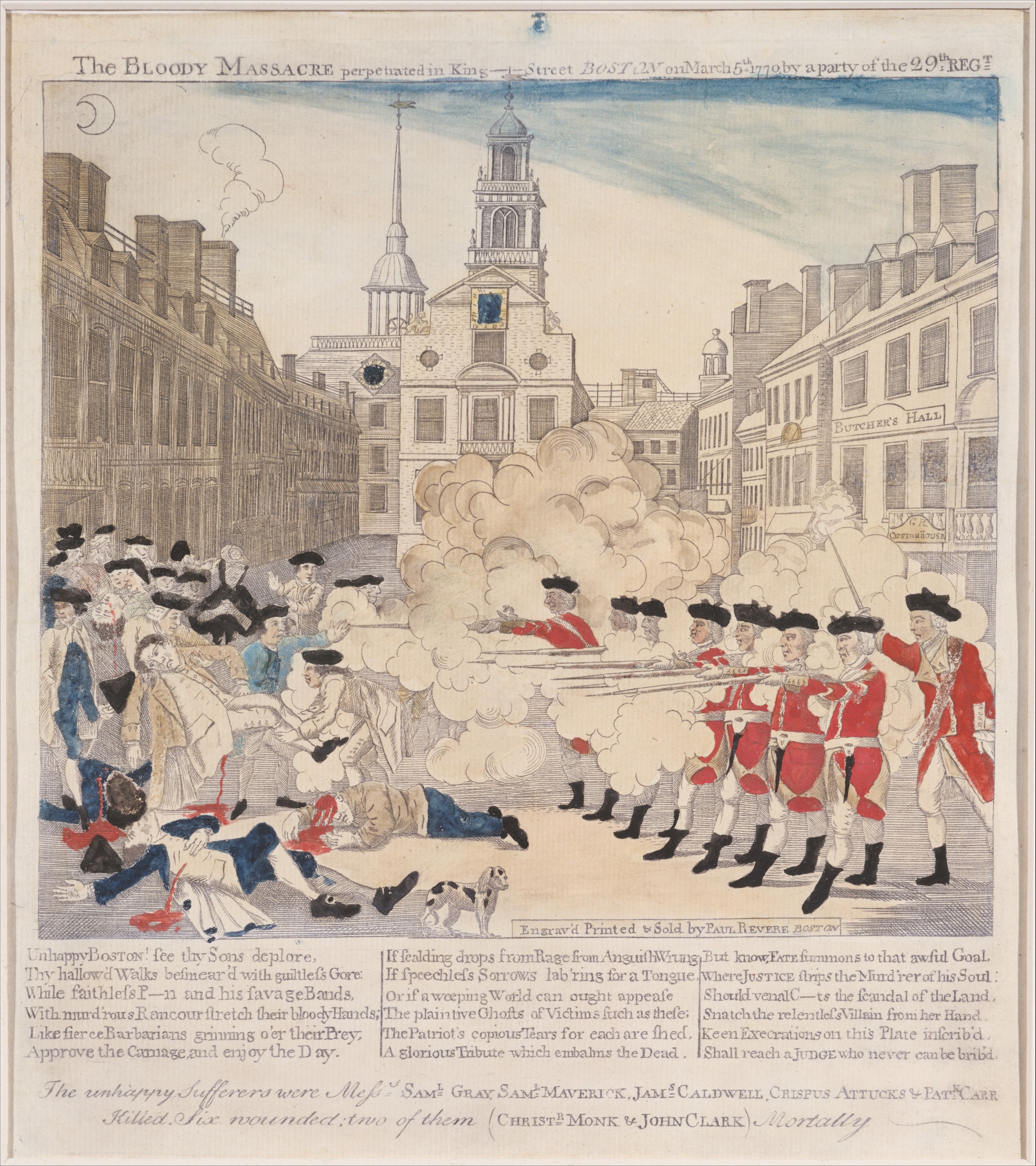
The fateful evening began innocently enough, with a lone British sentry, Private Hugh White, standing guard outside the Custom House on King Street (now State Street). A young wigmaker’s apprentice, Edward Garrick, allegedly insulted a British officer, prompting Private White to strike him with his musket. This incident quickly drew a crowd, which grew larger and more agitated. The colonists began to throw snowballs, ice, and other debris at White, shouting insults and dares.
Alarmed, White called for reinforcements. Captain Thomas Preston arrived with seven other soldiers, forming a semicircle in front of the Custom House to protect White and the building. The crowd, now numbering in the hundreds, surged forward, pressing close to the soldiers. They yelled “Fire!” and “Damn you, you dare not fire!” The chaos intensified, with bells ringing throughout the city, drawing even more people into the fray.

Amidst the cacophony, a soldier was struck by a projectile and fell. Whether intentionally or accidentally, a shot was fired. This single shot triggered a volley from the other soldiers. In the ensuing panic and confusion, shots rang out, tearing through the crowd. When the smoke cleared, several colonists lay dead or mortally wounded on the cobblestone street. The scene was gruesome, transforming a tense standoff into a bloody massacre and forever altering the course of American history.
The Victims of the Boston Massacre: Who Were They?
The direct answer to the question “How many people were killed in the Boston Massacre?” is five. These individuals, hailing from various walks of colonial life, became instant martyrs for the Patriot cause, their deaths igniting a firestorm of protest and galvanizing colonial resistance against British rule. Their names, though perhaps lesser known than the famous figures of the revolution, are etched into the foundations of American liberty.
The five men who died that night were:
-
Crispus Attucks: A runaway slave and seaman of African and Native American descent, Attucks is widely regarded as the first casualty of the Boston Massacre and, by extension, the American Revolution. He was struck by two musket balls in the chest and instantly killed. His presence at the front of the crowd challenged societal norms and made him a powerful symbol of colonial unity against oppression.
-
James Caldwell: A young sailor, Caldwell was also killed outright. Like many other victims, he was part of the working-class community that bore the brunt of British economic policies and military presence.
-
Patrick Carr: An Irish immigrant and leather breeches maker, Carr was mortally wounded, shot in the hip. He lingered for several days before succumbing to his injuries on March 14, becoming the fifth and final casualty. His death further highlighted the human cost of the conflict.
-
Samuel Gray: A rope maker, Gray was shot in the head and died on the spot. His occupation was particularly significant, given the prior brawl between rope makers and British soldiers just days before the massacre, adding to the narrative of targeted violence.
-
Samuel Maverick: A 17-year-old apprentice ivory turner, Maverick was struck by a bullet that ricocheted off a wall, piercing his abdomen. He died the following morning. His youth underscored the indiscriminate nature of the violence and the tragic loss of potential.
These five individuals became powerful symbols in the burgeoning revolutionary movement. Their funerals were massive public events, demonstrating the widespread outrage and grief throughout Boston and beyond. Their deaths cemented the Boston Massacre in colonial consciousness as a brutal act of tyranny, fanning the flames of rebellion.
The Aftermath and Its Revolutionary Echoes
The immediate aftermath of the Boston Massacre was a mix of outrage, fear, and a desperate attempt to restore order. The long-term effects, however, were far more profound, shaping public opinion and pushing the colonies inexorably towards armed conflict with Great Britain.
The Trials and John Adams’s Defense
In the immediate wake of the shootings, the British soldiers involved, including Captain Thomas Preston and eight of his men, were arrested and charged with murder. The trial that followed was one of the most significant legal events in colonial America. Surprisingly, it was a staunch Patriot and future president, John Adams, who stepped forward to defend the soldiers. His decision was controversial among his fellow colonists, but Adams believed fiercely in the principle of a fair trial and due process, even for those universally despised.
Adams, alongside Josiah Quincy II, argued that the soldiers had acted in self-defense, provoked by an unruly and threatening mob. He famously stated, “Facts are stubborn things; and whatever may be our wishes, our inclinations, or the dictums of our passions, they cannot alter the state of facts and evidence.” After a meticulous and lengthy trial, Captain Preston and six of the soldiers were acquitted. Two soldiers, Hugh Montgomery and Matthew Kilroy, were found guilty of manslaughter, branded on their thumbs, and then released. The outcome, while demonstrating the colonists’ commitment to justice, did little to soothe the underlying animosity.
Propaganda and the Road to Independence
While the trials sought legal closure, the political and emotional fallout continued to escalate. The Boston Massacre quickly became a powerful tool for Patriot propagandists. The most iconic example is Paul Revere’s famous engraving, “The Bloody Massacre in King Street March 5th 1770 by the British troops.” This image, widely circulated throughout the colonies, dramatically depicted British soldiers firing in a coordinated volley upon an innocent, unarmed crowd, with Captain Preston clearly ordering them to fire.
Despite its historical inaccuracies – it exaggerated the soldiers’ aggression and omitted the colonial mob’s instigation – Revere’s engraving was incredibly effective. It served as a rallying cry, illustrating what many colonists believed to be the tyranny of British rule and the inherent dangers of a standing army in peacetime. The narrative of British brutality versus American innocence solidified in the colonial mind. The annual commemoration of the massacre became an occasion for fiery speeches denouncing British policies, keeping the memory alive and fueling revolutionary fervor. The events of March 5, 1770, profoundly impacted public opinion, accelerating the colonies’ move towards a complete break from Great Britain and culminating in the American Revolution just five years later.
Visiting the Historic Sites: Experiencing the Boston Massacre Today
For history enthusiasts and casual travelers alike, Boston offers an unparalleled opportunity to step back in time and connect with the events of the Boston Massacre. As one of America’s most historically significant cities, Boston has preserved numerous landmarks that allow visitors to trace the path of revolution, making it a premier destination for cultural tourism and historical exploration.
Walking the Freedom Trail
The most engaging way to experience the sites connected to the Boston Massacre is by walking the Freedom Trail. This 2.5-mile red-lined path through downtown Boston connects 16 historically significant sites, many of which played a direct role in the lead-up to the massacre and its aftermath.
- The Old State House: This iconic landmark is arguably the most crucial stop. The Boston Massacre occurred directly in front of this building, which served as the seat of British colonial government. A cobblestone circle on the ground marks the precise location where the first shots were fired. Inside, you can find exhibits detailing the event and offering a panoramic view from the balcony, imagining the scene below.
- Faneuil Hall: Known as the “Cradle of Liberty,” this marketplace and meeting hall was where colonists gathered to debate, protest, and plan. It was here that Samuel Adams and others stirred revolutionary sentiment, laying the groundwork for events like the massacre.
- Boston Common: While not directly the site of the massacre, this historic park was where British troops often encamped, highlighting the military presence that caused so much tension.
- Granary Burying Ground: The final resting place for the victims of the Boston Massacre, alongside other prominent figures like John Hancock, Samuel Adams, and Paul Revere. A visit here offers a moment of solemn reflection on the sacrifices made for American independence.
Immerse Yourself in Colonial History
Beyond the specific massacre sites, Boston offers a comprehensive historical experience. Consider joining a guided walking tour along the Freedom Trail; expert guides often bring the stories to life with vivid narratives and fascinating anecdotes. Many of these tours focus specifically on the Boston Massacre, offering deeper insights into the characters and controversies.
For those interested in local culture and food, explore the historic North End, where you can dine in restaurants that have stood for centuries, or visit museums like the Museum of Fine Arts or the Boston Tea Party Ships & Museum to round out your understanding of colonial life. Accommodation options in Boston range from luxurious historic hotels to charming boutique inns, ensuring a comfortable stay while you delve into the city’s past. Whether you’re a history buff or simply seeking a unique travel experience, a visit to Boston provides an invaluable opportunity to connect with the very foundations of the United States and understand the true cost of liberty.
In conclusion, the Boston Massacre resulted in the tragic deaths of five individuals, a moment of violence that served as a profound turning point in colonial America. Their sacrifice, the trials that followed, and the enduring propaganda fueled the flames of revolution, leaving an indelible mark on history. Today, Boston stands as a living museum, inviting visitors to walk in the footsteps of those who shaped a nation, offering a powerful reminder that freedom often comes at a steep price.
LifeOutOfTheBox is a participant in the Amazon Services LLC Associates Program, an affiliate advertising program designed to provide a means for sites to earn advertising fees by advertising and linking to Amazon.com. Amazon, the Amazon logo, AmazonSupply, and the AmazonSupply logo are trademarks of Amazon.com, Inc. or its affiliates. As an Amazon Associate we earn affiliate commissions from qualifying purchases.