
Navigating California’s Strict Firearm Landscape
Understanding the legality of a pistol grip in [California] first requires a grasp of the state’s overarching firearm philosophy, which is among the most restrictive in the [United States]. The core intent of many [California] firearm laws is to regulate features that the state legislature deems contribute to “assault weapons” or enhance a firearm’s rapid-fire capability. This legislative approach has led to a highly technical and often perplexing set of rules, where minute details about a firearm’s components can determine its legality.
The Definition of an “Assault Weapon” in California
At the heart of the pistol grip debate is [California]’s definition of an “assault weapon.” For semi-automatic centerfire rifles, the presence of certain “evil features” combined with a detachable magazine is typically what triggers an “assault weapon” classification. A standard [pistol grip] that protrudes conspicuously beneath the action of the weapon is unequivocally listed as one of these “evil features.” Other features include a thumbhole stock, a telescoping or folding stock, a flash suppressor, a grenade launcher, and a forward vertical grip. If a semi-automatic centerfire rifle has a detachable magazine and any of these features, it is generally considered an “assault weapon” under [California] law and is illegal to acquire or possess unless it was registered as such during specific windows in the past. This stringent definition forces manufacturers and owners to either reconfigure their firearms to be “featureless” or adopt fixed-magazine systems to maintain legality.
Key Legislative Milestones and Their Impact
[California]’s journey toward its current firearm regulatory environment began significantly with the [Roberti-Roos Assault Weapons Control Act] of 1989. This landmark legislation was one of the first in the nation to ban specific firearms by name. Over the years, this act has been amended and expanded, moving from named bans to feature-based bans, and then to a complex interplay of both. Subsequent amendments have continually refined the definition of an “assault weapon,” often in response to technological advancements in firearm design and attempts by gun owners to comply while maintaining functionality. The most recent major shifts occurred around 2017, where many previously compliant “bullet button” equipped firearms were reclassified, forcing owners to register them as “assault weapons” or modify them further. These legislative milestones demonstrate a consistent effort by [California] lawmakers to control the types of firearms and their configurations available to civilians, profoundly impacting the “lifestyle” of firearm enthusiasts in the state.The Pistol Grip Predicament: Featureless vs. Fixed Magazine
Given that a standard pistol grip is an “evil feature” on a semi-automatic centerfire rifle with a detachable magazine, firearm owners in [California] have largely adopted two primary strategies to legally possess such rifles: converting them into “featureless” firearms or implementing “fixed magazine” systems. Each approach alters the rifle’s design and functionality, allowing it to bypass the “assault weapon” classification, thereby enabling the legal ownership of semi-automatic rifles within the state.
Understanding “Featureless” Configurations
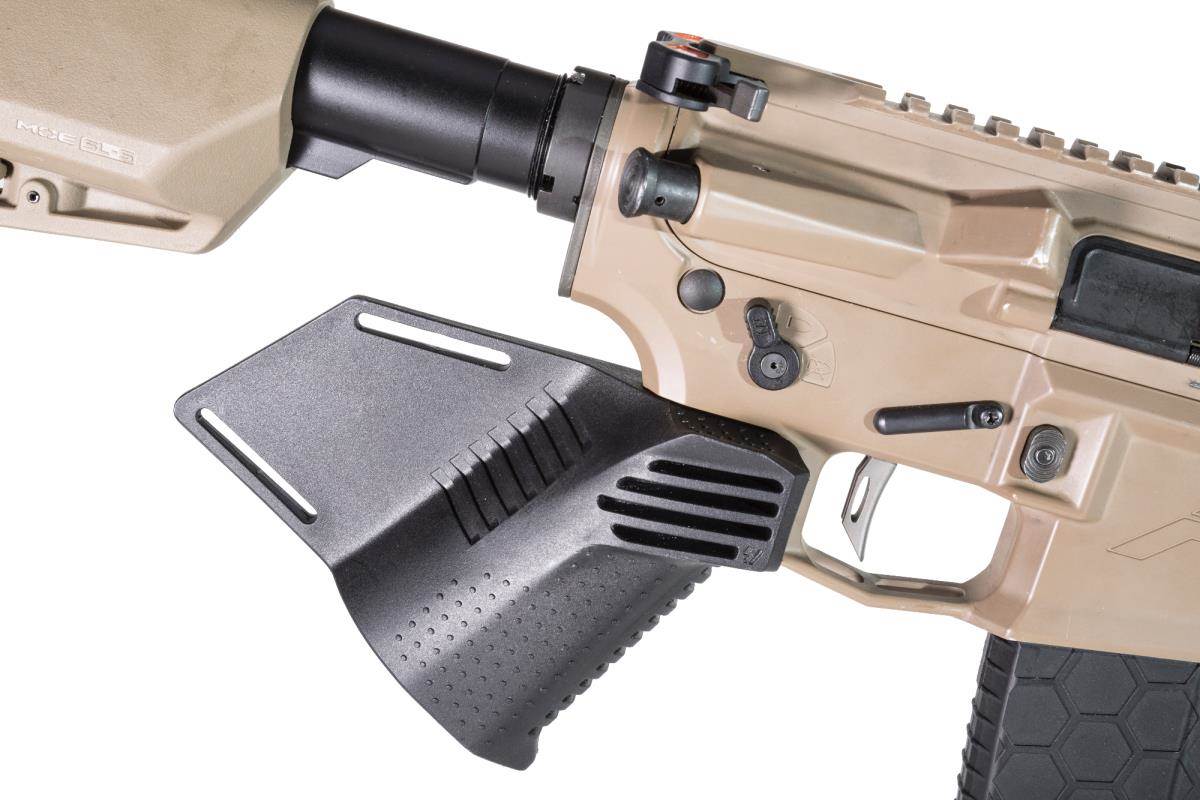
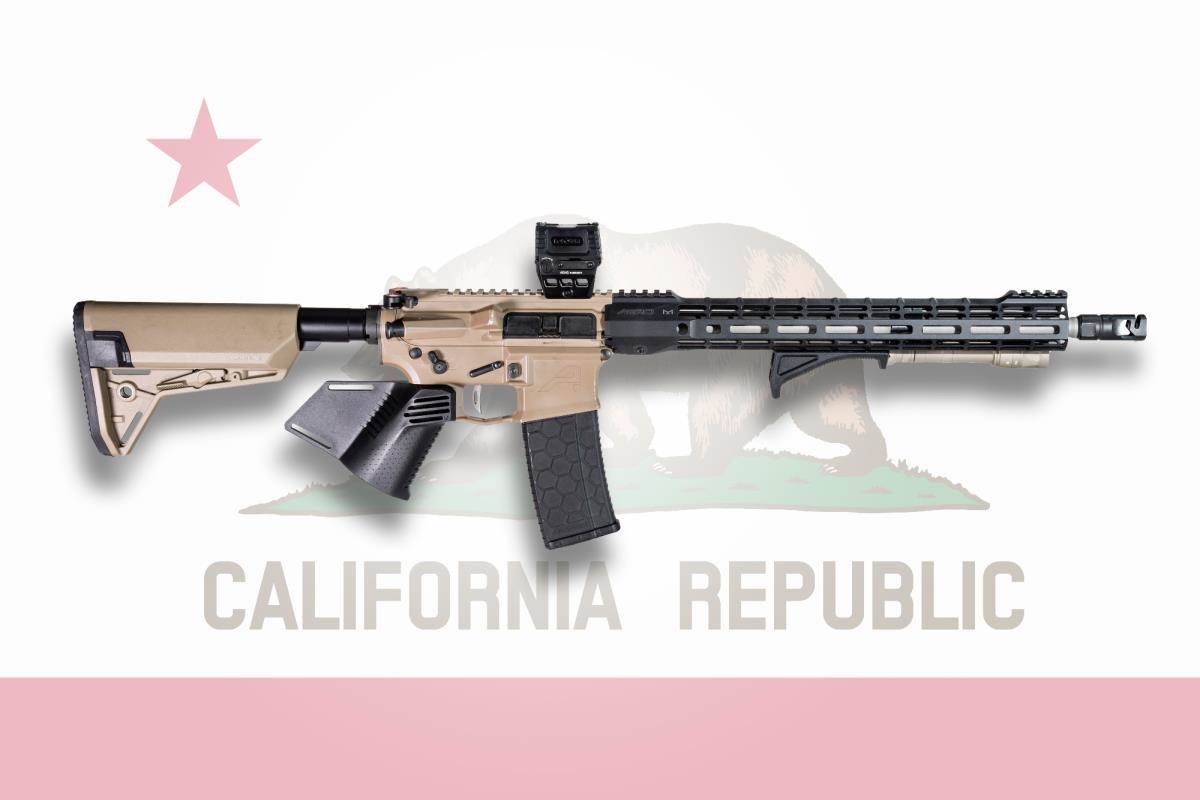
A “featureless” rifle is designed to avoid all the “evil features” enumerated in [California]’s assault weapon statutes while retaining a detachable magazine. For the pistol grip, this means replacing it with a compliant grip that does not allow for a “pistol style grasp” in which the web of the shooting hand can be placed below the top of the exposed trigger. Common “featureless” grip solutions include:
- Fin Grips: These are typically solid pieces of material attached to the rear of the receiver, separating the thumb from the rest of the fingers when gripping the rifle, preventing a traditional pistol grip.
- Thordsen Customs FRS-15 Stock: This is an integrated stock and grip system that creates a rifle-like grasp, positioning the hand above the trigger and eliminating the pistol grip feature.
- Sparrow Dynamics Grips: These grips are designed to mimic a traditional rifle grip angle but are shaped to prevent the thumb from wrapping around, thus avoiding the “pistol style grasp.”
By adopting one of these alternatives, owners can legally possess semi-automatic rifles with detachable magazines, providing a practical solution for maintaining some level of functionality while complying with state law. The “featureless” route often sacrifices some ergonomic comfort and traditional rifle aesthetics for legality.
The Role of Fixed Magazine Systems
The second primary method for legally owning semi-automatic centerfire rifles with a pistol grip in [California] involves using a “fixed magazine” system. A fixed magazine is defined as an ammunition feeding device contained in, or permanently attached to, a firearm in such a way that it cannot be removed without disassembly of the firearm’s action, or that it cannot be removed and that it has a capacity of no more than 10 rounds. If a rifle uses a fixed magazine system, it is generally exempt from the “evil feature” restrictions, meaning it can legally possess a pistol grip, along with other features like a flash suppressor or an adjustable stock.
Prominent fixed magazine solutions include:
- Maglock/Kingpin Systems: Devices like the [Maglock] and Kingpin system prevent the magazine from being released until the upper and lower receivers are partially separated (i.e., the action is “disassembled”). This allows the rifle to retain all “evil features,” including a pistol grip, as it no longer has a “detachable magazine” in the eyes of the law.
- Juggernaut Tactical Hellfighter: This system is another popular fixed magazine solution that incorporates a rear takedown pin replacement and a fixed magazine latch, allowing for rapid separation of the receivers to facilitate magazine changes.
Fixed magazine systems allow owners to retain the traditional ergonomics and features of a standard semi-automatic rifle, including a pistol grip. However, they introduce a slower, two-step magazine change process, which significantly impacts the rifle’s operational speed and ease of use compared to a freely detachable magazine. This trade-off is a common aspect of the [California] firearm ownership lifestyle.

Handguns and Pistol Grips: A Different Set of Rules
While the discussion of pistol grips often centers on rifles, it’s also important to understand how they pertain to handguns in [California]. The regulations for handguns are distinct and operate under a separate set of rules, primarily concerning the “handgun roster” and specific “assault pistol” definitions. In general, a standard pistol grip is an inherent feature of most handguns and is not, by itself, a prohibited “evil feature” in the same way it is for rifles.
California’s Roster of Approved Handguns
One of the most significant aspects of handgun ownership in [California] is the “Roster of Certified Handguns.” With very few exceptions (such as private party transfers, certain law enforcement acquisitions, or single-shot exemptions), any new handgun sold by a licensed dealer in [California] must be listed on this roster. To be included on the roster, handguns must pass specific safety tests and incorporate certain features, including a loaded chamber indicator, a magazine disconnect mechanism, and, for semi-automatic pistols, microstamping capability.
The vast majority of handguns on this roster naturally feature a pistol grip as part of their design. The legality of a pistol grip on a handgun is thus typically determined by whether the entire handgun model is approved for sale in [California], rather than the grip itself being an isolated problematic feature. This means that if you are purchasing a handgun from a licensed dealer, and it’s on the roster, its pistol grip is inherently legal as part of that approved configuration.
“Assault Pistol” Regulations
Despite the general legality of pistol grips on rostered handguns, handguns can still be classified as “assault pistols” in [California] if they possess certain combinations of features. These features are different from those for rifles and often include:
- Threaded Barrel: A barrel capable of accepting a flash suppressor, forward handgrip, or silencer.
- Second Handgrip: The ability to accept a second handgrip.
- Barrel Shroud: A device attached to the barrel designed to allow the shooter to hold the firearm without being burned.
- Magazine Outside Pistol Grip: A semi-automatic pistol with a fixed magazine that has the capacity to accept more than 10 rounds, and is not contained in the pistol grip.
- Unserialized Frame: Certain types of pistols may be deemed “assault pistols” if they lack a serial number or are homemade in specific configurations.
It’s critical to note that for handguns, it’s usually the combination of other features with a semi-automatic action and detachable magazine (or certain fixed magazine configurations) that leads to an “assault pistol” classification, not just the presence of a standard pistol grip. For instance, a common Glock with a standard pistol grip is perfectly legal if it meets roster requirements (or is acquired via a private party transfer from a [California] resident). However, adding a threaded barrel and a forward vertical grip could render it an illegal “assault pistol.”
Legal Considerations and Best Practices for Owners
The dynamic and intricate nature of [California]’s firearm laws means that responsible ownership demands constant vigilance and a proactive approach to compliance. For anyone engaging in the firearm ownership lifestyle in [California], understanding these best practices is not merely advisable, but essential to avoid severe legal repercussions.
Staying Compliant: The Importance of Due Diligence
Given the frequent amendments and detailed interpretations of [California] firearm statutes, relying solely on outdated information or casual advice can be perilous. What was legal last year might not be legal today, and seemingly minor modifications can inadvertently turn a legal firearm into an illegal “assault weapon.” Therefore, thorough due diligence is paramount.
- Consult Legal Professionals: For specific questions about your firearm’s configuration or legality, especially concerning modifications or new acquisitions, consulting an attorney specializing in [California] firearm law is the safest course of action. They can provide personalized advice based on the most current interpretations of the law.
- Engage with Licensed FFLs (Federal Firearm Licensees): Reputable FFLs in [California] are generally well-versed in state and federal firearm laws. They can often provide guidance on compliant firearms and accessories, and their expertise is invaluable for purchases and transfers.
- Stay Informed through Official Channels: Regularly check resources from the California Department of Justice and other official state legislative updates. While often dense, these are the authoritative sources for legal changes.
- Document Everything: Keep records of firearm purchases, modifications, and any legal advice received. This documentation can be crucial if questions about your firearm’s compliance ever arise.
The penalties for non-compliance with [California]’s “assault weapon” laws are severe, often involving felony charges, significant fines, and potential imprisonment. The state takes these laws very seriously, making proactive compliance a non-negotiable aspect of firearm ownership here.
A Note on Transportation and Storage
Beyond ownership, the lifestyle of a firearm owner in [California] also requires strict adherence to regulations concerning transportation and storage, even for legally owned firearms.
- Transportation: When transporting a handgun, it must be unloaded and carried in a locked container, separate from ammunition, and not readily accessible to the driver or passengers. Rifles and shotguns must also be unloaded during transport. In certain urban areas, even unloaded rifles must be transported in a locked container. These rules apply whether you’re traveling to a shooting range, hunting grounds, or simply moving residences within [California].
- Storage: Firearms must be stored securely to prevent access by unauthorized individuals, especially minors. This typically means using a locked safe or a lockbox. Negligent storage resulting in harm can lead to criminal charges.
These transportation and storage laws are designed to enhance public safety and are an integral part of the responsible firearm ownership framework in [California]. Ignoring them, even with legally compliant firearms, can lead to serious legal consequences.
In conclusion, owning a pistol grip in [California] is indeed possible, but it comes with a labyrinth of conditions and caveats that demand careful attention. For semi-automatic centerfire rifles, the legality hinges on whether the rifle is configured as “featureless” (without a traditional pistol grip and other “evil features” but with a detachable magazine) or employs a “fixed magazine” system (allowing for a pistol grip and other features, but with a restricted magazine removal process). For handguns, a pistol grip is generally legal as an inherent part of the firearm, provided the handgun itself is on the state’s approved roster or acquired legally through other specific means, and does not fall under the definition of an “assault pistol” due to a combination of other prohibited features. Navigating these laws is a critical aspect of the firearm ownership lifestyle in [California], requiring ongoing education, meticulous adherence to regulations, and often, professional guidance to ensure full compliance.
LifeOutOfTheBox is a participant in the Amazon Services LLC Associates Program, an affiliate advertising program designed to provide a means for sites to earn advertising fees by advertising and linking to Amazon.com. Amazon, the Amazon logo, AmazonSupply, and the AmazonSupply logo are trademarks of Amazon.com, Inc. or its affiliates. As an Amazon Associate we earn affiliate commissions from qualifying purchases.