
In the dynamic landscape of modern life, maintaining a balanced lifestyle can often feel like a juggling act. Between career aspirations, personal well-being, and family responsibilities, unexpected life events can easily tip the scales, creating stress and uncertainty. This is where crucial legal protections like the Family Medical Leave Act (FMLA) come into play, especially for those living and working in California. Far from being a mere bureaucratic formality, understanding and utilizing FMLA is a vital component of a resilient lifestyle, empowering individuals to navigate significant family or medical challenges without sacrificing their professional standing or financial stability.
The ability to take job-protected leave for personal illness, to care for a sick family member, or to welcome a new child is fundamental to modern work-life balance. It allows individuals to prioritize critical life events, ensuring their well-being and that of their families, thereby fostering a more sustainable and humane approach to professional engagement. In California, these protections are often enhanced by state-specific laws, creating a robust framework for employees seeking temporary reprieve from work. This comprehensive guide will demystify the FMLA application process in the Golden State, framing it within the broader context of maintaining a healthy and supported lifestyle.
Understanding FMLA in California: An Anchor for Your Lifestyle
The Family Medical Leave Act (FMLA) is a federal law that provides eligible employees with up to 12 workweeks of unpaid, job-protected leave in a 12-month period for specific family and medical reasons. For those in military families, it also offers up to 26 workweeks for certain military exigencies. This invaluable safety net ensures that individuals can address serious personal or family health conditions, or welcome new additions to their family, without the fear of losing their job. In a society that often demands relentless dedication to one’s career, FMLA serves as a critical anchor, allowing you to prioritize the foundational elements of your lifestyle – health and family – when they need you most.
What is FMLA and Why It Matters for Your Lifestyle
At its core, FMLA is about protecting your employment while you attend to urgent personal or family matters. Imagine facing a serious illness or the birth of a child; without FMLA, you might have to choose between your job and your responsibilities. This choice can be devastating, impacting not just your immediate finances but also your long-term career trajectory and overall quality of life. By guaranteeing job protection, FMLA alleviates much of this pressure, enabling you to focus on recovery, bonding with a new family member, or providing care to a loved one. This ability to temporarily step away and return to the same or an equivalent position is essential for maintaining career stability and, by extension, a consistent lifestyle during life’s most challenging or joyous moments. It allows for intentional “family trips” or periods of intensive caregiving without the added burden of employment insecurity.
Eligibility Requirements: Who Qualifies for This Essential Support?
To be eligible for FMLA leave, both the employer and the employee must meet specific criteria. Understanding these is the first step in determining if this support is available to you.
Employer Eligibility:
- Private-sector employers who employ 50 or more employees within a 75-mile radius for at least 20 workweeks in the current or preceding calendar year.
- Public agencies (local, state, federal) regardless of the number of employees.
- Public or private elementary and secondary schools, regardless of the number of employees.
Employee Eligibility:
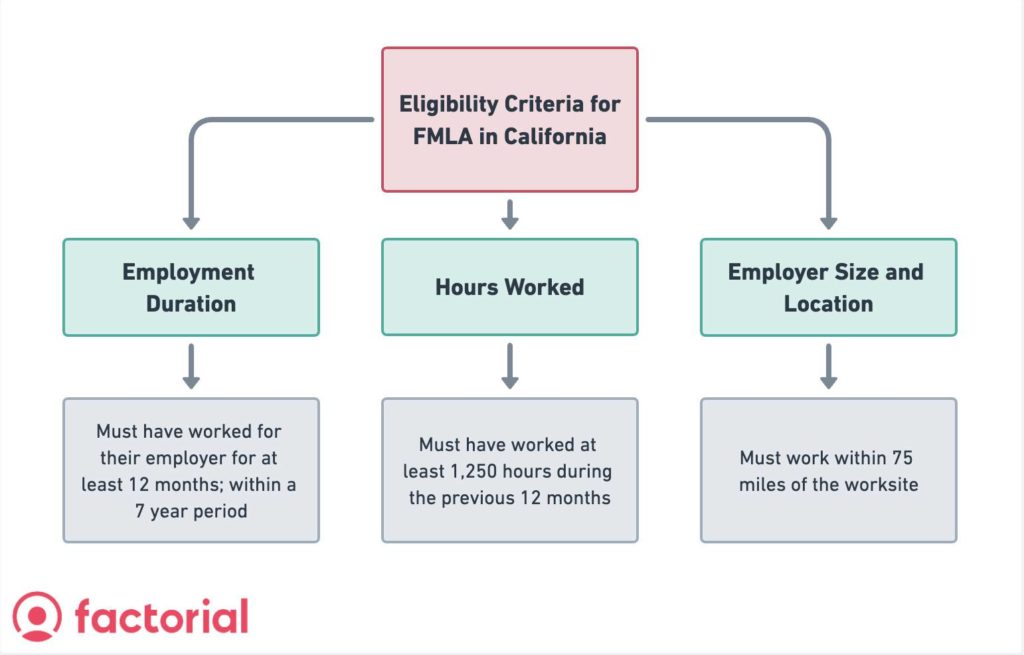
- Must have worked for the employer for at least 12 months (these 12 months do not have to be consecutive).
- Must have worked at least 1,250 hours during the 12-month period immediately preceding the start of the leave.
- Must work at a location where the employer has at least 50 employees within 75 miles.
Meeting these requirements ensures that when life calls for a pause, your job security is preserved, allowing you to manage your personal circumstances with greater peace of mind.
Covered Reasons for Leave: Protecting Your Family Lifestyle During Key Moments
FMLA grants leave for a finite set of qualifying reasons, all of which represent significant life events that demand attention and adjustment to one’s daily routine. These include:
- Birth of a Child and Care for the Newborn: Both parents are eligible for leave to bond with a new child, which must be taken within one year of the child’s birth. This is crucial for establishing early family bonds and adjusting to new “family lifestyles.”
- Placement of a Child for Adoption or Foster Care: Similar to birth, leave is provided to bond with a newly placed child, also within one year of placement.
- To Care for a Spouse, Child, or Parent with a Serious Health Condition: This covers situations where a family member requires substantial medical care, enabling you to provide essential support.
- For the Employee’s Own Serious Health Condition: If you are unable to perform the essential functions of your job due to a serious health condition, FMLA protects your time off for recovery.
- Military Family Leave: This category is split into two types:
- Qualifying Exigency Leave: Up to 12 workweeks for certain exigencies arising from a spouse, son, daughter, or parent being a covered military member on active duty or called to active duty status.
- Military Caregiver Leave: Up to 26 workweeks in a single 12-month period to care for a covered servicemember with a serious injury or illness if the employee is the servicemember’s spouse, son, daughter, parent, or next of kin.
These provisions collectively form a robust framework, allowing individuals to tend to critical family and personal health matters without compromising their career, thereby supporting a holistic and humane lifestyle.
The Application Process: Proactive Steps for California Families
Applying for FMLA leave, while a right, is also a process that requires diligence and communication. Being proactive and informed can significantly smooth the transition, ensuring you maximize the benefits without unnecessary stress or complications. Thinking of it as a meticulously planned ‘life trip’ rather than an unplanned detour can help frame the necessary steps.
Notifying Your Employer: The First Step Towards Work-Life Balance
The cornerstone of a successful FMLA application is timely and appropriate notification to your employer. While it may feel daunting to disclose personal information, this is a necessary step to activate your protections.
- Foreseeable Leave: If your need for leave is foreseeable (e.g., scheduled surgery, birth of a child, planned adoption), you must provide your employer with at least 30 days’ advance notice. This allows your employer time to plan for your absence and helps you arrange your own affairs, ensuring a smoother lifestyle transition.
- Unforeseeable Leave: If the need for leave is unexpected, you must provide notice as soon as practicable. This generally means within one or two business days of learning of the need for leave.
- Communication: While you don’t always need to explicitly state “FMLA,” you must provide enough information for your employer to understand that your leave is for a covered FMLA reason. Be clear about the reason for your absence, the anticipated duration, and when you expect to return. This open communication is crucial for maintaining professional relationships and securing your work-life balance.
Required Documentation: Building Your Case for Leave
After you provide notice, your employer will typically require documentation to certify your need for FMLA leave. This usually involves medical certifications or other official documents.
- Medical Certification: For leaves related to a serious health condition (your own or a family member’s), your employer will ask for a medical certification form to be completed by a healthcare provider. This form typically asks for the date the serious health condition began, its probable duration, and relevant medical facts. It’s crucial to ensure this is completed accurately and returned within the timeframe requested by your employer (usually 15 calendar days).
- Birth or Placement Documentation: For the birth of a child, a birth certificate or other official document may be requested. For adoption or foster care placement, court documents or other relevant legal papers will likely be needed.
- Military Exigency Documentation: For military family leave, employers may request documentation verifying the covered military member’s active duty status or call to active duty, and evidence of the qualifying exigency.
Providing accurate and complete documentation promptly is essential for your FMLA leave to be designated and protected. It demonstrates your adherence to the process and strengthens your case for receiving this critical lifestyle support.
Employer Responsibilities and Your Rights
Once you’ve initiated the process, your employer has specific responsibilities under FMLA:
- Designation Notice: Within five business days of receiving enough information to determine that the leave is FMLA-qualifying, your employer must notify you of the designation. This notice must include specific information about your rights and responsibilities.
- Rights and Responsibilities Notice: Your employer must provide a general notice of FMLA rights, often included in employee handbooks or posted in the workplace.
- Job Protection: Upon return from FMLA leave, you must be reinstated to your original job or an equivalent position with equivalent pay, benefits, and other terms and conditions of employment.
- Health Benefits: During FMLA leave, your employer must maintain your group health insurance coverage under the same conditions as if you had not taken leave.
Understanding these rights empowers you to confidently navigate your leave, knowing your professional future is protected, allowing you to fully engage in the personal aspects of your lifestyle journey.
California’s Unique Lifestyle Protections: Beyond Federal FMLA
California is renowned for its progressive employee protections, and family and medical leave are no exception. Beyond the federal FMLA, California offers additional or expanded rights that can significantly enhance your ability to maintain a balanced lifestyle during critical times. These state laws often provide broader coverage or additional benefits, cementing California’s commitment to supporting its residents’ well-being.
California Family Rights Act (CFRA): Expanding Your Leave Options
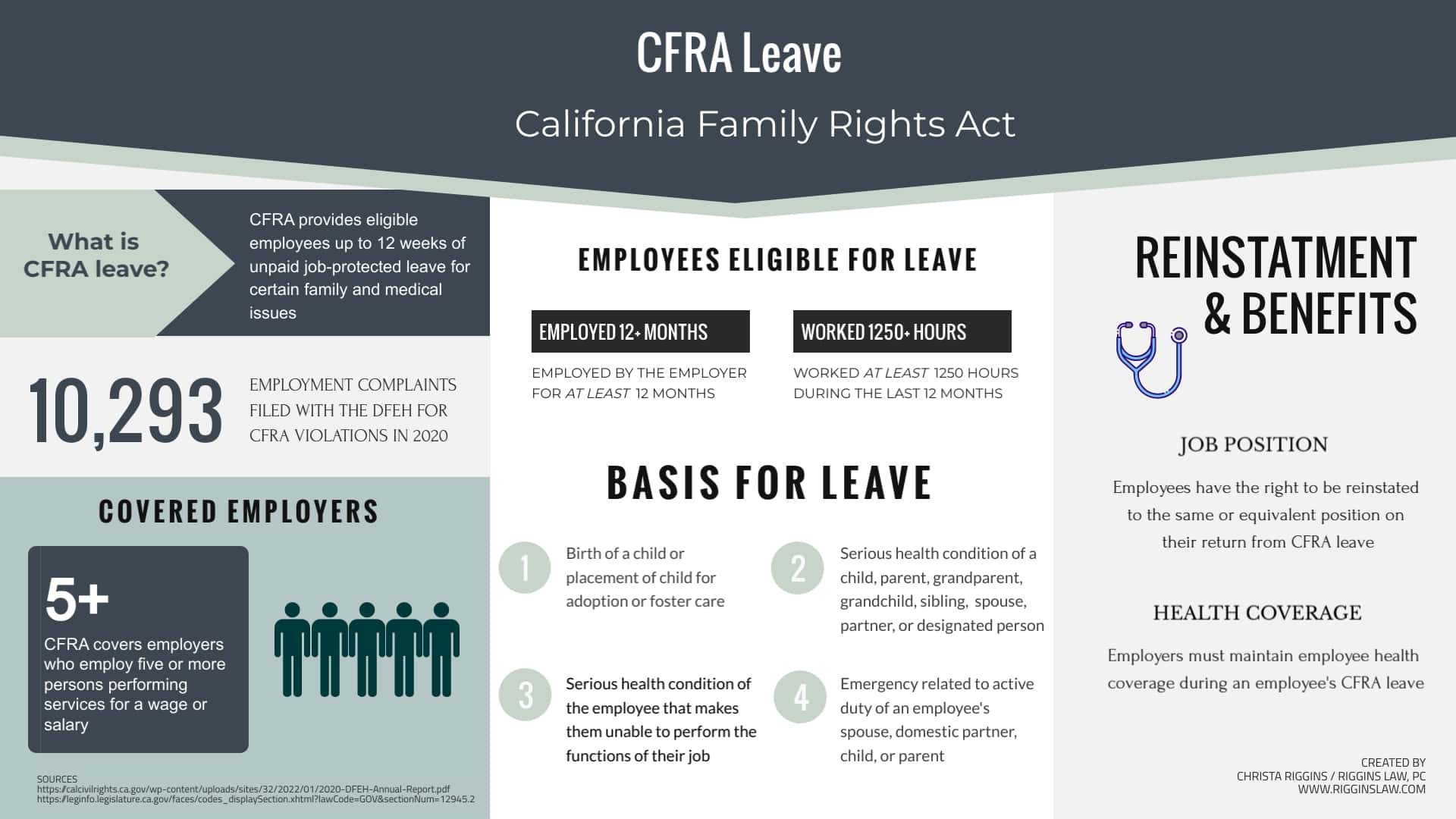
The California Family Rights Act (CFRA) is California’s state counterpart to FMLA. While there is significant overlap, CFRA often provides broader protections:
- Expanded Employer Coverage: CFRA generally applies to employers with 5 or more employees, significantly expanding access compared to FMLA’s 50-employee threshold.
- Broader Definition of Family Member: CFRA includes domestic partners and their children, grandparents, grandchildren, and siblings as qualifying family members for whom an employee can take leave to care, which is broader than FMLA.
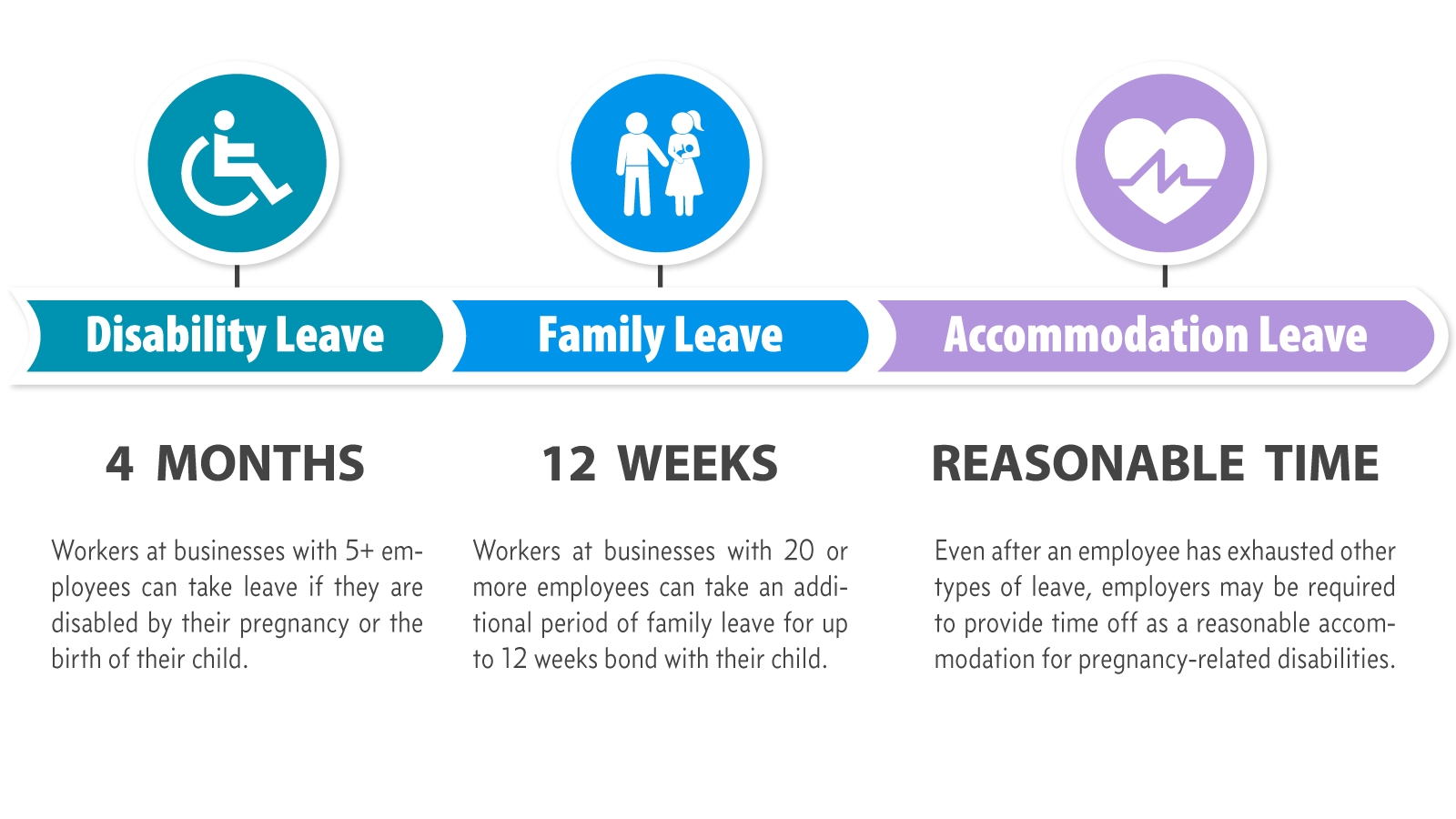
- Separate Leave Entitlements: In some cases, leave taken under CFRA and FMLA can run concurrently. However, for certain reasons (like pregnancy disability leave), the leave periods may be separate, allowing for more total leave time. For instance, pregnancy disability leave (PDL) in California can be taken first, followed by CFRA leave for bonding with the new child, providing an extended period of protected time off. This layered protection truly enhances lifestyle flexibility for new parents.
Understanding the interplay between FMLA and CFRA is crucial for California employees to maximize their leave options.
Paid Family Leave (PFL) and State Disability Insurance (SDI): Financial Pillars for Your Lifestyle During Leave
While FMLA and CFRA provide job protection for unpaid leave, California goes a step further by offering wage replacement programs, which are vital for maintaining financial stability and, thus, your lifestyle during an absence from work.
- Paid Family Leave (PFL): This program provides partial wage replacement (typically 60-70% of your weekly wages, up to a maximum weekly benefit amount) for up to eight weeks within any 12-month period for individuals who take time off to:
- Care for a seriously ill family member (child, parent, spouse, registered domestic partner, grandparent, grandchild, or sibling).
- Bond with a new child (birth, adoption, or foster care placement).
- Participate in a qualifying exigency related to a family member’s military deployment.
- State Disability Insurance (SDI): SDI provides partial wage replacement for eligible workers who are unable to work due to a non-work-related illness or injury, or pregnancy. This is distinct from PFL, as SDI covers your own disability, while PFL covers leave to care for others or to bond with a new child.
These financial support programs are significant game-changers, transforming what would otherwise be a financially challenging period into a manageable one, allowing individuals to truly focus on their family or health without the added burden of income loss. This is the essence of a supported lifestyle.
New Parent Leave Act and Other Local Ordinances: Tailored Support for Diverse Lifestyles
Beyond FMLA, CFRA, PFL, and SDI, California has continued to expand its protections. The New Parent Leave Act (NPLA), for instance, was implemented to provide baby bonding leave to employees not covered by FMLA or CFRA due to smaller employer size. While largely superseded by the expansion of CFRA to smaller employers, it highlights the state’s ongoing commitment. Additionally, various cities and counties within California may have their own local ordinances offering further leave protections, such as paid sick leave, which can sometimes be used in conjunction with FMLA. It’s always advisable to check local regulations to ensure you are aware of all applicable benefits that contribute to your overall lifestyle support.
Managing Your Leave: Practical Tips for a Smooth Lifestyle Transition
Successfully applying for FMLA is just the first step; effectively managing your leave ensures that your time away from work achieves its intended purpose without creating undue stress upon your return. A well-managed leave is key to a smooth “lifestyle transition,” minimizing disruption to both your professional and personal life.
Planning Ahead: Seamless Family Commitments and Personal Care
Strategic planning before your leave can make a significant difference.
- Communicate with Your Team: Work with your colleagues and manager to prepare for your absence. Document ongoing projects, provide clear instructions, and delegate responsibilities where possible. This foresight helps your team cover your duties efficiently and ensures a smoother reintegration upon your return.
- Organize Your Affairs: Before starting your leave, finalize any personal errands, appointments, or administrative tasks that might be difficult to manage while on leave. Whether it’s setting up automatic bill payments or scheduling medical appointments, tying up loose ends contributes to a more relaxed and focused leave period.
- Create a Support System: If you are taking leave to care for a family member or yourself, ensure you have a support network in place. This might involve coordinating with other family members, friends, or professional caregivers. Planning for support allows you to truly rest or provide care effectively, upholding your family’s lifestyle.
Communication is Key: Maintaining Professional Relationships
While on leave, maintaining appropriate communication with your employer is crucial.
- Establish Communication Expectations: Before your leave, discuss with your manager how and when you will communicate. This might involve providing periodic updates on your status, especially if the duration of your leave changes.
- Respect Boundaries: While communication is important, remember you are on leave. Avoid checking work emails excessively or engaging in work tasks unless absolutely necessary and pre-agreed upon. Your time off is for addressing personal or family needs, contributing to your overall well-being and a healthier lifestyle.
- Provide Updates on Return-to-Work Status: If your return date shifts, communicate this to your employer as soon as possible. Timely updates allow your employer to adjust plans accordingly.
Returning to Work: Reintegrating into Your Professional Lifestyle
The transition back to work can be as significant as the transition to leave. Thoughtful preparation can make your reintegration seamless.
- Re-familiarize Yourself: Before your first day back, you might consider reviewing any important updates or changes that occurred during your absence.
- Schedule a Re-entry Meeting: A meeting with your manager upon your return can help clarify priorities, provide updates, and ensure a smooth handover of responsibilities.
- Be Patient: It may take some time to fully readjust to your work routine and catch up on missed information. Be patient with yourself and allow for a gradual re-engagement.
FMLA, coupled with California’s robust state programs, provides invaluable support for maintaining a balanced and resilient lifestyle. By understanding the application process, knowing your rights, and planning effectively, you can navigate life’s inevitable challenges with confidence, ensuring that your personal well-being and family commitments are always prioritized without sacrificing your professional future. This proactive approach to utilizing these protections is key to a fulfilling and sustainable lifestyle in California.
LifeOutOfTheBox is a participant in the Amazon Services LLC Associates Program, an affiliate advertising program designed to provide a means for sites to earn advertising fees by advertising and linking to Amazon.com. Amazon, the Amazon logo, AmazonSupply, and the AmazonSupply logo are trademarks of Amazon.com, Inc. or its affiliates. As an Amazon Associate we earn affiliate commissions from qualifying purchases.