
The vast expanse of the Pacific Ocean separates the vibrant shores of California from the tranquil, volcanic islands of Hawaii. This journey, one of the most iconic and frequently undertaken routes for American travelers, represents more than just a change in latitude; it’s a transition from the continental hustle to the serene rhythm of island life. For anyone contemplating a trip to the Aloha State, the fundamental question often revolves around the practicalities of this oceanic crossing, and at its heart lies the simple query: “How many miles is California to Hawaii?” Understanding this distance is the first step in planning an unforgettable adventure, influencing everything from travel time and mode of transport to the overall experience.
While the number of miles provides a concrete measurement, the journey itself encompasses a rich tapestry of considerations for the discerning traveler. From the bustling international hubs of California to the sun-drenched beaches and lush landscapes of Hawaii, the distance is significant but eminently traversable, thanks to modern travel infrastructure. This article will delve into the precise distances, explore the primary modes of travel, offer essential planning insights, and ultimately underscore why this trans-Pacific voyage remains one of the most cherished travel experiences on earth. It’s a journey that promises not just a destination, but a profound shift in perspective, wrapped in the undeniable allure of paradise.
Unpacking the Distance: The Pacific Journey
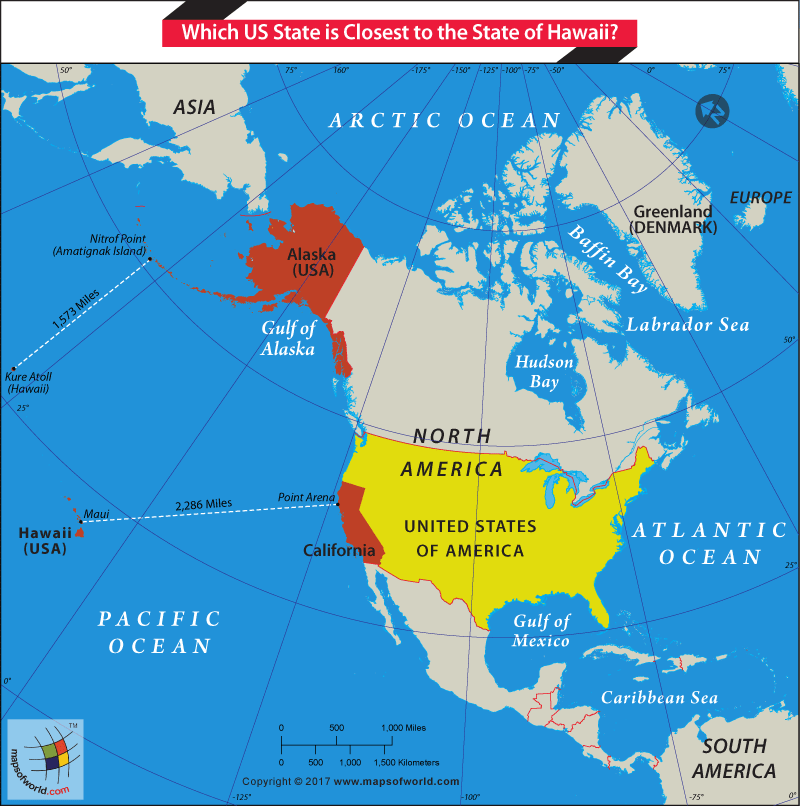
The geographical separation between the mainland United States and its isolated island state is considerable, defining the trans-Pacific journey as a substantial undertaking. However, understanding the exact mileage is crucial for setting expectations regarding travel time and logistics.
The Straight Line: Great Circle Distance
When measuring distances across large geographical expanses, especially for air travel, the concept of “Great Circle Distance” is paramount. This refers to the shortest path between two points on the surface of a sphere (or spheroid, like Earth). While it might appear as a curved line on a flat map, it is, in fact, the most direct route.
For the California to Hawaii route, the average Great Circle Distance is approximately 2,400 to 2,600 miles (3,862 to 4,184 kilometers). This range exists because California is a long state, and Hawaii is an archipelago. The specific departure city in California and the arrival island in Hawaii will slightly alter this measurement. For instance, departing from Southern California might yield a slightly shorter route to Honolulu than departing from Northern California to Kauai, though the differences are usually marginal in the grand scheme.
Distances from Key California Cities
To provide a more granular understanding, let’s look at specific routes from major California international airports to Daniel K. Inouye International Airport (HNL) in Honolulu, the primary gateway to the Hawaiian Islands:
- Los Angeles (LAX) to Honolulu (HNL): This is one of the most frequently traveled routes. The approximate distance is around 2,550 miles (4,104 kilometers). Travelers from Southern California often find this to be the most convenient departure point.
- San Francisco (SFO) to Honolulu (HNL): From the Bay Area, the distance is roughly 2,390 miles (3,846 kilometers). This route is slightly shorter than from Los Angeles due to San Francisco’s more northerly position.
- San Diego (SAN) to Honolulu (HNL): Traveling from San Diego covers a distance of approximately 2,620 miles (4,216 kilometers).
- Oakland (OAK) to Honolulu (HNL): Another significant Bay Area departure point, offering a distance similar to San Francisco, around 2,400 miles (3,862 kilometers).
It’s also worth noting that if you’re flying to other Hawaiian Islands directly (e.g., Maui (OGG), Kona (KOA) on the Big Island, or Kauai (LIH)), the distances will vary slightly. For instance, Maui is slightly closer to California than Oahu by a few dozen miles, while Kauai and the Big Island are generally a bit further. These variations, however, typically only affect flight times by a few minutes.
Modes of Travel: Traversing the Pacific
Given the substantial oceanic distance, the options for traveling from California to Hawaii are primarily limited to two major modes: air travel and sea travel. Each offers a distinctly different experience, catering to various travel preferences and budgets.
Air Travel: The Most Popular Choice
Without a doubt, flying is the predominant method for crossing the Pacific to Hawaii. It offers the fastest and most convenient way to reach the islands, making it accessible for a wide range of travelers, from families on vacation to business travelers.
- Flight Duration: A direct flight from major California cities to Honolulu typically takes between 5 to 6 hours when flying westbound. The return journey, flying eastbound, is often slightly shorter, ranging from 4.5 to 5.5 hours, thanks to prevailing tailwinds that push the aircraft.
- Major Airlines: Numerous airlines operate frequent services on this lucrative route. Key carriers include Hawaiian Airlines, United Airlines, Delta Air Lines, American Airlines, Southwest Airlines, and Alaska Airlines. These airlines offer a range of cabin classes, from economy to first class, providing varying levels of comfort and amenities for the journey.
- Factors Affecting Flight Time: Beyond the great circle distance, actual flight times can be influenced by several factors. Air traffic control, specific flight paths (which can be adjusted due to weather or military airspace), and the type of aircraft used can all play a role. However, the most significant factor is often the strong Pacific jet stream, which creates the noticeable difference in westbound vs. eastbound flight durations.
- Booking and Convenience: Travelers are advised to book flights well in advance, especially during peak seasons, to secure better fares. Direct flights are highly sought after for their convenience, eliminating the need for layovers. Many airlines also offer direct routes to islands beyond Oahu, such as Maui, Kauai, and the Big Island, reducing overall travel time.
Cruise Travel: A Leisurely Alternative
For those who view the journey as an integral part of the vacation, a cruise offers a more relaxed and luxurious way to travel to Hawaii. While significantly longer than flying, it transforms the travel time into an experience in itself.
- Duration and Experience: A one-way cruise from California to Hawaii typically takes 4 to 10 days, depending on the itinerary and the number of sea days. These cruises often include several days at sea, allowing passengers to enjoy the ship’s amenities, entertainment, and ocean views, before making port calls at various Hawaiian Islands.
- Departure Points: Major departure ports in California for Hawaii cruises include Los Angeles (specifically the Port of Long Beach or Port of Los Angeles) and San Francisco (from Pier 27 or Pier 35).
- Key Cruise Lines: Several reputable cruise lines offer itineraries to Hawaii, including Princess Cruises, Holland America Line, Carnival Cruise Line, and Norwegian Cruise Line. Each line offers different ship sizes, amenities, and onboard atmospheres.
- Benefits: Cruising allows travelers to unpack once and visit multiple islands, experiencing the journey across the Pacific in comfort and style. It’s an excellent option for those who enjoy the journey as much as the destination, providing a seamless blend of relaxation and exploration.
Private Yacht/Sailing: The Ultimate Adventure
For the truly adventurous and experienced mariner, sailing a private yacht from California to Hawaii is the ultimate dream. This endeavor requires extensive planning, skill, and a significant time commitment.
- Significance: This journey is a testament to seamanship, navigating one of the world’s largest oceans. It’s not for the faint of heart but offers unparalleled freedom and a profound connection with the sea.
- Time Commitment: Depending on the vessel’s speed, weather conditions, and stops, such a voyage can take anywhere from two weeks to over a month.
- Preparation: Rigorous preparation is essential, including thorough boat maintenance, provisioning for extended periods, advanced navigation skills, and robust safety protocols.

Planning Your Journey: Beyond the Miles
Knowing the distance and modes of travel is just the beginning. A well-planned trip enhances the entire experience, transforming a mere vacation into an unforgettable adventure.
Best Time to Travel
Hawaii boasts a tropical climate year-round, but certain periods offer more favorable conditions or fewer crowds.
- Peak Season: December to April (winter) and June to August (summer) are typically the busiest, aligning with school holidays. While popular, prices for flights and accommodations tend to be higher during these times.
- Off-Peak/Shoulder Season: Mid-April to early June and September to mid-December (excluding Thanksgiving week) often provide a sweet spot. The weather is usually excellent, crowds are thinner, and prices are generally more competitive. This is an ideal time for travelers seeking a balance of good weather and fewer tourists.
- Weather Considerations: While generally pleasant, Hawaii experiences a wet season from November to March, with more rain, particularly on the windward (eastern and northern) sides of the islands. The leeward (western and southern) sides tend to be drier year-round. Regardless of the season, expect warm temperatures and ocean breezes.
Travel Essentials and Considerations
Preparing adequately for your trip ensures a smoother, more enjoyable experience.
- Packing: Pack light, breathable clothing suitable for warm, humid weather. Include swimwear, sunscreen, a hat, and comfortable walking shoes. Evenings can be slightly cooler, so a light jacket or sweater is advisable. Don’t forget reef-safe sunscreen to protect Hawaii’s delicate marine ecosystem.
- Time Zones: Hawaii observes Hawaii Standard Time (HST) year-round and does not practice daylight saving. This means a significant time difference with California’s Pacific Daylight Time (PDT) – typically a 3-hour difference during daylight saving months and a 2-hour difference outside of it. Be prepared for potential jet lag, especially on arrival.
- Entry Requirements: Since Hawaii is a U.S. state, domestic travelers from California do not need a passport. A valid government-issued ID (like a driver’s license) is sufficient for air travel. International travelers will need to meet standard U.S. entry requirements.
- Inter-Island Travel: If you plan to visit multiple Hawaiian Islands, budget for inter-island flights. Hawaiian Airlines and Southwest Airlines are the primary carriers for these short hops, which typically range from 20 to 50 minutes. It’s often more efficient to fly directly to your first destination island from California and then take inter-island flights.
Budgeting for the Trip
A trip to Hawaii can be an investment, but careful budgeting allows for a fantastic experience.
- Flight Costs: Airfares are often the largest single expense. Prices fluctuate based on season, booking time, and airline. Consider flying mid-week or during off-peak times for better deals.
- Accommodation: Options range from luxurious resorts and boutique hotels to vacation rentals and budget-friendly condos. Prices vary significantly by island and location.
- Activities: Hawaii offers a plethora of activities, from free beach days and hiking to paid excursions like surfing lessons, snorkeling tours, luaus, and helicopter rides. Prioritize what matters most to your experience.
- Food: Dining out can be costly. Balance restaurant meals with grocery shopping for some meals, especially if staying in accommodations with kitchenettes. Explore local food trucks and farmers’ markets for delicious and more affordable options.
The Allure of Hawaii: Why the Journey is Worth It
Beyond the numbers and logistical planning, the journey from California to Hawaii is truly worth it for the incredible destination that awaits. Hawaii isn’t just a place; it’s an experience that captivates the senses and nourishes the soul.
Diverse Landscapes and Experiences
Each Hawaiian Island presents its own unique personality and natural wonders.
- Oahu: Home to Honolulu and the iconic Waikiki Beach, offering a vibrant mix of city life, surf culture, and historical sites like Pearl Harbor.
- Maui: Known for its stunning beaches, the scenic Road to Hana, and the majestic dormant volcano of Haleakala, perfect for sunrise views.
- Kauai: The “Garden Isle,” famous for its lush rainforests, dramatic Na Pali Coast, and the breathtaking Waimea Canyon.
- Big Island: Geologically the youngest, it boasts active volcanoes in Hawaii Volcanoes National Park, black sand beaches, and diverse climates ranging from tropical to alpine.
Whether you seek adventure through surfing and hiking, relaxation on pristine beaches, or exploration of volcanic landscapes, Hawaii delivers.
Rich Culture and Aloha Spirit
The Hawaiian Islands are steeped in a rich Polynesian culture that is profoundly intertwined with the land and sea. The famous “Aloha Spirit” is more than just a greeting; it’s a way of life that emphasizes love, peace, compassion, and respect.
- Local Traditions: Visitors can immerse themselves in the culture by attending a traditional luau, learning about hula dancing, exploring ancient Hawaiian temples (heiaus), and understanding the historical significance of places like Pearl Harbor.
- Cuisine: Hawaiian cuisine is a delicious fusion of Polynesian, Asian, and Western influences, featuring fresh seafood, tropical fruits, taro, and unique local dishes like poke, kalua pig, and shaved ice.
- Connection to Nature: The deep respect Hawaiians have for their ‘aina (land) is palpable, encouraging visitors to embrace sustainable tourism and appreciate the islands’ delicate beauty.

A Gateway to Unforgettable Memories
Ultimately, the miles separating California and Hawaii are easily conquered, leading to a realm where everyday concerns fade amidst stunning natural beauty and a welcoming atmosphere. From witnessing a spectacular sunrise over Haleakala to snorkeling in crystal-clear waters alongside vibrant marine life, or simply relaxing on a pristine beach with the sound of the waves, a trip to Hawaii creates lasting memories. It’s a journey that promises rejuvenation, adventure, and a profound connection to a truly special place on Earth.
In conclusion, the distance from California to Hawaii is approximately 2,400 to 2,600 miles, a significant but manageable journey by air, typically taking 5-6 hours. While cruise options offer a more leisurely passage over several days, flying remains the most popular way to bridge this oceanic gap. With careful planning, understanding the best times to visit, and preparing for the unique aspects of island travel, your trip to Hawaii from California will undoubtedly be an enriching and unforgettable experience, making every mile worth the journey.
LifeOutOfTheBox is a participant in the Amazon Services LLC Associates Program, an affiliate advertising program designed to provide a means for sites to earn advertising fees by advertising and linking to Amazon.com. Amazon, the Amazon logo, AmazonSupply, and the AmazonSupply logo are trademarks of Amazon.com, Inc. or its affiliates. As an Amazon Associate we earn affiliate commissions from qualifying purchases.