
California, a state synonymous with expansive coastlines, majestic mountains, and vibrant cities, is a dream destination for many travelers. Its vast geography often necessitates extensive driving, and with that comes a modern infrastructure designed to manage traffic flow and support ongoing development: toll roads and express lanes. For visitors planning a road trip or simply navigating urban centers, understanding “how much are toll roads in California?” is a crucial part of travel budgeting and itinerary planning. This guide aims to demystify the Golden State’s toll system, providing insights into costs, payment methods, and strategies for a smooth, budget-conscious journey.
Understanding California’s Toll Road Systems: Where and Why
California’s diverse landscape and high population density necessitate innovative solutions for transportation. Toll roads and express lanes are integral to managing congestion, funding crucial infrastructure projects, and offering commuters and travelers options for faster travel, especially during peak hours.
The Rationale Behind Toll Roads and Express Lanes
The primary reasons for the existence of toll roads in California are multifaceted:
- Congestion Relief: Express lanes, also known as High Occupancy Toll (HOT) lanes, allow solo drivers to pay a fee to use lanes typically reserved for carpools, thus optimizing lane capacity and offering a quicker option.
- Infrastructure Funding: Toll revenues directly support the maintenance, expansion, and construction of new roads, bridges, and other transportation facilities without relying solely on general taxes.
- Environmental Benefits: By encouraging carpooling and offering faster routes, tolls can indirectly contribute to reduced idling and emissions, though this is a secondary benefit.
Key Toll Facilities and Express Lanes Across the State
California features several distinct toll systems. Travelers will encounter these predominantly in major metropolitan areas:
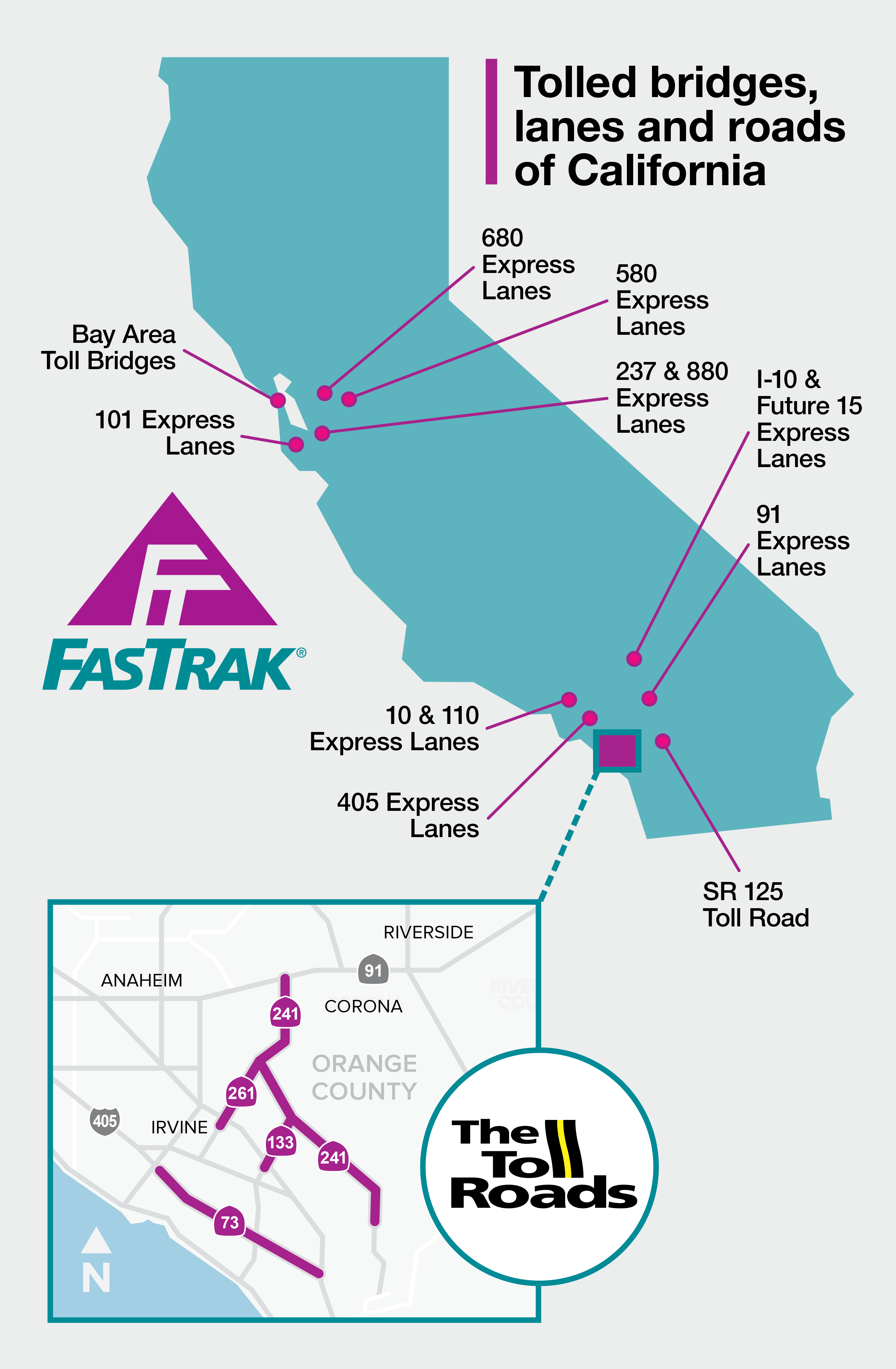
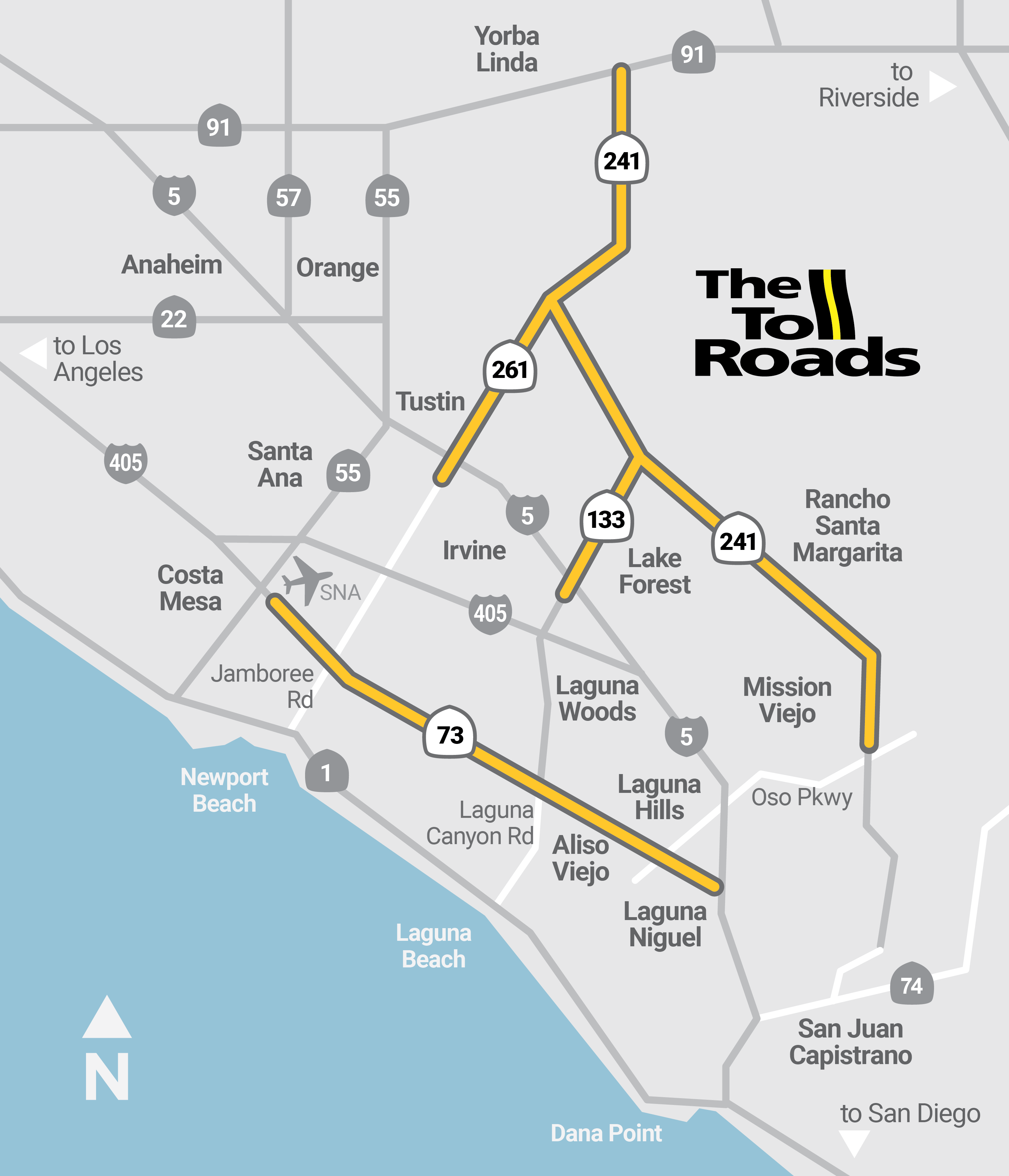
- The Toll Roads of Orange County: Located primarily in Orange County, these are traditional toll roads designed for efficiency. They include SR 73 (San Joaquin Hills Transportation Corridor), SR 133 (Laguna Canyon Road), SR 241 (Foothill Transportation Corridor), and SR 261 (Eastern Transportation Corridor). These roads are fully electronic, meaning there are no toll booths for cash payments.
- Express Lanes (HOT Lanes): Found in several regions, these lanes are typically alongside existing freeways. Carpoolers, motorcyclists, and public transit vehicles often use them free of charge or at a reduced rate, while solo drivers pay a variable toll.
- Los Angeles County: Key express lanes are found on I-10 (El Monte Busway) and I-110 (Harbor Freeway).
- Orange County: The SR 91 Express Lanes are a prominent example, offering a faster route through a highly congested corridor.
- San Francisco Bay Area: Express lanes are expanding across the region, notably on I-880, I-680, US-101, and SR 237.
- San Diego County: The I-15 Express Lanes are a key component of the region’s transportation network.
- Toll Bridges: While the title focuses on “toll roads,” it’s important for travelers to note that some major bridges also incur tolls. The most famous is the Golden Gate Bridge in San Francisco, which is southbound only. Other notable toll bridges are in the San Francisco Bay Area, such as the San Francisco-Oakland Bay Bridge (eastbound only). These operate with similar electronic payment systems.
Demystifying Toll Costs: What to Expect and Why Prices Vary
The cost of driving on California’s toll roads is not static; it’s influenced by several factors, making it essential for travelers to understand the variables involved.
Factors Influencing Toll Prices
Toll rates are determined by a dynamic pricing model, especially for express lanes, which means prices can fluctuate significantly:
- Time of Day and Day of Week: Peak hours (e.g., weekday mornings and afternoons) will almost always have higher tolls than off-peak hours (e.g., late nights, weekends). This is a core mechanism to manage congestion.
- Traffic Volume (Dynamic Pricing): For express lanes, tolls often adjust in real-time based on current traffic levels in the lane. Higher demand for the express lane means higher prices, ensuring the lane remains free-flowing.
- Distance Traveled: On roads like The Toll Roads of Orange County, the toll amount depends on the entry and exit points, with longer stretches costing more.
- Payment Method: Using an electronic transponder system like FasTrak almost always results in lower toll rates compared to the “pay-by-plate” option, which often includes additional administrative fees.
- Vehicle Type: While most passenger vehicles (2-axle) pay standard rates, multi-axle vehicles (e.g., those towing trailers or commercial trucks) may incur higher tolls.
- Occupancy (for Express Lanes): As mentioned, carpools (usually 2 or 3+ occupants, depending on the lane) and motorcycles often ride free or at a discounted rate in express lanes, provided they use the correct transponder settings.
General Price Ranges and Examples
Given the dynamic nature, providing exact figures is challenging, but here are general ranges to help travelers budget:
- The Toll Roads of Orange County: A typical drive on a segment of SR 73, SR 133, SR 241, or SR 261 might range from $2-$10 for FasTrak users, with pay-by-plate users incurring slightly higher fees (e.g., an additional $1-$2 per transaction). A full-length journey on a longer corridor could reach $15-$20+ during peak times for pay-by-plate.
- Express Lanes: These can vary widely. A short segment during off-peak hours might cost as little as $0.50-$3. However, a longer stretch of a highly congested express lane (like the SR 91 Express Lanes or I-10 Express Lanes near Los Angeles) during peak rush hour can cost anywhere from $10 to $20, or even upwards of $25-$30 for a single trip, especially for solo drivers.
- Toll Bridges: The Golden Gate Bridge toll is typically around $9.75 for FasTrak users and higher for pay-by-plate. The San Francisco-Oakland Bay Bridge toll varies by time of day, ranging from $7 to $8 for FasTrak users.
It’s crucial to check specific toll road operator websites or use online toll calculators for the most up-to-date and accurate cost estimates for your planned route and travel time.
Seamless Payments: Navigating California’s Toll Collection
California’s toll roads are predominantly cashless, relying on electronic payment systems. Understanding these methods is key to avoiding penalties and ensuring a smooth journey.
The FasTrak System: Your Best Bet
FasTrak is California’s statewide electronic toll collection system. It’s the most convenient and cost-effective way to pay tolls.
- How it Works: Users purchase a small electronic transponder that adheres to their vehicle’s windshield. As the vehicle passes under a toll gantries, the transponder communicates with sensors, and the toll amount is automatically deducted from a pre-paid account.
- Benefits:
- Lower Tolls: FasTrak users often pay the lowest available toll rates.
- Seamless Travel: No need to stop or search for payment.
- Statewide Acceptance: One FasTrak transponder works on all toll roads, express lanes, and toll bridges throughout California.
- Express Lane Flexibility: Specific switchable transponders allow drivers to indicate their occupancy (1, 2, or 3+ passengers) for express lanes, ensuring correct tolls or free passage for carpoolers.
- How to Get One: Travelers can purchase a FasTrak transponder online from one of the various regional toll agencies (e.g., Bay Area Toll Authority, The Toll Roads of Orange County, Metro ExpressLanes) or at select retail locations like Costco. It’s advisable to order well in advance of your trip.
Pay-by-Plate and One-Time Payment Options
For those without a FasTrak transponder, there are alternatives, though they generally come with higher costs and more effort.
- Pay-by-Plate: When a vehicle without a FasTrak transponder passes through a toll point, cameras capture the license plate image. An invoice is then mailed to the registered owner of the vehicle. These invoices often include administrative fees in addition to the base toll.
- One-Time Payment: This is the recommended option for infrequent toll users or out-of-state visitors. You can make a one-time payment online or by phone within a specific window (usually 5 days before or 5 days after your trip, though this can vary by toll authority). You’ll need your license plate number and the date of travel. This method avoids the higher penalties associated with waiting for a mailed invoice.
- Consequences of Non-Payment: Ignoring toll invoices or failing to make a one-time payment can result in significant penalties, late fees, and even a hold on your vehicle’s registration with the DMV, making it difficult to renew.
Rental Cars and Toll Roads
Traveling with a rental car requires careful consideration of toll payments.
- Rental Company Programs: Most rental car companies offer their own toll programs, which automatically charge tolls to your credit card on file. However, these programs often include significant daily administrative fees, even on days you don’t use a toll road, making them quite expensive.
- Better Options:
- Bring Your Own FasTrak: If you frequently visit California, consider purchasing a FasTrak transponder and registering your rental car’s license plate to your account for the duration of your rental. Remember to remove the rental car from your account upon return.
- One-Time Payment: Utilize the one-time payment option online. Ensure you get the rental car’s license plate number and make the payment promptly after your trip.
Smart Strategies for Travelers: Saving Time and Money on Tolls
While toll roads offer convenience, smart planning can help travelers manage costs effectively and ensure a stress-free journey through California.
Planning Your Route Wisely
Before hitting the road, leverage technology to make informed decisions:
- GPS and Mapping Apps: Use navigation apps like Google Maps or Waze. Most apps have an “avoid tolls” option that will direct you along non-tolled routes, though these may take longer.
- Understand Toll Hours: Some express lanes are only tolled during specific peak hours. Outside of these times, they may function as regular HOV lanes, open to all carpoolers for free, and sometimes even solo drivers.
- Check Toll Calculators: Many toll authorities (e.g., The Toll Roads of Orange County) offer online toll calculators that allow you to enter your entry/exit points and time of travel to get an estimated cost.
Carpooling and Public Transportation Alternatives
- Maximize Occupancy: If you’re traveling with others, utilize the carpool benefits of express lanes. Ensure your FasTrak transponder is set to the correct occupancy (if it’s a switchable model).
- Consider Public Transit: In major metropolitan areas like Los Angeles and the San Francisco Bay Area, public transportation (trains, buses, metro systems) can be an excellent way to avoid tolls, parking fees, and traffic altogether.

Budgeting for Tolls
- Factor into Your Budget: Don’t let tolls be an unexpected expense. Research your planned routes and estimate potential toll costs, adding them to your overall travel budget.
- Allocate a “Toll Buffer”: It’s wise to set aside a small buffer amount for unexpected tolls, especially if your travel plans are flexible or you encounter detours.
Navigating California’s toll roads doesn’t have to be a daunting task. By understanding where tolls exist, how much they generally cost, and the most efficient ways to pay, travelers can ensure their journey through this magnificent state is as smooth and enjoyable as the destinations themselves. Prepare with a FasTrak transponder or familiarize yourself with one-time payment options, and you’ll be well-equipped to experience all that California has to offer, without any unexpected detours in your budget.
LifeOutOfTheBox is a participant in the Amazon Services LLC Associates Program, an affiliate advertising program designed to provide a means for sites to earn advertising fees by advertising and linking to Amazon.com. Amazon, the Amazon logo, AmazonSupply, and the AmazonSupply logo are trademarks of Amazon.com, Inc. or its affiliates. As an Amazon Associate we earn affiliate commissions from qualifying purchases.