
The question of “When did Mexico sell California?” points to a pivotal moment in the history of both nations and a significant territorial shift that dramatically reshaped the North American continent. Far from a simple commercial transaction, the transfer of California from Mexican to United States sovereignty was the culmination of decades of geopolitical tensions, expansionist ambitions, and, ultimately, a transformative war. This historical event, formalized by the Treaty of Guadalupe Hidalgo in 1848, not only redefined borders but also laid the groundwork for modern California, turning it into a land of unparalleled opportunity and cultural diversity. Understanding this complex history requires a journey back to its colonial roots, through periods of nascent independence, and into the escalating conflicts that forever altered the landscape of the American West.
The Dawn of Alta California: A Brief Overview
To comprehend the circumstances leading to California’s transfer, one must first appreciate its earlier history under Spanish and then Mexican rule. The vast territory known as Alta California was a sparsely populated, distant frontier, yet its strategic location on the Pacific held immense, if largely untapped, potential.
Spanish Colonial Roots
The Spanish presence in Alta California began in the late 18th century, primarily driven by a desire to protect their existing colonial empire in New Spain (modern Mexico) from potential Russian or British encroachment along the Pacific coast. Missionaries, soldiers, and settlers established a chain of presidios (forts) and missions along the coast, stretching from San Diego in the south to Sonoma in the north. These institutions served as centers for religious conversion, agricultural development, and military control, often at the expense of the indigenous populations whose lands and cultures were systematically disrupted.
Life in colonial Alta California was characterized by its isolation from the bustling administrative heart of New Spain in Mexico City. The region developed a distinct ranching culture, with large land grants (ranchos) supporting cattle raising and hide-and-tallow trade, which became the economic backbone of the province. While Spain nominally controlled this expansive territory, its hold was tenuous, and the seeds of future geopolitical shifts were already being sown through the increasing presence of American and European traders and whalers along the coast.
Mexican Independence and Governance
In 1821, Mexico achieved its independence from Spain, and Alta California automatically became a part of the newly formed Mexican Republic. This transition brought significant changes to the province. The Mexican government secularized the missions, confiscating their vast lands and redistributing them, often to politically connected individuals who established even larger ranchos. This era, while brief, is often romanticized as the “Rancho period,” characterized by a vibrant Californio culture, extensive land holdings, and a relatively prosperous, if isolated, society.
However, Mexico’s control over Alta California remained weak. The central government in Mexico City struggled with internal political instability and lacked the resources to effectively govern and develop its distant northern territories. This neglect, coupled with a growing influx of American settlers, traders, and adventurers, created a power vacuum and simmering discontent among both Californios and newly arrived foreigners, setting the stage for future conflict. The vast, resource-rich lands of California began to attract the attention of a rapidly expanding United States.
The Looming Shadow of Manifest Destiny
The mid-19th century in the United States was dominated by the ideology of Manifest Destiny – the belief that the nation was divinely ordained to expand its dominion and spread democracy across the North American continent. This powerful sentiment fueled westward expansion and inevitably brought the United States into direct conflict with Mexico over its vast, sparsely populated northern territories.
American Interest and Expansion
As early as the 1830s, American interest in California was palpable. Traders from the United States regularly plied the Pacific coast, engaging in commerce and gaining familiarity with the region. American fur trappers and explorers also ventured into the interior, further mapping and publicizing the potential of California’s fertile valleys and rich resources. The strategic importance of deep-water ports like San Francisco Bay for Pacific trade and naval power became increasingly clear to American policymakers.
The acquisition of Texas in 1845, after its successful revolution against Mexico and a decade as an independent republic, only intensified American expansionist desires. President James K. Polk, a fervent believer in Manifest Destiny, openly pursued the acquisition of California and New Mexico through negotiation, and if necessary, through force. He sent diplomatic envoys to Mexico City with offers to purchase the territories, but these overtures were decisively rejected by a Mexican government deeply insulted by the loss of Texas and unwilling to cede more of its national patrimony.
Early Encounters and Tensions
The presence of a growing number of American settlers in Alta California, combined with the weak Mexican governmental control, created an increasingly volatile situation. American immigrants, many of whom harbored annexationist sympathies, often found themselves at odds with Mexican authorities. Instances of friction over land ownership, legal jurisdiction, and cultural differences became more frequent.
A notable precursor to the formal conflict was the Bear Flag Revolt in June 1846. A small group of American settlers, with unofficial encouragement from U.S. Army Captain John C. Frémont, rebelled against Mexican rule in Sonoma. They declared California an independent republic and hoisted a crudely fashioned flag depicting a bear and a star. Although short-lived and somewhat chaotic, the revolt signaled the imminent collapse of Mexican authority and the strong American desire to control the region. It also effectively served as a localized prelude to the broader Mexican-American War which was declared shortly thereafter.
The Mexican-American War: A Defining Conflict
The ultimate transfer of California was not a sale in the traditional sense, but rather a concession forced by the outcome of a full-scale military conflict: the Mexican-American War. This war irrevocably altered the map of North America and left a lasting legacy on both participating nations.
Causes and Commencement
The immediate cause of the Mexican-American War was a border dispute following the annexation of Texas by the United States. Mexico maintained that the southern border of Texas was the Nueces River, while the United States claimed the Rio Grande. When President Polk sent troops into the disputed territory, a clash occurred, providing him with the pretext to declare war in May 1846, arguing that Mexico had “shed American blood upon American soil.”
However, the underlying causes were much deeper, rooted in American expansionism, Mexico’s political instability, and its inability to defend its vast northern territories effectively. The war was seen by many in the United States as an opportunity to acquire California and other western lands, solidifying the nation’s continental ambitions.
Key Battles and California’s Role
While major land campaigns unfolded in Mexico itself, leading to the capture of Mexico City, a parallel theater of war developed in California. American naval forces, under Commodore John D. Sloat, quickly seized the coastal towns of Monterey, San Francisco, and later Los Angeles, officially proclaiming California as part of the United States in July 1846.
Despite initial American successes, Mexican Californios mounted resistance, particularly in the southern parts of the province. Led by figures like General José María Flores and Captain Andrés Pico, they temporarily recaptured Los Angeles in September 1846. However, superior American military organization and resources, including forces under General Stephen W. Kearny and Commodore Robert F. Stockton, ultimately overwhelmed the Californio resistance. The final major engagement in California was the Battle of La Mesa on January 8, 1847, which solidified American control over the region. By early 1847, virtually all of Alta California was under United States military occupation.
The Treaty of Guadalupe Hidalgo: The Transaction and its Aftermath
The conclusion of the Mexican-American War brought about the formal transfer of California and a vast expanse of other territories to the United States. This was not a voluntary sale but a forced cession as part of the peace settlement.
Negotiating Peace and Cession
With Mexico City under American occupation, Mexico had little choice but to negotiate. Nicholas Trist, chief clerk of the U.S. State Department, negotiated with Mexican representatives at the town of Guadalupe Hidalgo, just outside the capital. The resulting Treaty of Guadalupe Hidalgo was signed on February 2, 1848, officially ending the war.
From Mexico’s perspective, the treaty was a humiliating loss, forcing it to relinquish more than half of its national territory. For the United States, it was a monumental achievement, fulfilling the dreams of Manifest Destiny and extending the nation’s reach from the Atlantic to the Pacific.
The Terms of Sale and Territorial Changes
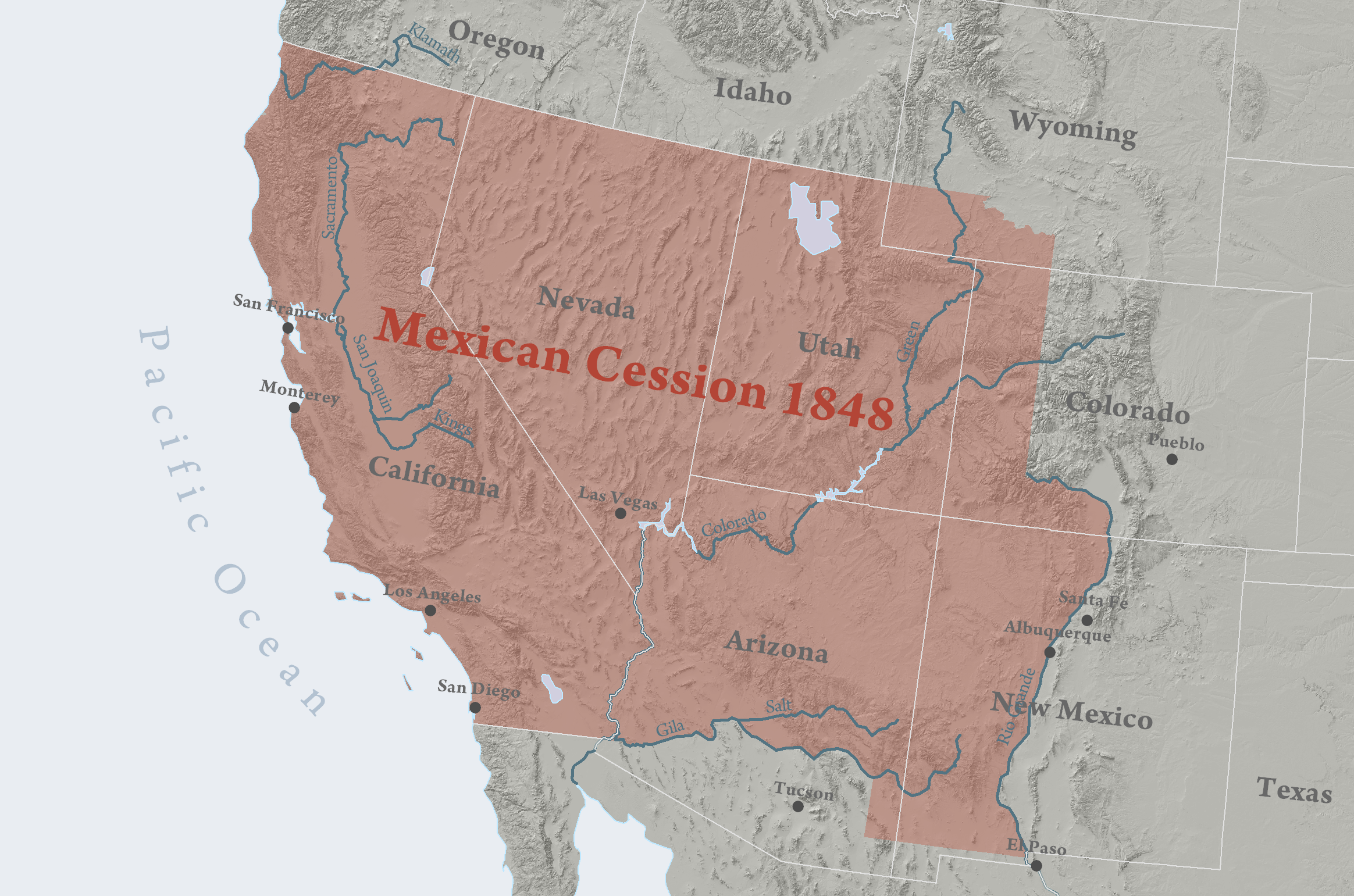
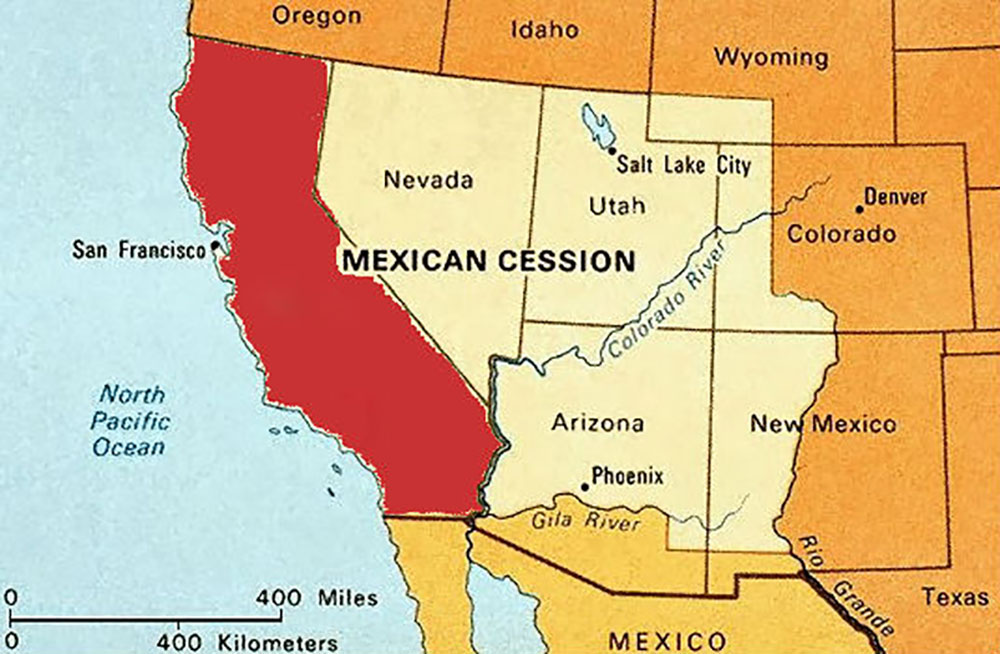
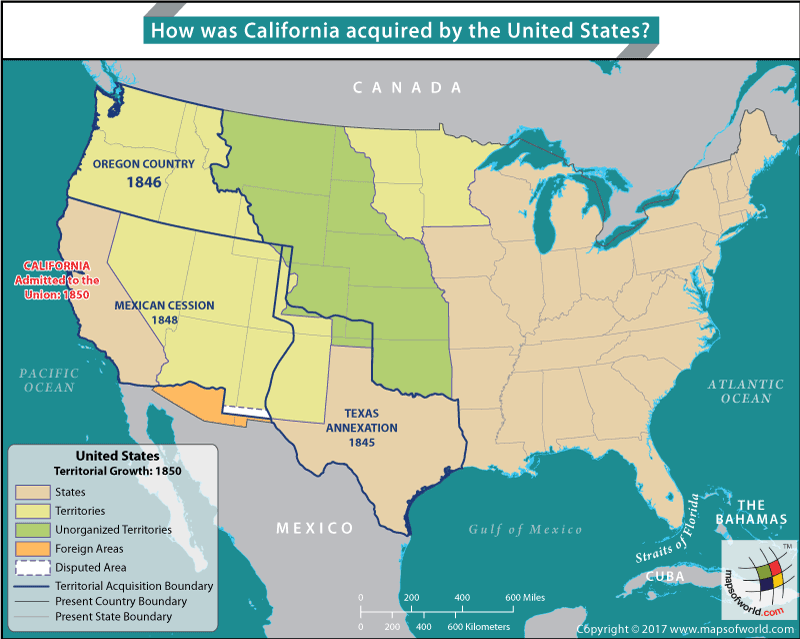
Under the terms of the Treaty of Guadalupe Hidalgo, Mexico formally ceded Alta California and New Mexico to the United States. This immense tract of land, known as the Mexican Cession, included all or parts of present-day California, Nevada, Utah, Arizona, New Mexico, Colorado, and Wyoming. In return, the United States agreed to pay Mexico $15 million and assume $3.25 million in claims that American citizens had against the Mexican government.
Crucially, the treaty also guaranteed property rights for Mexican citizens in the ceded territories, including those who chose to remain and become American citizens. It also established the Rio Grande as the official border between the United States and Mexico, finally resolving the initial dispute that triggered the war. Thus, Mexico did not “sell” California in a willing exchange, but rather ceded it as part of a peace treaty, receiving monetary compensation for the lost territory.
Long-term Impact on California and Mexico
The consequences of the Treaty of Guadalupe Hidalgo were profound and far-reaching. For Mexico, the loss of such a vast portion of its territory was a national trauma, contributing to ongoing political instability and economic hardship for decades. It also fostered a lingering sense of resentment towards the United States.
For California, the treaty marked the end of an era and the beginning of another. The Californios, who had dominated the social and political landscape for decades, found themselves a minority in their own homeland. Their land titles, though guaranteed by the treaty, were often challenged and lost in the complexities of the American legal system, leading to significant economic and social displacement. Yet, for the United States, the acquisition of California was a strategic triumph, opening up access to the Pacific and paving the way for unprecedented growth.
California’s Transformation: From Mexican Province to American State
No sooner had the ink dried on the Treaty of Guadalupe Hidalgo than California was plunged into a new era of explosive change, accelerating its integration into the United States.
The Gold Rush and Rapid Growth
Just days before the treaty was signed, gold was discovered at Sutter’s Mill near Coloma on January 24, 1848. This serendipitous timing ignited the California Gold Rush, an event that would forever define the state’s early American history. News of the discovery spread rapidly, triggering an unprecedented migration of people from across the United States and around the world. Tens of thousands, known as “forty-niners,” flocked to California in search of fortune, transforming sleepy villages into bustling towns overnight and creating new cities like Sacramento.
The Gold Rush led to an explosion in population, economic activity, and infrastructure development. The sudden influx of people, goods, and capital rapidly propelled California from a remote frontier into a dynamic, economically significant territory. This rapid growth quickly overwhelmed existing governmental structures and highlighted the urgent need for formal statehood.
Cultural and Political Integration
The massive demographic shift brought about by the Gold Rush profoundly reshaped California’s cultural landscape. The Californios, once the dominant group, became a small minority, their traditions and language often marginalized by the incoming Anglo-American culture. Nevertheless, elements of Mexican heritage, particularly in architecture, place names, and legal traditions, endured and continue to shape California to this day.
Due to its surging population, California was able to bypass the traditional territorial stage and applied directly for statehood. In September 1850, as part of the Compromise of 1850, California was admitted to the United States as the 31st state, entering as a free state. This rapid political integration solidified its place within the American union, marking the definitive end of its Mexican past and ushering in its future as a global economic and cultural powerhouse.
In conclusion, Mexico did not “sell” California in a conventional transaction but rather ceded it to the United States as a direct consequence of the Mexican-American War, formalized by the Treaty of Guadalupe Hidalgo on February 2, 1848. This monumental event irrevocably changed the trajectory of both nations and forever etched California’s place in American history.
LifeOutOfTheBox is a participant in the Amazon Services LLC Associates Program, an affiliate advertising program designed to provide a means for sites to earn advertising fees by advertising and linking to Amazon.com. Amazon, the Amazon logo, AmazonSupply, and the AmazonSupply logo are trademarks of Amazon.com, Inc. or its affiliates. As an Amazon Associate we earn affiliate commissions from qualifying purchases.