
To understand the political currents that define the Golden State today, one must embark on a journey through its rich and often surprising historical landscape. The question of when a Republican last won California is not merely a trivia point; it is a historical landmark, marking profound shifts in demographics, ideology, and the very identity of one of the United States’ most influential states. This historical inquiry offers a unique lens through which to appreciate California’s evolution, from its post-war boom to its current status as a global trendsetter. Delving into this past provides crucial context for understanding the state’s historical political leanings and the significant forces that reshaped them over decades.

A Golden State’s Shifting Sands: The Era of Republican Dominance
For much of the 20th century, California was considered a swing state, if not at times a bastion of Republican strength. This historical reality often surprises those unfamiliar with the state’s political past. Before its contemporary reputation as a Democratic stronghold, California played a pivotal role in national Republican politics, producing leaders who would shape the nation’s trajectory. Understanding this period is crucial for grasping the full historical scope of the state’s political identity.
The Reagan Legacy and Beyond: From Hollywood to Sacramento
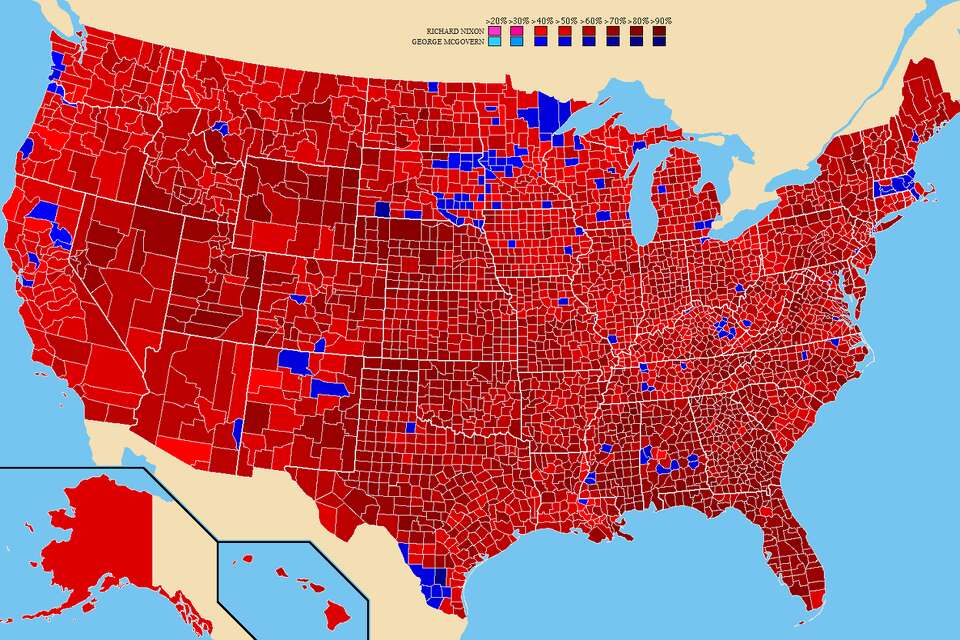
Perhaps the most iconic figure of California’s Republican past is Ronald Reagan. His journey from a charismatic actor in Hollywood to a two-term governor of California (1967-1975) and then to the Presidency of the United States (1981-1989) is a quintessential part of the state’s historical narrative. Reagan’s governorship in Sacramento was characterized by a blend of fiscal conservatism and appeals to traditional American values, resonating deeply with a significant portion of the California electorate at the time. His success, and that of other Republicans, reflected a state still largely shaped by its post-war expansion, suburban growth, and a burgeoning defense industry that brought conservative-leaning populations.
Following Reagan’s departure from the governor’s mansion, other Republicans continued to hold sway. George Deukmejian served as governor from 1983 to 1991, further cementing the Republican presence in California state politics. His tenure focused on law and order, fiscal restraint, and managing the state’s infrastructure. These decades were a testament to a vibrant Republican Party that successfully navigated the complex social and economic landscape of a rapidly growing state. This era contrasts starkly with today’s political alignment and represents a significant historical chapter.
Republican Presidential Victories: A Look Back
The last time a Republican presidential candidate carried California was in 1988, when George H.W. Bush won the state in his successful bid for the presidency. This victory occurred shortly after Reagan’s two terms and reflected a continuity of conservative appeal that had been carefully cultivated. In 1988, California was still perceived as a competitive battleground, and its 47 electoral votes were crucial to national elections. This win, however, proved to be a historical turning point. In every presidential election since 1992, California has voted for the Democratic candidate, often by significant margins. This dramatic shift over a few decades highlights the profound historical transformations that swept through the state.
The Tectonic Plates of Demography and Ideology
The transition of California from a Republican-leaning state to a Democratic stronghold is one of the most significant historical shifts in American politics. This transformation was not sudden but rather a gradual evolution, driven by powerful demographic changes and evolving ideological priorities that fundamentally reshaped the state’s electorate. Understanding these historical forces is key to appreciating California’s unique political trajectory.
Post-War Booms and New Arrivals: Shaping California’s Electorate
Following World War II, California experienced an unprecedented population boom. Millions migrated to the state, drawn by economic opportunity, a burgeoning defense industry, and the promise of the “California Dream.” This initial wave included many middle-class families, often from the Midwest and other parts of the United States, who frequently held more conservative views. As the population continued to grow through the latter half of the 20th century, particularly with increasing immigration from Latin America and Asia, the demographic fabric of California began to change dramatically.
Cities like Los Angeles, San Francisco, and later inland empires such as the Central Valley saw their populations become far more diverse. These new populations, many of whom faced different socio-economic realities and cultural backgrounds, often found their political alignment more closely aligned with the Democratic Party, which historically emphasized social safety nets, civil rights, and inclusivity. The cumulative effect of these demographic shifts, particularly as younger, more diverse generations came of voting age, gradually eroded the Republican base that had once dominated the state. This historical phenomenon is a crucial element in understanding the state’s modern political identity.
The Rise of Social and Environmental Consciousness: A Historical Perspective
Concurrently with demographic shifts, California also became a leading state in fostering new ideological priorities, particularly concerning social and environmental issues. Beginning in the 1960s and 70s, the state became a hotbed for environmental activism, consumer protection, and movements for social justice. The historical context of the Sierra Club’s foundational work, the development of stringent environmental regulations, and the pioneering role of California in renewable energy are all historical landmarks in this regard.
As these issues gained prominence, they became central to the state’s political discourse. The Democratic Party, more often than not, championed these causes, while the Republican Party’s national platform often struggled to adapt to California’s increasingly progressive leanings on social and environmental matters. This divergence created a widening ideological gap between the average California voter and the national Republican Party, making it increasingly difficult for Republican candidates to win statewide elections. The shift represented a historical embrace of new values that reshaped the state’s political landscape.
Schwarzenegger’s Interlude: A Moment in Time
Amidst the overarching trend of California’s leftward shift, a striking historical exception occurred in the early 21st century: the election of Arnold Schwarzenegger as governor. His rise to power was a unique political event, born out of extraordinary circumstances and reflecting a particular moment in the state’s history.
The Recall Election of 2003: A Unique Historical Event
The year 2003 saw one of the most unusual and dramatic political events in California’s history: the recall election of incumbent Democratic Governor Gray Davis. Beset by budget crises, an energy crisis, and declining approval ratings, Davis became only the second governor in U.S. history to be recalled by voters. This rare historical occurrence created a vacuum that drew in a crowded field of candidates, including the globally recognized actor and bodybuilder, Arnold Schwarzenegger.
Schwarzenegger’s celebrity, combined with a public yearning for a fresh face outside traditional politics, propelled him to victory. He won the recall election, becoming the state’s first Republican governor since Pete Wilson (who served from 1991 to 1999) and the last Republican to date to win a statewide office in California. This event stands as a significant historical anomaly rather than a reversal of the state’s underlying political trends.
Governing the Golden State: A Different Kind of Republicanism
Arnold Schwarzenegger’s governorship (2003-2011) represented a unique brand of Republicanism, often described as fiscally conservative but socially moderate or even liberal on many issues. He took office pledging to “clean up the mess” in Sacramento and govern as a post-partisan leader. His administration championed environmental initiatives, including the landmark Global Warming Solutions Act of 2006, which set aggressive targets for reducing greenhouse gas emissions. He also maintained relatively liberal stances on social issues like abortion and same-sex marriage, which sharply contrasted with the national Republican Party platform.
While Schwarzenegger proved popular enough to win re-election in 2006, his success did not signal a resurgence of the Republican Party in California in the long term. Instead, it highlighted the specific conditions under which a Republican could still succeed: immense personal popularity, a perceived outsider status, and a willingness to diverge significantly from conservative orthodoxy on issues that mattered deeply to California voters. His tenure is a fascinating historical case study in the evolving nature of Republicanism within the state.
The Contemporary Landscape: An Evolving Historical Narrative
Since Arnold Schwarzenegger’s departure from office, the historical narrative of Republican victories in California has become even more constrained. The state has firmly entrenched itself as a Democratic stronghold, a historical fact underscored by electoral outcomes at all levels of government.
The Last Stand in Statewide Elections (Governor, Senator)
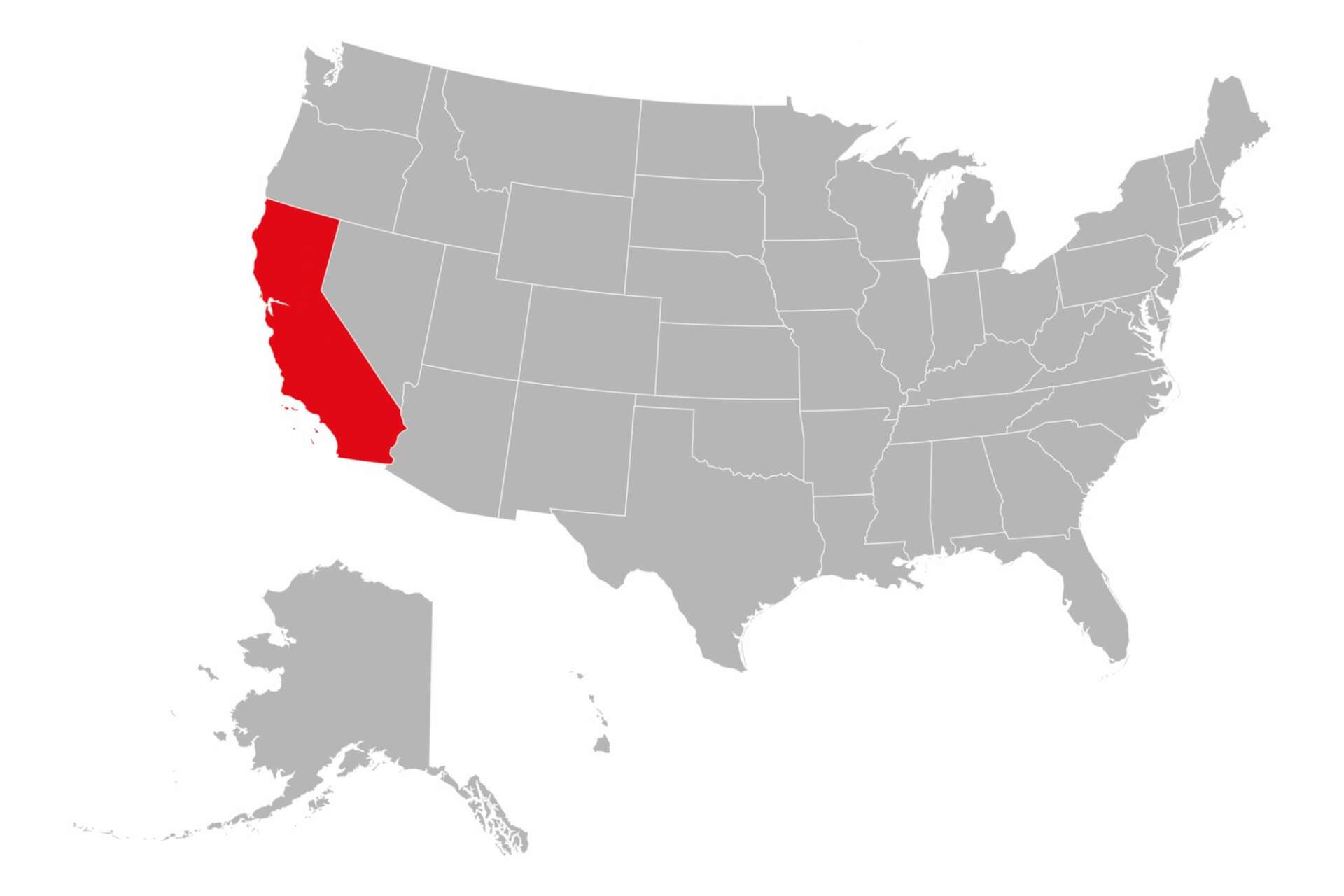
As previously noted, Arnold Schwarzenegger remains the last Republican to win a statewide election in California, having been re-elected as governor in 2006. For the United States Senate, the last Republican to win was Pete Wilson in 1988, who went on to become governor himself in 1991. Since then, both of California’s Senate seats have been held by Democrats.
This prolonged period without a Republican victory in a statewide contest is a defining historical characteristic of modern California politics. It reflects not just the continued demographic shifts but also the consolidation of a distinct Californian political identity, often characterized by progressive social values, a strong emphasis on environmental protection, and a generally interventionist approach to economic policy. The Republican Party in California has struggled to field candidates who can bridge the gap between these state-specific priorities and the national party platform, creating an ongoing historical challenge.
Beyond the Presidential Race: Localized Historical Pockets
While the statewide and presidential races tell a clear historical story of Democratic dominance, it’s important to recognize that the political landscape of California is not entirely monolithic. There remain localized historical pockets where Republican candidates can and do win elections. These areas are predominantly found in the more rural counties of the Central Valley, parts of Orange County, and certain mountainous or desert regions.
These areas often maintain a more conservative historical tradition, with economies rooted in agriculture or resource extraction, and populations that may hold different values than those in the bustling coastal metropolises of Los Angeles and San Francisco. Republican representation can still be found at the county, city, and even some congressional district levels in these regions. However, these localized successes are often insufficient to overcome the sheer numerical advantage and urban/suburban leanings of the state’s population centers in statewide contests. This historical geographical split offers insight into the diverse historical threads that still exist within the state.
In conclusion, the question of when a Republican last won California opens a fascinating window into the state’s dynamic political history. From the era of Ronald Reagan to the unique interlude of Arnold Schwarzenegger, California’s journey reflects profound demographic, social, and ideological shifts. These historical turning points have sculpted the state into the distinctive political entity it is today, making its political landscape a compelling landmark in the broader tapestry of American history. Understanding this journey is essential for any appreciation of the Golden State’s enduring legacy and its continuous evolution.
LifeOutOfTheBox is a participant in the Amazon Services LLC Associates Program, an affiliate advertising program designed to provide a means for sites to earn advertising fees by advertising and linking to Amazon.com. Amazon, the Amazon logo, AmazonSupply, and the AmazonSupply logo are trademarks of Amazon.com, Inc. or its affiliates. As an Amazon Associate we earn affiliate commissions from qualifying purchases.