
The question of whether the Zodiac Killer was ever caught in California resonates with a chilling persistence, a testament to one of the most infamous unsolved true crime sagas in American history. For over five decades, this elusive figure has cast a long shadow across the historical landscape of the Golden State, leaving behind a trail of terror, cryptic ciphers, and an enduring mystery that continues to captivate the public imagination and challenge law enforcement. The answer, definitively, is no: the individual known as the Zodiac Killer has never been officially identified or apprehended, leaving his true identity and ultimate fate shrouded in darkness.
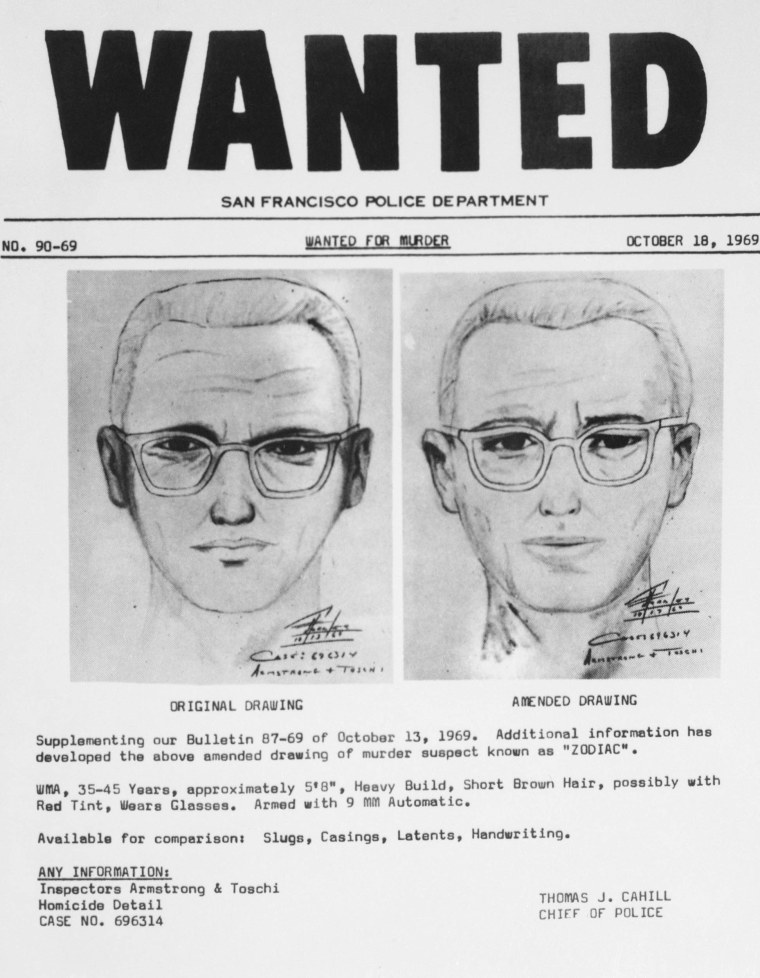
This enduring anonymity means that the locations associated with the Zodiac Killer’s crimes and communications have, in a morbid sense, become historical landmarks—places where a terrifying chapter of California’s past unfolded. These sites are not celebrated for their beauty or architectural grandeur but rather remembered for the horror they witnessed, serving as somber reminders of the victims and the unclosed case. Exploring the historical context of the Zodiac Killer’s reign involves revisiting these places and understanding their significance in the narrative of a deeply unsettling period in California’s rich, yet sometimes dark, history.
The Haunting Geography of the Zodiac Killer’s Reign
The Zodiac Killer’s activities were primarily concentrated in Northern California, specifically within a relatively contained geographic area that became the stage for his gruesome acts and taunting communications. These locations, once idyllic or ordinary, became indelibly marked by his presence, transforming into grim points of interest in the historical record of the case.
Early Attacks: Vallejo and its Outskirts
The Zodiac Killer’s confirmed attacks began in late 1968, marking a terrifying escalation from isolated incidents to a pattern of serial violence. The initial victims were young couples in secluded areas, a common target for thrill killers.
The first confirmed attack occurred on December 20, 1968, at Lake Herman Road in Benicia, on the outskirts of Vallejo, California. Seventeen-year-old David Faraday and sixteen-year-old Betty Lou Jensen were parked when they were shot and killed. This lonely stretch of road, traversing rural Solano County, became the first hallowed ground of the Zodiac Killer’s crimes, a grim historical marker where a nascent terror began.
Just a few months later, on July 4, 1969, another attack unfolded at Blue Rock Springs Park in Vallejo. Darlene Ferrin and Mike Mageau were targeted. Ferrin died, while Mageau survived, providing crucial details about the attacker. Blue Rock Springs Park, a recreational area often frequented by locals, quickly shed its innocent image to become another landmark of fear, forever associated with the Zodiac’s escalating brutality and his cold-blooded confidence. These sites in and around Vallejo represent the earliest chapters of a terror that would soon grip the entire region.
The Napa County Ambush and San Francisco Confrontation
The Zodiac Killer’s geographic reach and audacity grew significantly. On September 27, 1969, he attacked again, this time at Lake Berryessa in Napa County. Bryan Hartnell and Cecilia Shepard were enjoying a picnic when they were approached by a man wearing a hooded costume. Shepard was fatally stabbed, and Hartnell survived multiple stab wounds. The scene, a picturesque lakeside spot known for recreation, was transformed into a site of profound horror, a stark contrast between natural beauty and human cruelty. The killer’s choice of a disguise and the unique brutality of the attack added a new, disturbing dimension to his escalating profile.
Less than three weeks later, on October 11, 1969, the Zodiac Killer moved into the heart of a major metropolitan area: San Francisco. Taxi driver Paul Stine was shot and killed in his cab at the intersection of Washington Street and Cherry Street in the upscale Presidio Heights neighborhood. This particular crime, occurring in an urban setting and witnessed by teenagers, marked a chilling shift. It demonstrated the killer’s willingness to strike in public view, further cementing San Francisco as another historical locus of his crimes. The bloody cab, parked on a residential street, became an unforgettable image in the city’s grim history.
The Unseen Architect: Cryptic Communications and Public Taunts
Beyond the direct crime scenes, the Zodiac Killer’s legacy is equally defined by his unprecedented campaign of communication with the media and law enforcement. These letters, often boasting about his crimes, mocking authorities, and containing complex ciphers, effectively turned various newspaper offices into secondary “landmarks” of the case, processing his taunts and broadcasting his terrifying persona.
Newspapers as Conduits of Terror

The killer’s communications began shortly after the Blue Rock Springs Park attack, intensifying after the Lake Berryessa and Presidio Heights murders. Letters were sent to the San Francisco Chronicle, the San Francisco Examiner, and The Vallejo Times-Herald. These newspaper buildings, through which the killer’s messages were disseminated to a terrified public, became unwilling historical participants in the saga. They housed the original, handwritten notes, the infamous symbols, and the uncracked ciphers that remain part of the case’s enduring mystique. The act of publishing these letters turned the killer into a macabre celebrity, allowing him to control the narrative and spread fear on an unprecedented scale.
The Codes and Ciphers: Intellectual Taunts
The Zodiac’s ciphers, particularly the 408-character cipher sent with his first letters, and the later 340-character cipher, are perhaps the most iconic “artifacts” of the case. These complex puzzles, claimed by the killer to contain his identity, have only partially yielded their secrets. The 408 cipher was solved by a high school teacher and his wife, revealing a boastful message but no name. The 340 cipher remained unsolved for over 50 years until December 2020, when a team of code-breakers finally cracked it, revealing another chilling boast, but again, no definitive clue to his identity.
These ciphers represent a unique form of historical interaction, turning the pursuit of justice into an intellectual game orchestrated by a murderer. The cryptographic challenge became a key element of the Zodiac’s infamy, turning code-breaking into a national obsession and further cementing the killer’s place in the history of crime. The inability to fully decipher his true intent through these complex messages has only added to the frustrating allure of the unsolved case, making the ciphers themselves intellectual landmarks in the broader historical narrative of forensic investigation and public engagement.
Enduring Legacy: The Zodiac Killer in California’s Historical Conscience
The failure to apprehend the Zodiac Killer has left an indelible mark on California’s historical conscience, shaping both its legal and cultural landscape. The case remains an active cold case, a constant reminder of the limits of law enforcement and the chilling reality of an unknown predator.
Impact on Law Enforcement and Forensic Science
The Zodiac Killer case significantly influenced investigative techniques, particularly in the realm of forensic analysis and cold case management. It predated the widespread use of DNA evidence, leaving investigators with traditional forensics like fingerprints (though often inconclusive) and ballistics. The challenge of a killer who actively taunted and evaded capture, often seemingly a step ahead, underscored the need for enhanced inter-agency cooperation and the development of new profiling methods.
Today, law enforcement agencies in California, including the San Francisco Police Department, the Vallejo Police Department, and the Napa County Sheriff’s Office, continue to maintain active files on the Zodiac Killer, periodically revisiting evidence with advancements in forensic technology, such as sophisticated DNA testing that can extract profiles from increasingly minute samples. The case serves as a historical benchmark for how complex, prolonged investigations evolve with scientific progress, forever shaping the trajectory of cold case investigations across the state.
Cultural Iconography and the Shadow of the Unknown
Beyond its impact on criminology, the Zodiac Killer has permeated popular culture, solidifying his status as a legendary figure of terror in California history. Numerous books, documentaries, and feature films—most notably David Fincher’s 2007 “Zodiac”—have attempted to unravel the mystery, explore the lives of the victims, and delve into the obsessions of those who sought to unmask him. These cultural touchstones ensure that the story of the Zodiac Killer remains a vivid part of the state’s collective memory, continually drawing new generations into its unsettling narrative.
The historical sites themselves—Lake Herman Road, Blue Rock Springs Park, Lake Berryessa, and the quiet intersection in Presidio Heights—remain as solemn, unofficial monuments to the victims and the unresolved past. They are not tourist attractions in the conventional sense, but for those who study true crime or are drawn to the darker facets of history, these locations hold a chilling significance. They are places where historical events, however tragic, occurred, solidifying their status as somber landmarks in the historical landscape of California.
The Unclosed Chapter: The Search Continues
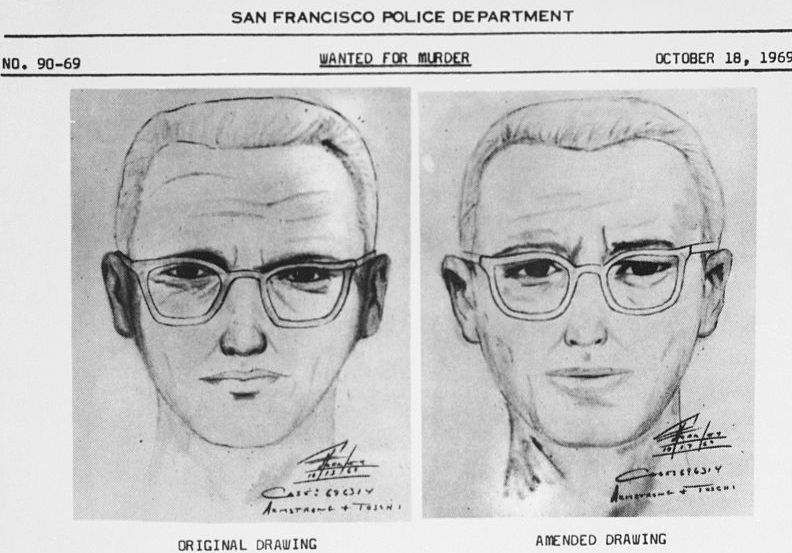
Despite the passage of over fifty years, the case of the Zodiac Killer remains technically open. No, they never caught the Zodiac Killer in California, at least not definitively, and certainly not to the satisfaction of justice or historical clarity. While various individuals have been identified as suspects over the decades, none have been conclusively proven to be the notorious killer.
The pursuit continues, driven by dedicated cold case detectives, independent researchers, and a public unwilling to let the mystery fade. The enduring question of the Zodiac’s identity underscores a fundamental aspect of historical inquiry: some questions, no matter how intensely pursued, may never yield a definitive answer. Yet, the continuous efforts to bring closure keep the historical narrative alive, reminding us of the enduring impact of a terror that once gripped a state and continues to resonate through its history. The landmarks of his crimes remain, silent witnesses to an unsolved enigma that forever altered the historical fabric of California.
LifeOutOfTheBox is a participant in the Amazon Services LLC Associates Program, an affiliate advertising program designed to provide a means for sites to earn advertising fees by advertising and linking to Amazon.com. Amazon, the Amazon logo, AmazonSupply, and the AmazonSupply logo are trademarks of Amazon.com, Inc. or its affiliates. As an Amazon Associate we earn affiliate commissions from qualifying purchases.