
The question of “how far” between two major cities like Chicago and Philadelphia is more than just a geographical query; it’s the fundamental starting point for any traveler planning a journey between these two vibrant American metropolises. Spanning a considerable distance across the United States, the journey from the heart of the Midwest to the historic East Coast presents a fascinating array of travel options, each with its own merits and considerations for time, cost, and experience. Understanding this distance, both in terms of miles and the practicalities of covering them, is crucial for crafting an efficient and enjoyable itinerary, whether for business or leisure.
The Geographic Reality: Distance and Location
At first glance, the distance between Chicago, Illinois, and Philadelphia, Pennsylvania, might seem daunting, but modern transportation infrastructure has significantly bridged this gap. Both cities are economic and cultural powerhouses, serving as major hubs in their respective regions.
Straight-Line vs. Driving Distance
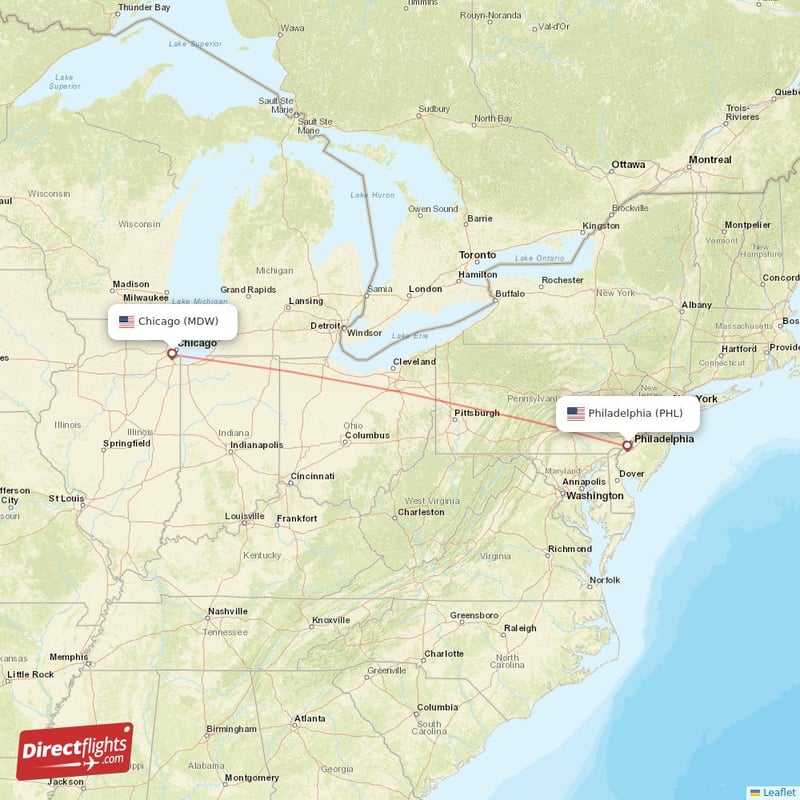
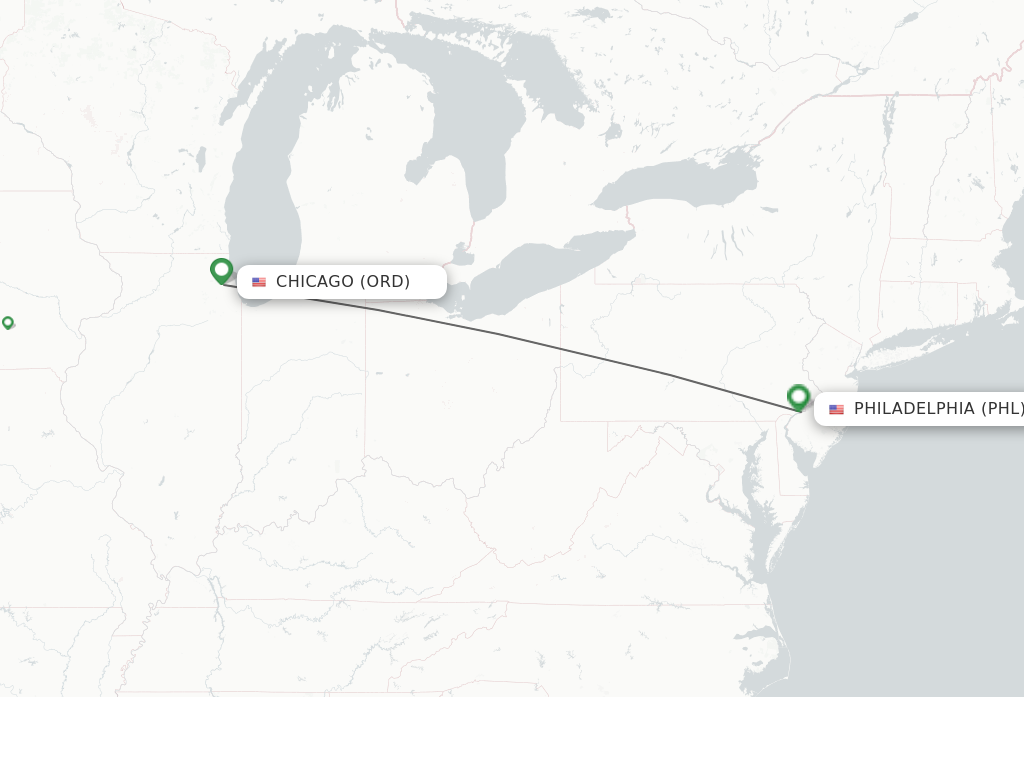
The straight-line or “as the crow flies” distance between the city centers of Chicago and Philadelphia is approximately 660 to 670 miles (around 1,060 to 1,080 kilometers). This is the shortest possible measure, primarily relevant for air travel planning.
However, for travelers embarking on a road trip, the actual driving distance is considerably longer due to the necessity of following established road networks. The typical driving route spans approximately 750 to 800 miles (about 1,200 to 1,280 kilometers), depending on the specific roads taken and any detours. This difference of roughly 100-140 miles underscores the winding nature of overland travel compared to direct aerial paths.
Why the Distance Matters
This significant distance dictates much about the travel experience. It transforms a quick hop into a substantial journey, requiring thoughtful planning. For air travel, it means a flight time of a few hours. For road travel, it translates into a full day or even a multi-day trip, demanding careful consideration of rest stops, fuel, and potential overnight stays. Understanding this fundamental geographical reality sets the stage for evaluating the most suitable mode of transport for individual needs and preferences. It also highlights the diverse landscapes and states travelers will traverse, offering a cross-section of American geography and culture.
Navigating the Journey: Transportation Options
Traveling between Chicago and Philadelphia offers a spectrum of transportation choices, each with its own unique advantages and disadvantages in terms of speed, cost, comfort, and environmental impact.
By Air: The Fastest Route
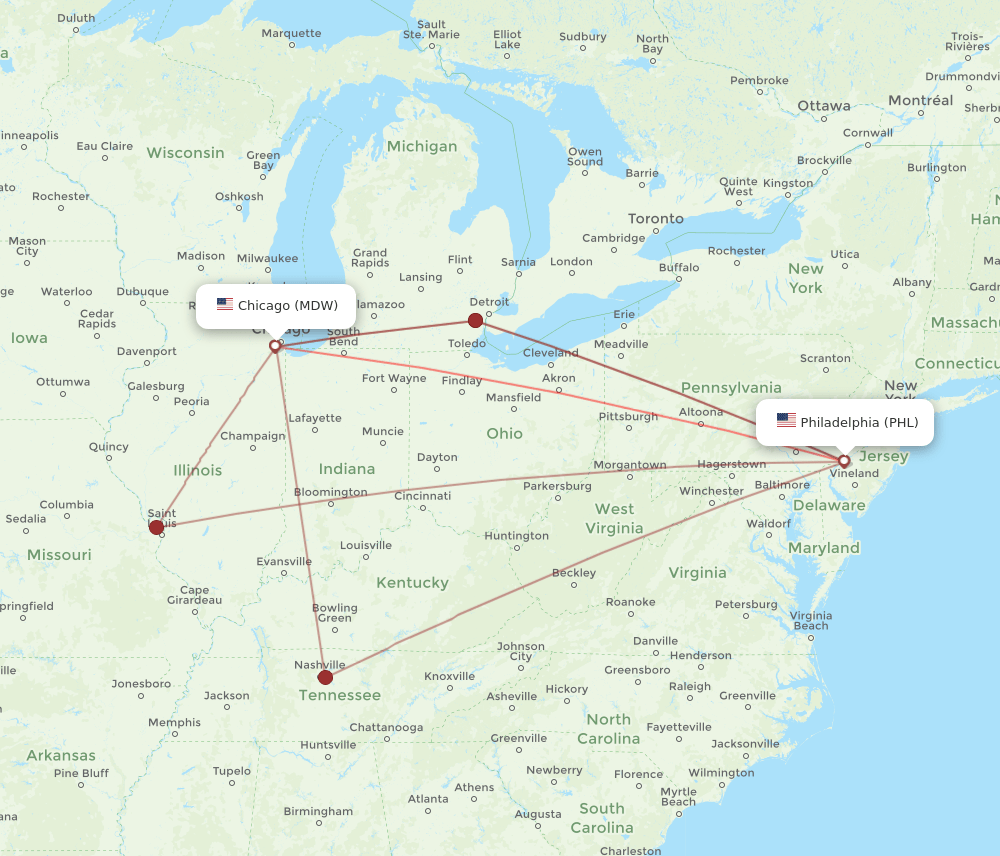
For those prioritizing speed, flying is unequivocally the most efficient option. Direct flights typically connect O’Hare International Airport (ORD) or Midway International Airport (MDW) in Chicago with Philadelphia International Airport (PHL).
- Flight Time: The actual in-air time for a direct flight is usually around 1 hour and 45 minutes to 2 hours.
- Total Travel Time: When factoring in airport security, check-in, boarding, and travel to and from the airports, the total door-to-door journey time typically extends to 4-6 hours.
- Airlines: Major carriers such as American Airlines, United Airlines, and Southwest Airlines frequently operate on this route.
- Cost: Airfare can vary wildly based on booking time, season, and airline. Expect prices to range from under $100 for budget airlines booked in advance to $300+ for peak travel or last-minute bookings.
- Pros: Fastest option, ideal for time-sensitive travel.
- Cons: Can be expensive, involves airport hassles (security, delays), and less scenic than ground travel.
By Car: A Scenic Road Trip
Embarking on a road trip offers flexibility and the opportunity to explore sights along the way, transforming the journey into an adventure itself. The driving distance is approximately 750-800 miles.
- Driving Time: A non-stop drive would take around 12-14 hours under ideal conditions (no traffic, minimal stops). However, this is an ambitious estimate for a single driver.
- Practical Travel Time: Most travelers opt to break the journey into two days, with an overnight stop. This allows for comfortable driving, meal breaks, and relaxation.
- Common Routes: The most common routes involve combinations of major interstates:
- I-80 East/I-90 East (Toll Roads): Travelers generally head east from Chicago on I-80 or I-90 through Indiana and Ohio. From Ohio, I-80 continues into Pennsylvania, often connecting with I-76 (the Pennsylvania Turnpike) towards Philadelphia.
- Cost: This involves fuel costs (significant for an 800-mile journey), potential toll fees (especially on the Pennsylvania Turnpike and parts of Ohio and Indiana), and possibly an overnight accommodation.
- Pros: Ultimate flexibility, ability to stop at attractions, can be cost-effective for groups/families.
- Cons: Long driving hours, potential for fatigue, weather dependency, tolls can add up.
By Train: A Relaxing Alternative
Amtrak offers train services connecting Chicago to Philadelphia, providing a more relaxed and scenic journey compared to flying or driving. While not as direct as a flight, it avoids the stresses of airport security and highway traffic.
- Travel Time: A typical Amtrak journey involves transfers, usually in Pittsburgh or Washington, D.C., and can take anywhere from 16 to 20 hours or even longer, depending on the specific connections. Routes like the Lake Shore Limited or Capitol Limited connect to services like the Northeast Regional.
- Cost: Train tickets vary greatly by class of service, booking time, and specific route. They can range from $80 for basic coach seats booked well in advance to several hundred dollars for flexible tickets or business class.
- Pros: Comfortable seating, ability to walk around, scenic views, no need for driving or airport security. Often drops you directly in city centers.
- Cons: Longest travel time, may require transfers, generally more expensive than bus travel.
By Bus: The Budget-Friendly Choice
Bus travel is typically the most economical option for covering the distance between Chicago and Philadelphia.
- Travel Time: Bus journeys are comparable to, or slightly longer than, driving. Expect anywhere from 15 to 20 hours, often with transfers in major cities like Cleveland or Pittsburgh.
- Operators: Companies like Greyhound and Megabus service this route.
- Cost: Bus tickets are generally the cheapest, often available for $50-$100 if booked in advance, though prices can increase closer to the travel date.
- Pros: Most affordable, especially for solo travelers on a tight budget.
- Cons: Longest and often least comfortable option, frequent stops, less personal space.
Planning Your Trip: Considerations for Travelers
Beyond simply choosing a mode of transport, a well-planned trip requires considering several factors that can significantly impact the overall experience.
Time and Budget Considerations
- Time of Year: Weather can heavily influence travel, especially for driving. Winter months can bring snow and ice across the Midwest and Northeast, leading to hazardous driving conditions and potential flight delays. Summer offers pleasant conditions but often higher prices and larger crowds. Spring and fall present a good balance.
- Flexibility: How much flexibility do you need? A road trip offers maximum spontaneity, while flights and trains require adherence to schedules.
- Budget: This is often the primary driver for choice. Flying is generally quickest but can be pricey. Buses are budget-friendly but time-consuming. Driving costs depend on fuel efficiency, tolls, and overnight stays.
- Purpose of Travel: Business travelers might prioritize speed (flying), while leisure travelers might value the journey itself (road trip, train).
Intermediate Stops and Points of Interest
For those opting for a road trip, the journey between Chicago and Philadelphia offers a wealth of potential stops that can enrich the experience. Breaking up the long drive not only makes it safer but also allows for exploration of different American regions.
- Indiana: Consider a stop at Indiana Dunes National Park for a unique natural landscape of beaches, forests, and dunes along Lake Michigan.
- Ohio: Cities like Cleveland offer attractions such as the Rock & Roll Hall of Fame. Columbus, the state capital, also provides a vibrant urban experience.
- Pennsylvania: Western Pennsylvania boasts Pittsburgh, a city rich in industrial history, bridges, and a thriving cultural scene. From Pittsburgh, one could detour to places like Frank Lloyd Wright’s Fallingwater or Gettysburg National Military Park before continuing to Philadelphia. These stops transform a mere transit into a discovery journey.
Beyond the Distance: What Awaits in Each City
While understanding the distance and how to traverse it is paramount, the ultimate reward is reaching these iconic destinations. Both Chicago and Philadelphia offer distinct and rich experiences for travelers.
Exploring the Windy City
Upon arrival in Chicago, travelers are greeted by a breathtaking skyline, world-class architecture, and a vibrant cultural scene. From the towering heights of the Willis Tower (formerly Sears Tower) and the unique art installations in Millennium Park (like “The Bean” – Cloud Gate), to the masterpieces housed in the Art Institute of Chicago and the family-friendly Lincoln Park Zoo, the city offers endless attractions. A deep-dish pizza is, of course, a quintessential Chicago experience, alongside exploring diverse neighborhoods, catching a Cubs game at Wrigleyville, or enjoying the shores of Lake Michigan.
Discovering the City of Brotherly Love
Philadelphia, the birthplace of American democracy, is steeped in history and charm. Visitors can walk the very streets where the nation was founded, exploring landmarks such as Independence Hall and the Liberty Bell. Beyond its historical significance, Philadelphia boasts a thriving culinary scene, famous for its cheesesteaks and vibrant Reading Terminal Market. The Philadelphia Museum of Art (with its iconic “Rocky Steps”) and the bohemian vibe of the South Street district offer diverse entertainment. Its blend of historic gravitas and modern urban energy makes it a compelling destination.
In conclusion, the journey from Chicago to Philadelphia is a significant undertaking, whether measured in 660 aerial miles or 800 driving miles. However, with careful planning and consideration of the myriad transportation options and potential scenic detours, this distance transforms from a logistical challenge into an exciting opportunity for exploration and discovery, connecting two of America’s most captivating cities.
LifeOutOfTheBox is a participant in the Amazon Services LLC Associates Program, an affiliate advertising program designed to provide a means for sites to earn advertising fees by advertising and linking to Amazon.com. Amazon, the Amazon logo, AmazonSupply, and the AmazonSupply logo are trademarks of Amazon.com, Inc. or its affiliates. As an Amazon Associate we earn affiliate commissions from qualifying purchases.