
The Willis Tower stands as an undisputed titan of the Chicago skyline, a monumental testament to human ambition and engineering prowess. More than just a building, it is a global icon, instantly recognizable and deeply woven into the fabric of the city’s identity. Its sheer scale captivates onlookers, prompting a natural curiosity about its precise dimensions. For decades, it held the title of the world’s tallest building, a crown that garnered international attention and solidified its place in architectural history. Today, while other structures have surpassed its peak, the Willis Tower remains a towering presence, a beacon for tourists and a symbol of Chicago’s enduring spirit of innovation. Understanding its height is not merely about reciting a number; it’s about appreciating the audacity of its design, the challenges overcome in its construction, and its continued significance as a landmark in the United States.

An Icon of American Ingenuity and Architectural Might
The story of the Willis Tower is one of visionary thinking and groundbreaking engineering. When conceived in the early 1970s, it aimed to consolidate the vast operations of Sears, Roebuck and Company, then the world’s largest retailer. The ambition was not merely to build a large office block but to construct an architectural marvel that pushed the boundaries of what was thought possible for supertall structures. This ambition gave birth to a building that would redefine skylines and set new global benchmarks for height and design.
Defining a Skyscraper’s Stature
When discussing the height of a skyscraper, multiple metrics can be used, often leading to confusion. The primary measurement is the architectural top, which includes spires but excludes antennas, flagpoles, or other functional-technical equipment. A secondary measurement often includes the tip of the highest point, encompassing antennas. For the Willis Tower, these distinctions are particularly relevant due to its prominent communication antennas that dramatically extend its visible reach into the sky. Its original design by Skidmore, Owings & Merrill (SOM), led by architect Bruce Graham and structural engineer Fazlur Rahman Khan, introduced the innovative “bundled tube” design. This revolutionary structural system allowed for the creation of unprecedented heights by essentially grouping nine structural tubes of varying heights, providing immense strength against the fierce winds of Chicago and efficient use of floor space.
The Quest for the Heavens: A Brief History
Construction of what was then known as the Sears Tower began in August 1970 and was completed in May 1973. For nearly 25 years, from its completion until 1998, it proudly stood as the tallest building in the world, a symbol of American economic power and architectural innovation. Its ascendancy marked a pivotal moment in the global race for skyscraper supremacy, drawing eyes from around the globe to Chicago. The construction involved thousands of workers and an immense amount of steel and concrete, pushing the limits of construction technology of its era. This historical context is vital when considering the tower’s stature today, as it set a precedent for future supertall buildings and solidified Chicago’s reputation as a cradle of modern skyscraper design.
Measuring the Colossus: The Numbers Behind the Legend
The definitive answer to “How tall is Willis Tower?” requires delving into specific measurements that capture its true scale, both architecturally and functionally. These figures not only satisfy curiosity but also underscore the building’s monumental impact on the urban landscape.
Official Height and Antennas
The official architectural height of the Willis Tower is 1,450 feet (442 meters) to the top of its highest structural element. This measurement firmly places it among the tallest buildings in the United States and the world. However, this figure does not account for its two prominent television and radio broadcasting antennas. When including the tip of the western antenna, the total height reaches an astonishing 1,729 feet (527 meters). This distinction is crucial, as the visible impact of the antennas extends the tower’s vertical reach significantly, making it appear even taller from various vantage points across Chicago. The decision to incorporate such extensive antenna structures was driven by practical broadcasting needs, yet it inadvertently contributed to the tower’s overall iconic silhouette.
From Sears Tower to Willis Tower: A Name Change and its Impact
For decades, the building was universally known as the Sears Tower, a name synonymous with its original corporate owner and its groundbreaking status. However, in 2009, its naming rights were acquired by Willis Group Holdings, a global insurance broker, leading to its renaming as the Willis Tower. This name change, while initially met with some local resistance and nostalgia for the old name, did not diminish the building’s physical stature or its significance as a landmark. The structure itself remained the same awe-inspiring height, continuing to draw visitors and function as a major commercial hub. The name change is an interesting facet of its history, reflecting evolving corporate landscapes, but its physical presence and architectural achievements remain undiminished regardless of its moniker.
Comparative Heights in a Global Context
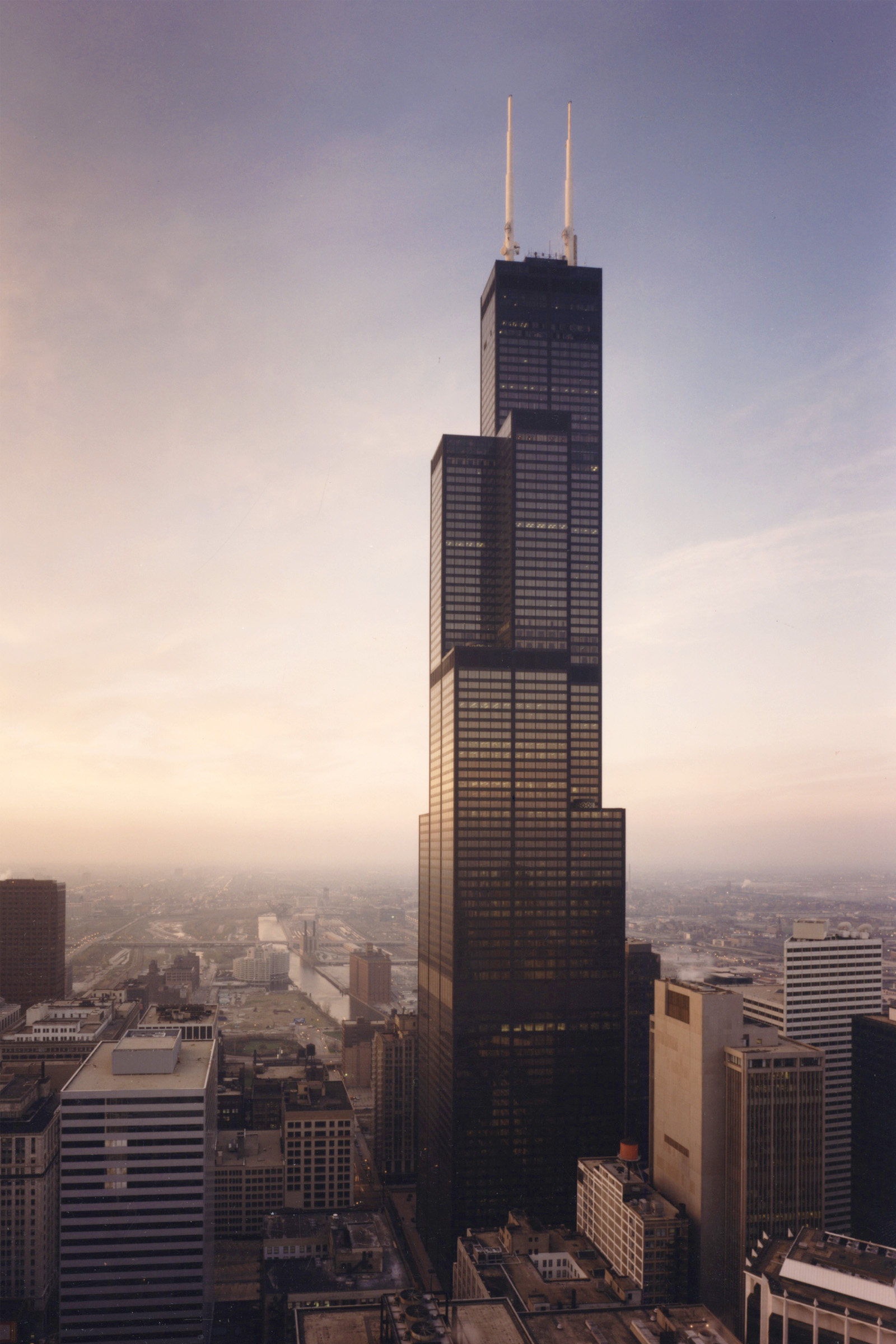
While the Willis Tower held the world’s tallest title for a quarter-century, the global skyscraper race has since pushed boundaries even further. Today, structures like the Burj Khalifa in Dubai, the Shanghai Tower in China, the Abraj Al-Bait Clock Tower in Mecca, and Taipei 101 in Taiwan have surpassed its architectural height. Nevertheless, the Willis Tower remains a towering achievement, still ranking among the top 25 tallest buildings globally by architectural height and within the top 10 in the United States. Its enduring presence alongside other Chicago giants like the John Hancock Center (now 875 N Michigan Avenue) underscores Chicago’s continued prominence as a city that cherishes and pioneers vertical architecture. These comparisons don’t diminish the Willis Tower’s grandeur but rather place its historical and contemporary significance within the broader narrative of global urban development.
Beyond the Bricks and Mortar: The Willis Tower Experience
The Willis Tower is far more than just a colossal structure; it offers a profound sensory and intellectual experience to its millions of annual visitors. Its allure lies not only in its height but also in the unique ways it allows people to engage with that height and the panoramic vistas it commands.
Skydeck Chicago: A Panoramic Perspective
At the heart of the visitor experience is Skydeck Chicago, located on the 103rd floor. Here, guests are whisked up by high-speed elevators, ascending to an elevation of approximately 1,353 feet (412 meters) in a mere 60 seconds. From this vantage point, visitors are treated to unparalleled 360-degree views stretching up to 50 miles (80 kilometers) on a clear day, encompassing four states: Illinois, Indiana, Wisconsin, and Michigan. The sheer scale of Chicago and its surrounding landscape becomes evident, offering a unique perspective on urban planning, the vastness of Lake Michigan, and the intricate grid of the city below. The Skydeck Chicago experience is meticulously designed to be both educational and thrilling, providing interactive exhibits that delve into the tower’s history, construction, and its place in popular culture.
The Ledge: Stepping into the Void
For those seeking an even greater thrill, The Ledge offers an unforgettable, heart-pounding encounter with the height. Extending approximately four feet from the main structure on the 103rd floor, The Ledge consists of four glass boxes with transparent floors, walls, and ceiling. Stepping into one of these enclosures creates the sensation of floating 1,353 feet above the bustling streets of the Loop district. This daring architectural feature provides an exhilarating and unique photo opportunity, allowing visitors to conquer their fear of heights (or embrace it) while suspended seemingly in mid-air. It’s an engineering marvel in itself, providing a safe yet profoundly intense experience that showcases the innovation embedded within the Willis Tower’s design.
Architecture and Engineering Marvels
The Willis Tower’s innovative “bundled tube” structural system, a brainchild of Fazlur Rahman Khan, revolutionized skyscraper design. This system consists of nine square tubes that rise to varying heights, creating the tower’s distinctive stepped-back silhouette. Two of these tubes rise to the full 110 stories, two others to 90 stories, three to 66 stories, and the final two to 50 stories. This modular approach not only provided exceptional structural integrity against wind loads but also allowed for flexibility in floor plate sizes, making the building highly efficient and adaptable for different tenants. The black aluminum and bronze-tinted glass façade further contribute to its imposing and timeless aesthetic, reflecting the urban environment and the changing skies of Chicago. Its architecture is not merely about form; it’s about a sophisticated integration of function, aesthetics, and structural ingenuity that has influenced skyscraper construction worldwide.
The Enduring Legacy of a Chicago Giant
Decades after its completion, the Willis Tower continues to exert a profound influence, shaping both the physical and cultural landscape of Chicago and beyond. Its legacy is multifaceted, touching upon economic vitality, cultural representation, and an enduring symbol of ambition.
Economic and Cultural Significance
Beyond its structural magnificence, the Willis Tower remains a significant economic engine for Chicago. It houses a vibrant ecosystem of businesses, from technology firms to financial services, contributing to the city’s commercial dynamism. The constant flow of office workers and millions of tourists supports local businesses in the Loop and surrounding areas. Culturally, the tower is deeply ingrained in the city’s identity. It frequently appears in films, television shows, and promotional materials, serving as a shorthand for Chicago itself. Its image is synonymous with the city’s architectural heritage, often featured in art, photography, and literature, symbolizing the pioneering spirit that built modern Chicago. It stands as a testament to the city’s role as a crucible of modern architecture, continually attracting talent and innovation in urban design.

A Symbol of Chicago’s Skyline
The Willis Tower’s distinct profile, with its stepped-back design and prominent antennas, is instantly recognizable and forms a quintessential part of the Chicago skyline. It anchors the city’s famous architectural ensemble, standing proud among other notable structures. Its presence provides a consistent point of reference, whether viewed from Lake Michigan, a plane arriving at O’Hare International Airport, or from a nearby street. For both residents and visitors, it evokes a sense of pride and wonder, a tangible representation of human achievement. The tower doesn’t merely occupy space; it defines it, setting a benchmark for verticality and contributing to the global narrative of urban development and architectural excellence. It continues to be a pilgrimage site for architecture enthusiasts and a source of inspiration for future generations of builders and designers.
In conclusion, the Willis Tower stands at an architectural height of 1,450 feet (442 meters), extending to 1,729 feet (527 meters) including its antennas. These impressive numbers only begin to tell the story of a building that revolutionized skyscraper design, captivated the world, and remains an indispensable landmark of Chicago. It is a structure that transcends its physical dimensions, embodying the spirit of innovation, providing breathtaking experiences, and serving as an enduring symbol of human ambition soaring to the heavens. Its legacy is etched not only into the steel and glass of its towering form but also into the very identity of the vibrant city it calls home.
LifeOutOfTheBox is a participant in the Amazon Services LLC Associates Program, an affiliate advertising program designed to provide a means for sites to earn advertising fees by advertising and linking to Amazon.com. Amazon, the Amazon logo, AmazonSupply, and the AmazonSupply logo are trademarks of Amazon.com, Inc. or its affiliates. As an Amazon Associate we earn affiliate commissions from qualifying purchases.