
In the dynamic world of lifestyle and travel content creation, credibility is paramount. From detailing the rich history of a landmark in Rome to chronicling an authentic culinary experience in Bangkok, the ability to present accurate, well-researched information is what distinguishes compelling content from mere anecdote. This is where the Chicago Manual of Style (CMS) emerges as an invaluable tool. While often associated with academic writing, the Chicago style offers a robust framework for citing sources that can significantly enhance the authority and trustworthiness of your blog posts, articles, and digital narratives. For content creators aiming to build a reputable brand and deeply engage their audience, understanding and implementing Chicago style is not just good practice—it’s a strategic advantage. This comprehensive guide will demystify the Chicago style, tailoring its principles to the unique needs of lifestyle and travel content, ensuring your stories are not only captivating but also impeccably supported.

Decoding the Chicago Manual of Style for Engaging Travel Narratives
The digital landscape is saturated with information, making it challenging for content to stand out. For travel and lifestyle writers, conveying authenticity and depth often relies on referencing a wide array of sources—from historical texts and cultural studies to personal interviews and official tourism websites. The Chicago Manual of Style provides a versatile and comprehensive system for acknowledging these sources, ensuring intellectual honesty and bolstering your content’s authority.
What is the Chicago Manual of Style?
The Chicago Manual of Style, first published in 1906 by the University of Chicago Press, is one of the most widely respected and comprehensive style guides in the publishing world. It offers guidelines on grammar, usage, punctuation, and, most notably, citation. Unlike more prescriptive styles that might focus on specific disciplines, Chicago is known for its flexibility and adaptability across a broad spectrum of subjects, making it particularly well-suited for the eclectic nature of lifestyle and travel writing. Its principles guide how to attribute ideas, facts, and direct quotes to their original creators, preventing plagiarism and allowing readers to trace information back to its source.
Why Chicago Style for Lifestyle and Travel Content?
While some might see citation as purely academic, its application in lifestyle and travel blogging serves crucial purposes:
- Building Credibility and Trust: When you cite your sources, you demonstrate diligence and respect for intellectual property. This builds trust with your audience, positioning you as a reliable authority in your niche. Readers are more likely to return to a source they deem credible, especially when planning their own adventures or making lifestyle choices.
- Enhancing Depth and Authority: Citing allows you to draw upon expert knowledge, historical facts, and cultural insights without claiming them as your own. This enriches your narratives, providing a deeper understanding of destinations, traditions, or phenomena. For instance, when describing the architectural nuances of a cathedral in Paris, referencing an art history book or an architectural journal lends significant weight to your observations.
- Facilitating Further Exploration: For an engaged audience, your article might be just the beginning. Proper citations provide a roadmap for curious readers to delve deeper into topics that pique their interest, whether it’s the history of a specific dish, the socio-economic impact of tourism on a local community, or the geological formation of a natural wonder.
- Protecting Against Plagiarism: In the digital age, content can be easily duplicated or rephrased. By meticulously citing, you safeguard your content from accusations of plagiarism, upholding ethical standards in your professional practice.
Mastering the Two Citation Systems: Notes-Bibliography vs. Author-Date
The Chicago Manual of Style is distinctive for offering two primary citation systems, each suited for different types of content and reader expectations. Understanding which system to employ is key to effective citation in your lifestyle and travel content.
The Notes and Bibliography System (NB) Explained
The Notes and Bibliography (NB) system is the most common choice for disciplines in the humanities, including history, literature, and the arts—making it highly appropriate for rich, descriptive travelogues and cultural explorations. This system uses:
- Footnotes or Endnotes: These concise notes appear at the bottom of the page (footnotes) or at the end of the document (endnotes) and correspond to a superscript number in the main text. Each note provides specific information about the source for a particular piece of information or direct quote.
- A Comprehensive Bibliography: This alphabetical list appears at the very end of your article and includes full publication details for every source cited in your notes, along with any other sources consulted during your research.
Example for a Travel Blog:
Imagine you’re writing about the history of the Eiffel Tower.
- In-text: “Built for the 1889 World’s Fair, the Eiffel Tower was initially met with mixed reactions from Parisians.”¹
- Footnote/Endnote: ¹ Jane Doe, The Wonders of Paris: A Historical Guide (New York: Travel Publishing, 2020), 45.
- Bibliography Entry: Doe, Jane. The Wonders of Paris: A Historical Guide. New York: Travel Publishing, 2020.
The NB system is ideal for lifestyle content that benefits from detailed historical context, cultural insights, or specific facts where the full bibliographic entry provides immediate context without interrupting the narrative flow.
The Author-Date System for Specific Audiences
The Author-Date system is primarily used in the physical, natural, and social sciences. It offers a more streamlined approach to in-text citations, making it suitable for content where the author and publication year are most critical. This system uses:
- Parenthetical Citations: Brief citations are placed directly within the text, usually at the end of a sentence, including the author’s last name and the year of publication (e.g., (Smith 2018)). If quoting directly, a page number is also included (e.g., (Smith 2018, 123)).
- A Reference List: Similar to a bibliography, this list at the end of your article provides full publication details for all sources cited in your text.
Example for a Lifestyle Article discussing travel trends:
- In-text: “Sustainable tourism practices have seen a significant increase in adoption over the past decade (Johnson 2021).”
- Reference List Entry: Johnson, Alex. 2021. The Future of Travel: Sustainable Practices for the Modern Tourist. London: Green Globe Publishing.
While less common for traditional travelogues, the Author-Date system can be effective for lifestyle articles that focus on data, research findings, or studies—for example, a piece discussing the economic impact of tourism or statistics on wellness retreats.
For most lifestyle and travel bloggers, the Notes and Bibliography system will likely be the more intuitive and narratively enhancing choice, allowing for rich, detailed explanations in notes without cluttering the main text.
Practical Applications: Citing Key Travel and Lifestyle Resources
The beauty of the Chicago Manual of Style lies in its ability to handle a vast array of source types. For lifestyle and travel content creators, this means you can confidently cite everything from classic guidebooks to dynamic online content.
Books and E-books (Guidebooks, Travelogues)
Books are often foundational for historical context, cultural understanding, or destination guides.
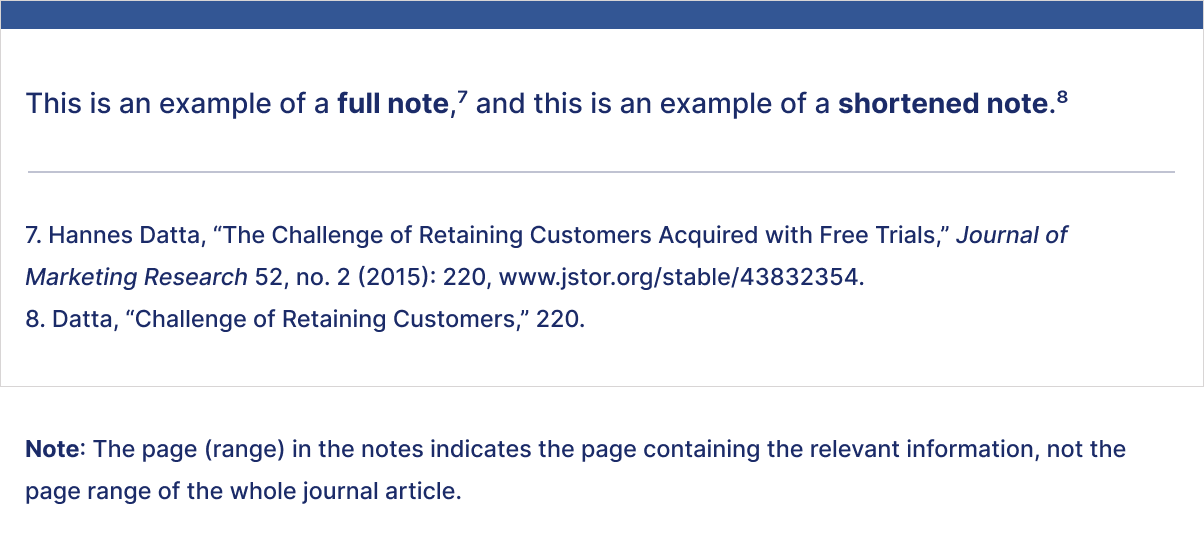
- Footnote/Endnote (First Citation): Author First Name Last Name, Book Title: Subtitle (City: Publisher, Year), page number.
- Example: ¹ Sarah Miller, Journey Through the Andes: A Cultural Exploration (Lima: Andean Press, 2019), 78.
- Bibliography: Last Name, First Name. Book Title: Subtitle. City: Publisher, Year.
- Example: Miller, Sarah. Journey Through the Andes: A Cultural Exploration. Lima: Andean Press, 2019.
Websites and Blogs (Other Travel Blogs, Official Tourism Sites)
The internet is a primary source for up-to-date travel information, local recommendations, and visual content.
- Footnote/Endnote (First Citation): Author First Name Last Name (if available), “Page Title,” Website Name, last modified/published Month Day, Year, URL.
- Example: ² Tourism Canada, “Exploring the Canadian Rockies,” Canada.travel, accessed October 26, 2023, https://www.canada.travel/rockies.
- Bibliography: Last Name, First Name (if available). “Page Title.” Website Name. Last modified/published Month Day, Year. URL.
- Example: Tourism Canada. “Exploring the Canadian Rockies.” Canada.travel. Accessed October 26, 2023. https://www.canada.travel/rockies.
Articles (Magazines, Journals, Newspapers)
For in-depth analyses, current events, or specialized insights into travel and lifestyle topics.
- Footnote/Endnote (First Citation): Author First Name Last Name, “Article Title,” Magazine/Journal Title Volume, no. Issue (Month Year): page number (if print) or URL (if online).
- Example: ³ David Chen, “The Resurgence of Train Travel in Europe,” Travel Explorer Monthly, May 2023, https://www.travelexplorer.com/train-travel.
- Bibliography: Last Name, First Name. “Article Title.” Magazine/Journal Title Volume, no. Issue (Month Year). URL.
- Example: Chen, David. “The Resurgence of Train Travel in Europe.” Travel Explorer Monthly, May 2023. https://www.travelexplorer.com/train-travel.
Interviews and Personal Communications
Often, your unique content comes from direct interaction with locals, experts, or fellow travelers.
- Footnote/Endnote (First Citation): First Name Last Name (of interviewee), type of communication (e.g., interview, email), Month Day, Year.
- Example: ⁴ Maria Rodriguez, interview by author, Mexico City, October 15, 2023.
- Bibliography: Personal communications are usually only cited in notes and not included in the bibliography unless they are archival or widely available.
Visuals and Multimedia (Photos, Videos, Maps)
Attributing images, maps, or video clips is crucial, especially in visual-heavy travel content.
- Footnote/Endnote (First Citation): “Description of Image/Video,” creator/owner, Platform/Website, Year, URL.
- Example: ⁵ “Sunrise over Machu Picchu,” Photography by Alex Varga, Instagram, 2022, https://www.instagram.com/p/BcdEfGhIJKL.
- Bibliography: Varga, Alex. “Sunrise over Machu Picchu.” Instagram. 2022. https://www.instagram.com/p/BcdEfGhIJKL.
Ensuring Accuracy and Credibility in Your Travel Stories
Beyond merely knowing the formats, truly mastering Chicago style involves a commitment to accuracy and consistency. This commitment significantly elevates the quality and trustworthiness of your lifestyle and travel content.
The Importance of a Consistent Approach
One of the cornerstones of effective citation is consistency. Once you choose a system (Notes-Bibliography or Author-Date), stick with it throughout your entire article or series. Similarly, ensure that all elements within each citation—punctuation, capitalization, order of information—are uniform. Inconsistency, even minor, can undermine the professional appearance and perceived credibility of your work. For a travel blog covering diverse topics and destinations, maintaining a coherent citation style across all posts reinforces your brand’s commitment to quality and attention to detail.
Tools and Resources for Chicago Style Adherence
While the Chicago Manual of Style is a comprehensive guide, remembering every nuanced rule can be daunting. Fortunately, numerous resources are available to assist content creators:
- The Official Chicago Manual of Style Online: The digital version (CMOS Online) offers a searchable database, quick guides, and Q&A forums, making it an invaluable resource for specific questions.
- Purdue OWL (Online Writing Lab): A free and widely respected resource, Purdue OWL provides clear, concise guides for various citation styles, including Chicago. It’s an excellent starting point for understanding basic formats.
- Citation Management Tools: Software like Zotero, Mendeley, or EndNote can help you organize your sources and automatically generate citations and bibliographies in Chicago style. While these might be more complex than needed for a simple blog post, they are incredibly useful for longer research-heavy articles or e-books.
- Online Citation Generators: Websites like BibMe or Cite This For Me can quickly format citations for you. However, always double-check their output against official guidelines, as automated tools can sometimes make errors.
Elevating Your Content: The Ethical Edge of Proper Citation
In the competitive landscape of lifestyle and travel blogging, where authenticity and unique perspectives are highly prized, proper citation serves as a powerful ethical tool. It’s not just about avoiding penalties; it’s about building a foundation of integrity that resonates deeply with your audience and differentiates your brand.
Building Trust with Your Audience
When readers encounter properly cited information, they recognize the effort and research behind your content. This transparency fosters trust, making your audience feel more confident in the advice, recommendations, and insights you provide. Whether you’re sharing the best hidden gems in Kyoto or offering tips for budget travel to Portugal, verifiable information sourced ethically strengthens your voice and positions you as a reliable guide. This trust translates into reader loyalty, increased engagement, and ultimately, a more impactful online presence.

Avoiding Plagiarism and Protecting Your Brand
Plagiarism, whether intentional or accidental, can have severe repercussions, from damaging your reputation to legal challenges. By consistently applying the Chicago Manual of Style, you clearly demarcate your original thoughts and experiences from those gleaned from other sources. This meticulous attribution safeguards your brand’s integrity, proving that your content is born from genuine effort and respect for intellectual property. In an era where content creators are increasingly scrutinized for originality and ethics, demonstrating a commitment to proper citation is a proactive measure that protects your professional standing and ensures the longevity of your online brand. It allows you to freely draw upon a wealth of knowledge to create compelling narratives, all while standing firm on the bedrock of ethical content creation.
LifeOutOfTheBox is a participant in the Amazon Services LLC Associates Program, an affiliate advertising program designed to provide a means for sites to earn advertising fees by advertising and linking to Amazon.com. Amazon, the Amazon logo, AmazonSupply, and the AmazonSupply logo are trademarks of Amazon.com, Inc. or its affiliates. As an Amazon Associate we earn affiliate commissions from qualifying purchases.