
For travelers and residents alike, particularly those with a spiritual inclination or an interest in understanding local cultural rhythms, knowing the precise timing of daily prayers can be a crucial aspect of planning one’s day. In Chicago, a city renowned for its diverse cultural tapestry and welcoming atmosphere, the Maghrib prayer marks a significant moment in the daily life of its Muslim community. This particular prayer, observed at sunset, carries profound spiritual and cultural weight, signifying the breaking of the day’s fast during Ramadan or simply marking the transition from day to night. Understanding when Maghrib occurs is not just about religious observance; it’s about connecting with the local environment, respecting cultural practices, and facilitating a smooth, enriching experience in the bustling metropolis of Chicago. This guide delves into the nuances of Maghrib prayer times in the Windy City, offering insights into its significance, how to accurately determine its schedule, and how to immerse oneself in the rich cultural experience surrounding it.

Understanding Maghrib Prayer and Its Significance
Maghrib is one of the five obligatory daily prayers (Salat) in Islam, observed by Muslims worldwide. Each prayer has a specific window of time based on the position of the sun, and Maghrib is distinct for its close association with sunset. Its timing makes it particularly poignant, often coinciding with family gatherings, the breaking of fasts, and a reflective pause as the day concludes.
The Pillars of Islam and Daily Prayers
The five daily prayers form one of the fundamental pillars of Islam, serving as a direct connection between a worshipper and God. They are Fajr (dawn), Dhuhr (noon), Asr (afternoon), Maghrib (sunset), and Isha (night). Each prayer has a prescribed ritual and a specific time slot within which it must be performed. For observant Muslims, these prayers punctuate the day, providing structure, spiritual renewal, and a constant reminder of their faith. Maghrib, falling at the precise moment the sun disappears below the horizon, is often seen as a moment of gratitude for the day’s blessings and an appeal for guidance into the night.
The Cultural and Spiritual Importance of Maghrib
Beyond its religious obligation, Maghrib holds immense cultural and spiritual significance. It’s a time when families often gather, particularly during the holy month of Ramadan, when the Maghrib call to prayer signals the end of the day-long fast (Iftar). This communal aspect fosters a strong sense of unity and shared experience. Spiritually, it’s a moment of transition and introspection. The fading light symbolizes the ephemeral nature of life and the eternal presence of the divine. For visitors to Chicago, witnessing or participating in this prayer can offer a unique window into the city’s diverse spiritual landscape and the rich traditions of its Muslim community.
The Astronomical Basis: Sunset
The timing of Maghrib prayer is entirely dependent on the astronomical phenomenon of sunset. This means it varies significantly throughout the year due to the Earth’s tilt and its orbit around the sun. In summer, sunset occurs much later, leading to longer gaps between afternoon and evening prayers, while in winter, it comes much earlier. This natural rhythm dictates the daily life of Muslim communities, influencing everything from meal times to social gatherings. In a city like Chicago, located at a northern latitude, these seasonal variations are quite pronounced, making accurate prayer time determination essential.
How to Accurately Determine Maghrib Times in Chicago
Given that prayer times are dictated by the sun’s position, they are not static. For Chicago, a city subject to distinct seasonal changes, obtaining accurate and up-to-date prayer schedules is crucial. Fortunately, there are several reliable methods to do so, catering to both residents and visitors.
Leveraging Technology: Apps and Websites
In the digital age, technology offers the most convenient and accurate way to determine prayer times. Numerous smartphone applications and websites are dedicated to providing precise prayer schedules based on your geographical location. Apps like “Muslim Pro,” “Athan,” or “Prayer Times” use your device’s GPS to calculate timings down to the minute, often incorporating various calculation methods (such as those from ISNA, Umm Al-Qura University, or the World Muslim League) to suit different theological preferences. Similarly, websites of reputable Islamic organizations or local mosques in Chicago often publish monthly or yearly prayer calendars. These digital tools are invaluable for travelers who need real-time updates as they move between different time zones or locations.
Consulting Local Mosques and Islamic Centers
For a truly authentic and community-aligned experience, consulting local mosques and Islamic centers is highly recommended. These institutions are the primary hubs for Muslim communities and meticulously calculate and display daily prayer times, often adjusted for local observations. Mosques like the Masjid Al-Taqwa, the Islamic Community Center of Illinois, or the Downtown Islamic Center in Chicago will have easily accessible prayer schedules, either posted physically or available on their respective websites. This method not only provides accurate timings but also offers an opportunity to connect with the local Muslim community, ask questions, and perhaps even participate in congregational prayers, gaining a deeper insight into local customs.
Factors Influencing Prayer Times (Seasons, Latitude)
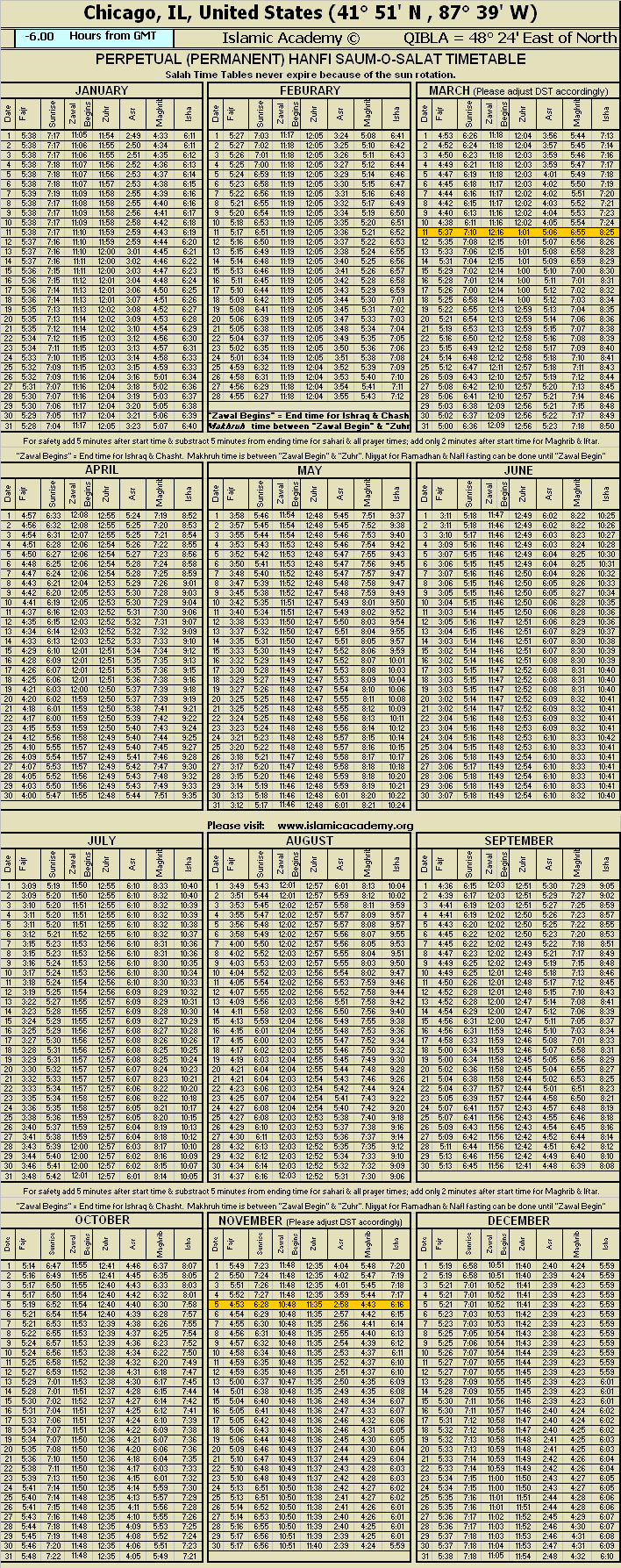
It’s important to understand why prayer times, especially Maghrib, fluctuate. As mentioned, the Earth’s orbit and tilt mean that the duration of daylight changes throughout the year. Chicago’s relatively northern latitude (around 41.8° N) means it experiences significant differences in sunrise and sunset times between summer and winter. In the summer months, Maghrib can occur as late as 8:30 PM or even later, while in the depths of winter, it might be as early as 4:30 PM. Furthermore, the exact calculation method used by different Islamic authorities can lead to slight variations (a few minutes) in prayer times, particularly for Fajr and Isha. While these differences are minor, they are good to be aware of for those who prefer to adhere to a specific school of thought or local community practice.
Experiencing Maghrib in Chicago: A Cultural and Spiritual Journey
Beyond simply knowing the time, experiencing Maghrib in Chicago offers a profound opportunity to engage with the city’s vibrant Muslim community and its rich cultural contributions. For both Muslim visitors and those interested in cultural exploration, this can be a highlight of their trip.
Iconic Mosques and Islamic Centers in Chicago
Chicago is home to a number of beautiful mosques and active Islamic centers that serve as spiritual homes and community hubs. Visiting one of these institutions during Maghrib can be an incredibly enriching experience.
- Masjid Al-Taqwa: Located on the north side, this mosque is a significant community center, known for its welcoming atmosphere and active programs.
- Islamic Community Center of Illinois: A large and prominent center in the suburbs, it often hosts interfaith dialogues and educational events, making it a great place to learn more about Islam in the Midwest.
- Downtown Islamic Center: Situated in the heart of the city, this center serves the needs of downtown workers and visitors, offering a convenient place for prayer and reflection amidst the urban bustle.
These centers not only provide prayer facilities but often host lectures, community meals, and events that visitors are welcome to attend, offering a deeper dive into local Islamic life.
Tips for Visitors: Observing Prayer and Local Customs
For non-Muslim visitors or Muslim travelers unfamiliar with local customs, a few tips can enhance the experience:
- Dress Modestly: When visiting a mosque, it’s respectful to dress modestly. Women are typically expected to cover their heads (a scarf will often be available if you don’t have one) and wear loose clothing that covers arms and legs. Men should also wear modest attire.
- Remove Shoes: Always remove your shoes before entering the prayer hall.
- Observe Silence: Maintain a respectful silence, especially during prayer times.
- Ask Questions: Most mosques are very welcoming and have individuals who can answer questions about Islam or their community.
For Muslim travelers, finding a prayer space within public areas or at attractions can often be done discreetly. Many malls, airports, and even some universities in Chicago offer dedicated prayer rooms.
Halal Dining and Community Engagement
The timing of Maghrib also ties into the city’s vibrant halal dining scene. After the sunset prayer, especially during Ramadan, families and friends often gather for meals. Chicago boasts a wide array of halal restaurants, from Middle Eastern and South Asian cuisines to American fusion, ensuring that Muslim travelers have ample options for delicious meals. Exploring these culinary offerings after Maghrib can be another way to immerse oneself in the local culture and community spirit. Many mosques also host community iftars during Ramadan, which are open to all and provide a wonderful opportunity for cultural exchange and delicious food.
Planning Your Chicago Visit Around Prayer Times
Integrating prayer times, particularly Maghrib, into your Chicago itinerary can be a seamless and enriching experience with a little planning. It allows for a deeper appreciation of the city’s rhythms and its diverse population.
Integrating Prayer into Your Itinerary
When planning your day in Chicago, a simple check of the Maghrib prayer time can help you schedule your activities. If you’re visiting a museum or attraction, you might plan to conclude your visit before Maghrib and head to a nearby mosque or find a quiet spot for prayer. For instance, if you’re exploring Millennium Park or the Art Institute of Chicago, you can use a prayer app to find the nearest mosque or a designated prayer area. Many major institutions are increasingly accommodating to the needs of diverse visitors, so it’s always worth inquiring. This thoughtful integration allows for both cultural exploration and spiritual observance without conflict.
Exploring Chicago’s Diverse Cultural Landscape
Chicago’s appeal lies in its stunning architecture, world-class museums, vibrant arts scene, and, crucially, its incredible cultural diversity. Understanding and respecting the religious practices of its communities, such as observing Maghrib, adds another layer to this exploration. It fosters a more holistic understanding of the city not just as a collection of landmarks but as a living, breathing tapestry of human experience. Engaging with the Muslim community through its mosques, halal restaurants, and cultural events provides an authentic glimpse into one of the many facets that make Chicago so dynamic.

Resources for Muslim Travelers
For Muslim travelers, Chicago is a welcoming destination with numerous resources. Websites like “HalalAdvisor” or “Zabihah” can help locate halal restaurants. Local Muslim community websites and social media groups can offer insights into events, prayer facilities, and community gatherings. Furthermore, many hotels in Chicago, especially those catering to international guests, may be able to provide information on prayer times, Qibla direction, and even offer prayer mats upon request, ensuring a comfortable and respectful stay.
In conclusion, knowing what time Maghrib is in Chicago is more than just a matter of religious adherence; it’s a key to unlocking a deeper cultural understanding and experiencing the city in a more profound way. With readily available technology and a welcoming community, integrating this spiritual rhythm into your visit or daily life in Chicago is both easy and immensely rewarding.
LifeOutOfTheBox is a participant in the Amazon Services LLC Associates Program, an affiliate advertising program designed to provide a means for sites to earn advertising fees by advertising and linking to Amazon.com. Amazon, the Amazon logo, AmazonSupply, and the AmazonSupply logo are trademarks of Amazon.com, Inc. or its affiliates. As an Amazon Associate we earn affiliate commissions from qualifying purchases.