
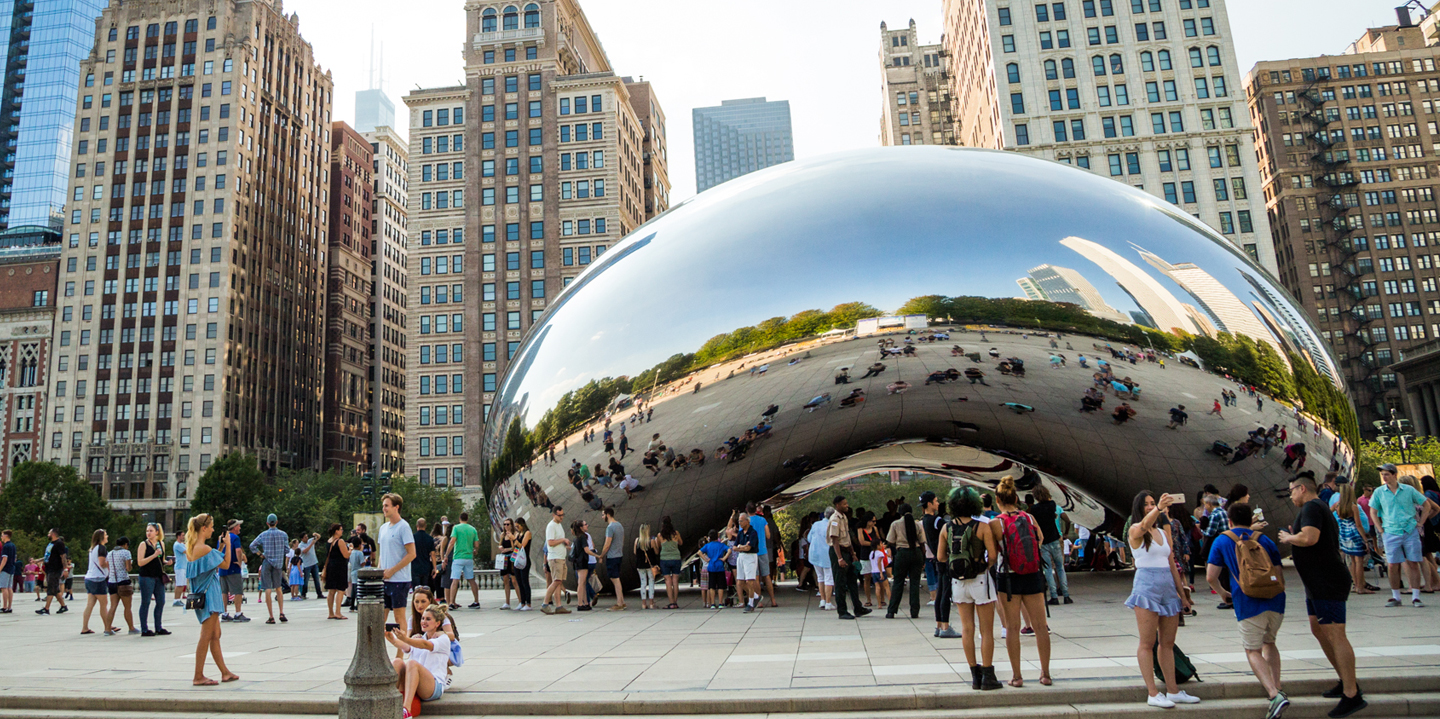
When one thinks of iconic urban sculptures, few capture the imagination and affection quite like “Cloud Gate,” affectionately known worldwide as “The Bean.” This monumental public artwork has become an undeniable emblem of Chicago, drawing millions of visitors annually to witness its spectacular reflections and unique architectural presence. To answer the pressing question, “Where is The Bean located in Chicago?”, it stands proudly as the centerpiece of AT&T Plaza in Millennium Park, a vibrant cultural hub nestled in the heart of downtown Chicago. This location places it amidst other significant landmarks and artistic installations, making it an essential stop for anyone exploring the city’s rich architectural and artistic landscape.
Unveiling Chicago’s Reflective Masterpiece: Cloud Gate
While colloquially known as “The Bean” due to its distinctive kidney-bean shape, the sculpture’s official name, Cloud Gate, perfectly encapsulates its artistic intent. Conceived by the renowned British artist Anish Kapoor, this stainless steel marvel is far more than just a large, reflective object; it is an interactive experience that blurs the lines between art, architecture, and the urban environment. Its location within Millennium Park is no accident, designed to integrate seamlessly with the park’s innovative landscape and surrounding cityscape.
The Icon’s Official Name and Artistic Vision
The name “Cloud Gate” speaks to Kapoor’s vision for the sculpture: to reflect the sky and the surrounding city, creating a gateway to the clouds and a mirror of urban life. The highly polished surface acts as a distorted funhouse mirror, capturing panoramic views of Chicago’s magnificent skyline, the movement of clouds, and the bustling activity of park-goers. This interplay of reflection and distortion invites visitors to engage with the artwork on multiple levels, observing how their own image, the city, and the sky are continuously reshaped and reinterpreted by its form. Kapoor’s genius lies in creating a piece that is both monumental and intimately personal, offering a fresh perspective on the familiar and a dynamic interaction with its environment. It challenges perceptions of space and scale, transforming the ordinary into the extraordinary.
Nestled Within Millennium Park
Millennium Park, itself a triumph of modern landscape architecture and urban planning, opened in 2004 and quickly became one of Chicago’s most celebrated public spaces. The park was built over a former rail yard and parking lot, transforming an industrial wasteland into a sprawling green oasis. Cloud Gate was installed between 2004 and 2006, becoming an immediate and immensely popular attraction within this new urban sanctuary. Its precise location within AT&T Plaza in the eastern part of the park places it strategically near other key attractions, including the Jay Pritzker Pavilion, Lurie Garden, and the Crown Fountain. This thoughtful integration within Millennium Park underscores its role not just as a standalone sculpture but as an integral component of a larger civic vision aimed at enriching public life through art and green spaces. The park’s design allows for easy pedestrian access from Michigan Avenue and other downtown areas, making Cloud Gate highly accessible to both locals and tourists alike.
Architectural Marvel and Engineering Feat
The construction of Cloud Gate was an ambitious undertaking, pushing the boundaries of engineering and material science. Its seamless, highly reflective surface gives it an almost ethereal quality, belying the immense structural complexity and meticulous craftsmanship required to bring Kapoor’s vision to life. The sculpture represents a remarkable fusion of artistic abstraction with practical engineering, making it a landmark not just for its beauty but also for its innovative construction.
The Genius Behind the Form: Anish Kapoor
Anish Kapoor, a British-Indian sculptor known for his large-scale public art and exploration of space, form, and material, conceived Cloud Gate as his first public outdoor work in the United States. His artistic philosophy often delves into dualities: presence and absence, light and dark, interior and exterior. Cloud Gate embodies these themes masterfully. He envisioned a sculpture that would not only reflect its surroundings but would also draw viewers into its core, creating a sense of infinite depth and transformation. The highly polished stainless steel was chosen for its ability to create a perfect, unblemished reflection, acting as a mirror to the soul of Chicago. Kapoor’s work consistently challenges traditional notions of sculpture, often inviting interaction and personal interpretation, and Cloud Gate is arguably his most celebrated example of this interactive aesthetic.
Construction Challenges and Innovative Solutions
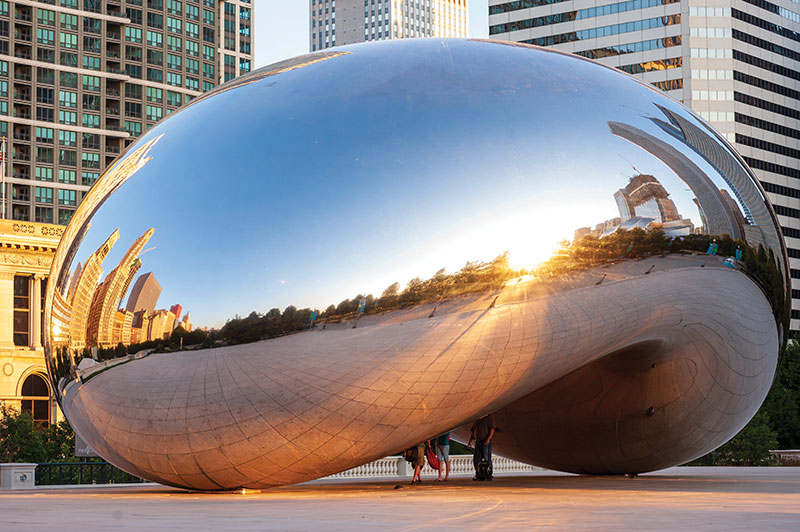
The sheer size and unique shape of Cloud Gate presented formidable engineering challenges. Weighing approximately 110 tons, the sculpture is constructed from 168 individual stainless steel plates, each precisely cut and welded together. The most extraordinary feat of its creation was the process of polishing these welds to such an extent that they are completely invisible, giving the appearance of a single, continuous fluid surface. This required an unprecedented level of precision and craftsmanship, with specialized polishing teams working tirelessly for months. The structure also had to be designed to withstand Chicago’s extreme weather conditions, including strong winds and significant temperature fluctuations. Inside, a complex internal steel framework supports the weight and maintains the sculpture’s unique form. The design also incorporates a “belly button” – an omphalos – a concave chamber on the underside that creates a mind-bending, multi-reflective experience as visitors walk beneath it, pulling their reflections upwards into an infinite vortex. This internal space is as much a part of the sculpture’s artistic statement as its exterior.
Reflecting the City’s Essence
Cloud Gate’s reflective surface does more than just mirror the cityscape; it actively engages with it, becoming a dynamic canvas for Chicago’s ever-changing environment. On a clear day, the blue sky and fluffy clouds dance across its surface. During sunset, the sculpture glows with fiery oranges and purples, reflecting the majestic colors over Lake Michigan. The towering skyscrapers that frame Millennium Park, such as the Art Institute of Chicago and other architectural masterpieces, are contorted and stretched, offering playful new perspectives on familiar sights. This constant interaction makes Cloud Gate a living landmark, one that changes with the light, the weather, and the people around it, truly reflecting the vibrant, dynamic essence of Chicago itself. It epitomizes the city’s commitment to public art and its proud architectural heritage, blending seamlessly with the surrounding built environment while simultaneously offering a profound contrast.
The Cultural Significance of Cloud Gate
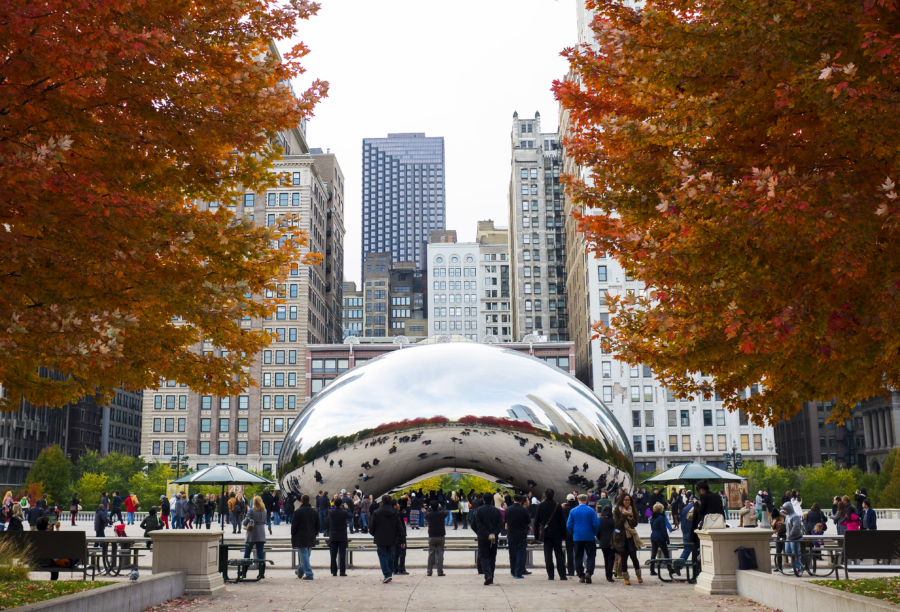
More than just a tourist attraction, Cloud Gate has cemented its place as a profound cultural landmark, shaping the identity of Millennium Park and indeed, the entire city of Chicago. Its universal appeal transcends age and background, fostering a sense of community and shared wonder among its countless admirers. The sculpture has become a focal point for civic pride and an enduring symbol of modern Chicago’s innovative spirit.
A Public Art Landmark for All
From its inception, Cloud Gate was conceived as a piece of public art, meaning it is freely accessible and intended for everyone to enjoy without barriers. This accessibility is a cornerstone of its cultural significance. Unlike art confined within museum walls, Cloud Gate invites direct interaction, touching, and playful engagement. It has become a democratic space where locals and international visitors stand side-by-side, sharing an experience of awe and amusement. Its prominent position within Millennium Park, a space designed for public enjoyment and recreation, reinforces its role as a landmark for all. This commitment to public art reflects Chicago’s broader cultural philosophy, which emphasizes making world-class art available and integral to the urban experience, turning the city itself into a grand gallery.
Interactive Art and Visitor Experience
The interactive nature of Cloud Gate is central to its enduring popularity. Visitors are not merely spectators; they become participants. Walking around and under The Bean, one can see their own reflection stretch, shrink, and multiply, often leading to moments of delighted surprise and laughter. The “belly button” underneath offers a unique, dizzying perspective, drawing people in to explore its depths. This hands-on, playful engagement makes the sculpture memorable and encourages repeated visits. It’s a place for selfies, family photos, and quiet contemplation alike, catering to a diverse range of visitor experiences. The way it warps and distorts reality creates a surreal environment, fostering a sense of childlike wonder even in adults. This direct, unmediated interaction with a major piece of art is a rare and precious thing in the modern urban landscape.
Symbol of Modern Chicago
Cloud Gate has rapidly evolved into one of Chicago’s most recognizable symbols, standing shoulder-to-shoulder with historical icons like the Willis Tower (formerly Sears Tower) and the Magnificent Mile. It represents the city’s forward-thinking approach to urban design, its commitment to integrating art into public spaces, and its status as a global cultural capital. The sculpture embodies Chicago’s blend of industrial might and artistic sophistication, reflecting both its powerful architecture and its vibrant creative spirit. It’s a testament to how contemporary art can define a city’s image, attracting tourism, stimulating economic activity, and instilling a sense of pride among residents. For many, The Bean is the first image that comes to mind when thinking of Chicago, a modern marvel that perfectly captures the essence of a dynamic, innovative metropolis. It bridges the gap between the city’s storied past and its ambitious future.
Planning Your Visit to this Urban Jewel
Experiencing Cloud Gate is a must for anyone visiting Chicago. Its central location, combined with the surrounding attractions of Millennium Park and the wider Grant Park area, makes it an easy and rewarding destination to incorporate into any itinerary. To maximize your enjoyment, considering the best times to visit and understanding its accessibility can greatly enhance the experience.
Best Times to Experience The Bean
Cloud Gate is a 24/7 landmark, accessible at any time of day or night. However, different times offer distinct experiences.
- Early Morning: For photographers and those seeking a quieter, more contemplative experience, early mornings (just after sunrise) are ideal. The soft light can create stunning reflections, and fewer crowds allow for unobstructed views and more personal interaction with the sculpture.
- Mid-day: This is typically the busiest time, especially during peak tourist season. While vibrant and energetic, it can be challenging to get clear photos without people in the frame. The strong sunlight, however, brings out the sculpture’s brilliant sheen.
- Late Afternoon/Sunset: The “golden hour” before sunset offers warm, dramatic lighting that transforms the sculpture. The reflections of the changing sky and the city lights beginning to twinkle are particularly captivating.
- Night: Cloud Gate takes on a magical quality after dark. The surrounding city lights, including those from nearby skyscrapers and the park itself, reflect beautifully off its surface, creating a dazzling display. This is an excellent time for a romantic stroll or unique night photography.
Accessibility and Surrounding Attractions
Cloud Gate is located in the heart of Millennium Park, which is fully accessible to pedestrians and features paved pathways. It is easily reachable via public transport (CTA ‘L’ trains and buses) and is within walking distance of many downtown hotels and attractions. The park itself is a car-free zone, promoting a pleasant walking experience.
Beyond Cloud Gate, Millennium Park offers a wealth of other attractions that complement a visit:
- Jay Pritzker Pavilion: An iconic outdoor concert venue with an impressive stainless steel headdress.
- Crown Fountain: Two 50-foot glass block towers projecting video images of Chicago residents, spitting water from their mouths during warmer months.
- Lurie Garden: A beautiful, contemplative perennial garden providing a peaceful escape.
- Art Institute of Chicago: One of the oldest and largest art museums in the United States, just across Michigan Avenue.
These nearby landmarks further solidify Cloud Gate’s position as a central component of Chicago’s cultural and architectural identity, inviting visitors to explore a broader tapestry of artistic and urban design achievements.
Capturing the Perfect Reflection
Photographing Cloud Gate is a popular activity, and its unique surface offers endless creative possibilities.
- Wide Shots: Capture the entire sculpture with the city skyline reflected in its surface.
- Close-ups: Focus on the intricate distortions of reflections, finding abstract patterns.
- Underneath: Stand directly beneath the “belly button” for a truly disorienting and captivating upward-looking shot.
- Interaction: Include people in your photos to convey the scale and interactivity of the artwork.
- Perspective: Experiment with different angles and distances to see how the reflections change. The sculpture acts as a giant convex mirror on its exterior and a concave mirror in its interior, providing a constantly shifting visual experience.
In conclusion, Cloud Gate, affectionately known as “The Bean,” is more than just a piece of public art; it is a monumental landmark situated in the vibrant Millennium Park, symbolizing Chicago’s innovative spirit and its deep commitment to culture and urban beauty. Its accessible location, breathtaking architecture, and profound cultural significance make it an indispensable experience for anyone wishing to understand the heart and soul of this magnificent city.
LifeOutOfTheBox is a participant in the Amazon Services LLC Associates Program, an affiliate advertising program designed to provide a means for sites to earn advertising fees by advertising and linking to Amazon.com. Amazon, the Amazon logo, AmazonSupply, and the AmazonSupply logo are trademarks of Amazon.com, Inc. or its affiliates. As an Amazon Associate we earn affiliate commissions from qualifying purchases.