
Navigating the bustling streets of a major metropolis like Chicago can be an exhilarating part of any travel experience, but for those opting to explore by car, understanding parking regulations is paramount. While the city offers a robust public transportation network, including the CTA and Metra, driving provides a level of flexibility that many visitors and residents’ guests appreciate. However, parking, especially in residential zones, comes with specific rules, and often, the need for a daily parking permit. This comprehensive guide will illuminate precisely where and how to obtain these essential permits, ensuring your visit to the Windy City is as smooth and penalty-free as possible.
Understanding Chicago’s Residential Parking Zones and Daily Permits
Before diving into the “where to buy,” it’s crucial to understand the “why” and “what” of Chicago daily parking permits. The city has implemented a system of residential parking zones to prioritize parking for residents and alleviate congestion. These zones are clearly marked with signs indicating permit requirements and restricted hours.
What are Daily Parking Permits?
Daily parking permits, often referred to as “guest permits” or “temporary permits,” are specifically designed for visitors or guests of residents in designated residential parking zones. These permits allow a vehicle, which is not registered to a resident of that specific zone, to park legally for a specified period, typically 24 hours. They are a courtesy extended to guests and are critical for avoiding costly parking tickets.
Who Needs a Daily Parking Permit?
If you are visiting a friend or family member who lives in a residential parking zone in Chicago and you plan to park your car on the street within that zone during restricted hours, you will need a daily parking permit. This applies whether you’re staying for a few hours or multiple days. Each day you park within a restricted zone requires a new permit for your vehicle. It is the responsibility of the resident to obtain these permits for their guests. Tourists staying in hotels, commercial parking garages, or using street parking outside of residential permit zones generally do not need these specific permits, but must still adhere to all posted parking signs and meter requirements.
Identifying Residential Parking Zones
Chicago’s residential parking zones are marked with distinctive signs that specify the zone number and the hours during which a permit is required. These signs are typically green with white lettering. For instance, a sign might read “Residential Parking Zone 101 – Permit Parking Only 6 AM – 10 PM Except Sunday.” Always check the signs carefully, as restrictions and hours can vary significantly from one block to another. Parking without a valid permit in a restricted zone during enforcement hours will almost certainly result in a parking citation.
Official Channels for Purchasing Daily Parking Permits
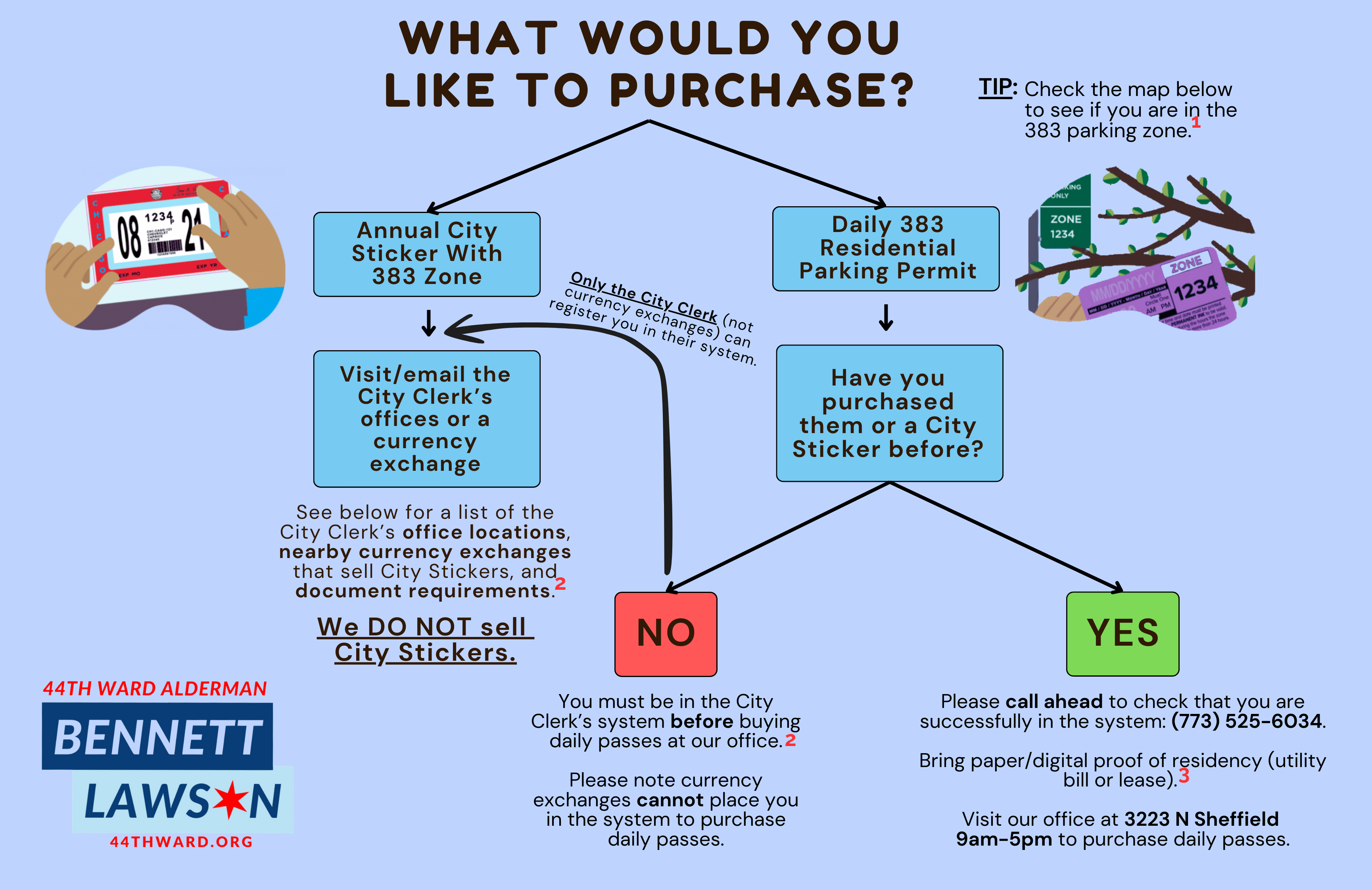
The process for acquiring daily parking permits is straightforward, primarily handled by the City of Chicago. It’s important to note that these permits are issued to residents for their guests, not directly to visitors. Therefore, your host in Chicago will be the one purchasing them on your behalf.
1. Online Purchase Through the Chicago City Clerk Website
The most convenient and increasingly popular method for residents to obtain daily parking permits is online through the official website of the Chicago City Clerk. This digital portal offers 24/7 access, allowing residents to purchase permits from the comfort of their home at any time.
- Process: Residents can log in or create an account on the Chicago City Clerk’s portal. They will need to provide proof of residency for their specific zone, which is typically verified through their vehicle registration or a utility bill associated with the residential address. Once verified, residents can select the number of permits they need and complete the transaction. The permits are usually available for pickup at a designated location (often a Ward Office) or, in some cases, can be mailed to the resident, though mail delivery takes several business days.
- Benefits: This method offers convenience, reduces wait times, and allows for proactive planning. Residents can purchase permits in advance for upcoming visits.
2. In-Person Purchase at Ward Offices
For residents who prefer an in-person transaction or need permits on short notice, daily parking permits can be purchased directly at their local Ward Office. Each of Chicago’s’s 50 wards has an office that serves its constituents.
- Process: The resident must visit their Ward Office during business hours. They will typically need to present a valid Illinois State ID or driver’s license showing their residential address within the ward, along with proof of residency (e.g., a utility bill, vehicle registration). Payment is usually accepted via cash, credit/debit card, or money order. Permits are printed on-site and issued immediately.
- Benefits: Immediate acquisition of permits, helpful for last-minute guest arrivals. Staff can also answer specific questions about parking regulations in the ward.
3. Select Currency Exchange Locations
In some areas, certain licensed currency exchanges are authorized to sell daily parking permits on behalf of the City of Chicago. These locations offer an additional layer of convenience, often with extended hours compared to Ward Offices.
- Process: Similar to Ward Offices, the resident must present valid identification and proof of residency. It’s advisable to call ahead to confirm that the specific currency exchange sells parking permits and what their current requirements are, as not all locations participate.
- Benefits: Potentially more flexible hours of operation and distributed locations throughout the city.
Navigating the Permit Application Process
While the methods of purchase are fairly straightforward, understanding the nuances of the application and usage ensures compliance.
Required Documentation
For residents purchasing permits:
- Proof of Residency: A valid Illinois State ID or driver’s license matching the residential address in the permit zone.
- Secondary Proof of Residency (sometimes needed): A recent utility bill (gas, electric, water) or a vehicle registration card with the matching address.
- Proof of Vehicle Ownership/Lease (for the resident’s vehicle): If linking permits to a registered vehicle.
- Payment: Cash, major credit/debit cards, or money order are typically accepted.
For guests using the permits:
- Once the resident has obtained the permits, they are issued as physical paper permits. Each permit has spaces to write in the date of use and the license plate number of the guest’s vehicle. It is crucial for the guest to fill out this information accurately and legibly.
Cost of Daily Permits and Fines for Non-Compliance
Daily parking permits in Chicago are relatively inexpensive, typically costing around $8-$10 for a sheet of 15 permits. Each permit is valid for 24 hours. While this may seem like a minor expense, the cost of a parking ticket for non-compliance can be significantly higher, often starting at $75 and escalating for repeat offenses or specific violations. Additionally, vehicles parked illegally can be towed, incurring substantial towing and impoundment fees. It’s always more cost-effective and less stressful to secure a permit when required.
Permit Activation and Display
Once obtained, the permits are physical slips of paper. For each day a guest needs to park in a residential zone, one permit must be properly filled out and displayed.
- Fill Out: Write the current date clearly in the designated space.
- Vehicle Information: Accurately write the guest’s vehicle license plate number in the provided area.
- Display: The permit must be clearly displayed on the inside of the front windshield, usually on the driver’s side, so that the date and license plate number are fully visible from the exterior of the vehicle. Failure to display it correctly can still result in a ticket, even if you possess a valid permit.
Key Considerations and Alternatives for Parking in Chicago
While daily parking permits are a lifesaver for guests of residents, it’s important to consider them as one piece of the larger Chicago parking puzzle.
Time Restrictions and Validity
Remember that each daily permit is valid for a 24-hour period from the date written on it. If your guest is staying for multiple days, they will need a new permit for each day they park in a restricted zone. Also, residential permit zones typically have specific hours of enforcement. Parking outside of these hours might not require a permit, but always verify the signs.
Public Transportation as a Primary Alternative
Chicago boasts one of the most comprehensive public transportation systems in the United States. The CTA operates ‘L’ trains and bus routes covering virtually the entire city and many suburbs, while Metra commuter rail services extend further into the metropolitan area. For many visitors, especially those exploring downtown attractions like the Magnificent Mile, Millennium Park, the Art Institute of Chicago, or Navy Pier, utilizing public transit from their accommodation or from park-and-ride lots near train stations can be far more convenient and cost-effective than driving and parking. Consider purchasing a multi-day Ventra pass for unlimited rides on CTA trains and buses.
Parking Garages and Commercial Lots
For those visiting downtown or areas without residential permit zones, numerous commercial parking garages and surface lots are available. While often more expensive than street parking, they offer security and guaranteed space. Parking apps like SpotHero or ParkWhiz allow users to find, compare, and pre-book parking spots, often at a discount. This is an excellent option for visitors flying into O’Hare International Airport or Midway International Airport and renting a car for specific excursions, or for those staying in hotels without dedicated parking.
Ride-Sharing Services
Chicago also has a robust network of ride-sharing services like Uber and Lyft. For short trips, evenings out, or travel to and from airports, these services can offer a hassle-free alternative to driving and dealing with parking.

Tips for a Stress-Free Parking Experience in Chicago
- Plan Ahead: If you know you’ll be driving to Chicago and staying with residents in a permit zone, communicate with your host well in advance to ensure they can secure the necessary permits.
- Read Signs Carefully: Always, always double-check parking signs. Restrictions can change, and what seems like an open spot might have time limits, street sweeping rules, or permit requirements.
- Utilize Technology: Download parking apps for commercial garages and lots, and use navigation apps that integrate real-time parking information if you are unsure of options.
- Consider Your Destination: For popular tourist attractions, public transportation is often the best choice, saving you the headache and expense of parking.
- Don’t Chance It: The Chicago Department of Finance is diligent in enforcing parking regulations. It is never worth the risk to park illegally, even “just for a few minutes.” The fines and potential towing costs far outweigh the cost of a permit or alternative parking.
In conclusion, daily parking permits are an integral part of navigating residential parking in Chicago for guests. By understanding who needs them, where your host can purchase them (online via the Chicago City Clerk or in-person at Ward Offices/currency exchanges), and how to properly display them, you can ensure a smooth and enjoyable driving experience. Factor in the city’s excellent public transportation and numerous commercial parking options, and you’ll be well-prepared to explore all that Chicago has to offer without the added stress of parking woes.
LifeOutOfTheBox is a participant in the Amazon Services LLC Associates Program, an affiliate advertising program designed to provide a means for sites to earn advertising fees by advertising and linking to Amazon.com. Amazon, the Amazon logo, AmazonSupply, and the AmazonSupply logo are trademarks of Amazon.com, Inc. or its affiliates. As an Amazon Associate we earn affiliate commissions from qualifying purchases.