
Colorado, a state celebrated for its majestic Rocky Mountains and vibrant outdoor lifestyle, transforms into a breathtaking panorama of gold, crimson, and orange each autumn. For travelers planning a visit, understanding “when does fall start in Colorado?” is paramount to experiencing the state’s legendary leaf-peeping season. It’s not merely a date on a calendar; it’s a dynamic period influenced by elevation, weather, and specific tree species, culminating in one of North America’s most spectacular natural shows. This guide delves into the nuances of Colorado’s autumnal transition, helping you pinpoint the ideal time to witness its unparalleled beauty.

Understanding Colorado’s Autumnal Transition
The arrival of fall in Colorado is a captivating interplay of scientific principles and natural artistry. Unlike many places where fall arrives uniformly, Colorado’s diverse topography creates a staggered, extended autumn that offers multiple windows for experiencing its splendor.
The Calendar vs. Nature’s Clock
While the astronomical start of fall, marked by the autumnal equinox around September 22nd, provides a widely recognized calendar date, nature in Colorado operates on its own schedule. Meteorologically, fall typically encompasses September, October, and November. However, for those seeking the visual spectacle of changing leaves – often termed the “ecological fall” – the season can begin much earlier in the high country and linger later in the lower elevations.
The primary driver of leaf color change is the reduction in daylight hours and cooler temperatures, which signal to deciduous trees like aspens to stop producing chlorophyll, revealing the vibrant yellow, orange, and gold pigments that have been present all along. Red and purple hues, often seen in scrub oak and cottonwoods, are produced by sugars trapped in the leaves.
Factors Influencing Peak Foliage
Several key environmental factors dictate the timing and intensity of Colorado’s fall foliage. Travelers should consider these when planning their trip:
- Altitude: This is perhaps the most significant factor. Leaves at higher elevations, where temperatures drop earlier and more dramatically, typically begin to change color first. This means that areas above 9,000 feet will often see peak colors in early to mid-September, while lower elevations might not peak until early to mid-October.
- Weather Patterns: A warm, wet summer followed by a cool, dry autumn with plenty of sunny days and crisp, cold (but not freezing) nights often produces the most vibrant and prolonged color displays. Early hard frosts can prematurely dull or drop leaves, shortening the season. Conversely, a very warm fall can delay the onset of colors.
- Tree Species: Colorado’s iconic fall display is largely thanks to its vast groves of quaking aspens, which turn a brilliant golden yellow. Other trees like cottonwoods along rivers turn yellow, while scrub oak, serviceberry, and sumac contribute splashes of red and burgundy, adding depth to the tapestry. The dominance of aspens means that the timing of their change heavily influences the “peak” season.
Regional Variations Across Colorado
Due to its vast elevation changes, Colorado experiences a progression of fall colors from north to south and from high mountains to plains.
- Northern Colorado (High Country): Areas like Rocky Mountain National Park and the surrounding Front Range mountains often kick off the season. Here, you can expect to see the first significant color changes in late August, progressing to peak by mid-September.
- Central Colorado (Elk Mountains, Sawatch Range): Regions around Aspen, Crested Butte, and Leadville are famous for their dense aspen groves. Peak foliage in these areas typically occurs from mid-September to early October.
- Southern Colorado (San Juan Mountains): The dramatic San Juan Mountains in southwestern Colorado, including towns like Ouray, Telluride, and Silverton, often see their peak colors from late September to early October, sometimes stretching a bit later than central Colorado.
- Lower Elevations and Eastern Plains: Cities like Denver, Boulder, and areas on the eastern plains will experience their fall colors much later, typically from early to mid-October, with some color extending into early November, particularly among cottonwoods along riverbeds.
This regional variation means that if you miss the peak in one area, you might still catch it in another, extending your opportunities for a fall foliage adventure.
The Best Time to Experience Colorado’s Fall Foliage
Pinpointing the absolute “best” time depends on your desired experience and preferred locations. However, a general progression allows travelers to plan strategically.
Early Fall (Late August – Mid-September)
The first whispers of autumn begin in the highest reaches of the Rocky Mountains in late August. By the first week of September, the tundra turns vibrant red and orange, and the highest aspen groves, particularly those above 10,000 feet, start to show their golden glow.
- Ideal for: High-altitude hikers and those looking to beat the peak-season crowds.
- Locations: Trail Ridge Road in Rocky Mountain National Park, the Mount Evans Scenic Byway, Independence Pass (near Aspen).
Peak Fall (Mid-September – Early October)
This two to three-week window is generally considered the prime time for leaf-peeping across most of Colorado’s major mountain ranges. The aspens are at their most brilliant, creating vast swaths of golden forests against the deep blue sky and dark evergreen trees. This is also when many popular scenic drives become crowded.
- Ideal for: Classic Colorado fall foliage experiences, stunning photography, and scenic drives.
- Locations: Kebler Pass (near Crested Butte), Dallas Divide and San Juan Skyway (near Ouray and Telluride), Maroon Bells (near Aspen), Guanella Pass.
Late Fall (Mid-October – Early November)
As the high country aspens begin to shed their leaves, the fall colors descend to lower elevations. This period is characterized by lingering yellows in some aspen groves, vibrant cottonwoods along riparian areas, and the deep reds and oranges of scrub oak in foothills and canyons.
- Ideal for: Exploring foothills, urban parks, and less crowded routes.
- Locations: Golden Gate Canyon State Park, Roxborough State Park, the foothills west of Denver and Boulder, river valleys throughout the state.
Top Destinations for Fall Colors in Colorado
Colorado’s diverse landscape offers an array of incredible locations to witness the fall spectacle, each with its unique charm.
Iconic Scenic Drives
Embarking on a scenic drive is one of the most popular ways to experience Colorado’s fall colors.
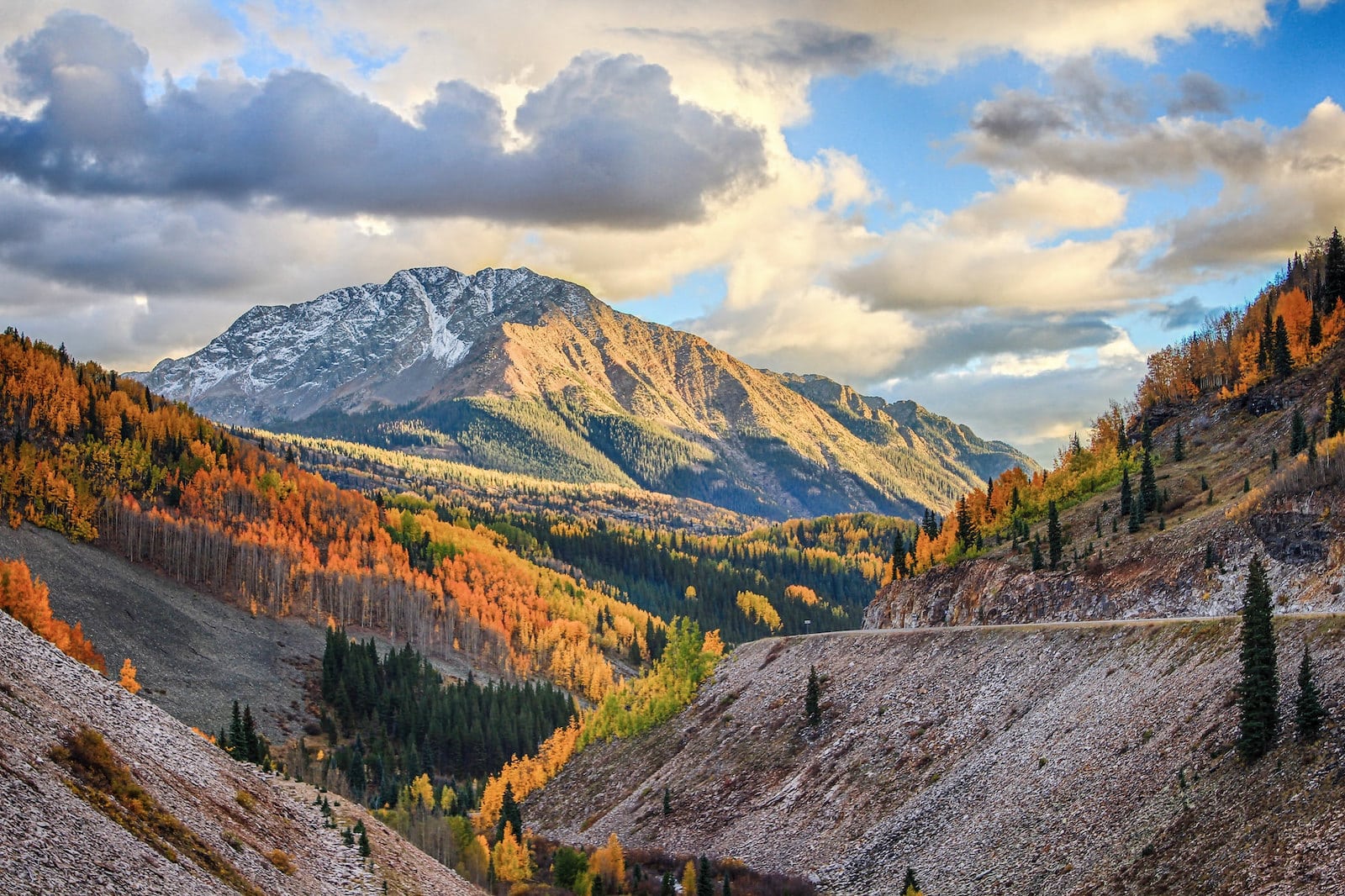
- Kebler Pass: Widely considered one of the most stunning fall drives in the world, this unpaved road between Paonia and Crested Butte traverses arguably the largest aspen grove in North America, turning into an unbroken sea of gold.
- San Juan Skyway: Known as “The Million Dollar Highway” for its breathtaking views, this loop connects Durango, Silverton, Ouray, and Telluride. The vibrant aspens contrast dramatically with the rugged peaks of the San Juan Mountains.
- Trail Ridge Road (in Rocky Mountain National Park): America’s highest continuous paved road offers sweeping tundra views, where alpine flora turns brilliant reds and oranges, and lower elevation aspens shimmer gold. Spotting elk bugling during the rutting season adds to the magic.
- Guanella Pass Scenic Byway: A popular and easily accessible drive from Denver, connecting Georgetown and Grant. It offers magnificent aspen viewing with dramatic mountain backdrops, including Mount Bierstadt.
Charming Mountain Towns
Beyond the drives, many of Colorado’s iconic mountain towns serve as perfect bases for fall adventures, offering lodging, dining, and easy access to trails.
- Aspen: Famous for its namesake trees, Aspen offers unparalleled access to destinations like Maroon Bells and Independence Pass, where golden aspens dominate the landscape.
- Crested Butte: Nestled in a valley surrounded by mountains, Crested Butte is an outdoor enthusiast’s paradise, especially when framed by the dazzling colors of Kebler Pass.
- Ouray & Telluride: These picturesque towns in the San Juan Mountains provide a rugged, dramatic backdrop for fall colors, with stunning views from nearly every vantage point.
National Parks and Forests
Colorado’s protected lands are treasure troves of autumn beauty.
- Rocky Mountain National Park: Beyond Trail Ridge Road, numerous hiking trails through the park offer intimate encounters with golden aspens and fiery tundra.
- White River National Forest: Home to vast aspen groves, particularly around Glenwood Springs and the Fryingpan River Road, this forest provides ample opportunities for hiking and photography.
- Gunnison National Forest: Encompassing Kebler Pass, this forest is a prime destination for an immersive fall experience, offering camping, hiking, and stunning vistas.
Planning Your Colorado Fall Adventure
A successful fall trip to Colorado requires careful planning, as this is one of the state’s most popular seasons.
Accommodation and Booking Tips
Due to the immense popularity of fall foliage season, accommodations in mountain towns fill up quickly and prices can be higher.
- Book Early: Aim to reserve lodging several months in advance, especially if you plan to visit during a weekend in late September or early October.
- Consider Mid-Week Stays: Weekday visits often offer fewer crowds and potentially better rates.
- Explore Options: From cozy bed & breakfasts to rustic cabins and luxury resorts, Colorado offers diverse lodging. Look for places slightly outside the most popular towns for potentially better availability and value.
- Camping: If you enjoy camping, many national forests and state parks offer beautiful fall campsites, but these also require early reservations.
Essential Packing List
Colorado’s mountain weather in the fall can be highly variable, with warm sunny days, crisp nights, and sudden snow showers, especially at higher elevations.
- Layers: This is key. Pack warm base layers, a fleece or wool mid-layer, and a waterproof/windproof outer shell.
- Comfortable Footwear: Hiking boots or sturdy walking shoes are essential for exploring trails.
- Warm Hat and Gloves: Even if the day starts warm, high-altitude mornings and evenings can be chilly.
- Sun Protection: Sunglasses, sunscreen, and a wide-brimmed hat are still important, as the sun at altitude is intense.
- Camera Gear: Don’t forget extra batteries and memory cards for capturing the stunning scenery.
Activities Beyond Leaf Peeping
While the primary draw is the foliage, Colorado in fall offers a wealth of other activities.
- Hiking and Biking: Countless trails offer incredible views, from gentle strolls to challenging treks.
- Photography Workshops: Many locations offer specialized workshops to help you capture the perfect fall shot.
- Fishing: Fall is a prime time for fly-fishing in Colorado’s rivers and streams.
- Festivals: Many mountain towns host fall festivals, harvest celebrations, and Oktoberfest events. Check local event calendars for destinations like Breckenridge, Vail, or Ouray.
- Wildlife Viewing: Fall is the elk rutting season, and you can often hear and see elk in parks like Rocky Mountain National Park.
Respecting the Environment
Colorado’s natural beauty is a precious resource. Practice Leave No Trace principles: pack out everything you pack in, stay on marked trails, and respect wildlife.
Maximizing Your Fall Trip to Colorado
To make the most of your autumnal adventure, keep these tips in mind.
Avoiding Crowds
- Weekdays are Your Friend: Popular spots like Maroon Bells or Trail Ridge Road can be swamped on weekends during peak season. Visiting Monday through Friday significantly enhances the experience.
- Early Bird Gets the Worm: Arriving at scenic viewpoints or trailheads early in the morning not only ensures parking but also offers the best light for photography and a more serene experience.
- Seek Lesser-Known Gems: While the famous spots are famous for a reason, Colorado has countless less-trafficked areas that offer equally stunning, if not more intimate, fall colors. Research state forests or less-popular sections of national forests.
Flexibility is Key
- Weather Watch: Keep a close eye on weather forecasts. Mountain weather can change rapidly, and an unexpected snowstorm can dramatically alter plans or shift peak colors.
- Road Closures: High-altitude passes like Trail Ridge Road and Independence Pass often close for the season in mid-October due to snow, sometimes earlier. Always check road conditions before heading out.

Photography Tips for Stunning Views
- Golden Hour: The hour after sunrise and before sunset provides the softest, most magical light for photographing fall colors.
- Overcast Days: Don’t dismiss cloudy days! Overcast conditions can create diffused light that saturates colors beautifully and minimizes harsh shadows.
- Reflections: Look for opportunities to capture reflections of the colorful trees in lakes and rivers.
- Composition: Use leading lines (roads, rivers) and contrasting elements (dark evergreens, clear blue skies) to make your photos pop.
In conclusion, “when does fall start in Colorado?” is a question with a multi-layered answer, reflecting the state’s unique geography and climate. While the calendar offers a guide, the true autumnal transition begins in the high mountains in late August and sweeps across the state through early November. By understanding these nuances and planning your trip around the regional progression of colors, you can ensure a professional, insightful, and engaging travel experience filled with the unparalleled beauty of Colorado’s fall foliage. Prepare for golden aspens, crisp mountain air, and memories that will last a lifetime.
LifeOutOfTheBox is a participant in the Amazon Services LLC Associates Program, an affiliate advertising program designed to provide a means for sites to earn advertising fees by advertising and linking to Amazon.com. Amazon, the Amazon logo, AmazonSupply, and the AmazonSupply logo are trademarks of Amazon.com, Inc. or its affiliates. As an Amazon Associate we earn affiliate commissions from qualifying purchases.