
Creating a lush, vibrant lawn in Colorado is more than just a chore; it’s an investment in your home’s aesthetic appeal and an enhancement of your Colorado lifestyle. A healthy lawn provides a beautiful backdrop for outdoor living, whether you’re enjoying the crisp mountain air, hosting gatherings, or simply relaxing in your backyard. However, Colorado’s unique and often challenging climate demands a strategic approach to lawn care, particularly when it comes to planting grass seed. Rushing the process or choosing the wrong time can lead to frustration and wasted effort. Understanding the nuances of Colorado’s weather patterns, soil conditions, and grass types is paramount for establishing a successful lawn that thrives year after year.

This comprehensive guide will equip you with the knowledge needed to time your grass seeding perfectly, ensuring your efforts yield a resilient, green carpet that complements the stunning natural beauty of your Colorado home. From deciphering optimal planting windows to selecting the best grass varieties and implementing effective post-planting care, we’ll cover everything you need to know to cultivate a lawn that becomes a source of pride and enjoyment.
Understanding Colorado’s Unique Climate and Seasons
Colorado is renowned for its diverse landscapes, from the towering peaks of the Rocky Mountains to the sprawling plains. This geographical variety translates into a highly varied climate, which significantly impacts gardening and lawn care. Successful grass seeding begins with a deep appreciation for these regional differences and the specific environmental factors at play.
The Challenge of High-Altitude Gardening
Much of Colorado sits at a significant elevation, which introduces several challenges for growing grass. Higher altitudes mean more intense UV radiation, which can stress young grass seedlings. The air is typically drier, leading to faster evaporation of soil moisture. Furthermore, temperature fluctuations can be extreme, with warm sunny days often followed by surprisingly cool nights, even in summer. This combination of factors necessitates careful planning for irrigation and protection for newly sown seeds. The growing season can also be shorter in higher elevation areas, limiting the windows for successful germination and establishment.
Regional Climate Variations Across Colorado
While the general principles apply statewide, the optimal planting times can shift slightly depending on your specific location within Colorado.
- Front Range (e.g., Denver, Boulder, Colorado Springs, Fort Collins): This heavily populated corridor generally experiences a semi-arid climate with hot, dry summers, mild autumns, and cold, snowy winters. Spring can be unpredictable, with late frosts and sudden temperature drops. The key here is to plant when soil temperatures are consistently warm but before the intense heat of summer, or during the cooler, more stable conditions of early fall.
- Western Slope (e.g., Grand Junction): This region tends to be warmer and even drier than the Front Range, with a longer growing season. However, the arid conditions demand robust irrigation strategies. Early spring and early fall are still the best times, but the spring window might open earlier and the fall window extend slightly longer compared to higher elevations.
- Mountain Towns (e.g., Aspen, Vail): These areas face the most extreme conditions with shorter growing seasons, significant snowfall, and colder temperatures. Planting windows are much narrower, often confined to late spring/early summer once the threat of hard frost has passed, and then again in late summer before the first heavy snows. Soil temperatures are crucial indicators here.
Understanding these regional nuances allows homeowners to fine-tune their planting schedule, ensuring their grass seed has the best possible start tailored to their specific environment.
The Optimal Planting Windows for Success
Timing is everything when it comes to planting grass seed in Colorado. Your primary goal is to provide the new seedlings with an extended period of moderate temperatures and adequate moisture to allow them to establish a strong root system before facing environmental stressors.
The Prime Window: Late Summer to Early Fall
For most of Colorado, the period from mid-August to mid-September is hands down the best time to plant cool-season grass seed. This window offers several significant advantages:
- Ideal Soil Temperatures: As air temperatures begin to cool, the soil retains warmth from the summer, providing the perfect environment for germination. Grass seeds germinate best when soil temperatures are between 55°F and 65°F.
- Cooler Air Temperatures: The scorching heat of summer has usually subsided, reducing stress on tender young seedlings. Cooler air allows the grass to focus energy on root development rather than fighting heat stress.
- Increased Moisture: Fall often brings more consistent rainfall in Colorado, lessening the burden of supplemental irrigation.
- Reduced Weed Competition: Many common weeds, particularly annuals, are winding down their life cycle in the fall, giving your new grass a better chance to grow without intense competition for resources.
- Extended Growing Period: Planting in late summer/early fall allows the grass to develop a robust root system over several weeks before the onset of winter dormancy. This strong foundation enables the grass to emerge vigorous and healthy in the spring.
Areas like Denver and Boulder especially benefit from this timing, as it minimizes the exposure of delicate seedlings to the intense heat and dry winds characteristic of Colorado summers.
The Secondary Window: Early Spring
While not as ideal as the fall, early spring (late March to early May) can be a viable alternative, particularly if you missed the fall window. However, it comes with its own set of challenges:
- Unpredictable Weather: Colorado springs are notorious for their variability. Warm spells can be interrupted by sudden freezes, heavy snow, or cold snaps, which can be detrimental to newly germinated grass.
- Weed Competition: Spring is when many weeds, both annual and perennial, begin to emerge vigorously. Your new grass will face stiff competition for nutrients, water, and sunlight.
- Impending Summer Heat: Grass planted in the spring has a shorter period to establish its root system before the full force of summer heat and dryness arrives. This can lead to weaker, more susceptible lawns if not carefully managed.
If you opt for spring planting in areas like Colorado Springs or Fort Collins, focus on the earliest possible window when soil temperatures consistently reach the lower end of the germination range (around 55°F) but before daytime highs become too extreme. Be prepared for diligent watering and potential weed control.
Preparing Your Soil for a Thriving Lawn

No matter when you plant, the success of your new lawn hinges significantly on proper soil preparation. Colorado soils often present unique characteristics that need to be addressed.
Soil Testing and Amendments
Before you even think about scattering seeds, conduct a soil test. This inexpensive analysis will reveal your soil’s pH level, nutrient deficiencies, and composition. Colorado soils often tend to be alkaline (high pH) and can be deficient in certain micronutrients.
- pH Adjustment: If your soil is too alkaline, amendments like elemental sulfur can help lower the pH, making nutrients more available to your grass.
- Nutrient Deficiencies: Based on your soil test, incorporate appropriate fertilizers or organic matter to provide essential nutrients like nitrogen, phosphorus, and potassium.
- Organic Matter: Most Colorado soils, especially those heavy in clay or sand, benefit greatly from the addition of organic matter such as compost. Compost improves drainage in clay soils, enhances water retention in sandy soils, and enriches the soil structure, fostering a healthier environment for root growth.
Essential Steps Before Sowing
Once you’ve addressed soil amendments, follow these critical steps:
- Clear the Area: Remove all debris, rocks, and existing weeds. If you’re overseeding an existing lawn, rake out thatch and dead grass.
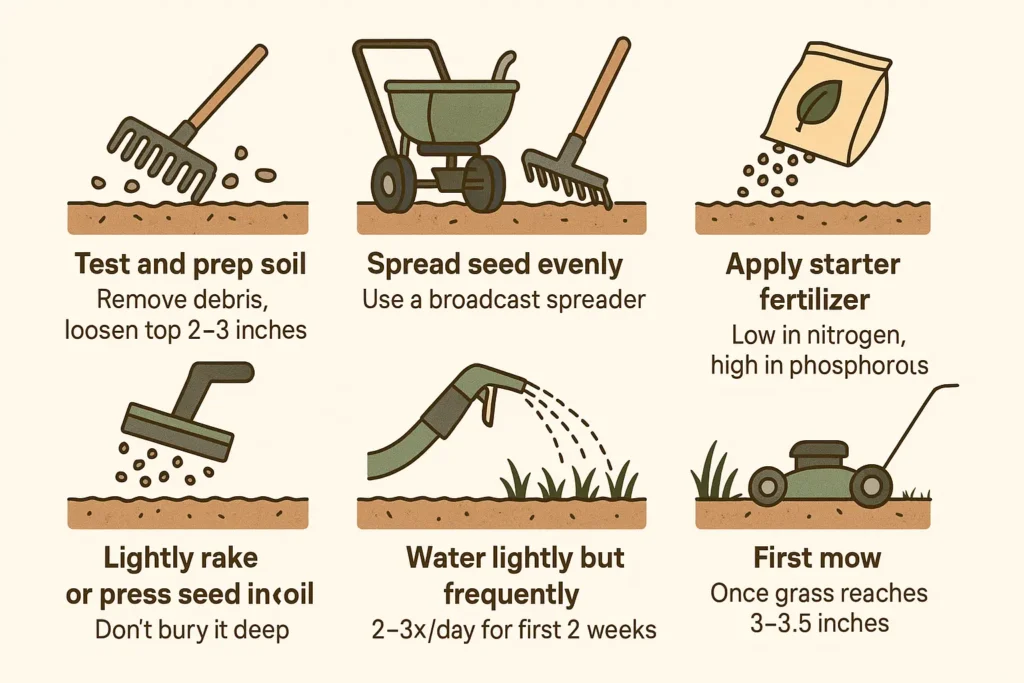
- Loosen the Soil: Use a rototiller or garden fork to loosen the top 4-6 inches of soil. This provides an easy path for roots to penetrate and allows for better air and water movement. For smaller areas, a sturdy rake might suffice.
- Grade for Drainage: Ensure the area is properly graded to allow for water runoff away from structures. Avoid depressions where water can pool, as this can lead to disease.
- Smooth and Level: Rake the soil smooth and level. A smooth surface is crucial for even germination and ease of future mowing. You can use a lawn roller (lightly) to achieve a firm, level seedbed.
Selecting the Right Grass Varieties for Colorado’s Climate
Choosing the appropriate grass type is fundamental to a sustainable and attractive lawn in Colorado. The majority of Colorado falls within the cool-season grass zone, but understanding the options is key.
Cool-Season Grasses: Kentucky Bluegrass, Tall Fescue, Perennial Ryegrass
These grasses thrive in the moderate temperatures of spring and fall and can tolerate Colorado‘s cold winters.
- Kentucky Bluegrass: This is the most popular lawn grass in Colorado due to its beautiful blue-green color, dense growth habit, and ability to self-repair via rhizomes. It forms a thick, luxurious turf, but requires more water and fertilization than other cool-season grasses. It’s excellent for high-traffic areas if properly maintained.
- Tall Fescue: Known for its deep root system, Tall Fescue is more drought-tolerant and heat-tolerant than Kentucky Bluegrass. It has a coarser blade but performs well in sun and partial shade, making it a good choice for homeowners seeking a lower-maintenance option. It doesn’t spread as aggressively as Kentucky Bluegrass so bare spots need to be reseeded.
- Perennial Ryegrass: Often used in seed mixes, Perennial Ryegrass germinates very quickly, providing rapid cover and erosion control. It has a finer texture but is less tolerant of extreme cold and heat compared to Kentucky Bluegrass and Tall Fescue. It’s best used in blends or for temporary cover.
Many homeowners in Colorado opt for a blend of Kentucky Bluegrass and Tall Fescue to combine the strengths of both: the density and self-repairing nature of bluegrass with the drought tolerance of fescue.
Warm-Season Grasses: Buffalograss, Blue Grama
These native grasses are exceptionally drought-tolerant and require less fertilizer and mowing. They thrive in the heat of summer and go dormant, turning brown, during cooler months. While they offer significant water savings and sustainability benefits, their aesthetic is different from traditional green lawns. They are slow to establish from seed.
- Buffalograss: A low-growing, fine-textured grass that turns green in late spring and goes dormant in early fall. Ideal for low-traffic areas.
- Blue Grama: Another native, very drought-tolerant grass often used in xeriscaping or naturalized areas.
For most traditional lawns in Colorado, cool-season grasses are the standard, but warm-season options are excellent for those prioritizing water conservation and a more naturalized look.
Post-Planting Care: Nurturing Your New Lawn
Once your grass seed is down, the hard work isn’t over. The initial weeks and months are critical for the successful establishment of your new lawn. Diligent care will ensure your seedlings mature into a robust, healthy turf.
Watering Schedules and Techniques
Consistent moisture is perhaps the most crucial factor for successful germination and seedling growth.
- Frequent, Light Watering: Immediately after seeding, water lightly to avoid washing away seeds. For the first 2-3 weeks, you’ll need to water frequently – 2-4 times a day – but lightly, just enough to keep the top inch of soil moist. The goal is to prevent the seeds from drying out, which can halt germination.
- Gradual Reduction: Once seedlings emerge and reach about 2 inches tall, you can gradually reduce the frequency of watering but increase the duration. This encourages roots to grow deeper into the soil in search of moisture, making the grass more drought-tolerant. Aim for deep, less frequent watering (e.g., once a day, then every other day, then 2-3 times a week, depending on conditions).
- Monitor Soil Moisture: Always check the soil moisture before watering. Stick your finger into the soil; if it feels dry an inch or two down, it’s time to water. Avoid overwatering, which can lead to fungal diseases and root rot.
Mowing and Fertilization for Young Grass
Proper post-planting care extends beyond just watering.
- First Mowing: Wait until your new grass is at least 3-4 inches tall before its first mow. Ensure your mower blades are sharp to avoid tearing the delicate blades. Set the mowing height to remove no more than one-third of the blade length. For cool-season grasses in Colorado, a mowing height of 2.5 to 3 inches is generally recommended, as taller grass helps shade the soil, reducing water evaporation and suppressing weeds.
- Fertilization: A starter fertilizer, rich in phosphorus (the middle number in N-P-K), is often applied at the time of seeding or shortly after to promote root development. Follow the product instructions carefully. After the initial starter fertilizer, wait until the grass has been mowed a few times (typically 6-8 weeks) before applying a balanced lawn fertilizer, unless your soil test indicates a specific need. Avoid heavy fertilization on very young grass, as it can burn the delicate roots.
- Weed Control: Be patient with weeds. Avoid applying herbicides to a newly seeded lawn for at least 6-8 weeks, or until after the second or third mowing, as they can harm young grass. Hand-pulling weeds is often the safest option for the first few months.
Cultivating a beautiful, resilient lawn in Colorado is a rewarding endeavor that significantly enhances your home’s appeal and your outdoor lifestyle. By understanding the unique climatic conditions, adhering to optimal planting windows, meticulously preparing your soil, selecting the right grass varieties, and providing diligent post-planting care, you can achieve a thriving green space that withstands the elements and provides years of enjoyment. Remember, patience and consistency are your greatest allies in nurturing your new lawn from seed to a lush, established turf.
LifeOutOfTheBox is a participant in the Amazon Services LLC Associates Program, an affiliate advertising program designed to provide a means for sites to earn advertising fees by advertising and linking to Amazon.com. Amazon, the Amazon logo, AmazonSupply, and the AmazonSupply logo are trademarks of Amazon.com, Inc. or its affiliates. As an Amazon Associate we earn affiliate commissions from qualifying purchases.