
The story of Connecticut is not merely a tale of colonial expansion; it is a foundational narrative in the annals of American history, marking the establishment of a distinctive political and social experiment that would profoundly influence the future United States. As a vital historical landmark, understanding the motives behind Connecticut’s founding offers crucial insights into the complexities of early English settlement in America, driven by a potent mix of religious dissent, economic ambition, and a revolutionary yearning for self-governance. Far from being a simple offshoot of its Puritan neighbors, Connecticut emerged from unique pressures and pioneering visions that shaped its identity as the “Constitution State.” Its origins are steeped in the quest for more fertile lands, greater economic autonomy, and a progressive vision for a government “of the people,” making the exploration of its founding a journey into the very heart of American democratic ideals.

The Puritan Exodus and the Quest for Religious and Political Freedom
The genesis of Connecticut is inextricably linked to the socio-religious and political climate of the Massachusetts Bay Colony. While the Puritans who settled Massachusetts sought religious freedom from the Church of England, they soon established their own rigid orthodoxy, creating an environment where dissent was often met with severe consequences. This internal struggle for freedom within freedom ultimately spurred the migration that led to Connecticut’s birth.
Dissatisfaction in Massachusetts Bay
Under the leadership of figures like John Winthrop, the Massachusetts Bay Colony evolved into a theocratic society where political participation was strictly limited to church members, and the government wielded significant power over both spiritual and secular life. This structure, while providing stability, also fostered an atmosphere of intellectual and religious intolerance. Many devout Puritans, while sharing the core theological beliefs of their Massachusetts brethren, found themselves increasingly at odds with the colony’s restrictive governance. They yearned for a society where civic participation was not solely dependent on religious standing and where local communities held greater sway over their own affairs. This desire for broader suffrage and less centralized control became a powerful catalyst for westward migration.
The Vision of Thomas Hooker
Among the most influential figures driving this exodus was the Reverend Thomas Hooker. A prominent Puritan minister, Hooker arrived in Massachusetts Bay in 1632 but quickly grew disillusioned with its limited franchise and the concentration of power in the hands of a few. He preached passionately about the right of the people to choose their magistrates and the importance of government resting on the consent of the governed—ideas considered radical for their time. In a famous sermon in 1638, he declared that “the foundation of authority is laid in the free consent of the people,” articulating a vision that was far more democratic than anything then practiced in the Massachusetts Bay Colony.
Hooker’s theological and political disagreements with Winthrop and other Massachusetts leaders became a primary driver for his decision to lead his congregation and other like-minded settlers to the Connecticut River Valley. His leadership provided not just a spiritual guide, but a philosophical framework for a new colony built on principles of popular sovereignty and representative government, laying the groundwork for Connecticut to become a beacon of democratic thought.
Economic Opportunities and Fertile Lands
Beyond the pursuit of religious and political freedom, the allure of economic opportunity played a significant, often understated, role in the founding of Connecticut. The burgeoning population in Massachusetts Bay, coupled with the increasing scarcity of prime agricultural land, pushed many settlers to look for new horizons. The rich natural resources of the Connecticut River Valley presented an irresistible prospect.
The Allure of the Connecticut River Valley
The Connecticut River Valley was renowned even before extensive European settlement for its exceptional fertility. Unlike the rockier, less productive soil found in much of Massachusetts, the river valley offered expansive tracts of alluvial land, ideal for farming. Early accounts spoke of abundant meadows, rich woodlands, and ample water resources, promising prosperous harvests of corn, wheat, and other crops essential for sustenance and trade. This agricultural bounty was a powerful magnet for families seeking to establish self-sufficient farms and secure a better economic future than was available in the more crowded settlements to the east.
The river itself also offered significant advantages. The Connecticut River, a major waterway, provided a natural highway for transportation and trade, connecting inland agricultural communities with the coast and beyond. This facilitated the movement of goods, enabling settlers to export their surplus produce and timber while importing essential supplies. This strategic geographic advantage hinted at a future of robust commerce and economic growth, an appealing prospect for those eager to escape the economic constraints of the older colonies.
Expansion and Resource Exploitation
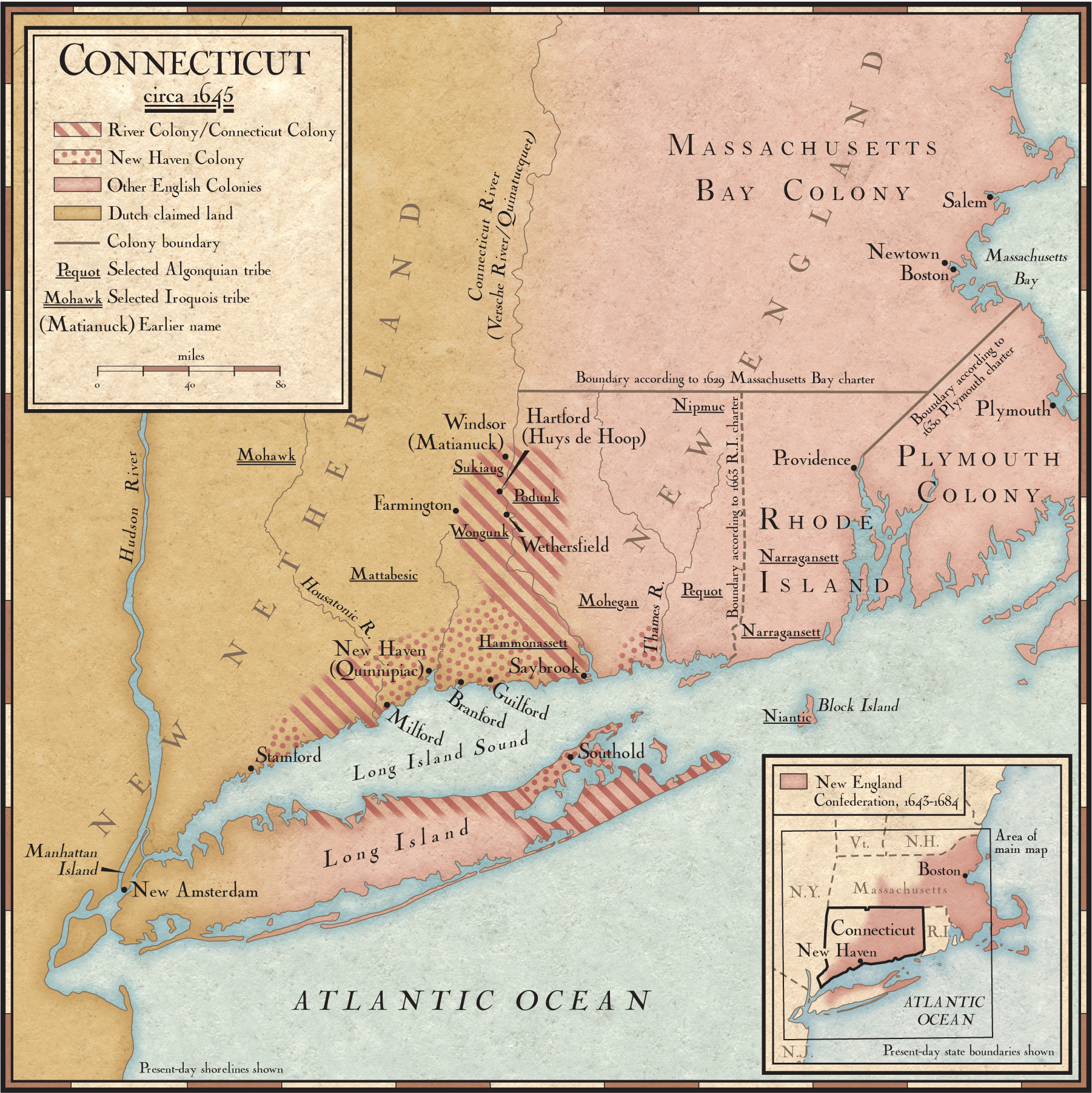
The drive for expansion was also fueled by a broader colonial ambition to exploit new resources and establish control over valuable trade routes. The English were keenly aware of the Dutch presence in the region, particularly around present-day Hartford, where a Dutch trading post had been established. Securing the Connecticut River Valley was not just about internal migration; it was also a strategic move to assert English dominance over a contested territory rich in beaver pelts and other valuable commodities.
The fertile lands and strategic river system offered more than just farming opportunities; they represented a chance to build a thriving mercantile economy. Timber from the vast forests, fish from the river and coast, and agricultural surplus could all be leveraged for trade, creating wealth and stability for the new settlements. This blend of individual economic aspiration and imperial strategic maneuvering contributed significantly to the impetus behind Connecticut’s founding, establishing it as a site of both agrarian prosperity and mercantile ambition.
Early Settlements and Indigenous Relations
The push into the Connecticut River Valley was not into an uninhabited wilderness. The region was home to several Indigenous tribes, whose presence and interaction significantly shaped the early years of the colony, leaving an indelible mark on its historical landscape.
Pioneering Towns: Wethersfield, Windsor, and Hartford

The first permanent English settlements in Connecticut were established by groups migrating from Massachusetts. In 1633, a group from Plymouth Colony established a trading post at Windsor, seeking to capitalize on the fur trade. Soon after, in 1634, settlers from Watertown (Massachusetts) founded Wethersfield, attracted by the fertile agricultural lands. The most significant migration occurred in 1636 when Thomas Hooker led his congregation from Newtowne (later Cambridge, Massachusetts) to found Hartford. These three towns—Hartford, Wethersfield, and Windsor—formed the nucleus of what would become the Connecticut Colony. Each of these locations today stands as a historical landmark, bearing witness to the pioneering spirit of early English settlers and the challenging conditions they faced. Their development was rapid, driven by the desire to quickly establish a viable presence and defend their claims against both rival European powers and Indigenous populations.
Interactions with Native American Tribes
The expansion into the Connecticut River Valley inevitably led to complex interactions with the Indigenous peoples who had long inhabited the land. The region was home to various Algonquian-speaking tribes, including the Pequot, Mohegan, Narragansett, and Wangunk. Initially, some tribes, particularly the Wangunk and Podunk, welcomed the English as potential allies against the more powerful Pequot tribe, who held significant sway over trade routes and resources. This initial cooperation, however, quickly deteriorated as English demands for land and resources grew.
Tensions escalated rapidly, culminating in the brutal Pequot War of 1637. This conflict, marked by the infamous Mystic Massacre, saw the combined forces of the Connecticut and Massachusetts colonies, alongside their Mohegan and Narragansett allies, virtually annihilate the Pequot tribe. The war had profound and lasting consequences, solidifying English control over the Connecticut River Valley and setting a grim precedent for future Indigenous-European relations in New England. Today, historical sites and museums across Connecticut grapple with the complex legacy of these early encounters, serving as important landmarks for understanding the full scope of the colony’s founding.
The Fundamental Orders of Connecticut: A Blueprint for Self-Governance
Perhaps the most enduring legacy of Connecticut’s founding, and indeed one of its defining characteristics as a historical landmark, is the creation of the Fundamental Orders of Connecticut. This document stands as a testament to the colonists’ radical vision for self-governance.
A Radical Document for Its Time
Adopted in 1639 by the inhabitants of Hartford, Wethersfield, and Windsor, the Fundamental Orders of Connecticut established a framework for governance that was remarkably progressive for the 17th century. Unlike other colonial charters, which were typically granted by the crown or proprietors, the Fundamental Orders were drafted and adopted by the people themselves. This marked a profound shift, signaling that the authority of government derived not from a distant monarch, but from the consent of the governed.
The document outlined a system of representative government, featuring an elected governor, magistrates, and deputies chosen by the freemen of the towns. Crucially, it did not restrict voting rights to church members, a stark contrast to the practice in Massachusetts Bay. While still limiting suffrage to male landowners, it broadened the base of political participation significantly. It specified the powers and limits of the General Court (the legislative body), ensuring that no single individual or group held absolute power. The Fundamental Orders of Connecticut effectively created a government based on popular sovereignty and the rule of law, anticipating many principles later enshrined in the United States Constitution.
Legacy of Democratic Principles
The foresight and democratic principles embedded in the Fundamental Orders of Connecticut earned Connecticut the nickname “The Constitution State.” Scholars widely regard it as one of the first written constitutions in the Western world to define the powers of government and the rights of the governed. Its emphasis on the consent of the people, limited government, and elected representation provided a tangible model for future political thought in America.
The Fundamental Orders laid the groundwork for a tradition of self-reliance and local control that permeated Connecticut’s political culture for centuries. They influenced later colonial charters and ultimately contributed to the intellectual ferment that led to the American Revolution and the drafting of the United States Constitution. This foundational document is not just a relic of the past; it is a living landmark, a testament to Connecticut’s pivotal role in shaping American democracy, with its principles echoing through the nation’s governance to this day.
Connecticut’s Enduring Legacy as a Historical Landmark
From its inception, Connecticut has been a crucible of American identity, forged from a unique blend of religious conviction, economic ambition, and a pioneering spirit of self-governance. Its founding story is not merely a historical footnote but a cornerstone of the broader American narrative.
From Colony to State
The Connecticut Colony continued to evolve and expand, navigating complex relations with neighboring colonies, Indigenous tribes, and the English crown. Its commitment to self-governance, enshrined in the Fundamental Orders, meant that it often bristled under royal attempts to exert greater control, exemplified by events like the Charter Oak incident in 1687, where the colony’s charter was purportedly hidden to prevent its revocation.
During the American Revolution, Connecticut played a crucial role, earning the moniker “Provisions State” for its vital contributions of food, supplies, and soldiers to the Continental Army. Its tradition of democratic principles and local autonomy prepared its citizens to readily embrace the cause of independence. After the war, Connecticut became one of the original thirteen states of the United States, maintaining its distinctive identity while contributing significantly to the new nation’s development. Its early legal and political structures often served as models for other states, reinforcing its status as a seminal influence on American governance.
Preserving the Past
Today, Connecticut stands as a vibrant living landmark, where the echoes of its founding story can be felt across its diverse landscape. Historic towns like Hartford, Wethersfield, and Windsor preserve colonial-era architecture, offering tangible connections to the early settlers. Museums and historical societies throughout the state meticulously document the lives of its founders, the challenges they faced, and the enduring impact of their decisions.
The site where Thomas Hooker preached, the routes taken by the early migrants, and the locations of significant colonial events are all preserved and interpreted, allowing visitors to walk in the footsteps of history. From the Old State House in Hartford, where the Fundamental Orders were debated, to the numerous markers commemorating the Pequot War, Connecticut offers a rich tapestry of historical landmarks. These sites not only tell the story of one colony but also provide a microcosm of the larger American experiment in self-governance, religious freedom, and territorial expansion. Understanding why Connecticut was founded is essential to appreciating the deep historical roots of American democracy and the complex journey from a collection of struggling settlements to a powerful nation.
LifeOutOfTheBox is a participant in the Amazon Services LLC Associates Program, an affiliate advertising program designed to provide a means for sites to earn advertising fees by advertising and linking to Amazon.com. Amazon, the Amazon logo, AmazonSupply, and the AmazonSupply logo are trademarks of Amazon.com, Inc. or its affiliates. As an Amazon Associate we earn affiliate commissions from qualifying purchases.