
For many prospective travelers, the allure of the Great Plains and the Midwest is undeniable, offering vast landscapes, iconic monuments, and a unique slice of American heritage. However, along with the picturesque prairies and dramatic geological formations, these regions are often associated with a formidable natural phenomenon: tornadoes. This often leads to a pressing question for those planning a trip or considering a move to the Mount Rushmore State: “Does South Dakota get tornadoes?” The straightforward answer is yes, South Dakota does experience tornadoes. But understanding the implications for travel requires a deeper dive into the state’s geography, climate, and how visitors can responsibly prepare for and mitigate any potential risks. Far from being a deterrent, this knowledge empowers travelers to explore South Dakota’s wonders with confidence and an informed perspective.

South Dakota’s Place in Tornado Alley
The term “Tornado Alley” typically conjures images of states like Oklahoma or Kansas, but its geographical boundaries are not rigidly defined and often extend northward to include parts of the Dakotas. South Dakota lies squarely within a region susceptible to severe weather, a characteristic shaped by its unique geographical position.
The Geographical Reality
South Dakota’s location is a prime contributor to its tornado activity. Situated in the heart of North America, it’s a meeting point for three distinct air masses: warm, moist air from the Gulf of Mexico, cool, dry air from the Rocky Mountains and Canada, and hot, dry air from the Southwest United States. When these air masses collide, particularly when a powerful cold front pushes against warm, humid air, they create atmospheric instability. This instability, coupled with strong wind shear (changes in wind speed and direction with height), forms the perfect conditions for supercell thunderstorms, the type of storm most likely to produce tornadoes. The relatively flat terrain of eastern South Dakota also plays a role, offering little resistance to rotating updrafts and allowing storms to develop and track unimpeded across vast distances.
Seasonal Peaks and Frequency
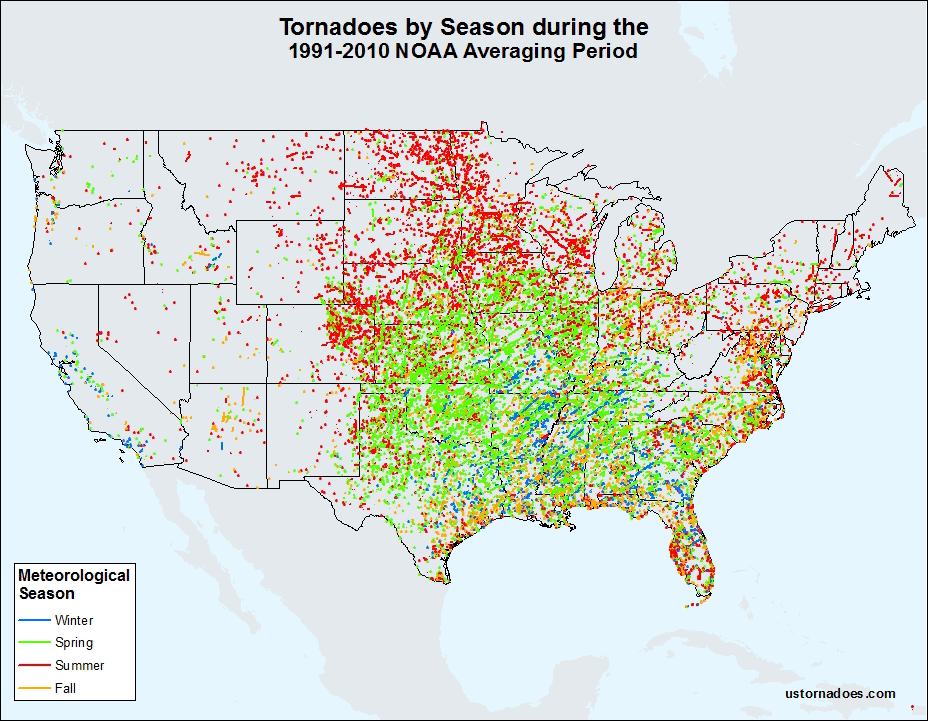
Tornado activity in South Dakota follows a distinct seasonal pattern. The peak “tornado season” typically runs from late spring through early summer, specifically from May through July. During these months, temperatures rise, and the clash of air masses is most pronounced, leading to increased thunderstorm development. While tornadoes can occur outside of this window, their frequency is significantly lower. On average, South Dakota experiences around 30 tornadoes per year, though this number can fluctuate significantly from one year to the next. Most of these are relatively weak (EF0 or EF1 on the Enhanced Fujita scale), but the potential for stronger, more damaging tornadoes always exists, underscoring the importance of awareness.
Distinguishing Between Eastern and Western South Dakota
While the entire state is technically susceptible to tornadoes, there’s a noticeable difference in frequency between the eastern and western halves of South Dakota. The flatter, more humid eastern plains, particularly the southeastern corner near cities like Sioux Falls, tend to experience more tornado activity. This area is more directly influenced by the warm, moist air flow from the Gulf of Mexico. In contrast, the western part of the state, dominated by the rugged terrain of the Black Hills and the Badlands, generally sees fewer tornadoes. The mountainous topography can disrupt the atmospheric conditions necessary for tornado formation, making the region relatively less prone, though certainly not immune, to these powerful storms. This geographical distinction is important for travelers, but the fundamental safety principles remain universal across the state.
Understanding Tornado Risk for Travelers
While the existence of tornadoes in South Dakota is a fact, it’s crucial for travelers to put this information into perspective. The risk to an individual visitor is statistically very low, and preparedness, rather than fear, should be the guiding principle.
Assessing the Actual Danger
The images of devastating tornadoes can be unsettling, but it’s important to remember that they are highly localized events. Even during a significant outbreak, the chances of any single person or specific location being directly impacted by a tornado are extraordinarily small. Millions of people visit South Dakota annually, especially during the summer, which coincides with peak tornado season, and enjoy their trips without incident. The primary “danger” lies in being uninformed or unprepared. With a basic understanding of weather patterns and emergency procedures, travelers can significantly enhance their safety and peace of mind. The goal is to be aware, not alarmed.
Key Travel Seasons and Weather Considerations
Many popular travel times to South Dakota overlap with the state’s severe weather season. Summer, from June to August, is when families flock to attractions like Mount Rushmore and Badlands National Park, and when outdoor activities like hiking and camping are at their peak. Coincidentally, this is also when the atmospheric conditions are most conducive to tornado formation. Therefore, travelers visiting during these months should pay closer attention to weather forecasts and alerts. Early spring and late fall offer cooler temperatures and fewer crowds, and generally, a lower risk of severe weather, though it’s never zero. Winter, with its cold temperatures, poses virtually no tornado threat. Planning your trip with an eye on the seasonal weather patterns can help you anticipate potential conditions and pack accordingly.
Popular Destinations and Tornado Preparedness
Whether you’re exploring the presidential faces carved into Mount Rushmore, marveling at the geological wonders of Badlands National Park, venturing into the caves of Custer State Park, or enjoying the urban amenities of Sioux Falls or Rapid City, tornado preparedness is a universal consideration. While the risk varies slightly by region, the principles of staying informed and knowing what to do are applicable everywhere. Major tourist hubs and cities typically have robust emergency communication systems and readily available shelters. National Parks and smaller towns also have protocols in place, and park rangers or local authorities are excellent resources for specific guidance. Integrating weather awareness into your daily travel plan is as important as checking road conditions or attraction opening hours.

Essential Safety Tips for Visitors
Being prepared is the best defense against severe weather. By following a few straightforward safety tips, visitors to South Dakota can ensure they are ready to act should a tornado threat arise.
Staying Informed: Weather Alerts and Apps
The most critical step in tornado safety is staying informed. Before and during your trip, make it a habit to check weather forecasts from reliable sources. The National Weather Service (NWS) is the official source for severe weather alerts in the United States. Many reputable weather apps (e.g., NOAA Weather Radar, local news apps) can provide real-time alerts directly to your smartphone. Ensure your phone is charged, and consider carrying a portable power bank, especially if you plan to be in remote areas. Pay attention to local radio and television broadcasts, particularly if you are in a hotel or rental property. When severe weather is possible, these outlets will provide continuous updates.
Identifying Safe Shelters
Knowing where to seek shelter is paramount. If you are staying in a hotel or motel, inquire about their severe weather procedures and designated shelter areas upon check-in. Most modern buildings offer sturdy interior rooms or basements. If a tornado warning is issued:
- Indoors: Go to the lowest level of a sturdy building (basement is ideal). If no basement, go to an interior room (bathroom, closet) away from windows and doors. Get under something sturdy, like a heavy table, and cover your head and neck.
- Outdoors/Campgrounds: If you are camping or in a remote area and a sturdy shelter is not immediately available, lie in a ditch or other low-lying area and cover your head with your arms. This offers some protection from flying debris. Never seek shelter under an overpass.
During a Tornado Watch vs. Warning
Understanding the difference between a tornado watch and a tornado warning is vital:
- Tornado Watch: Conditions are favorable for tornadoes to develop in or near the watch area. This means you should stay alert, monitor weather updates, and have a plan ready. It’s a time for preparation, not panic. If you have outdoor plans, consider postponing them.
- Tornado Warning: A tornado has been sighted or indicated by weather radar, posing an imminent threat to life and property in the warned area. This is when you must take immediate action and seek shelter. Do not wait to see the tornado; by then, it might be too late to react safely.
Vehicle Safety
Being caught in a vehicle during a tornado warning is a particularly dangerous situation. Vehicles offer little protection from a tornado’s powerful winds and flying debris.
- If you are in a car, truck, or RV: Do not try to outrun a tornado in urban or congested areas. Your best option might be to abandon your vehicle and seek a sturdy shelter nearby.
- Rural Areas: If you are in a rural area with no sturdy shelter immediately available, and the tornado is far enough away that you can safely get out of your vehicle, lie down in a ditch or other low-lying area away from the car. Cover your head with your arms. If you cannot get to a ditch, stay in your vehicle with your seatbelt on, put your head down below the windows, and cover yourself with a blanket or coat.
Exploring South Dakota Responsibly and Safely
With its breathtaking landscapes and rich history, South Dakota is a destination well worth exploring. The presence of tornadoes, while a reality, should not overshadow the incredible experiences the state offers. Instead, it serves as a reminder to travel responsibly and with an informed perspective.
Enjoying the Outdoors with Awareness
South Dakota’s natural beauty is a major draw, from the rugged Badlands to the serene Black Hills. Embrace these outdoor adventures, but do so with an awareness of the weather. Before embarking on a hike, a scenic drive, or a day of fishing, check the forecast. If thunderstorms are predicted, consider modifying your plans or ensuring you have a way to receive alerts and identify nearby shelters. Many state parks and national monuments provide visitor centers and ranger stations where you can get up-to-date local weather information and guidance. This proactive approach allows you to fully immerse yourself in the natural wonders while minimizing potential risks.
Local Resources and Emergency Services
One of the reassuring aspects of traveling in regions prone to severe weather is the efficiency and preparedness of local communities and emergency services. South Dakota has well-established emergency management systems, and residents are generally well-versed in tornado safety. Local law enforcement, fire departments, and search and rescue teams are highly trained and ready to respond. When visiting, you’ll find that hotels, campgrounds, and public facilities often have clear emergency plans in place. Don’t hesitate to ask locals for advice; they can offer invaluable insights into local weather patterns and safety protocols. This robust infrastructure and community awareness contribute significantly to visitor safety.
Peace of Mind for Your Trip
Ultimately, a trip to South Dakota should be an enjoyable and memorable experience. The fact that tornadoes occur there is a piece of information to be respected, but not feared. By understanding the seasonal risks, staying informed through reliable weather alerts, and knowing the basic safety protocols, travelers can significantly mitigate potential dangers. The chances of encountering a tornado during your specific visit are extremely low, and the risk of personal harm even lower. Armed with knowledge and a sensible approach, you can confidently plan your itinerary, explore the breathtaking landscapes, delve into the rich history, and savor the unique charm that South Dakota has to offer, all with complete peace of mind.
In conclusion, while South Dakota is indeed within “Tornado Alley” and experiences these powerful storms, the risk to travelers is manageable through awareness and preparedness. By staying informed about weather conditions, knowing where to seek shelter, and understanding the difference between a tornado watch and a warning, visitors can confidently explore the state’s incredible attractions. So, pack your bags, prepare for any weather, and get ready to discover the majesty of South Dakota without undue concern.
LifeOutOfTheBox is a participant in the Amazon Services LLC Associates Program, an affiliate advertising program designed to provide a means for sites to earn advertising fees by advertising and linking to Amazon.com. Amazon, the Amazon logo, AmazonSupply, and the AmazonSupply logo are trademarks of Amazon.com, Inc. or its affiliates. As an Amazon Associate we earn affiliate commissions from qualifying purchases.