
The story of Detroit is a compelling narrative of innovation, prosperity, and profound transformation. Often referred to as the “Motor City,” Detroit once epitomized American industrial might and ingenuity, a beacon of opportunity that drew millions. Yet, over the course of the 20th century, the city experienced a dramatic and prolonged decline, becoming a symbol of urban decay and post-industrial struggle. Pinpointing a single moment for this decline is a simplification; rather, it was a complex interplay of economic, social, and political factors that unfolded over decades, leaving an indelible mark on its landscape and its people. Understanding this trajectory requires examining the city’s meteoric rise, the subtle shifts that heralded trouble, and the significant events that accelerated its fall, all while acknowledging the resilient spirit that now fuels its resurgence.

The Zenith of Motor City: A Pre-Decline Landscape
Before its decline, Detroit was a powerhouse, a testament to American manufacturing prowess and innovation. Its early 20th-century boom was nothing short of miraculous, fueled almost entirely by the burgeoning automotive industry. This period laid the foundation for the city’s distinct identity and its lasting legacy, creating landmarks of industry and a vibrant urban core.
The Automotive Boom and Urban Expansion
The late 19th and early 20th centuries saw Detroit transform from a regional port city into the undisputed automotive capital of the world. Visionaries like Henry Ford, Ransom E. Olds, and the Dodge brothers established their pioneering factories here, revolutionizing transportation and production. The introduction of the assembly line by Henry Ford at his Highland Park Plant in 1913 brought unprecedented efficiency, making cars affordable for the masses. This innovation created immense wealth and an insatiable demand for labor.
People from across the United States, particularly from the rural South during the Great Migration, and immigrants from Europe flocked to Detroit seeking well-paying factory jobs. The city’s population exploded, growing from around 285,000 in 1900 to nearly 1.8 million by 1950, making it the fourth-largest city in the country. This rapid growth spurred massive infrastructure development, from grand boulevards and residential neighborhoods to iconic architectural marvels that still stand today, such as the Fisher Building and the Guardian Building. These structures, designed during the city’s heyday, embody the optimism and prosperity of the era, standing as physical landmarks of a golden age.
Early Signs of Strain
Even amidst the booming prosperity, subtle fissures began to appear by the mid-20th century. The very success of the automotive industry fostered an environment where the city became overly dependent on a single sector. While General Motors, Ford Motor Company, and Chrysler provided unparalleled economic stability, they also made Detroit vulnerable to shifts in consumer demand, technological advancements, and global competition. The vast, sprawling factories, while efficient for their time, also began to show their age, and the sheer scale of production eventually led to environmental concerns. Though seemingly minor at the time, these early indicators hinted at an underlying fragility that would become more pronounced in the decades to come.
The Mid-Century Turning Point: Seeds of Change
The true genesis of Detroit’s decline can largely be traced to the mid-20th century, a period marked by profound national shifts that disproportionately impacted the city. The post-World War II economic landscape, coupled with significant social upheavals, created a perfect storm that began to erode the city’s foundations.
Shifting Industrial Tides and Suburbanization
Post-World War II, the American dream shifted towards homeownership and suburban living, heavily facilitated by government policies like the GI Bill and massive investments in infrastructure, particularly the Interstate Highway System. This development had a dual impact on Detroit. Firstly, it enabled the automotive companies to decentralize production, moving factories from the crowded urban core to cheaper, more accessible suburban and rural areas. This outflow of industrial jobs began to hollow out the city’s economic base, directly impacting the blue-collar workforce.
Secondly, the burgeoning suburbs offered a perceived escape from the challenges of urban life, including rising crime rates and racial tensions. Affluent and middle-class residents, predominantly white, began a mass exodus from the city to the surrounding suburbs—a phenomenon known as “white flight.” Between 1950 and 1960 alone, Detroit’s population dropped by over 180,000. This demographic shift not only reduced the city’s tax base but also segregated its population, leaving the urban core with fewer resources and an increasingly marginalized community. The once-bustling commercial districts, designed to serve a dense urban population, started to see empty storefronts and reduced foot traffic, an early physical manifestation of decline.
Social Unrest and Demographic Shifts
Racial tensions, simmering beneath the surface of Detroit’s industrial success, boiled over in the mid-1960s. The city’s rapid demographic change, coupled with deeply entrenched systemic racism in housing, employment, and policing, created an explosive environment. The 1967 Detroit Riot (also referred to as the 1967 Rebellion) was a pivotal moment. Lasting five days, it resulted in widespread destruction, loss of life, and a deep psychological scar on the city. This event profoundly accelerated the trends of white flight and capital disinvestment, painting Detroit as a dangerous and unstable place for investment and residence.
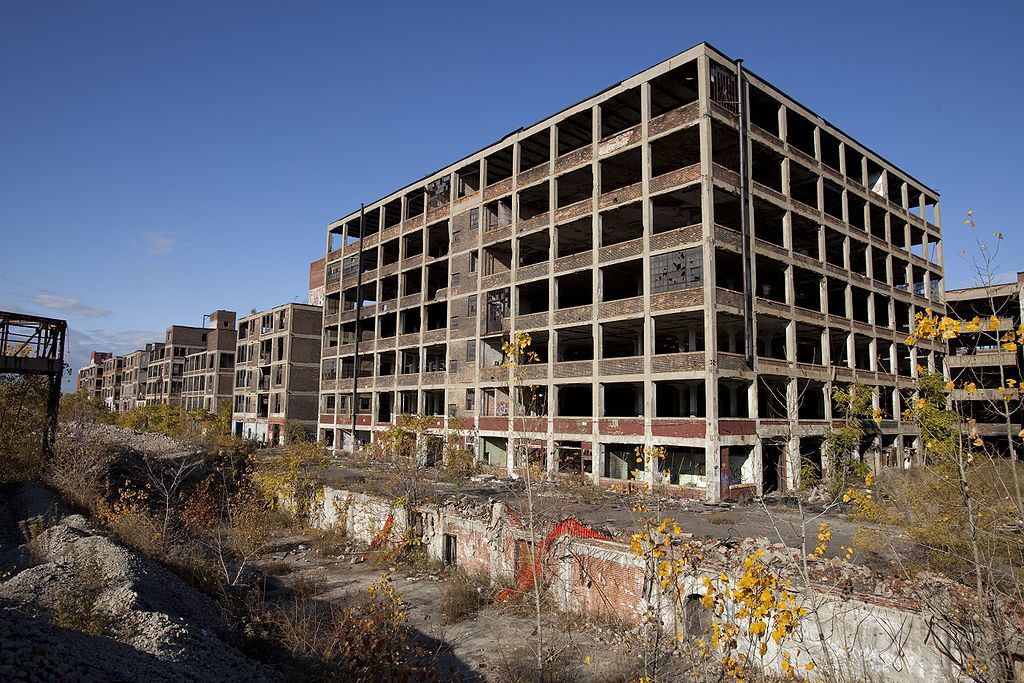
The riot’s aftermath saw an even more rapid out-migration of businesses and residents, further decimating the tax base and leaving vast swaths of the city abandoned. Neighborhoods that had once been vibrant became shells of their former selves, with homes and commercial buildings falling into disrepair. The social fabric of the city, already strained by inequality and segregation, was further fractured, making recovery an increasingly daunting task. The physical landscape, once a testament to collective prosperity, began to show visible signs of abandonment and decay, with iconic landmarks like Michigan Central Station standing as poignant symbols of this decline.
The Great Unraveling: Decades of Disinvestment
The period from the late 1960s through the early 21st century witnessed the continued unraveling of Detroit, characterized by persistent economic downturns, further manufacturing exodus, and escalating fiscal crises. This era saw the city’s physical and financial infrastructure crumble, solidifying its image as a struggling Rust Belt metropolis.
Economic Downturns and Manufacturing Exodus
The oil crises of the 1970s delivered a severe blow to the American auto industry, which had largely focused on producing large, fuel-inefficient vehicles. Japanese and European automakers, offering smaller, more fuel-efficient cars, gained significant market share. This shift in consumer preference caught the “Big Three” (General Motors, Ford Motor Company, Chrysler) off guard, leading to massive layoffs and plant closures in Detroit and throughout Michigan. The rise of globalization and trade agreements like NAFTA in the 1990s further incentivized manufacturers to seek cheaper labor and production costs outside the United States, accelerating the exodus of manufacturing jobs from the Rust Belt.
As the core industry declined, so too did the ancillary businesses and services that supported it. Detroit’s industrial landscape, once dotted with bustling factories, became increasingly characterized by vacant lots and abandoned buildings. The skilled workforce, unable to find comparable employment, either left the city or faced chronic unemployment, exacerbating poverty and social challenges. The once-grand architectural landmarks, built during the city’s boom, now stood as imposing, yet often empty or underutilized, monuments to a bygone era, slowly succumbing to the ravages of neglect and vandalism.
Fiscal Crises and Infrastructure Decay
The shrinking population and diminishing economic activity created a catastrophic decline in Detroit’s tax revenue, making it increasingly difficult for the city government to provide essential services. Police, fire, and sanitation departments faced severe cutbacks, leading to slower response times, increased crime, and deteriorating public health. Infrastructure, from roads and streetlights to water pipes and public transit, began to crumble due to lack of maintenance and investment. Blocks upon blocks of residential properties were abandoned, creating urban prairies and making the city’s problems appear insurmountable.
The culmination of these fiscal challenges led to Detroit’s historic bankruptcy filing in 2013, the largest municipal bankruptcy in United States history. This event, while a painful nadir, also served as a catalyst for critical financial restructuring and a renewed focus on long-term sustainability. The sight of iconic city landmarks, like the Detroit Institute of Arts, being considered for asset sale during the bankruptcy proceedings, underscored the depth of the crisis and the widespread impact on the city’s cultural heritage.
Towards Revival: A New Chapter for Detroit
While the period of decline was long and arduous, Detroit has demonstrated remarkable resilience and is now in the midst of an inspiring resurgence. This new chapter is characterized by strategic reinvestment, a commitment to restoration, and a vibrant spirit of innovation, transforming the city while acknowledging its rich, complex past.
Reinvestment, Restoration, and Resilience
In the wake of bankruptcy, Detroit‘s narrative began to shift from one of decline to one of determined revival. Public-private partnerships, philanthropic efforts, and significant investment from both local entrepreneurs and major corporations have poured into the city. Downtown Detroit and Midtown have experienced a dramatic revitalization, with historic buildings being meticulously restored and repurposed for residential, commercial, and entertainment uses. The once-derelict Michigan Central Station is currently undergoing a massive renovation by Ford Motor Company to become a hub for innovation and technology, a powerful symbol of the city’s future.
New businesses are flourishing, from technology startups to a burgeoning hospitality sector, creating jobs and attracting a new generation of residents. The focus is not just on economic growth but also on cultural enrichment, with institutions like the Detroit Institute of Arts and the Motown Museum playing crucial roles in preserving the city’s heritage. The iconic Comerica Park and the new Little Caesars Arena highlight renewed investment in sports and entertainment, drawing people back to the city center.

Preserving the Past, Building the Future
Detroit’s recovery is not about erasing its past but about learning from it and integrating it into a sustainable future. The city’s unique architectural heritage, from its grand early 20th-century skyscrapers to its diverse neighborhood housing stock, is being recognized and celebrated. Preservation efforts are crucial, acknowledging that these landmarks tell the story of Detroit’s triumphs and trials. Green initiatives are transforming urban prairies into community gardens and parks, reclaiming neglected spaces and improving quality of life for residents.
The story of Detroit’s decline is a multifaceted tale, not confined to a single year or event but rather a prolonged process influenced by economic restructuring, social inequalities, and demographic shifts that began in earnest in the mid-22th century. Yet, just as profoundly, the city’s ongoing revitalization demonstrates the incredible resilience of its people and the enduring spirit of innovation that has always defined this remarkable “Famous Place.” Detroit stands today not merely as a historical landmark of decline but as a living testament to recovery, a city actively reshaping its destiny while honoring the rich, complex history embedded in its very foundations.
LifeOutOfTheBox is a participant in the Amazon Services LLC Associates Program, an affiliate advertising program designed to provide a means for sites to earn advertising fees by advertising and linking to Amazon.com. Amazon, the Amazon logo, AmazonSupply, and the AmazonSupply logo are trademarks of Amazon.com, Inc. or its affiliates. As an Amazon Associate we earn affiliate commissions from qualifying purchases.