
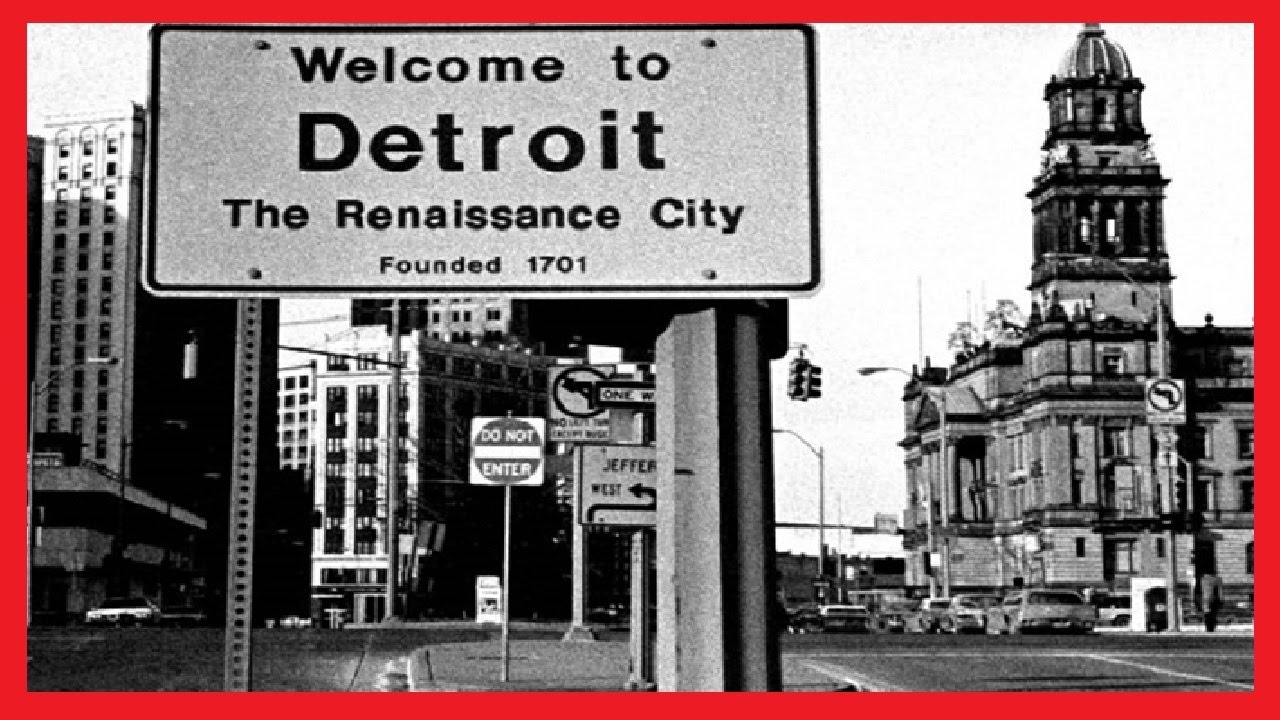
Detroit, often recognized as the heart of American innovation and industry, boasts a history as rich and complex as the narratives woven into the fabric of the United States itself. To understand when this iconic city was established is to delve into a compelling saga of colonial ambition, strategic importance, and the relentless drive that has characterized its evolution. The definitive answer to its founding date traces back to July 24, 1701, when the French explorer and military officer Antoine de la Mothe Cadillac established Fort Pontchartrain du Détroit on the banks of the river connecting Lake Erie and Lake Huron in the Great Lakes region. This act marked the beginning of what would become a pivotal urban center, a landmark of endurance through centuries of change.
The Dawn of a Frontier Outpost: Antoine de la Mothe Cadillac’s Vision
The establishment of Detroit was not a random occurrence but a carefully considered strategic move born from the geopolitical rivalries of 17th-century North America. The French and British Empires were locked in a fierce competition for control over lucrative fur trade routes and territorial dominance, particularly in the vast interior accessible via the Great Lakes.
Strategic Location and Early European Interest
The narrow strait, or “détroit” in French, connecting Lake Huron and Lake Erie (part of the larger chain of the Great Lakes leading to the St. Lawrence River) was a vital artery for trade, transportation, and military movements. For decades, both French and British traders and explorers understood its immense potential. This strategic choke point was ideal for establishing a permanent settlement that could serve as a hub for the fur trade, a military outpost to counter British expansion, and a base for missionary work among indigenous peoples.
Before Cadillac’s arrival, the area was inhabited by various indigenous nations, including the Anishinaabe peoples (Ojibwe, Odawa, and Potawatomi), who had long utilized the rich resources of the region. The French presence aimed to solidify their claim over these lands, bringing European influence to a critical junction of North American geography.
Founding of Fort Pontchartrain du Détroit (July 24, 1701)
Antoine de la Mothe Cadillac, a French adventurer and commander of Fort Michilimackinac, tirelessly lobbied the French crown for permission to establish a new settlement at “le Détroit.” He envisioned a vibrant community, not just a military fort, that would attract French settlers and indigenous allies, strengthening French claims and creating a monopoly on the fur trade. After much persuasion, he received the necessary authorization.
On July 24, 1701, Cadillac arrived at the site with fifty French soldiers and fifty French-Canadian settlers, along with 100 Huron and Ottawa allies. They immediately began constructing a palisaded fort, naming it Fort Pontchartrain du Détroit in honor of Louis Phélypeaux, Comte de Pontchartrain, the French Minister of Marine. This small outpost, with its strategic location and ambitious founder, laid the groundwork for the modern city of Detroit.
Early Challenges and Growth
Life in early Detroit was challenging. The settlement faced harsh winters, logistical difficulties in receiving supplies from New France (present-day Canada), and constant tensions with various indigenous groups and the encroaching British Empire. Cadillac’s vision of a prosperous agricultural and trading community took time to materialize. Disputes over the fur trade, the distribution of land, and the treatment of indigenous peoples led to internal conflicts and several changes in leadership.
Despite these hurdles, the settlement slowly grew. The fertile land supported farming, and the river provided abundant fishing. Over time, a small village began to form around the fort, with homes, a church (Ste. Anne de Détroit Parish was established on the day of the founding), and trading posts. This early period established Detroit’s identity as a multi-cultural frontier town, a blend of European and indigenous influences, constantly navigating the complexities of colonial expansion.
A Shifting Colonial Tapestry: French, British, and American Influence
The strategic importance of Detroit meant it would not remain under French control indefinitely. Over the next century, the settlement became a prize in the larger imperial struggles that reshaped the North American continent, passing through the hands of three dominant powers.
The French and Indian War and British Takeover (1760)
The mid-18th century saw the culmination of Anglo-French rivalry in North America with the French and Indian War (1754–1763), known globally as the Seven Years’ War. This monumental conflict determined the colonial future of the continent. Following a series of decisive British victories, including the capture of Quebec and Montreal, French power in North America crumbled.
In 1760, Major Robert Rogers and his Rogers’ Rangers formally took possession of Fort Pontchartrain du Détroit for the British Empire. The Treaty of Paris (1763) officially ceded all French territories east of the Mississippi River to the British, solidifying their control over Detroit. This transition was not entirely smooth, as the indigenous allies of the French viewed the British with suspicion and hostility.
Pontiac’s Rebellion and British Rule
The shift in power from the French to the British brought significant changes to the local dynamics. The British policies, which were often less conciliatory towards indigenous populations than those of the French, led to widespread discontent. This culminated in Pontiac’s Rebellion (1763–1766), a major uprising led by Pontiac, an Odawa chief. Detroit became a central focus of the rebellion, with Fort Detroit (as it was by then known) enduring a lengthy siege for nearly six months in 1763.
Despite the siege, the British managed to hold the fort, and eventually, the rebellion waned. Under British rule, Detroit continued its role as a key fur trading post and military stronghold, though its growth was somewhat stifled by the ongoing imperial conflicts and the region’s distance from the main colonial settlements.
The American Revolution and Cession to the United States (1796)
The American Revolution (1775–1783) once again placed Detroit at the center of conflict. While geographically distant from the primary battlegrounds of the eastern seaboard, the fort served as a British command center for operations against American colonists and their indigenous allies in the Ohio Country and the western frontier. British forces, often supported by various indigenous tribes, launched raids from Detroit against American settlements.
Despite the Treaty of Paris (1783) officially ceding Detroit and the surrounding territory to the newly formed United States, the British refused to relinquish control. They maintained their garrisons in the Great Lakes region for another 13 years, citing American failures to uphold certain treaty obligations. It was not until Jay’s Treaty in 1794 that the British finally agreed to evacuate the posts. On July 11, 1796, the American flag was raised over Detroit, marking its official transition into American hands. This date is often considered a second founding for the city, signifying its integration into the nascent republic.
From Village to City: Early American Development
Under American control, Detroit began its transformation from a frontier outpost into a burgeoning American city. The early years of American rule, however, were not without significant challenges, including natural disaster and further conflict.
The Great Fire of 1805 and Rebuilding Efforts
Just nine years after becoming part of the United States, disaster struck. On June 11, 1805, a devastating fire swept through Detroit, virtually destroying every building in the settlement, leaving only a warehouse and a few stone chimneys standing. This catastrophe, while tragic, also provided a unique opportunity for urban planning.
Following the fire, Augustus B. Woodward, a territorial judge, proposed an ambitious radial street plan, similar to that of Washington D.C., to rebuild the city. The Woodward Plan, though never fully implemented due to practical difficulties and land ownership disputes, laid the foundation for much of Detroit’s distinct street layout, with wide avenues radiating from a central point. This period of reconstruction demonstrated the resilience and forward-looking vision that would become hallmarks of the city.
Territorial Capital and Incorporation (1806, 1815)
In 1805, shortly before the fire, Detroit was designated the capital of the newly formed Michigan Territory. This elevated its status and spurred further development. It was incorporated as a town in 1806 and later, after the War of 1812, it was officially incorporated as a city in 1815.
The War of 1812 saw Detroit briefly fall back into British hands in 1812 before being recaptured by American forces under William Henry Harrison in 1813 following the decisive Battle of Lake Erie. These experiences underscored Detroit’s critical role in national security and its position as a gateway to the American Midwest.
Economic Growth and the Rise of Industry
The opening of the Erie Canal in New York in 1825 revolutionized transportation and trade, dramatically reducing the travel time and cost of moving goods and people between the East Coast and the Great Lakes region. This had a profound impact on Detroit. Immigration surged, bringing in waves of new settlers from the eastern United States and Europe.
Detroit’s economy diversified beyond the fur trade, with shipbuilding, lumber, and manufacturing gaining prominence. Its strategic location on the Detroit River and its access to the vast natural resources of Michigan propelled its growth throughout the 19th century, setting the stage for its eventual emergence as a global industrial powerhouse.
Detroit’s Enduring Legacy: A City of Resilience and Innovation
The story of Detroit’s establishment is one of ambition, geopolitical chess, and unwavering resilience. From a small French fort in 1701 to a vital American city, its history is a testament to the transformative power of its location and the spirit of its inhabitants.
From Fur Trade to Industrial Powerhouse
The foundations laid by Antoine de la Mothe Cadillac evolved dramatically over the centuries. What began as a fur trading post would, by the turn of the 20th century, become the epicenter of the automobile industry. Visionaries like Henry Ford, Ransom E. Olds, and the founders of General Motors and Chrysler transformed Detroit into “Motor City,” an engine of American ingenuity and industrial might. This industrial boom attracted millions seeking opportunity, further diversifying its population and enriching its cultural landscape. Later, in the mid-20th century, it would also become the birthplace of Motown Records, a musical phenomenon that revolutionized popular music worldwide.
Architectural Echoes of the Past
While the Great Fire of 1805 obliterated many of Detroit’s earliest structures, the city’s commitment to rebuilding and evolving has resulted in a fascinating architectural legacy. Vestiges of its rich history can still be found, from the historic Ste. Anne de Détroit Parish, which predates the fire and has been rebuilt multiple times, to the distinct layout influenced by the Woodward Plan. Landmarks like the Guardian Building and the Fisher Building stand as testaments to its industrial zenith, while efforts to preserve and revitalize historic neighborhoods continue to honor its deep roots.

Celebrating Detroit’s Rich Heritage
Today, Detroit continues to celebrate its unique heritage. Its establishment on July 24, 1701, is more than just a date; it represents the inception of a city that has consistently reinvented itself, faced adversity head-on, and contributed immeasurably to American history and culture. From its French colonial origins through its British occupation and its pivotal role in the formation of the United States, Detroit’s story is a compelling narrative of perseverance, innovation, and the enduring human spirit to build and rebuild, making it a truly significant landmark in the annals of American history.
LifeOutOfTheBox is a participant in the Amazon Services LLC Associates Program, an affiliate advertising program designed to provide a means for sites to earn advertising fees by advertising and linking to Amazon.com. Amazon, the Amazon logo, AmazonSupply, and the AmazonSupply logo are trademarks of Amazon.com, Inc. or its affiliates. As an Amazon Associate we earn affiliate commissions from qualifying purchases.