
The Ambassador Bridge stands as more than just a steel and concrete span; it is a vital artery for trade, a daily conduit for travelers, and an enduring symbol of the close relationship between the United States and Canada. Connecting Detroit, Michigan, with Windsor, Ontario, this iconic structure facilitates an astonishing volume of cross-border commerce and personal travel, making it one of North America’s busiest international crossings. Given its monumental importance, the question of its ownership is often met with curiosity and sometimes, surprise. Unlike many public infrastructure projects, the Ambassador Bridge is, and largely has been, a privately owned entity, a fact that has shaped its history, operational policies, and its intricate relationship with both governmental bodies it serves.

The Illustrious History and Construction of an Icon
The genesis of the Ambassador Bridge dates back to the early 20th century, a period of burgeoning cross-border trade and increasing demand for more efficient transportation links. Its journey from concept to reality is a testament to visionary entrepreneurship and remarkable engineering prowess.
Visionary Beginnings
The idea for a direct bridge connection across the Detroit River gained significant traction in the 1920s. Joseph A. Bower, an ambitious entrepreneur and developer, emerged as the driving force behind the project. He envisioned a privately funded and operated bridge that would alleviate the bottlenecks of ferry transport and the existing railway tunnel, unlocking enormous economic potential for both Detroit and Windsor. Despite considerable financial challenges and the sheer scale of the undertaking, Bower managed to secure the necessary backing, laying the groundwork for one of the most significant privately funded infrastructure projects of its time.
Engineering Marvel
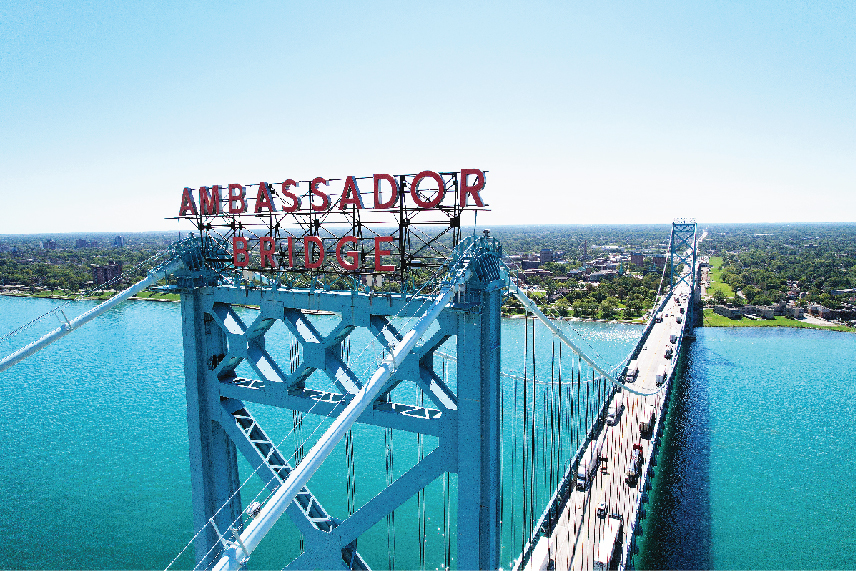
Construction of the bridge commenced in May 1927. Designed by the firm McClintic-Marshall Company of Pittsburgh, the bridge was an engineering marvel for its era. When it officially opened on November 11, 1929, it boasted the longest suspension bridge main span in the world at 1,850 feet (564 meters), a record it held for two years. Its impressive steel superstructure, towering cables, and grand design quickly made it a recognized landmark. The construction was completed rapidly, demonstrating the era’s industrial might and the urgency with which such a vital link was desired, especially on the eve of the Great Depression.
Early Ownership and Purpose
From its inception, the Ambassador Bridge was operated by a private entity, the Detroit International Bridge Company (DIBC). Its primary purpose was clear: to facilitate the movement of goods and people between the USA and Canada, charging tolls to generate revenue for its investors and cover operational costs. This private model allowed for swift decision-making and project execution, bypassing some of the bureaucratic hurdles often associated with public works.
The Moroun Era: A Dynasty of Ownership
While the Ambassador Bridge began as a privately owned venture, its current and most recognized period of ownership is inextricably linked to the Moroun family, particularly the late Manuel “Matty” Moroun. His acquisition and subsequent control of the bridge marked a significant chapter in its history, cementing its status as a cornerstone of a vast private business empire.
Manuel Moroun’s Acquisition
The bridge eventually became part of a larger portfolio of investments. In 1979, Manuel “Matty” Moroun, a shrewd and formidable businessman from Detroit, acquired the Ambassador Bridge through his holding company, the CenTra, Inc. Known for his vast holdings in trucking, logistics, and real estate, Moroun saw the bridge not just as an asset but as the very heart of cross-border trade, an indispensable link that generated significant and consistent revenue. His acquisition brought the bridge under singular, private control, a situation that would define its management and impact for decades to come.
The Detroit International Bridge Company
Under Moroun’s ownership, the Detroit International Bridge Company (DIBC) continued to be the operational entity for the bridge. This company, wholly controlled by the Moroun family (now primarily through Matthew Moroun, Matty’s son, after his father’s passing), manages all aspects of the bridge’s operations, including maintenance, security, toll collection, and interactions with border agencies. The DIBC’s authority over such a critical piece of infrastructure, while private, has always been subject to various agreements and regulations from both the U.S. and Canadian governments.
A Legacy of Control

The Moroun family’s long tenure of ownership has been characterized by both efficiency and controversy. They have maintained the bridge as a highly profitable enterprise, leveraging its strategic importance. However, this private control has also led to frequent clashes with government entities on both sides of the border over issues such as maintenance standards, expansion plans, and particularly, the opposition to the construction of competing public bridges. The family’s unwavering stance on maintaining their monopoly over the Detroit River crossings became a hallmark of their ownership, shaping the political and economic landscape of the region for decades.
The Significance of Private Ownership on a Public Artery
The private ownership of such a vital public asset like the Ambassador Bridge presents a unique set of advantages and challenges, influencing everything from daily commuters to international trade policies.
Economic Lifeline
The Ambassador Bridge is an undeniable economic powerhouse. It carries approximately 25% of all trade between the United States and Canada, making it the single busiest international border crossing in North America by trade volume. Billions of dollars in goods, particularly from the automotive industry, traverse its lanes annually. For businesses in Detroit and Windsor, and indeed across the continent, its efficiency and reliable operation are paramount. The private ownership model allows for rapid operational adjustments, but also means that a significant portion of the revenue generated from this crucial public service flows into private hands.
Controversies and Challenges
The DIBC’s private ownership has often been a source of tension. Critics have raised concerns about the pace and quality of maintenance, leading to periods where the bridge infrastructure was perceived as aging and in need of substantial upgrades. Toll collection and revenue generation have also been contentious, with debates over the fairness of rates and the lack of transparent public oversight common for private enterprises. Perhaps the most significant challenge to the private ownership model came with the persistent calls for a new, publicly owned bridge to ensure redundancy and alleviate congestion. The Moroun family vehemently opposed any such initiatives, viewing them as direct competition to their lucrative asset.
Impact on Cross-Border Relations
The ownership structure of the Ambassador Bridge has, at times, complicated cross-border relations. Decisions made by a private entity regarding critical infrastructure have sometimes diverged from the strategic interests of the U.S. and Canadian governments. Security upgrades, traffic management, and long-term planning for economic development often require intricate negotiations between government agencies and the private bridge owner, adding layers of complexity not typically found with public infrastructure.
The Future of Cross-Border Connectivity: A Shifting Landscape
While the Ambassador Bridge has long dominated the Detroit-Windsor crossing, its future role is evolving dramatically with the introduction of a monumental new player.
The Gordie Howe International Bridge
After years of political wrangling, legal battles, and extensive planning, the Gordie Howe International Bridge is nearing completion. This massive project, a joint effort between the Canadian and U.S. governments, will be a publicly owned and operated bridge connecting Detroit and Windsor. Its purpose is to provide much-needed additional capacity, improve border security, and ensure a stable, publicly controlled crossing for future generations of trade and travel. Its eventual opening represents a significant shift in the landscape of cross-border infrastructure in the region.
Competition and Coexistence
The advent of the Gordie Howe International Bridge will introduce direct competition to the Ambassador Bridge for the first time in decades. While the DIBC initially fought its construction fiercely, it will now need to adapt to a new reality. Both bridges are expected to coexist, serving the immense volume of traffic between the two nations. The Ambassador Bridge’s ownership will undoubtedly face new strategic considerations regarding toll rates, service offerings, and potential upgrades to remain competitive in a dual-bridge environment.
Evolving Ownership Dynamics
Despite the new competition, the Ambassador Bridge will remain under the private ownership of the Moroun family. Its status as a privately held landmark, an enduring symbol of entrepreneurial vision, will continue. However, its monopoly is ending, potentially ushering in an era where the needs of public infrastructure and the interests of private enterprise are more balanced. The landmark that has defined cross-border passage for nearly a century will adapt, but its unique ownership story will remain a fascinating chapter in the annals of international commerce and infrastructure.
In conclusion, the Ambassador Bridge in Detroit is a landmark unlike many others, with its ownership firmly rooted in private hands, specifically the Moroun family via the Detroit International Bridge Company. This distinctive private control over a critical public artery has shaped its history, driven numerous controversies, and underscored its immense economic significance. As the region embraces a new era of expanded cross-border infrastructure with the Gordie Howe International Bridge, the Ambassador Bridge will continue to stand as a testament to its singular past, a crucial link, and an architectural landmark with a story unlike any other.
LifeOutOfTheBox is a participant in the Amazon Services LLC Associates Program, an affiliate advertising program designed to provide a means for sites to earn advertising fees by advertising and linking to Amazon.com. Amazon, the Amazon logo, AmazonSupply, and the AmazonSupply logo are trademarks of Amazon.com, Inc. or its affiliates. As an Amazon Associate we earn affiliate commissions from qualifying purchases.