
For many, the ability to carry a firearm for self-defense is a fundamental right, and understanding the specific laws governing this right, especially when traveling, is paramount. Florida, a popular destination known for its stunning beaches, vibrant cities, and diverse attractions, has recently undergone significant changes to its concealed carry laws, impacting both residents and visitors alike. If you’re planning a trip to the Sunshine State and considering carrying a concealed weapon, navigating these regulations can seem complex. This comprehensive guide aims to demystify Florida’s concealed carry laws, particularly in the context of travel, ensuring you are well-informed and compliant.
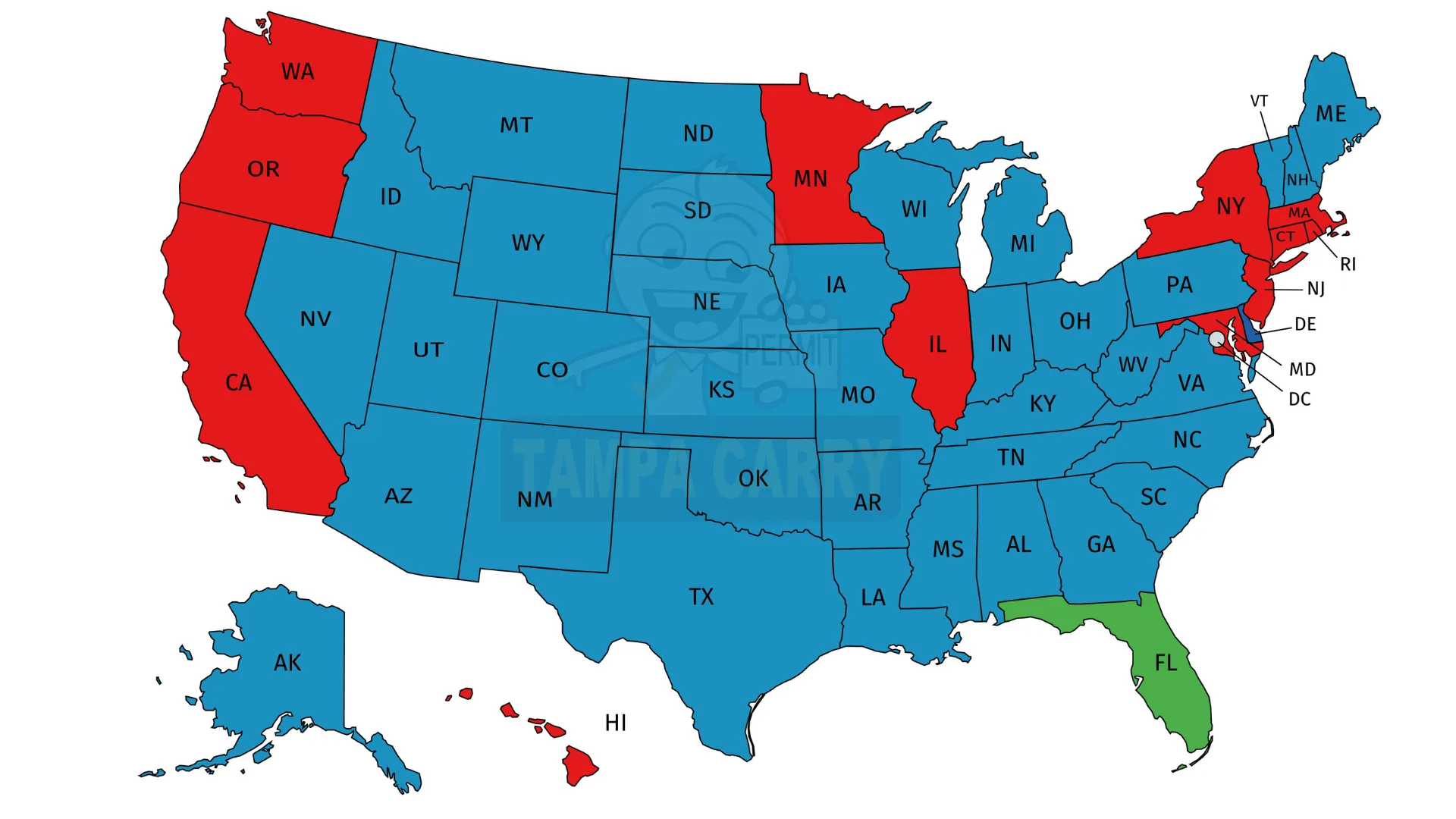
The question of whether a permit is required to conceal carry in Florida has a new answer as of July 1, 2023. Prior to this date, Florida was a “shall-issue” state, meaning that qualified individuals were required to obtain a Concealed Weapon or Firearm License (CWFL) from the Florida Department of Agriculture and Consumer Services (FDACS) to carry a concealed firearm. This permit system involved specific training requirements, background checks, and an application process. However, the legislative landscape shifted dramatically, ushering in a new era for firearm owners in the state.
The Evolving Landscape of Concealed Carry in Florida
Understanding the historical context and the recent legislative changes is crucial for anyone looking to comprehend Florida’s current stance on concealed carry. The state has a long history of being a strong proponent of Second Amendment rights, but the method by which those rights could be exercised for concealed carry has evolved.
Historical Context: Florida’s Previous Permit Requirement
For decades, Florida operated under a traditional concealed carry permit system. To legally carry a concealed firearm, an individual needed a valid CWFL. This license was issued to applicants who met specific criteria, including being at least 21 years old (with exceptions for active military personnel), completing a certified firearms training course, passing a background check, and demonstrating competency with a firearm. This system aimed to ensure that individuals carrying concealed weapons had a basic understanding of firearm safety and legal responsibilities. For travelers, this often meant relying on reciprocity agreements – if their home state’s concealed carry permit was recognized by Florida, they could carry in the state. Otherwise, they would have to adhere to strict transport laws, keeping firearms unloaded and encased.
The Shift to Permitless Carry: What Changed?
The most significant change occurred on July 1, 2023, when Florida officially became a permitless carry state. This legislative change, signed into law by Governor Ron DeSantis, removed the requirement for a state-issued license to carry a concealed firearm. Essentially, any individual who is legally eligible to own a firearm in Florida is now also legally permitted to carry it concealed, without needing a separate permit. This represents a substantial shift from the previous regime and aligns Florida with a growing number of states that have adopted similar permitless carry (also known as “constitutional carry”) laws.
This change does not, however, alter who is eligible to possess a firearm. All existing state and federal restrictions on firearm ownership still apply. This means individuals convicted of certain felonies, those with domestic violence injunctions, or those deemed mentally incapacitated, among other criteria, are still prohibited from possessing firearms, regardless of the permitless carry law. The law simply removes the licensing requirement for concealed carry for those who are otherwise legally allowed to own a gun.
Understanding Florida’s Permitless Carry Law
While the term “permitless carry” might sound straightforward, there are critical nuances and specifics that anyone, particularly a traveler, must understand to remain compliant with Florida law.
Who Qualifies for Permitless Carry?
The primary qualification for permitless concealed carry in Florida is that the individual must be legally allowed to own a firearm under both state and federal law. Key criteria include:
- Age: Must be 21 years of age or older (with an exception for active military personnel and honorably discharged veterans aged 18 and older).
- Criminal Record: Must not have any disqualifying felony convictions or other prohibitions (e.g., domestic violence misdemeanors, active injunctions).
- Mental Competency: Must not have been adjudicated delinquent or been committed to a mental institution under specific conditions.
- Residency: While residents are clearly covered, non-residents who meet Florida’s eligibility requirements are also permitted to carry concealed firearms in the state without a Florida permit. This is a crucial point for travelers.
It’s important to reiterate that “permitless” does not mean “unregulated.” Individuals are still subject to all existing firearm laws regarding purchase, transfer, and prohibited persons.
What “Concealed Carry” Truly Means in Florida
The law specifically refers to “concealed carry.” This means the firearm must be carried in a manner that it is not openly visible to the ordinary observation of others. It must be “on or about the person” and “not openly displayed.” This can include carrying in a holster under clothing, in a purse, backpack, or vehicle glove compartment, as long as it remains out of sight. Open carry of handguns is generally prohibited in Florida, with very limited exceptions (e.g., hunting, fishing, or target practice). Violating the concealed aspect can lead to legal penalties, so understanding and adhering to this definition is paramount.
Places Where Concealed Carry is Still Prohibited
Even with permitless carry, there are still numerous locations where carrying a concealed firearm, even by an eligible person, is strictly prohibited. These “gun-free zones” are codified in Florida Statute 790.06 and include, but are not limited to:
- Any place of nuisance as defined in s. 823.05.
- Any police, sheriff, or highway patrol station.
- Any detention facility, prison, or jail.
- Any courthouse or courtroom.
- Any polling place during an election.
- Any meeting of the governing body of a county, public school district, municipality, or special district.
- Any meeting of the Legislature or a committee thereof.
- Any school, college, or university facility (including athletic events not related to self-defense).
- Any school bus.
- Any airport passenger terminal (beyond security checkpoints).
- Any establishment primarily devoted to dispensing alcoholic beverages for consumption on the premises (bars).
- Any portion of an establishment licensed to dispense alcoholic beverages for consumption on the premises, which is primarily devoted to such purpose.
These prohibitions apply uniformly to everyone, regardless of whether they have a concealed weapon license or are carrying under the permitless carry provision. Travelers must be especially vigilant about these locations, as ignorance of the law is not a defense.
Benefits of Still Obtaining a Florida Concealed Weapon License (CWL)
Despite the advent of permitless carry, many firearm owners, including some residents and frequent travelers, still choose to obtain a Florida Concealed Weapon License (CWL). There are several compelling reasons for this, offering advantages not available through permitless carry.

Reciprocity with Other States
Perhaps the most significant benefit of holding a Florida CWL is its reciprocity with many other states across the United States. While Florida no longer requires its own residents or eligible non-residents to have a permit to carry concealed within Florida, other states still require a permit for concealed carry. A Florida CWL is recognized by dozens of other states, allowing the holder to legally carry a concealed firearm while traveling outside of Florida. For those who frequently travel to states like Georgia, Alabama, Texas, or others that honor Florida permits, maintaining a CWL simplifies interstate travel with a firearm. Without a CWL, individuals would be subject to the concealed carry laws of each state they visit, which may require a permit.
Enhanced Legal Protections and Understanding
The process of obtaining a Florida CWL typically involves a certified firearms safety course. While not strictly mandatory for permitless carry, this training provides invaluable education on firearm safety, the legal aspects of self-defense, use-of-force laws, and where firearms are prohibited. For those who choose permitless carry, they are responsible for knowing and understanding all these laws without formal instruction. Holding a CWL often demonstrates a proactive commitment to understanding the legal framework, which can be beneficial in any legal situation, however unlikely. It also ensures the individual has received at least basic instruction on safe gun handling.
Expedited Firearm Purchases
Another practical advantage of a Florida CWL is that it can expedite the purchase of firearms. When purchasing a firearm from a licensed dealer, a background check is required. For CWL holders, the license often serves as an alternative to the waiting period and can streamline the background check process, allowing for quicker acquisition of a firearm. This can be a significant convenience for those looking to purchase a new firearm.
Important Considerations for Travelers to Florida
For visitors to Florida, understanding the nuances of these laws is even more critical. While the permitless carry law simplifies things in some regards, it adds layers of responsibility for those unfamiliar with Florida-specific regulations.
Non-Residents and Permitless Carry
A key point for travelers is that Florida’s permitless carry law generally extends to non-residents who are legally eligible to possess a firearm under federal and Florida law. This means if you are visiting Florida and meet the state’s criteria for firearm possession (age, no disqualifying criminal record, etc.), you can carry a concealed firearm without a Florida permit. However, it is crucial that non-residents are intimately familiar with Florida’s specific laws, as they may differ significantly from their home state’s regulations. Relying solely on the permitless aspect without understanding the detailed prohibitions and definitions (like “concealed”) could lead to legal trouble.
Transporting Firearms in Vehicles
When transporting firearms in a vehicle in Florida, specific rules apply. Generally, a firearm can be kept in a private conveyance if it is securely encased or otherwise not readily accessible for immediate use. “Securely encased” means it is in a glove compartment, snapped holster, a closed box, or a gun case, or in some other container that requires an action to retrieve it. With the permitless carry law, an eligible individual can also carry a concealed firearm on their person within a vehicle. However, firearms cannot be carried in such a way that they are openly displayed to public view inside a vehicle. For those without a CWL, ensuring the firearm is securely encased and not readily accessible is the safest approach, especially if it is not being carried on the person concealed.
Understanding Local Ordinances and Business Policies
While state law governs most aspects of firearm carry, travelers should be aware that local ordinances might impose additional restrictions, especially concerning certain public spaces or events. Although Florida has strong preemption laws preventing local governments from creating their own firearm regulations that supersede state law, it’s always wise to be aware of any specific local rules, particularly in large metropolitan areas like Miami, Orlando, or Tampa. Furthermore, private businesses retain the right to prohibit firearms on their premises. A “No Guns” sign displayed by a private establishment typically carries legal weight, and ignoring such a sign could lead to trespassing charges, even if you are otherwise legally carrying. Always respect the policies of private property owners.
Responsible Firearm Ownership and Travel
Whether you choose to utilize Florida’s permitless carry law or obtain a CWL, responsible firearm ownership is paramount, especially when traveling. The right to carry comes with significant responsibilities.
Training and Safety Best Practices
Even though formal training is no longer required for concealed carry in Florida, it is highly recommended. A quality firearms safety course can teach critical skills, including safe handling, storage, marksmanship, and understanding the legal aspects of self-defense. For travelers, practicing with your chosen carry method (e.g., holster, bag) before your trip ensures proficiency and comfort. Always adhere to the four fundamental rules of firearm safety: treat every gun as if it were loaded, never point a gun at anything you are not willing to destroy, keep your finger off the trigger until your sights are on the target, and be sure of your target and what is beyond it.
Staying Informed About Legislative Changes
Firearm laws are dynamic and can change. What is permissible today might be different tomorrow. It is incumbent upon firearm owners, especially those who travel, to stay informed about any legislative updates at both state and federal levels. Reliable sources include the Florida Department of Agriculture and Consumer Services, the National Rifle Association (NRA), and reputable legal resources specializing in firearm law. Before any trip, a quick check of current laws is a wise precaution.

When in Doubt: Seek Legal Counsel
The complexities of firearm law, particularly across state lines and in various scenarios, can be immense. If you have any doubts about your eligibility, the legality of carrying in a specific location, or any other aspect of firearm law in Florida, the safest course of action is to consult with a qualified attorney specializing in Second Amendment and firearm law. Professional legal advice tailored to your specific situation can prevent costly mistakes and ensure your peace of mind while enjoying all that Florida has to offer.
In conclusion, as of July 1, 2023, you generally do not need a permit to conceal carry in Florida if you are legally eligible to own a firearm. This applies to both residents and non-residents. However, this permitless carry comes with stringent requirements regarding where and how you can carry, and it does not negate the benefits of obtaining a Florida Concealed Weapon License for reciprocity and enhanced knowledge. For any traveler to [Florida](https://lifeoutofthebox.com/florida], understanding and respecting these laws is crucial for a safe and enjoyable visit.
LifeOutOfTheBox is a participant in the Amazon Services LLC Associates Program, an affiliate advertising program designed to provide a means for sites to earn advertising fees by advertising and linking to Amazon.com. Amazon, the Amazon logo, AmazonSupply, and the AmazonSupply logo are trademarks of Amazon.com, Inc. or its affiliates. As an Amazon Associate we earn affiliate commissions from qualifying purchases.