
Managing long-term accommodation can be a rewarding endeavor, offering a stable income stream and contributing to the vibrant housing market. However, even the most diligent property owners in Florida may, at some point, face the difficult situation of needing to evict a tenant. The eviction process, formally known as an “unlawful detainer action,” is a legal procedure governed by strict state statutes. It is not a simple matter of asking a tenant to leave, nor is it permissible for landlords to take matters into their own hands. Understanding the precise steps, legal requirements, and potential pitfalls is crucial for any property owner navigating this challenging landscape. This comprehensive guide aims to shed light on the process, empowering landlords with the knowledge to proceed lawfully and efficiently, minimizing complications and ensuring compliance with Florida law.
Understanding Florida’s Eviction Landscape
Eviction is a legal remedy available to landlords when a tenant fails to uphold the terms of their lease agreement or Florida’s landlord-tenant laws. It’s imperative to remember that the objective is to regain possession of the property, not merely to collect unpaid rent, although that can be addressed concurrently or separately. The process is highly regulated to protect both landlords and tenants, ensuring due process is followed.
The Legal Framework: Florida Statutes Chapter 83, Part II
The foundation of landlord-tenant law in Florida is laid out in Chapter 83, Part II of the Florida Statutes. This section meticulously details the rights and responsibilities of both parties, covering everything from lease agreements and security deposits to notices and the eviction process itself. Any deviation from these statutes can result in significant legal setbacks for the landlord, including dismissal of the eviction case and potential liability for damages. Therefore, a thorough understanding of this legal framework is the first and most critical step before initiating any eviction proceedings. It dictates the type of notice required, the timelines for tenant response, and the court procedures that must be adhered to.
Valid Grounds for Eviction
Before even considering an eviction, a landlord must have a legally valid reason. Florida law recognizes several primary grounds for eviction:
- Non-payment of Rent: This is arguably the most common reason. If a tenant fails to pay rent when due, the landlord can initiate eviction proceedings after providing proper notice.
- Material Non-compliance with the Lease Agreement (Curable): This includes violations like having unauthorized pets, exceeding occupancy limits, or failing to maintain the property as required by the lease. For these issues, the landlord must give the tenant an opportunity to fix the violation.
- Material Non-compliance with the Lease Agreement (Non-curable): This refers to egregious violations that cannot be remedied, such as intentional damage to the property, repeated similar violations, or criminal activity on the premises.
- Holding Over: This occurs when a tenant remains in possession of the property after their lease term has ended and without the landlord’s permission.
- Termination of a Month-to-Month Tenancy: For periodic tenancies (e.g., month-to-month), either party can terminate the agreement with proper notice, usually 15 days prior to the end of the monthly period. If the tenant does not vacate after notice, an eviction can follow.
Each ground for eviction requires a specific type of notice, setting the stage for the formal legal process. Without a valid ground and proper notice, any eviction attempt will fail.
The Step-by-Step Eviction Process in Florida
Once a valid ground for eviction has been identified, the landlord must follow a precise sequence of legal steps. This process is designed to ensure fairness and provide tenants with opportunities to remedy issues before being dispossessed of their home.
Serving Proper Notice to the Tenant
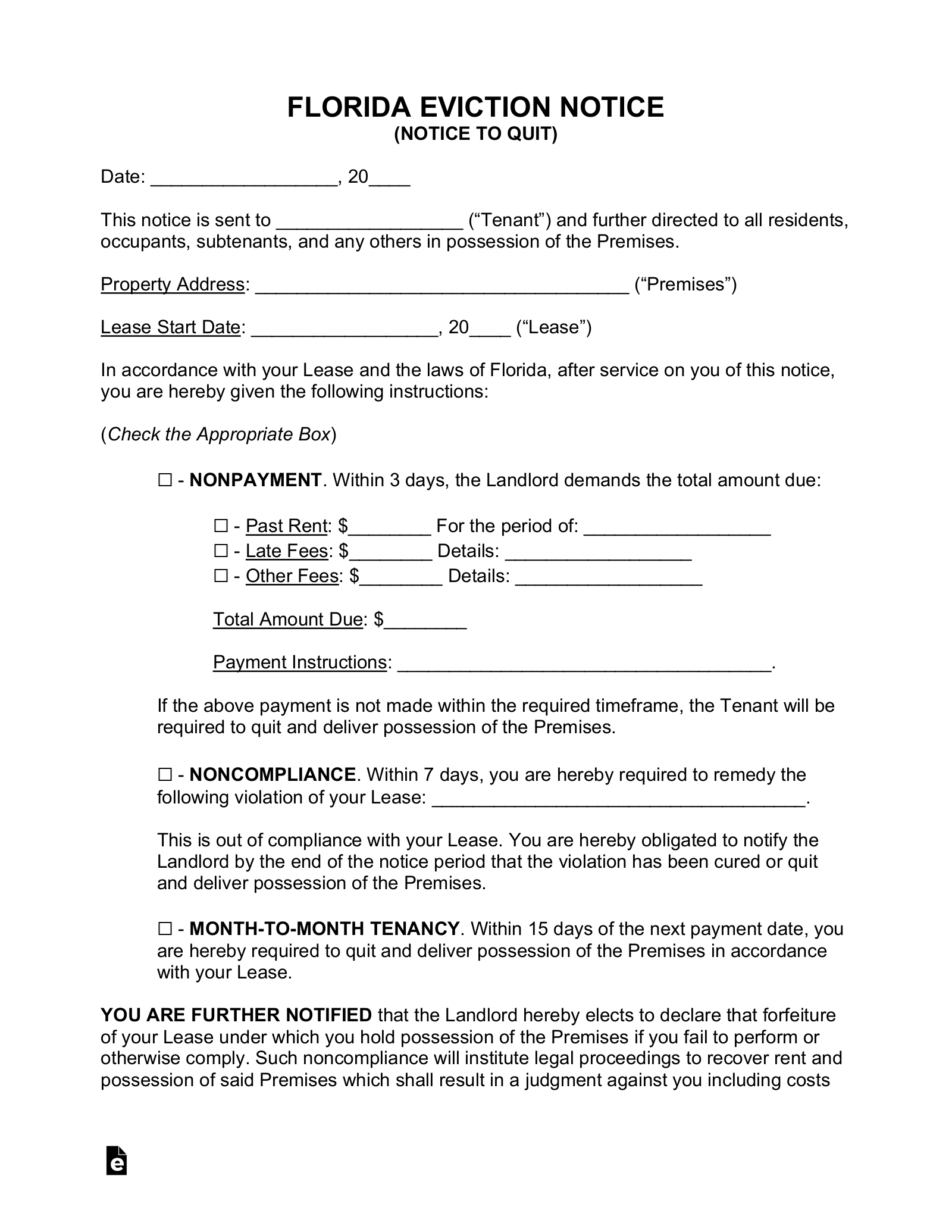
The eviction process officially begins with the landlord serving the tenant with a formal written notice. The type of notice depends entirely on the reason for eviction:
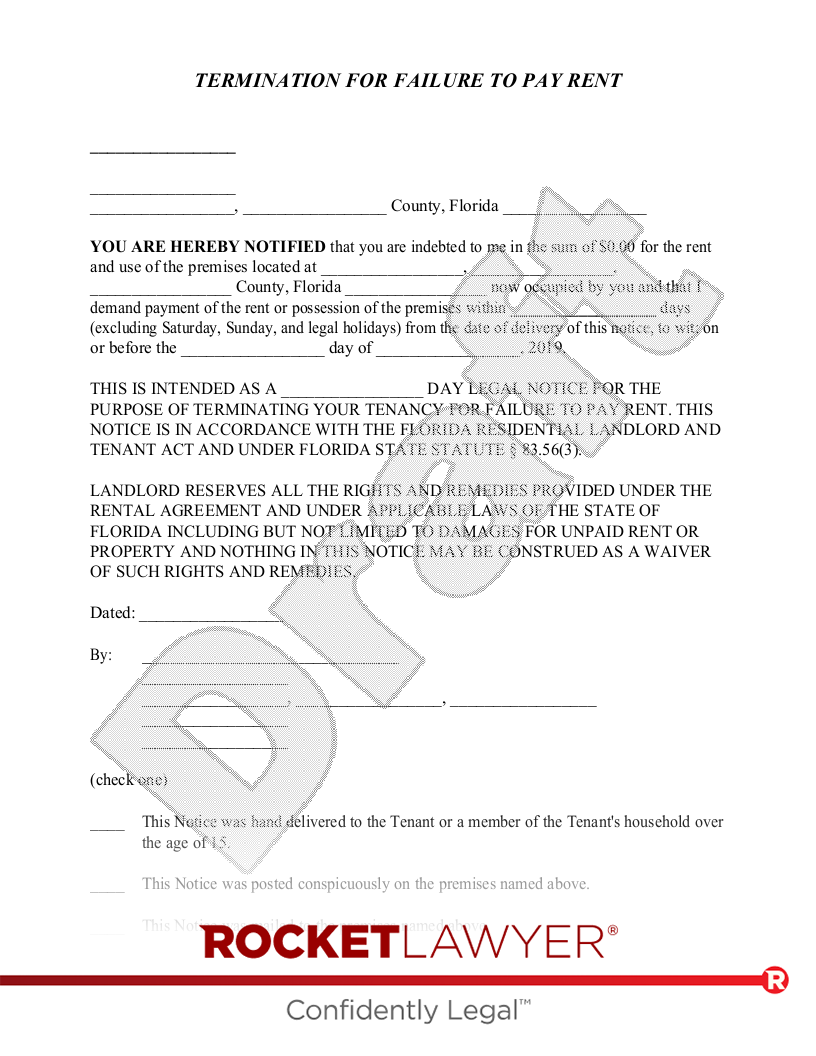
- 3-Day Notice to Pay Rent or Vacate: This is used exclusively for non-payment of rent. It demands that the tenant pay the full amount of past due rent within three business days (excluding weekends and legal holidays) or vacate the premises. If the tenant fails to do either, the landlord can proceed with filing an eviction lawsuit.
- 7-Day Notice to Cure Non-Compliance: This notice is for lease violations that are curable. It gives the tenant seven days to remedy the violation (e.g., remove an unauthorized pet, clean up excessive clutter) or face eviction. If the tenant cures the violation within the seven days, the eviction process stops.
- 7-Day Notice of Termination of Tenancy (Non-Curable Non-Compliance): This notice is for serious, non-curable lease violations or repeated violations. It informs the tenant that their tenancy is terminated in seven days and they must vacate the premises. There is no opportunity to “cure” the violation with this notice.
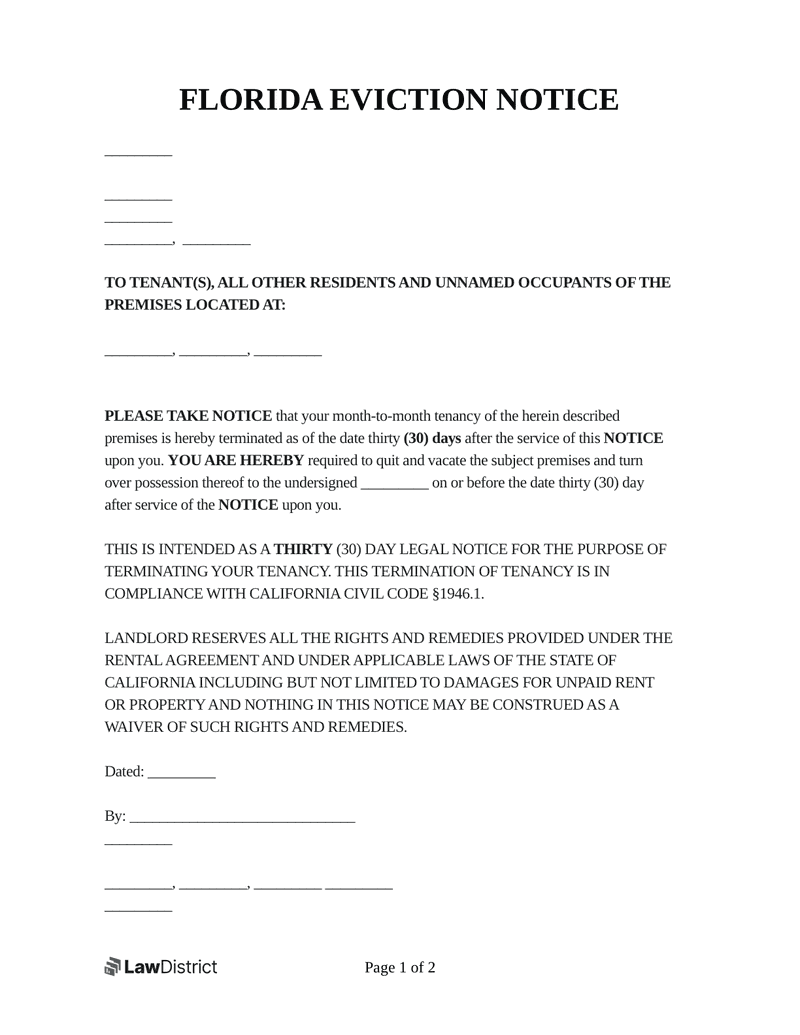
- 15-Day Notice of Termination of Monthly Tenancy: For month-to-month leases, if a landlord wishes to terminate the tenancy without specific cause, they must provide the tenant with 15 days’ notice prior to the end of any monthly period. If the tenant fails to vacate, an eviction can be pursued.
The notice must be delivered properly, typically by mail, hand-delivery, or by posting it on the door of the rental unit if the tenant is absent. Keeping proof of delivery is essential.
Filing the Eviction Lawsuit (Unlawful Detainer Action)
If the tenant fails to comply with the notice (e.g., doesn’t pay rent, doesn’t cure the violation, or doesn’t vacate), the landlord can then file an eviction lawsuit with the appropriate county court.
- Complaint Filing: The landlord (or their attorney) files a “Complaint for Eviction” with the clerk of the court. This document outlines the details of the tenancy, the grounds for eviction, and states that the landlord is seeking possession of the property. A copy of the lease agreement and the notice served to the tenant must typically be attached.
- Summons Issuance: Once the complaint is filed, the court issues a “Summons” which formally notifies the tenant of the lawsuit and instructs them on how to respond. The summons and a copy of the complaint must be “served” on the tenant by a sheriff or certified process server. Proper service is critical for the court to have jurisdiction over the case.
Tenant’s Response and Court Proceedings
Upon receiving the summons and complaint, the tenant has a limited time frame to respond.
- Tenant’s 5-Day Reply: In Florida, tenants typically have only five business days (excluding weekends and legal holidays) from the date of being served to file a written answer with the court. If the eviction is for non-payment of rent, the tenant must also deposit the disputed rent amount into the court registry as a prerequisite to raising any defenses other than payment. Failure to file an answer within this timeframe can result in a “Default Judgment” in favor of the landlord.
- Mediation/Hearing: If the tenant files an answer and raises defenses, the case may proceed to mediation or a court hearing. A judge will hear arguments and evidence from both sides and make a ruling. This can be a complex process, often requiring legal representation.
- Final Judgment for Possession: If the court rules in favor of the landlord, a “Final Judgment for Possession” is issued. This legal document formally grants the landlord the right to regain possession of the property.
Post-Judgment and Tenant Removal
Receiving a Final Judgment for Possession does not mean the tenant immediately vacates. There are still a few crucial steps to legally remove the tenant from the property.
Writ of Possession
After the Final Judgment for Possession is entered, the landlord must request a “Writ of Possession” from the court clerk. This writ is an official court order directing the sheriff to remove the tenant and their belongings from the property. It’s an indispensable step to lawfully regain control of the premises.
Sheriff’s Role in Eviction
Once the Writ of Possession is issued, it is delivered to the county sheriff’s office. The sheriff will then post a 24-hour notice on the tenant’s door. This notice informs the tenant that they have 24 hours to vacate the property. If the tenant has not left by the expiration of the 24 hours, the sheriff will return to the property and physically remove the tenant and their possessions, if necessary, ensuring the landlord regains possession in a lawful manner. Landlords should never attempt to physically remove a tenant themselves, change locks, or shut off utilities, as these “self-help” evictions are illegal and can lead to severe penalties.
Handling Tenant Property
Even after an eviction, landlords have legal obligations regarding any personal property the tenant leaves behind. Florida Statute 715.104 dictates that landlords must store the property safely and provide written notice to the former tenant, outlining where the property is stored and how they can retrieve it. The tenant typically has 10 days to reclaim their belongings, or longer if specified in the notice. If the property is not claimed, the landlord may then dispose of it, sell it, or donate it, subject to specific legal requirements depending on the estimated value of the property.
Common Pitfalls and Best Practices for Landlords
The eviction process in Florida is fraught with legal technicalities, and a single misstep can cause significant delays or even dismissal of the case. Adhering to best practices is paramount for a smooth and lawful eviction.
Avoiding Self-Help Eviction
Perhaps the most critical warning for landlords is to absolutely avoid “self-help” evictions. This includes changing locks, shutting off utilities, removing the tenant’s belongings, or attempting to physically remove a tenant without a sheriff present and a valid Writ of Possession. These actions are illegal in Florida and can result in the landlord being liable for statutory damages, actual damages, attorney’s fees, and even criminal charges. Always follow the judicial process.
Importance of Documentation
Maintain meticulous records of everything related to the tenancy. This includes:
- The signed lease agreement.
- Records of all rent payments and any bounced checks.
- Copies of all notices served to the tenant (3-day, 7-day, 15-day), along with proof of delivery.
- All written communication with the tenant (emails, letters, texts).
- Photos or videos documenting property condition (move-in/move-out inspections, damage).
Thorough documentation is the bedrock of a strong eviction case and can be invaluable evidence in court.
Seeking Legal Counsel
While it’s possible for landlords to represent themselves in eviction cases, the complexities of Florida law often warrant the assistance of an experienced attorney. An attorney can ensure all notices are correctly drafted and served, complaints are properly filed, and court procedures are followed precisely. This can save landlords significant time, stress, and potential legal missteps, especially when dealing with uncooperative tenants or complex lease disputes.
Navigating the Financial Aspects of Eviction
Beyond regaining possession of the property, landlords often aim to recover financial losses incurred during the eviction process, such as unpaid rent and damages to the property.
Recovering Unpaid Rent and Damages
Landlords can often include a claim for unpaid rent and damages to the property as part of the eviction lawsuit or file a separate action for monetary damages. If the tenant doesn’t appear or a judgment is granted for unpaid rent, the landlord may then pursue collection methods against the tenant. It’s important to note that collecting a money judgment can be a separate, often challenging, process. Any claim for damages beyond normal wear and tear should be meticulously documented with evidence such as repair invoices, photos, and comparison to move-in condition reports.
Security Deposit Application
Florida law dictates strict rules for how security deposits must be handled. After a tenant vacates (whether voluntarily or through eviction), the landlord has 15 days to return the security deposit, or 30 days to send a written notice of intent to impose a claim on the deposit (e.g., for unpaid rent or damages beyond normal wear and tear). The notice must specify the reasons for the claim. If the landlord fails to send this notice within 30 days, they generally forfeit the right to claim any portion of the deposit. Tenants have 15 days to object to the claim. Understanding and adhering to these timelines is crucial to avoid further legal disputes regarding the security deposit.
In conclusion, evicting a tenant in Florida is a precise and legally demanding process. It requires landlords to operate within the strict confines of Chapter 83, Part II of the Florida Statutes, ensuring every step from initial notice to sheriff-led removal is executed flawlessly. While the journey can be challenging, adherence to the law, meticulous documentation, and seeking professional legal guidance can streamline the process, allowing property owners to efficiently manage their accommodation and protect their investments. The emphasis should always be on professionalism and strict legal compliance, safeguarding both the landlord’s rights and the tenant’s due process.
LifeOutOfTheBox is a participant in the Amazon Services LLC Associates Program, an affiliate advertising program designed to provide a means for sites to earn advertising fees by advertising and linking to Amazon.com. Amazon, the Amazon logo, AmazonSupply, and the AmazonSupply logo are trademarks of Amazon.com, Inc. or its affiliates. As an Amazon Associate we earn affiliate commissions from qualifying purchases.