
The geographical proximity of Florida to Cuba has long fascinated travelers, historians, and policymakers alike. A mere stretch of water separates these two distinct cultures, yet the journey between them has often been far more complex than the crow flies would suggest. Understanding this distance is the first step in unraveling the rich tapestry of connections and disconnections that define their relationship, especially for those contemplating a journey to the island nation. This article delves into the exact distances, the historical context, current travel logistics, and what a traveler can expect when bridging this captivating gap.
The Geographical Proximity: A Closer Look
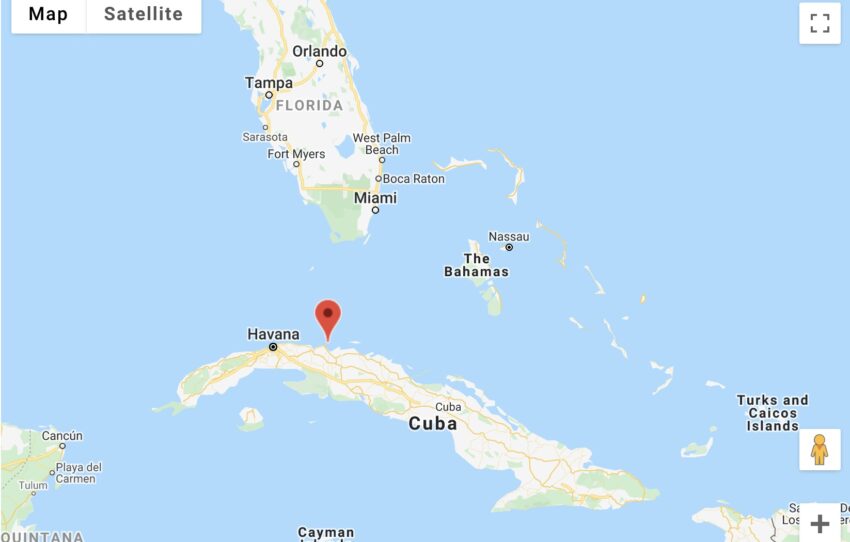
The Caribbean Sea and the Atlantic Ocean converge in the waters that lie between Florida and Cuba, forming a crucial waterway known as the Straits of Florida. This strategic location has made both regions pivotal throughout history, and their closeness continues to be a point of interest for anyone exploring travel opportunities.
The Shortest Distance: Key West to Havana
The absolute closest point between the United States mainland (or more accurately, its territorial waters) and Cuba is remarkably short. From Key West, the southernmost point of the Florida Keys and the continental U.S., the distance to Havana, the capital of Cuba, is approximately 90 nautical miles, or roughly 103 miles (166 kilometers). This is a distance that can be covered by a small plane in under an hour, or by a fast boat in a few hours, highlighting the sheer closeness that often surprises many. The famous “90 Miles to Cuba” marker in Key West serves as a constant reminder of this remarkable proximity, drawing visitors from around the globe to witness this symbolic threshold. This narrow stretch of ocean, while geographically insignificant, has been a significant barrier and a bridge throughout centuries, dictating everything from migration patterns to international relations. The warm waters of the Florida Current, an extension of the Caribbean Current and the beginning of the powerful Gulf Stream, flow vigorously through these straits, adding another layer of natural complexity to any maritime journey between the two landmasses.
Broader Perspectives: Miami and Other Points
While Key West offers the shortest direct line, many travelers originate their journeys from larger Florida cities. From Miami, a bustling hub of international travel and a city with deep Cuban-American roots, the distance to Havana is slightly greater. Depending on the exact starting and ending points, the aerial distance from Miami to Havana is approximately 230 miles (370 kilometers). This still makes for a very short flight, typically taking around 45 minutes to an hour.
Other major Florida cities, such as Fort Lauderdale, Orlando, or Tampa, also serve as departure points for flights to Cuba. The distances from these cities will naturally be longer than from Key West or Miami, extending the flight time slightly but still keeping the journey under two hours in most cases. For instance, a flight from Tampa International Airport to José Martí International Airport in Havana covers roughly 300 miles, making it an equally convenient route for many. These relatively short distances underscore the potential for cultural and economic exchange that has historically been limited by geopolitical factors rather than geographical barriers. The short hop across the water highlights the artificiality of the divides and the immense potential for connection when conditions allow.
Historical and Political Context of Travel
The narrative of travel between Florida and Cuba is inextricably linked to the intricate web of historical events and political decisions that have shaped the relationship between the United States and Cuba. For decades, this short distance has been governed by complex regulations rather than simple travel logistics.
A Legacy of Connection and Separation
Prior to the Cuban Revolution in 1959 and the subsequent U.S. embargo, travel between Florida and Cuba was common and vibrant. Havana was a popular destination for American tourists, drawn by its casinos, nightlife, and tropical charm. Ferries regularly transported passengers and goods, and there was a rich cultural exchange that transcended the short geographical divide. The proximity fostered deep family ties and economic connections, particularly between South Florida and Cuba. Many Cubans saw Florida as a natural extension for commerce and personal visits.
However, with the escalation of tensions and the imposition of the U.S. embargo in the early 1960s, direct commercial and leisure travel largely ceased. For most American citizens, travel to Cuba became highly restricted, transforming a short, accessible journey into a complicated, often forbidden endeavor. This historical turning point redefined the meaning of the 90-mile stretch, transforming it from a bridge into a symbolic chasm, despite the physical closeness. The stories of families separated by this political divide underscore the profound impact of these policies on human lives, making the geographical distance feel far greater than it truly is.
Evolving Travel Regulations
Over the decades, the regulations governing U.S. travel to Cuba have fluctuated, experiencing periods of easing and tightening based on geopolitical developments. While outright tourism by U.S. citizens remains prohibited under the embargo, the U.S. Department of the Treasury’s Office of Foreign Assets Control (OFAC) has established 12 categories of authorized travel. These categories permit individuals to travel to Cuba for specific purposes, including family visits, professional research, educational activities, religious activities, public performances, and journalistic activities, among others. The “Support for the Cuban People” category is often utilized by independent travelers who engage in activities that strengthen civil society in Cuba.
Travelers must adhere strictly to these regulations, maintaining records of their activities for five years. While direct commercial flights from Florida to Cuba have resumed at various times, and charter flights have been a consistent option, the regulatory framework means that a trip to Cuba requires careful planning and adherence to specific guidelines. Non-U.S. citizens generally face fewer restrictions, often only requiring a visa or tourist card, making the physical distance the primary consideration rather than political hurdles. The complexity of these regulations highlights that “how far” is not just about miles but also about accessibility.
Navigating the Journey: Travel Options and Logistics
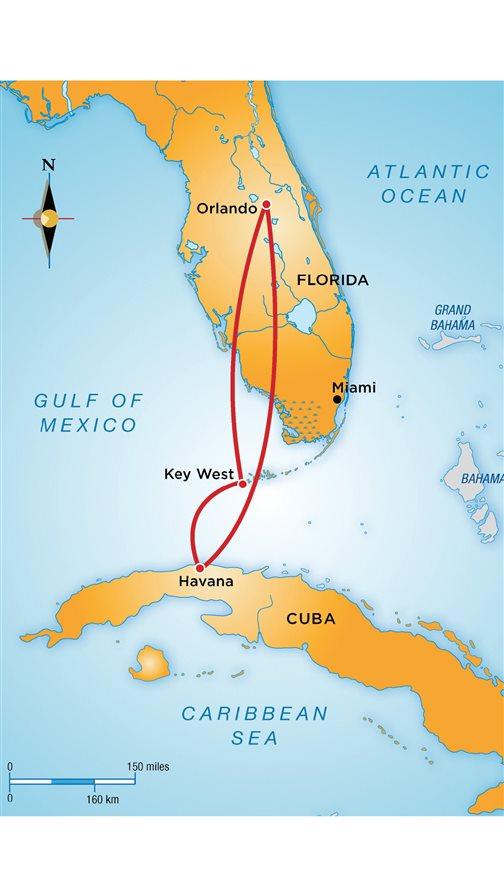
Despite the political complexities, the geographical closeness ensures that travel between Florida and Cuba is logistically feasible. For authorized travelers, several options exist, each with its own set of considerations, from the swiftness of air travel to the potential for a maritime adventure.
Air Travel: The Primary Route
For most travelers, flying is the most practical and efficient way to bridge the gap between Florida and Cuba. Several airlines offer direct flights, primarily from major Florida airports to Havana’s José Martí International Airport (HAV) and sometimes to other Cuban cities like Santa Clara (SNU) or Santiago de Cuba (SCL).
- Departure Airports: Miami International Airport (MIA) is the primary gateway, offering the most frequent flights. Tampa International Airport (TPA) and sometimes Fort Lauderdale-Hollywood International Airport (FLL) also provide direct connections.
- Flight Duration: As mentioned, flights are remarkably short. A typical flight from Miami to Havana lasts around 45 minutes to an hour. From Tampa, it’s approximately 1 hour and 15 minutes. This makes Cuba an incredibly accessible international destination from Florida in terms of travel time.
- Booking: Travelers can book flights through commercial airlines, but it’s crucial to ensure that their travel purpose aligns with one of the authorized OFAC categories. For U.S. citizens, purchasing a Cuban tourist card (visa) is also a necessary step, often available for purchase at the airport before departure or through the airline.
Sea Travel: A Historical and Emerging Path
While air travel dominates, the allure of crossing the Straits of Florida by sea holds historical significance and offers a unique perspective. Historically, ferries connected Key West and Miami to Havana. After a long hiatus, some ferry services were briefly reinstated in the mid-2010s but have since faced regulatory hurdles and ceased operations. Currently, there are no regular commercial ferry services for passengers directly between Florida and Cuba.
Private boat travel is technically possible, but it is heavily restricted and requires extensive permissions from both U.S. and Cuban authorities. Individuals considering this option must navigate a complex permit process and adhere to strict maritime laws and regulations. Cruise ships, while they operate in the Caribbean, have also faced fluctuating permissions for docking in Cuban ports, often depending on the prevailing political climate. Therefore, while romantic in concept, sea travel currently remains a niche and highly regulated option compared to flying.
Essential Travel Preparations
Regardless of the mode of transport, several crucial steps are necessary for any traveler planning a trip from Florida to Cuba:
- Visa/Tourist Card: Most nationalities require a tourist card to enter Cuba. For U.S. citizens, this is mandatory and is distinct from the OFAC travel category requirement. It can often be purchased from airlines or through tour operators.
- Health Insurance: Proof of health insurance valid in Cuba is mandatory for entry. Many airlines include this in the ticket price, but it’s important to verify.
- Currency: The official currency for tourists in Cuba is the Cuban Peso (CUP). U.S. credit and debit cards generally do not work in Cuba due to the embargo, so travelers must carry sufficient cash, usually in Euros or Canadian Dollars, for exchange upon arrival.
- Accommodation and Activities: For U.S. travelers, it is important to avoid directly engaging with entities on the U.S. State Department’s Cuba Restricted List, which includes certain hotels and businesses. Staying in casas particulares (private homes) and supporting small, independent businesses aligns with the “Support for the Cuban People” category.
What to Expect: Travel Experience Between Florida and Cuba
The short geographical distance between Florida and Cuba belies a world of difference in culture, atmosphere, and daily life. A journey from one to the other is not just a hop across water, but a step into a remarkably distinct experience.
Cultural Immersion in Cuba
Once you arrive in Cuba, the feeling of having traveled to a different era and a vibrant, unique culture is immediate. Havana bursts with colonial architecture, classic American cars from the 1950s, and the sounds of salsa music spilling from doorways. Exploring the cobbled streets of Old Havana, a UNESCO World Heritage site, offers a glimpse into centuries of history. Beyond the capital, destinations like the verdant tobacco fields of the Viñales Valley or the perfectly preserved colonial town of Trinidad offer diverse experiences.
Cuban culture is characterized by its resilience, warmth, and artistic expression. Travelers can expect lively conversations with locals, impromptu street performances, and delicious, albeit sometimes simple, cuisine. The vibrant art scene, the ubiquitous presence of music, and the strong sense of community make for an unforgettable cultural immersion that stands in stark contrast to the modern conveniences and commercialism often found in Florida. It’s a place where resourcefulness is an art form and human connection often takes precedence over material wealth.
Contrasting Proximity with Experience
The journey from Florida to Cuba is a powerful illustration of how geographical closeness does not necessarily equate to similarity in experience. On one side, Florida offers sprawling beaches, theme parks, and the dynamic energy of a modern U.S. state. On the other, Cuba presents a world shaped by socialism, historical preservation, and a distinct lack of widespread commercial development. This contrast is part of Cuba’s unique appeal.
Despite being a short flight away, travelers often report feeling as though they’ve traversed continents. This feeling arises from the architectural styles, the economic systems, the daily rhythms, and the overall atmosphere that are profoundly different. The infrastructure, the internet access, and the available amenities in Cuba are generally less developed than in Florida, requiring travelers to adapt and embrace a different pace of life. This very contrast, however, is what makes a trip to Cuba such a rich and transformative experience for those seeking genuine cultural engagement rather than just a resort vacation.
In conclusion, the question “How far is Florida to Cuba?” has a straightforward geographical answer: a mere 90 to 230 miles, depending on the specific points. However, the journey itself is layered with historical context, political nuance, and an unparalleled cultural shift. For those willing to navigate the regulations and embrace the distinctive charm of the island, a trip across these relatively short miles promises an enriching and unforgettable travel experience. It’s a testament to the idea that some of the most profound journeys are not always measured in miles, but in the breadth of experience they offer.
LifeOutOfTheBox is a participant in the Amazon Services LLC Associates Program, an affiliate advertising program designed to provide a means for sites to earn advertising fees by advertising and linking to Amazon.com. Amazon, the Amazon logo, AmazonSupply, and the AmazonSupply logo are trademarks of Amazon.com, Inc. or its affiliates. As an Amazon Associate we earn affiliate commissions from qualifying purchases.