
Orlando, Florida, the undisputed Theme Park Capital of the World, beckons millions of travelers annually with its promise of magic, adventure, and endless sunshine. Yet, while the allure of world-class attractions like Walt Disney World Resort and Universal Orlando Resort is undeniable, a successful and enjoyable trip hinges significantly on understanding the local climate. The weather in Orlando is a dynamic character, capable of enhancing your vacation experience with its warmth and vibrancy, or presenting challenges that require thoughtful preparation. For any traveler planning a journey to this iconic United States destination, gaining insight into its seasonal weather patterns, typical daily conditions, and potential weather-related events is paramount. This guide will delve into the meteorological nuances of Orlando, equipping you with the knowledge to pack smartly, plan wisely, and make the most of your adventure, come rain or shine.

Understanding Orlando’s Subtropical Climate
Orlando’s climate is officially classified as humid subtropical, a designation that immediately hints at the primary characteristics travelers can expect: warmth and moisture. Situated relatively close to the equator and flanked by the Atlantic Ocean to the east and the Gulf of Mexico to the west, the city is heavily influenced by these vast bodies of water. This geographical positioning creates a unique atmospheric cocktail that dictates everything from daily temperatures to the frequency of afternoon thunderstorms. Understanding this fundamental classification is the first step in decoding Orlando’s weather.
The Sunshine State’s Signature Warmth
True to Florida’s moniker as “The Sunshine State,” Orlando experiences abundant sunshine throughout the year, with an average of 236 sunny days annually. Temperatures generally remain warm, rarely dipping below freezing even in the winter months. This consistent warmth is a major draw for visitors escaping colder climates, especially during the peak tourist season from December to April. While summer brings intense heat, even the cooler months offer pleasant, mild conditions perfect for exploring outdoor attractions. The daily average temperature for the year hovers around a comfortable 72-74°F (22-23°C), but this average belies significant seasonal fluctuations.
Humidity: A Constant Companion
Perhaps more defining than the warmth itself is Orlando’s pervasive humidity. Due to its proximity to the coasts and its subtropical classification, moisture in the air is a near-constant factor, particularly from late spring through early autumn. Relative humidity often ranges from 60% to 90%, making even moderate temperatures feel warmer and sweatier. This high humidity contributes to the development of daily afternoon thunderstorms in the summer and can make physical activity feel more strenuous. Travelers unaccustomed to such levels of atmospheric moisture should prepare to hydrate frequently and pace themselves, especially when visiting theme parks like Magic Kingdom or Universal Studios Florida.
Hurricane Season: What Travelers Need to Know
A crucial aspect of Orlando’s weather, particularly for those traveling between June and November, is the Atlantic Hurricane Season. While Orlando is inland and not directly on the coast, it is still susceptible to the effects of tropical storms and hurricanes. The peak of the season typically runs from mid-August through October. During this period, travelers should monitor weather forecasts closely. While direct hurricane strikes on Orlando are less common than on coastal areas, the region can experience heavy rainfall, strong winds, and potential travel disruptions from systems passing nearby. Many hotels and attractions, including those within Walt Disney World Resort and Universal Orlando Resort, have policies regarding hurricane-related cancellations, offering peace of mind for those booking during this timeframe.
Seasonal Breakdown: What to Expect Year-Round
Understanding Orlando’s weather season by season is key to planning the perfect trip. Each period offers a distinct experience, from the pleasantly mild winters to the vibrant, yet intense, summers.
Winter (December – February): Mild and Pleasant
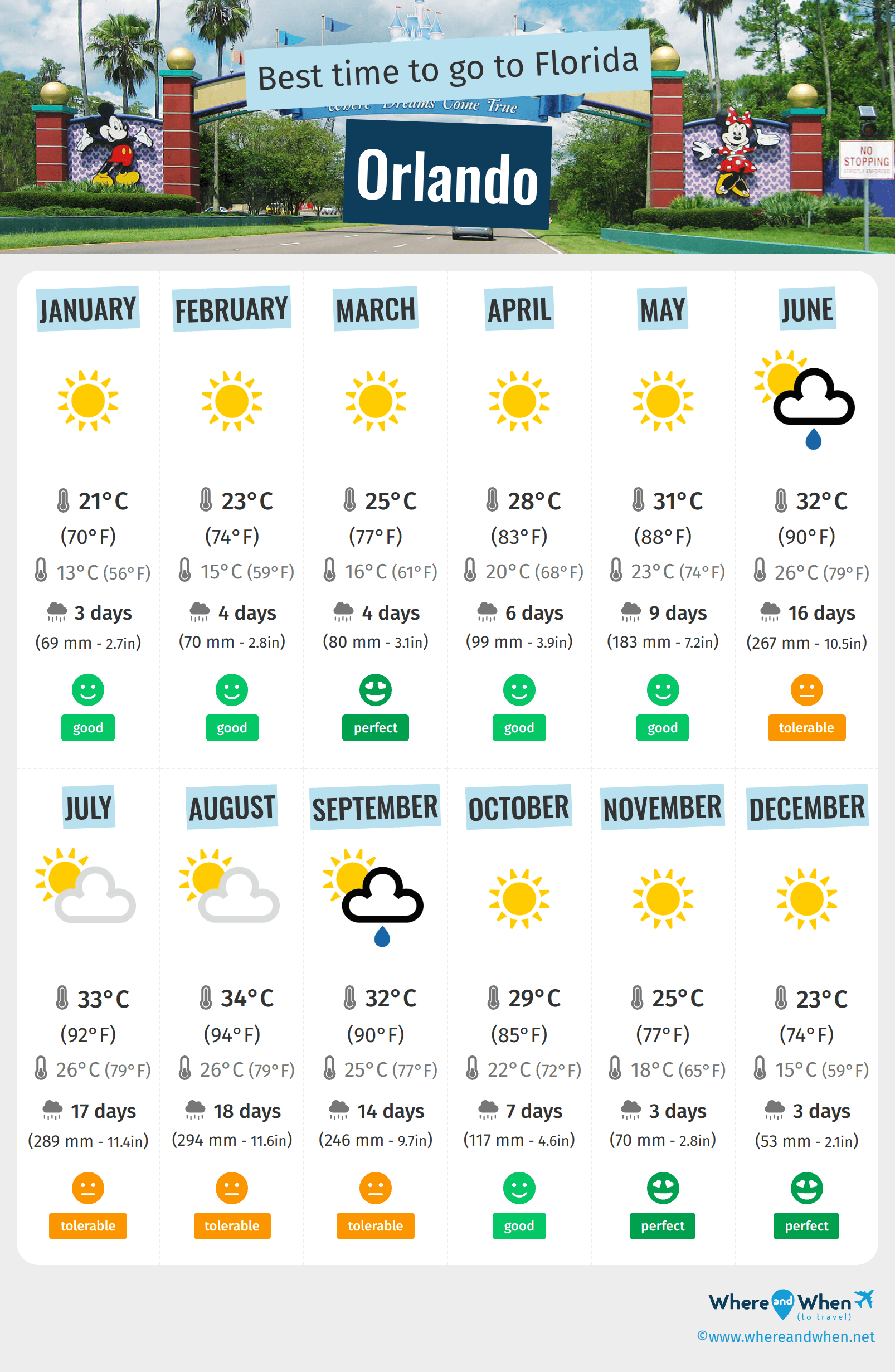
Orlando’s winter is a significant draw for many. Temperatures are comfortably mild, averaging highs in the low to mid-70s°F (21-24°C) and lows in the 50s°F (10-15°C). Humidity is at its lowest, and rainfall is infrequent. This is considered peak tourist season, offering ideal conditions for exploring outdoor attractions without the oppressive heat. Evenings can be cool, sometimes dipping into the 40s°F (4-9°C), especially in January, making a light jacket or sweater essential. Frost is rare but can occur.
Spring (March – May): Warmth Blossoms
As winter recedes, spring in Orlando brings a gradual increase in temperatures and humidity. March and April continue to offer very pleasant conditions, with average highs climbing into the high 70s to low 80s°F (25-29°C). May sees a more significant jump, with highs often reaching the mid-80s°F (30-32°C). Rainfall remains relatively low, though the occasional afternoon shower starts to become more common towards late May. Spring breaks and Easter holidays can make this a busy time, but the weather is generally very conducive to theme park visits and other outdoor activities.
Summer (June – August): Hot, Humid, and Stormy
Summer defines Orlando’s climate in its most extreme form. Expect consistently hot temperatures, with daily highs typically in the low to mid-90s°F (32-35°C), often feeling even hotter due to the high humidity. Coupled with this heat are frequent, often daily, afternoon thunderstorms. These storms are usually brief but intense, bringing heavy rain, lightning, and sometimes strong winds. While they can provide a temporary cool-down, they often lead to temporary closures of outdoor rides at Epcot or Islands of Adventure. Despite the heat and storms, summer is a popular time for families, especially during school breaks.
Autumn (September – November): Transitioning to Comfort
Autumn in Orlando is a period of transition, moving from the intense summer heat towards the milder winter. September and early October can still feel very much like summer, with high temperatures and significant humidity, and it is still within hurricane season. However, by late October and especially November, there’s a noticeable drop in both temperature and humidity. Highs in November typically settle into the upper 70s°F (25-27°C), with pleasant lows in the 50s°F (10-15°C). The frequency of afternoon storms decreases, making this a truly delightful time to visit, especially later in the season when the weather is ideal and holiday festivities begin at many attractions.
Preparing for Orlando’s Weather: Practical Tips
Regardless of when you visit, a few universal tips will ensure you’re well-prepared for Orlando’s unique weather patterns. Thoughtful planning can transform potential discomfort into minor inconveniences, allowing you to focus on the fun.
Packing Essentials for Every Season
Packing strategically is crucial. For any season, lightweight, breathable clothing is advisable. Cotton or moisture-wicking fabrics are excellent choices. During summer, pack plenty of shorts, t-shirts, and swimwear for water parks like Volcano Bay or hotel pools. In winter, layering is key: light pants or shorts for daytime, with a sweater or light jacket for cooler evenings. Always include comfortable walking shoes, as you’ll be covering significant distances at places like Hollywood Studios or Animal Kingdom. And without fail, bring a compact umbrella or a lightweight poncho, especially if traveling between May and October.
Hydration and Sun Protection
These two elements are non-negotiable for any Orlando visitor. The combination of heat, humidity, and extensive outdoor activity can quickly lead to dehydration. Carry a refillable water bottle and take advantage of free water at quick-service restaurants in theme parks. Sun protection is equally vital. Even on cloudy days, Florida’s sun is strong. Apply broad-spectrum sunscreen liberally and frequently, wear a hat, and consider sunglasses. Seeking shade whenever possible, especially during the hottest parts of the day, is also a wise strategy.
Embracing the Afternoon Showers
Instead of letting them dampen your spirits, try to embrace Orlando’s predictable summer afternoon showers. Many locals and seasoned visitors use this time strategically. It can be an ideal opportunity to head indoors for a show, a sit-down meal, or a bit of shopping. The rain usually doesn’t last long, and often, after a good downpour, the temperatures drop slightly, and the air feels refreshed. Plus, a rainy spell can sometimes clear out crowds, leading to shorter lines for rides once the sun reappears.
Weather’s Impact on Orlando’s Attractions and Activities
The weather in Orlando significantly influences how you experience its vast array of attractions. From planning your theme park strategy to enjoying outdoor adventures, understanding these impacts can enhance your visit.
Theme Park Strategies
For those visiting Walt Disney World Resort, Universal Orlando Resort, SeaWorld Orlando, or LEGOLAND Florida Resort, the weather dictates much of the day’s flow. During summer, prioritize outdoor rides and attractions in the morning before the heat and storms set in. Use the afternoon for indoor shows, air-conditioned restaurants, or even a return to your hotel for a swim. Water parks become essential havens for cooling off. In cooler months, you have more flexibility, but be mindful that certain water rides might be too chilly for comfort. Always check park apps for weather-related ride closures and showtime changes.
Enjoying Outdoor Adventures
Beyond the theme parks, Orlando offers numerous outdoor activities, from airboat tours to golfing. The best times for these are generally the cooler, drier months of winter and spring. Gatorland and other nature-focused attractions are much more comfortable when temperatures are mild. Even in summer, early morning excursions can be pleasant before the heat builds. Always have a backup plan for rainy days, as outdoor activities are the first to be affected by severe weather.
Indoor Alternatives for Rainy Days
Orlando is well-equipped for rainy days. Beyond indoor theme park attractions, destinations like ICON Park on International Drive offer a variety of indoor entertainment, dining, and shopping. Museums, dinner shows, or even a trip to the Kennedy Space Center Visitor Complex (about an hour’s drive away) provide excellent sheltered alternatives. Even just enjoying your resort’s amenities or catching a movie can be a welcome break when the skies open up.
Best Time to Visit Orlando Based on Weather Preferences
Choosing the “best” time to visit Orlando largely depends on your personal preferences regarding weather, crowd levels, and budget. Each season has its pros and cons, allowing travelers to tailor their trip to their ideal conditions.
For Cooler Temperatures and Lower Humidity
If your priority is comfortable temperatures, low humidity, and minimal rainfall, the winter months (December to February) are unrivaled. This period offers the most pleasant weather for long days at the theme parks, golfing, or exploring Orlando’s many outdoor attractions. However, be prepared for higher crowd levels, especially around holidays like Christmas, New Year’s, and Presidents’ Day. Early December and the latter half of January are often ideal, balancing good weather with slightly fewer crowds.
For Balancing Weather and Crowd Levels
For a good balance of pleasant weather and more manageable crowd sizes, consider visiting in late April to early May or late October to early November. During these shoulder seasons, the intense summer heat hasn’t fully arrived or has begun to dissipate, and the humidity is lower than in peak summer. While still warm, these periods offer a comfortable experience without the extreme crowds of summer or major winter holidays. You’ll enjoy agreeable temperatures perfect for exploring Magic Kingdom or Epcot without the constant need to escape indoors.

For Budget-Conscious Travelers (and Weather Considerations)
Travelers looking for potentially lower prices on flights and accommodations might find the late summer to early autumn (August to September) appealing, as this coincides with the quieter post-summer, pre-holiday period and hurricane season. While the weather during this time is hot, humid, and prone to storms, it also means fewer crowds and often more attractive deals. If you can tolerate the heat and are prepared for potential rain, this can be a cost-effective way to experience Orlando’s magic. Being flexible with travel dates and having travel insurance during hurricane season is highly recommended for this period.
In conclusion, the weather in Orlando, Florida, is a significant factor in shaping your travel experience. While consistent warmth and sunshine are hallmarks, understanding the seasonal variations in temperature, humidity, and rainfall is vital. By preparing for the climate, whether it’s packing layers for a mild winter evening or carrying a poncho for a summer afternoon shower, travelers can ensure their visit to this enchanting city is as magical and comfortable as possible.
LifeOutOfTheBox is a participant in the Amazon Services LLC Associates Program, an affiliate advertising program designed to provide a means for sites to earn advertising fees by advertising and linking to Amazon.com. Amazon, the Amazon logo, AmazonSupply, and the AmazonSupply logo are trademarks of Amazon.com, Inc. or its affiliates. As an Amazon Associate we earn affiliate commissions from qualifying purchases.