
The skyline of Chicago is an iconic testament to human ingenuity and architectural ambition, a majestic panorama dominated by towering skyscrapers that pierce the clouds. Among these celebrated giants, one edifice stands out, not just for its immense stature but also for its enduring legacy and the memorable name it once bore: the Sears Tower. Today, globally recognized as the Willis Tower, this colossal structure has fascinated visitors and locals alike for decades, frequently prompting the simple yet profound question: “How tall is it?”
This question, seemingly straightforward, opens a gateway to exploring not only the sheer physical dimensions of a record-breaking landmark but also its deep historical roots, its pivotal role in urban development, and its vibrant presence in modern tourism. For those planning travel to the Windy City, understanding the scale of the Willis Tower is essential for appreciating one of the world’s most formidable attractions. It represents a significant part of Chicago’s identity, influencing everything from the vantage points offered by luxury hotels to the very fabric of the city’s commercial and cultural lifestyle. Beyond its impressive height, the tower embodies a narrative of engineering marvel, groundbreaking design, and the ever-evolving landscape of global architecture. Join us as we ascend to the dizzying heights of the Willis Tower, unraveling the story of its immense scale and its lasting impact on Chicago and the world.
The Iconic Ascent: Unveiling the Willis Tower’s Stature
When the Sears Tower first opened its doors in 1973, it wasn’t just another skyscraper; it was a statement. Commissioned by Sears, Roebuck & Co., then the world’s largest retailer, the goal was to consolidate their 350,000 employees into a single headquarters. The ambition quickly soared beyond mere corporate convenience, aiming for a structure that would capture global attention and signify the company’s unparalleled success. This quest for dominance in both commerce and structural engineering inadvertently propelled Chicago to the forefront of architectural innovation, setting new benchmarks for supertall buildings. The building’s initial purpose was practical, yet its outcome was nothing short of legendary, forever altering the definition of urban verticality. For nearly a quarter-century, it held the undisputed title of the world’s tallest building, a testament to the bold vision that brought it to life.
A Legacy of Lofty Ambition
The genesis of what would become the Sears Tower was rooted in a post-war economic boom and an era of intense corporate competition. Sears, Roebuck & Co. needed a colossal amount of office space, and rather than scattering their operations across multiple buildings, they opted for a singular, monumental structure. This decision, driven by efficiency and a desire for corporate identity, became a catalyst for architectural history. The project was entrusted to the renowned architectural firm Skidmore, Owings & Merrill (SOM), with architect Bruce Graham and structural engineer Fazlur Khan leading the charge. Their collaborative genius birthed a revolutionary “bundled tube” design that would not only support the incredible height but also become a standard for future supertall structures. The tower quickly transcended its corporate origins, becoming a powerful symbol of Chicago’s grit and soaring aspirations. Its construction, a massive undertaking that involved thousands of workers and innovative techniques, captivated the city and the world, cementing its place in the annals of modern history.
The Measurement Game: Roof, Antenna, and Observation Decks
Determining the “height” of a skyscraper can be surprisingly complex, often depending on whether one measures to the roof, the highest occupied floor, or the tip of its antenna. For the Willis Tower, these distinctions are particularly important and contribute to its impressive statistics.
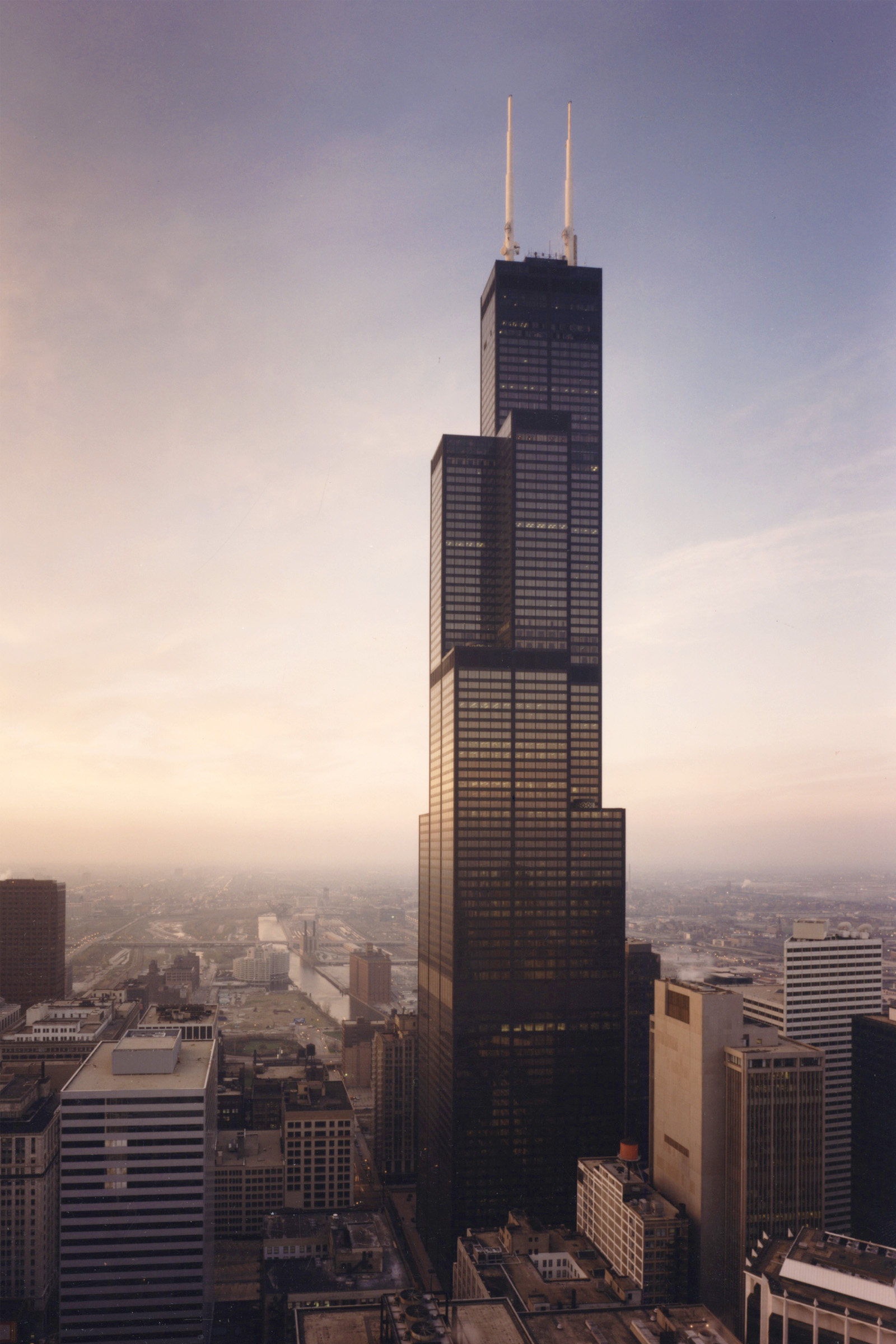
- Architectural Height (to the top of the structural or architectural top): The Willis Tower stands at an astounding 1,450 feet (442 meters) to the top of its roof. This measurement established it as the world’s tallest building upon its completion.
- Tip Height (including antennae): Factoring in its two towering antennae, the skyscraper reaches a breathtaking 1,729 feet (527 meters). For many years, these antennae were vital for broadcasting and communications, but they also added significantly to its overall perceived height, allowing it to retain a formidable stature even after other buildings surpassed its architectural height.
- Highest Occupied Floor: The building features 108 stories, with the highest occupied floor residing at an elevation of 1,354 feet (413 meters). This floor offers unparalleled views, showcasing the vast expanse of Chicago and beyond.
- Skydeck Chicago Elevation: The famous Skydeck, located on the 103rd floor, is situated at approximately 1,353 feet (412 meters) above ground level. This is the primary vantage point for millions of tourists each year, offering truly panoramic perspectives of the city, Lake Michigan, and even parts of four surrounding states on a clear day.
These figures underscore the colossal scale of the tower, which held the title of the world’s tallest building for 24 years until it was surpassed by the Petronas Towers in Kuala Lumpur in 1998, and later by the Burj Khalifa in Dubai. Despite no longer holding the absolute world record, its towering presence continues to dominate the Chicago skyline and remains a significant contender among the tallest buildings in the United States, usually second only to One World Trade Center in New York City.
Beyond the Bragging Rights: Architectural Marvel and Engineering Feat
The Willis Tower’s true genius lies not just in its height, but in the revolutionary architecture and engineering principles that made such a height possible and practical. Before its construction, building skyscrapers of this magnitude presented significant challenges, particularly concerning wind loads and the efficient use of space. The innovative minds at Skidmore, Owings & Merrill (SOM), led by Fazlur Khan, conceptualized a structural system that redefined skyscraper design for decades to come. This wasn’t merely about stacking floors; it was about designing an integrated system that would gracefully withstand the immense forces of nature while offering adaptable internal spaces. The tower stands as a monumental case study in how form can perfectly meet function at an unparalleled scale.
The Bundled Tube Design
The structural backbone of the Willis Tower is its groundbreaking “bundled tube” design, a concept pioneered by Fazlur Khan. Instead of a single, rigid tube, the tower is composed of nine square tubes, or “bundles,” grouped in a 3×3 matrix at the base. These tubes rise together, but some “drop off” as the building ascends, creating the iconic setback silhouette.
- Nine Tubes: From the ground up to the 50th floor, all nine tubes are present.
- Seven Tubes: At the 50th floor, two of the corner tubes terminate, creating the first setback.
- Five Tubes: At the 66th floor, two more corner tubes drop off.
- Two Tubes: At the 90th floor, three central tubes continue, reducing the floor plate significantly.
- One Tube: The remaining two tubes continue up to the 108th floor.
This innovative system effectively distributes the lateral forces of wind pressure and seismic activity, making the building incredibly stable and efficient. By bundling smaller tubes together, the overall structure becomes much stiffer and more resistant to swaying than a single, large tube of the same dimensions. This design maximized usable floor space on lower levels where demand was highest, while tapering the upper floors to reduce wind resistance and material costs. The bundled tube became a blueprint for subsequent supertalls around the world, influencing structures like the John Hancock Center and many others.
Enduring the Elements: Engineering for the Windy City
Building a structure of the Willis Tower’s height in Chicago, notoriously known as the “Windy City,” presented unique engineering challenges. Wind forces increase exponentially with height, and ensuring the building’s stability and occupant comfort required sophisticated solutions. The bundled tube system itself was a primary defense, providing inherent stiffness. However, other measures were also incorporated:
- Deep Foundations: The tower rests on an incredibly robust foundation system, extending down to the bedrock to firmly anchor the massive structure against uplift and lateral forces.
- Damping Systems: While not employing the tuned mass dampers seen in some later supertalls, the sheer structural integrity and mass of the Willis Tower’s steel frame inherently provides significant damping against wind-induced oscillations.
- Aerodynamic Design: The setbacks in the tower’s profile are not just aesthetic; they disrupt the wind patterns around the building, reducing the overall force and mitigating vortex shedding, which can cause uncomfortable swaying.
The careful integration of these engineering principles ensured that the Willis Tower stands as a monument of stability and comfort, even on the windiest Chicago days. It serves as a living laboratory for tall building design, inspiring generations of engineers and architects to push the boundaries of what is structurally possible.
Experiencing the Sky: The Willis Tower as a Chicago Attraction
Beyond its architectural prowess, the Willis Tower is a premier Chicago attraction, drawing millions of visitors annually. It offers an unparalleled vantage point to witness the sprawling beauty of the city, Lake Michigan, and the vast plains stretching into the horizon. A visit here is not merely about ticking off a bucket-list item; it’s an immersive experience that connects you directly with the pulse of one of America’s greatest cities. For tourists planning their itineraries, the tower represents a quintessential Chicago stop, providing both breathtaking views and a deeper appreciation for urban planning and modern engineering. It’s an essential destination for anyone exploring the city’s rich tapestry of famous places and local culture.
The Skydeck Chicago Experience
The heart of the visitor experience at the Willis Tower is undoubtedly the Skydeck Chicago, located on the 103rd floor. After a swift elevator ride that whisks guests up 1,353 feet in approximately 60 seconds, visitors emerge into a panoramic observation area. From here, the city unfolds beneath you in a stunning 360-degree spectacle. Informational exhibits detail the building’s history, architecture, and the various landmarks visible from the deck. High-powered telescopes allow for closer inspection of specific areas, and interactive displays provide context for Chicago’s growth and development. The views are spectacular at any time of day, but sunset offers a particularly magical transformation as the city lights begin to twinkle, mirroring the stars above. For many, this unique perspective provides one of the most memorable moments of their entire Chicago travel adventure.
The Ledge: A Glass-Bottomed Thrill
For those seeking an even more exhilarating experience, The Ledge offers an unmatched thrill. Introduced in 2009, The Ledge consists of four glass boxes that extend 4.3 feet (1.3 meters) out from the Skydeck’s west side. Stepping into these transparent enclosures, visitors find themselves seemingly suspended in mid-air, with a direct view straight down to the streets 1,353 feet below. The sensation is both terrifying and awe-inspiring, providing a truly unique perspective on the city’s scale. It’s a prime spot for unforgettable photos and a test of courage for many. The Ledge has quickly become one of the most talked-about features of the Willis Tower and a major draw for adventure seekers and photo enthusiasts alike. It perfectly encapsulates the daring spirit of Chicago tourism, turning a simple view into an unforgettable, adrenaline-pumping activity.
Willis Tower in the Chicago Tapestry: Travel, Tourism, and Accommodation
The Willis Tower is more than a standalone attraction; it’s an integral thread in the vibrant tapestry of Chicago’s travel and tourism industry. Its prominent location in the heart of the city makes it a focal point for visitors planning their itineraries, and its surrounding area is replete with options for dining, shopping, and accommodation. Understanding how the tower fits into a broader Chicago experience is crucial for maximizing one’s trip. From choosing the right hotel to exploring local culture and cuisine, the Willis Tower serves as an excellent starting point for many urban adventures. It influences everything from the city’s identity as a global destination to the practicality of booking a suite with a view.
Planning Your Chicago Travel Itinerary
A visit to the Willis Tower can easily be integrated into a comprehensive Chicago travel plan. Situated in the West Loop, it’s within walking distance or a short ride from other major attractions like Millennium Park, the Art Institute of Chicago, and the bustling Magnificent Mile. Many visitors choose to visit the Skydeck in the morning for clear views or in the late afternoon to catch a sunset. Due to its popularity, it’s always advisable to purchase tickets in advance online to minimize waiting times, especially during peak tourism seasons. Combining the tower experience with a Chicago Architecture Foundation river cruise provides an incredible complementary perspective, allowing you to appreciate the city’s buildings from both above and below. For detailed planning, numerous guides and tips are available, emphasizing the importance of strategic scheduling to avoid crowds and make the most of your day.
Nearby Hotels and Accommodation Options
Given its central location, the area surrounding the Willis Tower offers a wide array of accommodation options to suit every lifestyle and budget. From luxurious resorts to boutique hotels and convenient apartments, visitors can find the perfect place to stay.
- Luxury Hotels: Prestigious establishments like The Langham Chicago, Four Seasons Hotel Chicago, and Waldorf Astoria Chicago offer opulent suites, world-class amenities, and often stunning views of the skyline, including the Willis Tower itself. These are perfect for luxury travel or business stays.
- Mid-Range Hotels: Options such as the Hyatt Centric Chicago Loop or the Canopy by Hilton Chicago Central Loop provide excellent value, comfortable rooms, and convenient access to the tower and other attractions.
- Budget-Friendly Stays: Hostels and more economical hotels are also available a little further afield or in other downtown neighborhoods, ensuring that budget travel is still possible while remaining close to the city’s core.
- Apartments and Villas: For longer stays or family trips, serviced apartments or vacation rentals offer the comforts of home, often with kitchen facilities, providing a different kind of accommodation experience.
When booking accommodation, consulting reviews and using comparison sites is recommended to find the best fit for your needs and ensure a comfortable long-term stay or short visit. Many hotels offer specialized travel packages that include attraction tickets, which can be a convenient option for tourists.
A Landmark for All Lifestyles: From Business to Leisure
The Willis Tower, while undeniably a major tourist attraction, is also a thriving commercial hub, home to numerous businesses and corporations. This dual identity makes it a fascinating focal point for a range of lifestyles, catering to everyone from the discerning business traveler to families on vacation. Its global recognition as a landmark extends beyond its physical dimensions, embodying the spirit of enterprise and innovation that defines Chicago. The blend of corporate functionality with public accessibility highlights its role as a dynamic urban center, offering diverse experiences for different visitors and contributing significantly to the city’s economic and cultural vibrancy.
Business Hub and Luxury Travel
As a premier commercial address, the Willis Tower continues to attract high-profile tenants, contributing significantly to Chicago’s status as a global financial and business center. For those on business stays, working within or near the tower offers prestige and convenience, with state-of-the-art office spaces and easy access to transportation and high-end dining. The surrounding area boasts numerous luxury hotels, fine dining establishments, and upscale amenities, making it a natural choice for luxury travel or corporate retreats. The fusion of commerce and elevated hospitality means that professionals can conduct their business in a sophisticated environment, often with the added bonus of breathtaking city views from their suites or meeting rooms. This confluence of business and leisure exemplifies the modern urban lifestyle that Chicago so skillfully provides.
Family Adventures and Budget-Friendly Exploration
Despite its grandeur, the Willis Tower remains highly accessible and enjoyable for all types of travelers, including families and those on a budget travel plan. The Skydeck Chicago offers an educational and awe-inspiring experience for children and adults alike, sparking curiosity about architecture, engineering, and urban geography. Many families delight in the interactive exhibits and the thrilling sensation of The Ledge. While tickets for the Skydeck are an investment, the value of the unique perspective and unforgettable memories often outweighs the cost. Furthermore, integrating a visit to the tower with other free or low-cost Chicago attractions like Millennium Park or a stroll along the Chicago Riverwalk can balance the overall trip budget. Dining options around the tower range from gourmet restaurants to more casual, family-friendly eateries, ensuring that visitors can enjoy local culture and food without breaking the bank. This adaptability makes the Willis Tower a truly inclusive landmark, appealing to diverse interests and financial considerations, epitomizing the comprehensive tourism appeal of Chicago.
In conclusion, the question “How tall is the Sears Tower in Chicago?” evokes far more than a simple numerical answer. It invites an exploration into the very spirit of urban ambition, architectural innovation, and the unforgettable experiences that define travel to the Windy City. Standing at an architectural height of 1,450 feet (442 meters) and a tip height of 1,729 feet (527 meters), the Willis Tower remains a towering symbol of human achievement. It continues to be a pivotal landmark, drawing visitors from around the globe to its Skydeck and The Ledge, offering views that are as breathtaking as the engineering that created them. Whether you are seeking a luxury travel experience, planning family trips, or exploring on a budget, the Willis Tower stands ready to elevate your Chicago adventure.
LifeOutOfTheBox is a participant in the Amazon Services LLC Associates Program, an affiliate advertising program designed to provide a means for sites to earn advertising fees by advertising and linking to Amazon.com. Amazon, the Amazon logo, AmazonSupply, and the AmazonSupply logo are trademarks of Amazon.com, Inc. or its affiliates. As an Amazon Associate we earn affiliate commissions from qualifying purchases.