
In the heart of the Midwest, Chicago stands as a beacon of urban innovation, a sprawling metropolis that has long captivated residents and visitors alike with its architectural marvels, vibrant culture, and diverse neighborhoods. As cities worldwide grapple with the challenges of congestion, pollution, and the ever-growing demand for sustainable living, urban planning strategies have evolved significantly. One such strategy, Transit-Oriented Development (TOD), has gained considerable traction, especially in dense urban environments like Chicago. TODs aim to create compact, walkable, mixed-use communities centered around high-quality public transportation. This approach fundamentally rethinks the role of the automobile, particularly concerning parking requirements for residential buildings. For those considering a stay in Chicago, whether for a brief visit or an extended relocation, understanding the nuances of TOD apartments and their parking regulations is crucial. It impacts everything from daily commutes and accessibility to accommodation choices and overall lifestyle.
Understanding Transit-Oriented Development (TOD) in Urban Settings
Transit-Oriented Development is more than just a real estate trend; it’s a comprehensive urban planning philosophy designed to foster sustainable, livable, and economically vibrant communities. At its core, TOD seeks to maximize access to public transport, often leading to a reduction in the need for private vehicles.
The Philosophy Behind TODs
The fundamental principle of TOD is to concentrate residential, commercial, and recreational spaces within walking distance (typically half a mile) of public transit hubs, such as train stations, bus stops, or subway lines. This strategic placement encourages residents and visitors to utilize public transportation, cycling, or walking instead of driving. The design often features higher-density housing, a mix of retail and office spaces on the ground floors, and pedestrian-friendly infrastructure like wide sidewalks, bike lanes, and green spaces. The goal is to create a dynamic environment where daily necessities, work, and leisure activities are easily accessible without the reliance on a car. This aligns perfectly with a travel philosophy that embraces local culture and sustainable exploration, allowing visitors to immerse themselves fully in the destination’s unique rhythm. For travelers seeking authentic experiences, a TOD apartment offers an unparalleled opportunity to live like a local, with easy access to attractions and hidden gems.
Benefits of TODs for Residents and the City
The advantages of TODs are multifaceted, impacting environmental sustainability, economic vitality, and the quality of life for urban dwellers. Environmentally, TODs reduce carbon emissions by minimizing car usage, contributing to cleaner air and a smaller ecological footprint for the city. Economically, they stimulate local businesses, increase property values near transit hubs, and often lower household transportation costs for residents. From a lifestyle perspective, TODs promote physical activity, foster a stronger sense of community through shared public spaces, and provide convenient access to a wide array of amenities. For residents, this translates into less time spent in traffic, more disposable income, and a healthier, more connected urban experience. For Chicago, a city known for its bustling public transit system, the CTA, TODs are a critical component in its ongoing efforts to enhance urban mobility and sustainability. They offer an alternative accommodation model for both short-term stays, akin to hotels and serviced apartments, and long-term living, appealing to those who prioritize convenience and an urban lifestyle over car ownership.

Chicago’s Approach to Parking and TODs
Chicago has been at the forefront of implementing TOD principles, recognizing their potential to transform its urban landscape and support its extensive public transit network. The city’s specific ordinances reflect a progressive stance on reducing parking mandates in transit-rich areas.
Evolution of Parking Regulations in Chicago
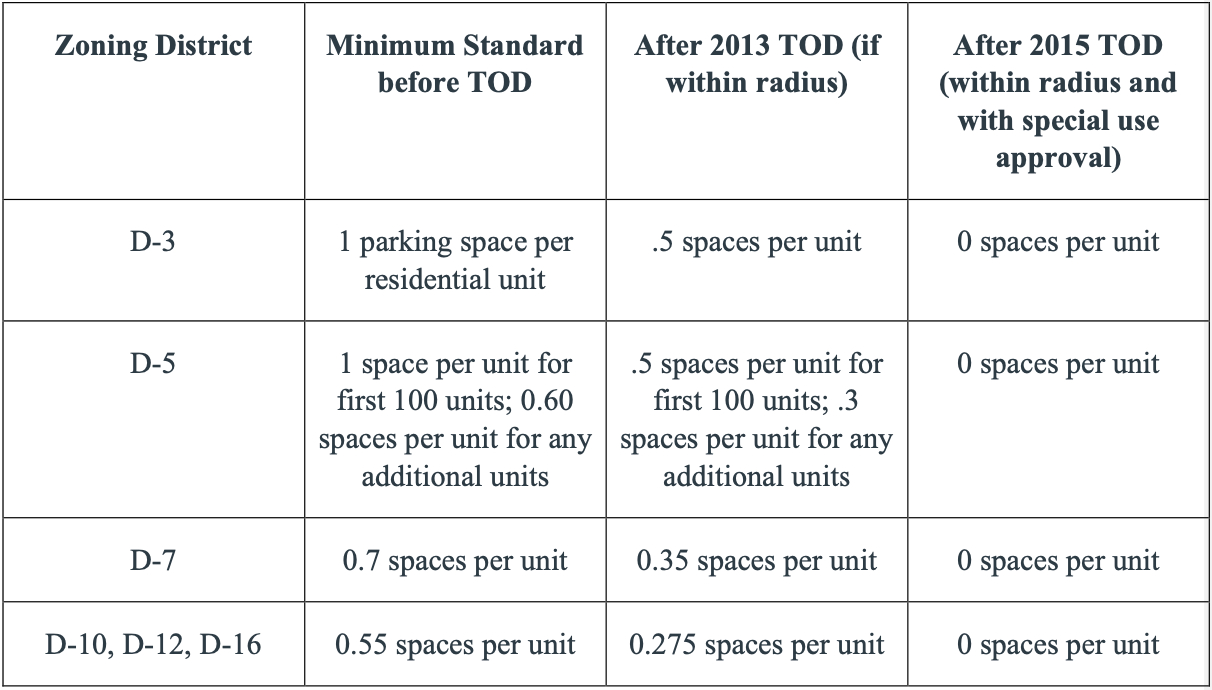
Historically, many United States cities, including Chicago, adopted zoning codes that mandated minimum parking requirements for new developments. These requirements were often based on a fixed ratio (e.g., X number of parking spaces per Y residential units), leading to an oversupply of parking in some areas and contributing to urban sprawl, increased traffic, and higher construction costs. However, as urban planners and policymakers began to understand the adverse effects of car-centric development, a paradigm shift occurred. Chicago began to reassess these rigid mandates, especially in areas well-served by its robust public transit system. The goal was to encourage more sustainable modes of transport and free up valuable land for housing and other amenities. This evolution paved the way for the city’s specific TOD ordinance, marking a significant departure from traditional planning.
The TOD Ordinance and Its Impact
In 2013, Chicago passed its initial TOD ordinance, which was subsequently amended and expanded in 2015 and 2019. This ordinance significantly relaxed or entirely removed minimum parking requirements for developments located within a certain radius of public transit stations and high-frequency bus routes. Specifically, properties within 1,320 feet (a quarter-mile) of an L Train or commuter rail station, or a designated high-frequency bus route, are eligible for reduced parking. For developments within 600 feet, minimum parking requirements can be entirely waived, meaning developers are not obligated to provide any parking spaces for residential units. This has had a profound impact:
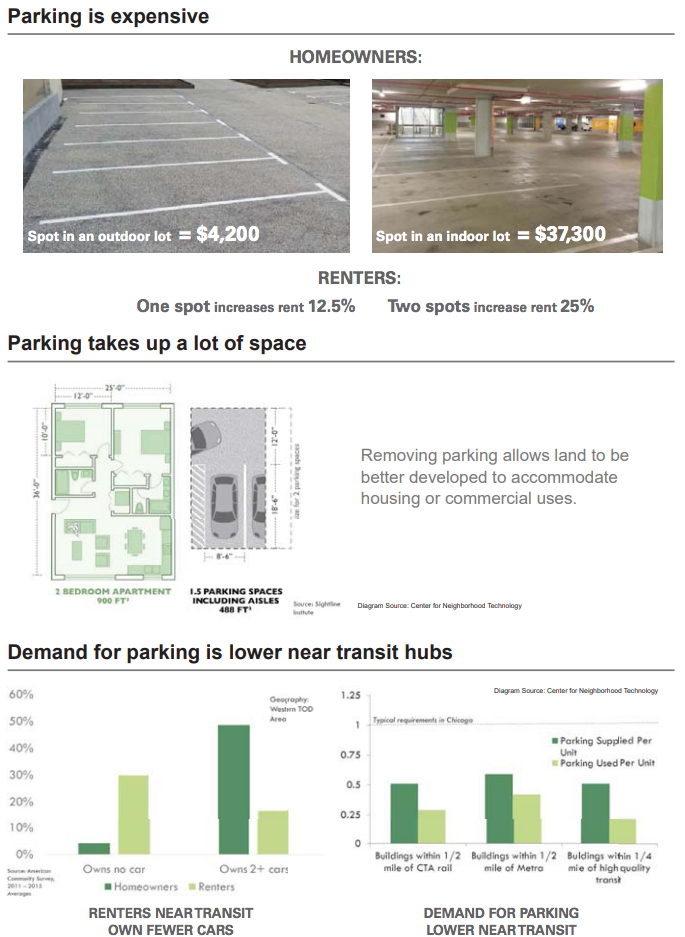
- Reduced Development Costs: Eliminating the need to build expensive underground or multi-story parking garages lowers construction costs, which can translate into more affordable housing options.
- Increased Housing Density: Land previously earmarked for parking can now be used for more residential units, open spaces, or mixed-use retail, contributing to higher urban density and more vibrant neighborhoods.
- Encouraged Transit Use: By making car ownership less convenient or necessary, the ordinance actively promotes the use of the CTA system, aligning with the city’s sustainability goals.
- Neighborhood Revitalization: TODs often spur economic growth and revitalization around transit hubs, creating more dynamic and appealing areas for residents and businesses.
Popular neighborhoods benefiting from this ordinance include parts of the Loop, River North, Lincoln Park, and Wicker Park, all of which boast excellent transit access and have seen a rise in new TOD apartment complexes.
Navigating Parking for TOD Apartment Dwellers
For individuals choosing to live in or stay at a TOD apartment in Chicago, the reduced or absent parking requirements mean a different approach to transportation.
- Embrace Public Transit: The primary expectation is that residents will rely on the extensive CTA system, which includes the iconic L Train and numerous bus lines, for daily commuting and city exploration. This is particularly advantageous for tourists looking to explore landmarks and attractions without the hassle of driving and parking.
- Ride-Sharing and Taxis: Services like Uber and Lyft are readily available throughout Chicago, providing convenient alternatives for trips not easily covered by public transit or when carrying luggage.
- Biking and Walking: With pedestrian-friendly infrastructure and numerous bike lanes, cycling and walking are excellent options for shorter distances, offering a chance to experience the city at a more intimate pace. Many TOD buildings include secure bike storage facilities.
- Car-Sharing Services: For occasional car needs, services like Zipcar or Turo offer vehicles for hourly or daily rentals, available at various points across the city.
- Nearby Parking Garages: While the TOD apartment itself might not offer parking, there are often public or private parking garages within walking distance. However, these can be expensive, especially for long-term parking, making them less ideal for budget-conscious travelers or residents.
- Street Parking: Street parking regulations in Chicago are complex, with permit zones, metered spots, and time restrictions. Relying solely on street parking near a TOD apartment is often impractical due to high demand and the risk of fines.
Understanding these alternatives is key to a smooth experience, whether you’re a long-term resident embracing an urban lifestyle or a visitor on a family trip or business stay.
The Traveler’s Perspective: Staying in Chicago’s TOD Apartments
For visitors to Chicago, the choice of accommodation significantly impacts their travel experience. TOD apartments, whether rented for short stays via platforms similar to Airbnb or through serviced apartment providers, offer a unique set of advantages and considerations, particularly regarding parking.
Advantages for Tourists and Business Travelers
Staying in a TOD apartment offers numerous benefits for travelers keen on exploring Chicago efficiently and authentically:
- Unrivaled Accessibility: Proximity to public transit means easy and quick access to major attractions like Millennium Park, the Art Institute of Chicago, Navy Pier, Shedd Aquarium, Field Museum, and the Magnificent Mile. Business travelers will find it convenient for reaching corporate offices in the Loop or other business districts.
- Budget-Friendly Travel: By reducing or eliminating the need for a rental car, expensive parking fees, and gas, travelers can significantly cut down on transportation costs. This frees up budget for experiences like dining at Chicago’s renowned restaurants, enjoying local culture, or indulging in shopping.
- Immersive Local Experience: Living in a TOD apartment places travelers squarely within vibrant neighborhoods, offering a glimpse into local life beyond typical tourist hotspots. This allows for a deeper appreciation of Chicago’s diverse communities and their unique offerings, from local food markets to neighborhood cafes.
- Efficiency for Business Stays: For professionals, time is money. Staying in a TOD apartment ensures quick commutes to meetings and easy access to O’Hare International Airport or Midway International Airport via the CTA, optimizing productivity and reducing travel stress.
Planning Your Stay: Parking Considerations
While the benefits are clear, it’s essential to plan accordingly if you arrive with a car or anticipate needing one during your stay:
- Assess Your Itinerary: If your travel plans focus exclusively on downtown Chicago and areas well-served by the CTA, a car is likely unnecessary and could even be a hindrance. For family trips involving excursions to more suburban attractions or areas beyond transit reach, a rental car might be considered for specific days, not for the entire duration.
- Pre-Book Parking: If you absolutely need a car, research and pre-book parking at a nearby garage. Websites like SpotHero or ParkWhiz allow you to find and reserve spaces in advance, often at a discount compared to drive-up rates. Confirm the garage’s proximity to your TOD apartment and consider the daily costs.
- Consider Airport Transportation: Both O’Hare International Airport and Midway International Airport are directly connected to downtown Chicago via the CTA L Train lines (Blue Line for O’Hare, Orange Line for Midway). This makes public transit an ideal and cost-effective way to get to and from your TOD accommodation without a car.
- Luggage Management: If relying on public transit, pack judiciously. While the L Train and buses can accommodate luggage, navigating crowded platforms or stairs with excessive bags can be challenging.
Maximizing Your Chicago Experience Without a Car
Embracing Chicago’s TOD lifestyle as a traveler opens up a world of possibilities:
- The CTA as Your Guide: Purchase a Ventra Card for seamless travel on all CTA buses and trains. Use online maps and apps to plan your routes to landmarks like the Willis Tower Skydeck, the John Hancock Center observatory, or a show in the Theater District.
- Walkable Wonders: Many of Chicago’s most iconic sights, from Grant Park to the waterfront along Lake Michigan, are best explored on foot. Take a walking tour to discover the city’s rich architecture and history.
- Bike-Friendly City: Chicago boasts an extensive network of bike paths and a Divvy bike-share program. Rent a bike to cruise along the Lake Michigan lakefront trail or explore neighborhoods at your own pace.
- Culinary Adventures: Chicago’s diverse food scene is easily accessible via public transit. From deep-dish pizza in the Loop to Michelin-starred restaurants in River North, your culinary journey is just a train ride away.
Lifestyle and Long-Term Implications of TOD Living
Beyond the immediate travel and accommodation considerations, TOD apartments in Chicago represent a broader shift in urban lifestyle and the future of city development.
Embracing Sustainable Urban Living
For many, choosing a TOD apartment is a conscious decision to embrace a more sustainable and community-oriented urban lifestyle. It reflects a desire to reduce one’s environmental impact, simplify daily commutes, and prioritize experiences over possessions (like a car). This mode of living is particularly appealing to young professionals, empty-nesters, and anyone who values convenience, accessibility, and a vibrant city life over the expenses and responsibilities of car ownership. It’s a choice that supports Chicago’s vision for a greener, more efficient, and more connected future, aligning with global trends toward sustainable urban development. For long-term stays, this lifestyle choice becomes an integral part of daily living, fostering engagement with local culture and community resources.
The Future of Urban Mobility in Chicago
The success of TODs in Chicago points towards a future where urban mobility is increasingly diversified and less reliant on private vehicles. Continued investment in public transit infrastructure, expansion of bike networks, and the integration of new mobility options (like electric scooters and enhanced ride-sharing services) will further cement the role of TODs in the city’s fabric. As technology advances and societal preferences evolve, Chicago is poised to continue leading the way in creating dynamic urban environments where residents and visitors can thrive without the burden of excessive parking requirements. This vision ensures that the city remains an attractive destination for diverse lifestyles, from luxury travel to budget-conscious explorations, all underpinned by convenient and accessible accommodation options.
In conclusion, understanding the parking requirements for TOD apartments in Chicago is crucial for anyone considering living in or visiting these innovative developments. While the absence of dedicated parking might initially seem daunting to those accustomed to car ownership, it is a deliberate design choice that unlocks a wealth of benefits. By prioritizing public transit, walkability, and a vibrant urban experience, TOD apartments offer a compelling proposition for travelers seeking seamless access to Chicago’s iconic landmarks and local attractions, as well as for residents committed to a sustainable and connected lifestyle in one of the United States’ most dynamic cities. Embracing the TOD model means embracing the future of urban living, where convenience, sustainability, and community thrive, often at a lower personal cost and with a lighter environmental footprint.
LifeOutOfTheBox is a participant in the Amazon Services LLC Associates Program, an affiliate advertising program designed to provide a means for sites to earn advertising fees by advertising and linking to Amazon.com. Amazon, the Amazon logo, AmazonSupply, and the AmazonSupply logo are trademarks of Amazon.com, Inc. or its affiliates. As an Amazon Associate we earn affiliate commissions from qualifying purchases.