
Embarking on a career as a general contractor in Florida represents more than just a job; it’s a significant professional lifestyle choice, offering immense opportunities within one of the nation’s most vibrant and growing construction markets. The Sunshine State beckons with its consistent development, diverse building projects, and a constant demand for skilled, licensed professionals. For individuals seeking to establish a robust business or advance their construction career, obtaining a Florida general contractor license is the essential gateway. This comprehensive guide outlines the rigorous yet rewarding path to becoming a licensed general contractor, equipping you with the knowledge to navigate the state’s requirements and build a thriving professional lifestyle.
Why Choose a Contracting Career in Florida? (Lifestyle & Opportunity)
The decision to pursue a general contractor license in Florida is often driven by the allure of a dynamic market and the promise of a fulfilling professional lifestyle. Beyond the beaches and tourist attractions, Florida offers a fertile ground for construction professionals to grow their businesses and impact communities.
The Booming Florida Construction Market
Florida’s economy is consistently among the fastest growing in the United States, fueled by a booming population, robust tourism, and significant commercial investment. This translates directly into a high demand for new residential homes, commercial developments, infrastructure projects, and extensive renovations. From the bustling metropolitan areas of Miami and Orlando to the expanding suburbs and coastal communities, construction projects are ubiquitous. This sustained growth provides a stable environment for general contractors, offering a steady stream of diverse projects that cater to various specializations. The sheer volume of work means more opportunities for professional development, scaling a business, and contributing to the state’s ongoing evolution.
Benefits of Being a Licensed Professional
Holding a general contractor license in Florida is not merely a formality; it’s a mark of credibility, professionalism, and legal authority. A license allows you to bid on larger, more complex projects, which are often inaccessible to unlicensed individuals. It provides the legal backing to operate a legitimate business, obtain necessary permits, and ensure compliance with Florida’s stringent building codes. Furthermore, a license instills confidence in clients, knowing that you have met specific state-mandated standards for experience, financial stability, and knowledge. This credibility often translates into higher earning potential, better project opportunities, and a respected standing within the industry, defining a secure and reputable professional lifestyle.
Envisioning Your Florida Lifestyle
Becoming a general contractor in Florida is a commitment to a particular professional lifestyle. It means building a business in a state known for its year-round outdoor living, vibrant communities, and diverse cultural landscape. While the work itself is demanding, the rewards can be substantial, offering the flexibility and financial independence to enjoy all that Florida has to offer. Whether your vision involves managing large-scale commercial builds in Jacksonville, developing luxury homes in Naples, or contributing to community infrastructure in Tallahassee, a Florida general contractor license is the foundation upon which to build that professional and personal lifestyle. It’s about more than just construction; it’s about crafting your future in a dynamic and desirable locale.
Understanding Florida’s Licensing Requirements
The path to licensure in Florida is governed by the Florida Department of Business and Professional Regulation (DBPR), specifically through the Construction Industry Licensing Board (CILB). Their guidelines ensure that all licensed contractors meet high standards of competence and ethics.
Types of Contractor Licenses
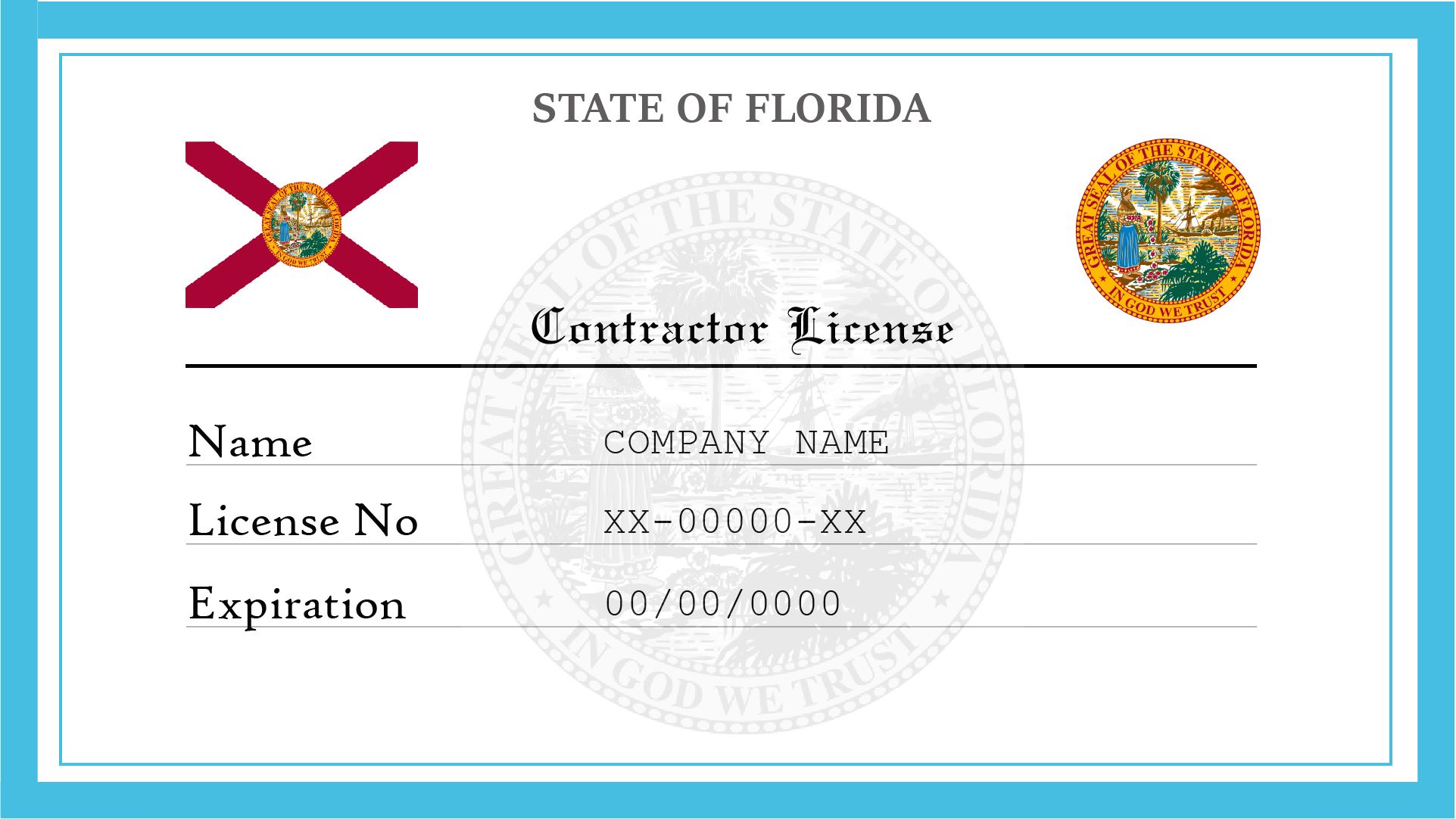
Florida categorizes contractor licenses based on the scope of work allowed. For a general contractor, there are two primary classifications:
- Certified General Contractor (CGC): This is the highest level of general contractor license, allowing you to contract in any aspect of construction, whether commercial or residential, anywhere in the state of Florida. This license is state-wide and doesn’t require local registration after obtaining the state certification.
- Registered General Contractor: This license is specific to a particular county or municipality where you’ve demonstrated competence and passed a local examination. While it allows you to operate locally, if you wish to work in other areas, you’d need to register your license with each specific jurisdiction. Most aspiring general contractors aim for the Certified General Contractor license for its broader scope and professional recognition.
Understanding which license aligns with your career aspirations is the first critical step. This guide focuses primarily on the Certified General Contractor (CGC) license, as it offers the broadest scope for a comprehensive professional lifestyle in construction across the state.
Eligibility Criteria: Experience and Education
To qualify for a Certified General Contractor license, applicants must meet stringent criteria concerning experience and education. Generally, you must be at least 18 years old and possess a Social Security number or an Individual Taxpayer Identification Number. The core requirements revolve around your professional background:
- Four years of verifiable construction experience: This experience must be in the general construction field, with at least one year as a supervisory experience. The DBPR is very particular about what constitutes “supervisory.” It typically means overseeing projects, managing teams, and making critical decisions.
- Substitution for experience: Florida allows for substitutions for a portion of the experience requirement if you have relevant academic qualifications. For instance:
- A four-year construction-related degree from an accredited college can substitute for three years of experience.
- A two-year construction-related degree can substitute for one year of experience.
- A bachelor’s degree in building construction from an accredited university can substitute for three years of experience, with the remaining one year requiring practical experience, including at least six months of supervisory experience.
- A four-year degree in architecture or engineering, or a related field, combined with three years of experience (one of which must be supervisory).
Carefully documenting and verifying all your experience and educational background is crucial, as any discrepancies can lead to delays or denial of your application. This foundational step is a testament to your professional readiness.
Financial Stability and Background Checks
Beyond experience and education, the DBPR also scrutinizes an applicant’s financial responsibility and moral character.
- Financial Stability: Applicants must demonstrate financial responsibility by providing a credit report. This report is assessed to ensure you do not have outstanding judgments, liens, or bankruptcy filings that could jeopardize your ability to operate a business. If there are credit issues, you may be required to obtain a special bond. The specific requirements for net worth or bonding can vary, and it’s essential to review the latest guidelines from the DBPR. This ensures that only financially sound individuals enter the profession, maintaining the integrity of the contracting lifestyle.
- Criminal Background Check: All applicants must undergo a criminal background check, typically involving fingerprinting. The DBPR reviews any past criminal history to assess an applicant’s moral turpitude and suitability for licensure. While certain offenses may disqualify an applicant, each case is reviewed individually, and explanations or evidence of rehabilitation may be considered. Honesty and full disclosure are paramount during this stage.
These checks are in place to protect the public and ensure that licensed professionals are reliable and trustworthy, upholding the ethical standards expected of the contracting lifestyle.
The Application and Examination Process
Once you’ve confirmed your eligibility, the next phase involves meticulously preparing your application and demonstrating your knowledge through a comprehensive state examination. This is often the most challenging part of the journey to a licensed professional lifestyle.
Preparing Your Application Package
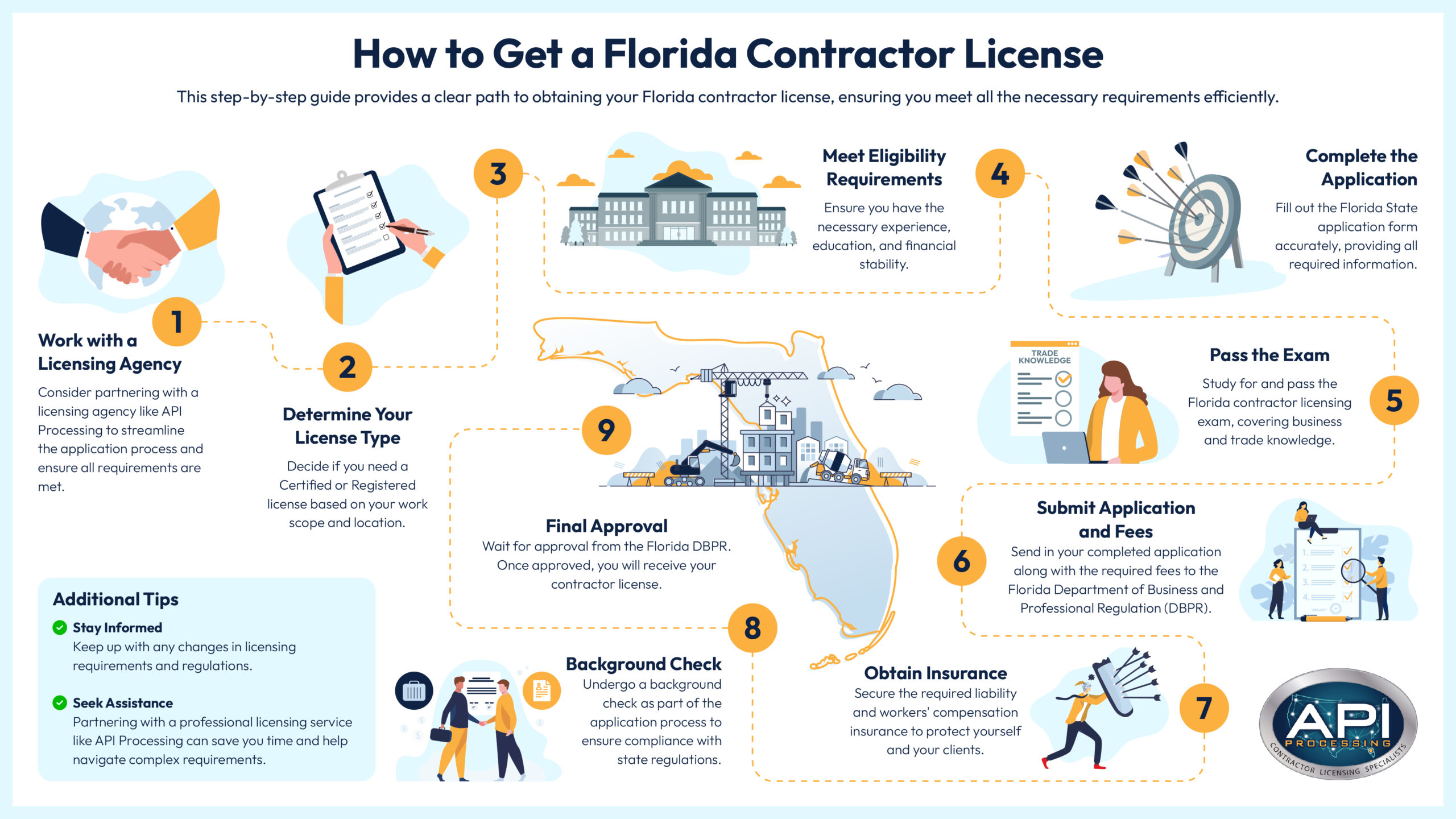
The application process for a Florida Certified General Contractor license is detailed and requires careful attention. You’ll need to submit a completed application form to the Florida Department of Business and Professional Regulation (DBPR). The package typically includes:
- Completed application form: Filled out accurately and entirely.
- Proof of experience: Detailed summaries, affidavits from past employers, and any supporting documentation verifying your four years (or equivalent) of experience, including supervisory roles.
- Educational transcripts: If you are using education to substitute for experience.
- Financial statement/credit report: Demonstrating your financial responsibility.
- Proof of criminal background check: After fingerprinting and submission.
- Application fees: Non-refundable fees are required for processing.
It is highly recommended to seek assistance from a licensing service or experienced consultant to ensure your application is complete and error-free. Missing documents or incorrect information can lead to significant delays.
Conquering the State Licensing Exam
The Florida General Contractor exam is renowned for its difficulty and comprehensiveness, a true test of a professional’s knowledge. It is divided into three parts:

- Contract Administration: Covers business and finance, project management, contracts, safety, and regulations.
- Project Management: Focuses on planning, scheduling, cost control, quality control, and general construction knowledge.
- Contracting Principles and Practices (Business & Finance): This part tests knowledge of legal requirements, financial management, lien laws, and general business practices relevant to contracting.
These are open-book exams, but this does not make them easy. They require a deep understanding of the reference materials and the ability to quickly navigate complex information under timed conditions. Effective preparation is key, often involving:
- Enrolling in an exam prep course: Many specialized schools and programs offer courses specifically designed for the Florida contractor exams.
- Thorough study of approved reference books: The DBPR publishes a list of required reference materials, including building codes, safety standards, and business law manuals.
- Practice exams: Repeatedly taking practice tests helps familiarize you with the format, timing, and types of questions.
Passing this multi-part examination is a significant achievement and a definitive step toward your professional lifestyle as a licensed contractor.
Post-Exam Steps: Insurance and Licensing Boards
Even after passing the rigorous state exam, there are still crucial steps before your license is officially issued and you can fully embrace your new professional lifestyle.
- Proof of Insurance: You must secure both general liability insurance and workers’ compensation insurance (or an exemption if you have no employees). The minimum general liability coverage typically required is $300,000 for bodily injury and $50,000 for property damage. Workers’ compensation requirements vary based on the number of employees.
- Background Review by the CILB: Your application and exam results are then reviewed by the Construction Industry Licensing Board (CILB) for final approval. This board meeting is where your qualifications are officially recognized. In some cases, you may be required to appear before the board to answer questions regarding your application or experience.
Upon final approval and verification of all requirements, the DBPR will issue your Certified General Contractor license, officially launching you into your new professional lifestyle in Florida.
Maintaining Your Florida Contractor License
Obtaining your license is a monumental achievement, but it’s just the beginning of your professional journey in Florida. Maintaining your license and staying compliant with state regulations is crucial for a long and successful career, upholding the integrity of your professional lifestyle.
Continuing Education Requirements
To ensure that general contractors remain current with industry standards, building codes, and best practices, Florida mandates continuing education. For certified general contractors, 14 hours of continuing education must be completed during each two-year licensure cycle. These hours typically include specific topics such as:
- Workplace safety: Keeping up-to-date with OSHA regulations and job site safety protocols.
- Business practices: Enhancing skills in financial management, contract law, and project administration.
- Workers’ compensation: Understanding the latest laws and requirements.
- Florida building code updates: Critical for staying compliant with the ever-evolving construction standards.
- Advanced building energy efficiency: Incorporating sustainable and energy-saving practices.
- Accessibility requirements: Adhering to ADA standards and other accessibility mandates.
Numerous approved providers offer these courses, both online and in-person, making it convenient for busy professionals to fulfill their obligations. Regular engagement with continuing education not only ensures compliance but also enhances your expertise, directly contributing to your professional growth and the longevity of your contracting lifestyle.
License Renewal Process
Your Florida General Contractor license is valid for a two-year period and must be renewed to remain active. The renewal process typically involves:
- Completing continuing education: As mentioned above, this must be done before renewal.
- Submitting a renewal application: This can often be done online through the DBPR portal.
- Paying renewal fees: Required to process your application.
- Updating any personal or business information: Ensuring all records are current.
The DBPR typically sends renewal notices well in advance of the expiration date. Missing the renewal deadline can result in late fees, and if the license remains inactive for too long, it may require reinstatement or even re-application, which can be a costly and time-consuming setback to your professional lifestyle.
Adhering to Florida Building Codes and Regulations
Florida has a comprehensive set of building codes and regulations, collectively known as the Florida Building Code. This code is continually updated and strictly enforced to ensure the safety, health, and welfare of the public, particularly given the state’s susceptibility to hurricanes and other environmental factors. As a licensed general contractor, it is your legal and ethical responsibility to:
- Understand and apply the latest codes: This includes structural, electrical, plumbing, mechanical, energy, and accessibility codes.
- Obtain all necessary permits: Before commencing any project, ensure all required local and state permits are secured.
- Comply with inspections: Be prepared for and cooperate with mandatory inspections at various stages of construction.
- Follow safety protocols: Implement and enforce strict safety measures on all job sites to protect workers and the public.
Strict adherence to these codes and regulations is not just about avoiding penalties; it’s about building a reputation for quality, safety, and integrity, which are cornerstones of a successful and respected contracting lifestyle in Florida.
Navigating Your Licensed Contracting Journey in Florida
With your Florida General Contractor license in hand, you are ready to build not just structures, but a thriving business and a fulfilling professional lifestyle. Success in this competitive field requires strategic planning, continuous effort, and adaptability.
Building Your Network
In the construction industry, relationships are paramount. Networking with other professionals can open doors to new projects, collaborations, and valuable insights. Attend industry events, join local contractor associations (e.g., Associated Builders and Contractors, National Association of Home Builders), and connect with architects, engineers, subcontractors, and suppliers. A strong professional network can be a critical asset, providing support, mentorship, and a steady stream of referrals that are vital for sustaining and growing your contracting lifestyle in Florida.
Specializing in Niche Markets
While a Certified General Contractor license allows for a broad scope of work, specializing in a niche market can help you stand out and build a stronger brand. Florida’s diverse market offers numerous specialization opportunities:
- Luxury residential construction: Catering to high-end clients in areas like Sarasota or Palm Beach.
- Commercial renovations: Focusing on upgrading office spaces, retail establishments, or hospitality venues.
- Disaster recovery and remediation: Essential work in a state prone to severe weather events.
- Sustainable and green building: Addressing the growing demand for eco-friendly construction.
- Historic preservation: Working on iconic Florida structures in cities like St. Augustine or Key West.
Identifying a niche that aligns with your expertise and passions can differentiate your business, attract targeted clients, and make your professional lifestyle more rewarding.
The Long-Term Vision for Your Florida Business
A successful contracting career in Florida is built on a long-term vision. This involves not only planning for immediate projects but also strategizing for sustainable growth, financial stability, and legacy. Consider developing a robust business plan that outlines your goals, target markets, marketing strategies, and financial projections. Invest in project management software, foster a strong company culture, and continuously seek opportunities for innovation and improvement. The journey to obtaining a general contractor license in Florida is a demanding one, but it lays the groundwork for a challenging yet highly rewarding professional lifestyle, allowing you to build a lasting impact on the landscape and communities of the Sunshine State.
LifeOutOfTheBox is a participant in the Amazon Services LLC Associates Program, an affiliate advertising program designed to provide a means for sites to earn advertising fees by advertising and linking to Amazon.com. Amazon, the Amazon logo, AmazonSupply, and the AmazonSupply logo are trademarks of Amazon.com, Inc. or its affiliates. As an Amazon Associate we earn affiliate commissions from qualifying purchases.