
Florida, the Sunshine State, is more than just a premier destination for vacations and retirement; it’s a dynamic economic powerhouse attracting individuals seeking new professional horizons and an unparalleled quality of life. For many, the dream of calling Florida home extends to building a thriving career within its booming real estate market. Obtaining a Florida real estate license isn’t just about passing an exam; it’s a strategic move towards a rewarding lifestyle, offering flexibility, significant earning potential, and the chance to contribute to the state’s vibrant communities. This comprehensive guide will navigate you through every essential step, transforming your aspiration into a tangible career and a new way of living in one of the most sought-after states in the nation.

The Allure of Florida’s Real Estate Landscape: A Lifestyle Opportunity
The decision to pursue a real estate career in Florida is often driven by more than just professional ambition; it’s a lifestyle choice. The state offers a unique blend of economic opportunity and an enviable quality of life, making it an attractive destination for both residents and real estate professionals.
Why Florida? Economic Drivers and Quality of Life
Florida’s real estate market is consistently robust, fueled by several key factors. A rapidly expanding population, drawn by warm weather, beautiful beaches, and a lack of state income tax, ensures a steady demand for housing across all segments. Beyond residential properties, the state’s diverse economy, encompassing tourism, aerospace, technology, and finance, drives significant commercial real estate activity. Major metropolitan areas like Miami, Orlando, and Tampa are epicenters of growth, but vibrant markets can be found statewide, from the historic charm of St. Augustine to the business-centric environment of Jacksonville.
For those seeking a lifestyle shift, Florida offers an exceptional environment. Imagine a career where you can work with clients helping them find their dream home, then unwind on the beach, or enjoy world-class golf courses. The flexibility inherent in real estate allows professionals to tailor their schedules, potentially leading to a better work-life balance and the freedom to embrace all that Florida has to offer. It’s a career path that integrates seamlessly with a desired lifestyle of sun, opportunity, and community.
Diverse Real Estate Markets Across the State
One of Florida’s greatest strengths, from a real estate perspective, is the sheer diversity of its markets. This means agents can specialize in niches that align with their interests and the lifestyle they wish to cultivate.
In Southeast Florida, Miami is a global hub for luxury condominiums and international investment, offering a fast-paced, glamorous market. Further north, areas like Palm Beach cater to high-net-worth individuals seeking exclusive waterfront estates. Central Florida, anchored by Orlando, thrives on residential sales driven by theme park employment and a robust vacation rental market, appealing to agents interested in investment properties and tourism-related real estate.
On the Gulf Coast, Tampa and Sarasota boast strong family-oriented communities, booming urban redevelopment, and a relaxed, coastal lifestyle. The Panhandle offers military markets around Pensacola and vacation rental opportunities in places like Destin and Panama City Beach. Even the state capital, Tallahassee, presents a stable market driven by government and university employment. This rich tapestry of markets ensures that a Florida real estate license opens doors to a wide array of professional paths, allowing you to choose a specialization that truly resonates with your desired career and personal lifestyle.
Meeting the Prerequisites: Laying the Groundwork
Before you can embark on your journey to becoming a licensed real estate professional, there are specific foundational requirements and educational steps that must be met. These prerequisites are designed to ensure that all aspiring agents possess the basic qualifications and knowledge necessary for ethical and effective practice.
Eligibility Requirements for Aspiring Agents
The path to a Florida real estate license begins with meeting a set of fundamental eligibility criteria established by the state. Applicants must be at least 18 years of age and hold a high school diploma or its equivalent (GED). A Social Security Number is also required for identification and background check purposes.
Crucially, aspiring agents must demonstrate honesty, trustworthiness, and integrity. This is assessed through a comprehensive background check that involves fingerprinting. Any past criminal history, even minor offenses, must be disclosed during the application process. While a past indiscretion doesn’t automatically disqualify an applicant, failure to disclose it will. The Department of Business and Professional Regulation (DBPR), the overarching agency responsible for professional licensing in Florida, reviews each case individually. It is highly advisable to disclose everything upfront and provide any requested supporting documentation to avoid delays or potential denial of your application. This commitment to transparency and ethics from the outset sets the tone for a professional career in real estate.
Navigating the 63-Hour Pre-Licensing Education
Once you’ve confirmed your eligibility, the next critical step is to complete the mandatory 63-hour sales associate pre-licensing course. This course is not just a formality; it’s a foundational education designed to equip you with the essential knowledge of Florida real estate principles, practices, and law.
The course curriculum typically covers a wide range of topics, including property rights, contract law, agency relationships, financing, valuation, property taxes, and ethical conduct. It delves into the specifics of Florida statutes and administrative rules governing real estate, ensuring you are well-versed in the regulatory landscape. These courses must be completed through a state-approved education provider. You have the flexibility to choose between traditional classroom settings, which offer direct interaction with instructors and peers, or convenient online formats, ideal for those balancing work, family, or a busy lifestyle. Regardless of the format, you must pass an end-of-course examination administered by the provider to demonstrate mastery of the material. This educational cornerstone is vital for both passing the state exam and building a successful, ethical career in real estate.
The Application and Examination Journey
With your pre-licensing education complete, the next phase involves formally applying for your license and proving your knowledge through the state examination. This is where your preparation culminates into a tangible pursuit of your new Florida real estate career.
Submitting Your License Application
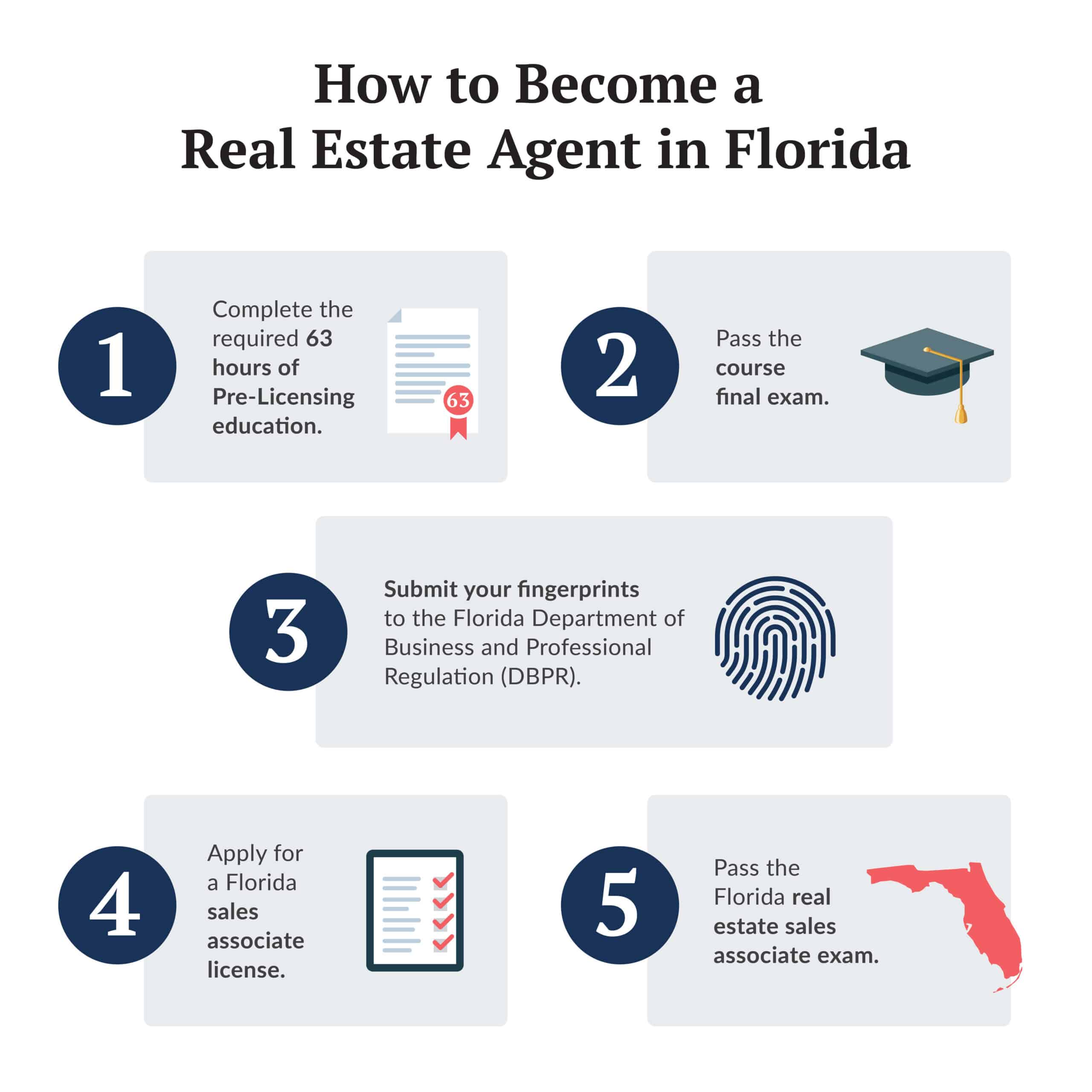
After successfully completing your 63-hour pre-licensing course, the official application process begins. You will need to submit an application to the DBPR. The most efficient way to do this is online through the DBPR’s secure portal. The application requires detailed personal information, a review of your moral character and criminal history, and payment of the application fee.
As part of the application, you must also undergo fingerprinting for a background check. This process is typically conducted by approved vendors, and your fingerprints are submitted electronically to the Florida Department of Law Enforcement and the FBI. It’s crucial to complete the fingerprinting promptly, as the background check can take several weeks, and your application cannot be approved until it’s clear. Once your application is processed and approved, and your background check is satisfactory, the DBPR will notify you that you are eligible to schedule your state examination.
Conquering the State Real Estate Exam
The pinnacle of the licensing process is passing the Florida Real Estate Sales Associate Examination. This is a rigorous test designed to ensure all licensed professionals possess a comprehensive understanding of real estate principles and Florida law. The exam consists of 100 multiple-choice questions, divided into two main sections: general real estate principles and practices, and specific Florida real estate law. You are given 3.5 hours to complete the exam, and a score of 75% or higher is required to pass.
Preparation is key to success. Reviewing your pre-licensing course materials thoroughly, taking practice exams, and joining study groups can significantly boost your confidence and knowledge. Many real estate schools offer exam preparation workshops specifically designed to mimic the actual state exam experience. The exam is administered by a third-party testing service, and locations are available throughout Florida’s major cities like Miami, Orlando, and Tampa. Once you pass, you will receive notification immediately, and your license will be issued by the Florida Real Estate Commission (FREC), the regulatory body that governs real estate professionals in Florida, under the purview of the DBPR.
Activating Your License and Embracing Your New Career
Passing the state exam is a monumental achievement, but it’s just the beginning. To officially activate your license and start practicing real estate in Florida, a few more crucial steps are required, along with a commitment to ongoing professional development.
Finding a Sponsoring Broker
Unlike many other professions, a newly licensed Florida real estate sales associate cannot operate independently. You must work under the supervision of a licensed real estate broker. This requirement ensures that new agents receive mentorship, guidance, and support as they navigate the complexities of real estate transactions and adhere to professional standards. The broker acts as a sponsor, taking responsibility for your actions as an agent.
Finding the right sponsoring broker is a critical decision that will significantly impact your early career. Research different brokerages, considering factors such as company culture, training programs, commission splits, office resources, and the specialization of the firm (e.g., residential, commercial, luxury, rentals). Interviewing with several brokers will help you find a mentor who aligns with your career goals and the lifestyle you envision for yourself in Florida. Once you’ve chosen a broker, they will submit a form to the DBPR indicating their sponsorship, officially activating your license and allowing you to begin practicing.
Post-Licensing Education and Continuing Professional Development
Obtaining your license is a milestone, but the learning doesn’t stop there. Florida law mandates ongoing education to ensure that real estate professionals remain knowledgeable about current laws, ethics, and market trends.
For your first renewal cycle (which occurs within 18 to 24 months after initial licensure, depending on your activation date), you are required to complete a 45-hour post-licensing course. This course is more in-depth than the pre-licensing material, focusing on practical application and advanced topics relevant to practicing agents. Failure to complete this 45-hour course before your first renewal deadline will result in your license becoming null and void, requiring you to start the entire licensing process over.
After the initial 45-hour post-licensing requirement, all subsequent renewals require 14 hours of continuing education every two years. This ongoing education typically includes core law updates, ethical practices, and specialty topics chosen by the FREC to keep agents informed and proficient. This commitment to continuous learning is not just a regulatory obligation; it’s an investment in your career longevity and ability to provide the best service in Florida’s dynamic real estate market.
Your Florida Real Estate Career: A Lifestyle Transformed
Embarking on a real estate career in Florida is more than just a job; it’s an opportunity to reshape your professional and personal life, integrating passion with purpose in a vibrant, sought-after environment.
The Impact on Your Professional and Personal Life
A Florida real estate license opens doors to a career characterized by significant flexibility and earning potential, which are key components of a desirable lifestyle. As an agent, you largely control your schedule, allowing you to balance work with personal interests, family time, and enjoying Florida’s abundant recreational opportunities. This autonomy appeals to many who seek an entrepreneurial path without the constraints of a traditional 9-to-5 job. Your income is directly tied to your effort and success, offering unlimited growth potential.
Beyond financial incentives, a career in real estate is inherently social and community-focused. You’ll meet diverse people, build extensive networks, and play a pivotal role in one of life’s most significant transactions—buying or selling a home. This can be immensely rewarding, fostering a deep connection to the communities you serve, whether it’s helping a family find their first home in Orlando or assisting an investor with a luxury condo in Miami. It’s a profession that allows you to live and work in paradise, embodying a truly transformed lifestyle.
Ethical Practice and Market Navigation
Success in Florida real estate is built on a foundation of ethical practice and a keen understanding of the market. The FREC sets high standards for licensee conduct, emphasizing integrity, honesty, and fiduciary duties to clients. Adhering to these ethics not only prevents legal issues but also builds a strong reputation, fostering client trust and repeat business.
The Florida real estate market is constantly evolving, influenced by national economic trends, local development projects, and seasonal tourism patterns. Staying updated on these dynamics—from interest rate changes to new construction in Tampa or zoning regulations in Tallahassee—is crucial. Successful agents continuously research market data, attend industry seminars, and network with peers. This proactive approach ensures you can provide insightful advice to clients and confidently navigate diverse transactions, cementing your place as a valued professional in Florida’s vibrant real estate landscape.
Obtaining a Florida Real Estate License is a significant undertaking that requires dedication, education, and commitment. However, for those seeking a dynamic career that offers flexibility, substantial earning potential, and the opportunity to thrive in one of the most desirable states in the U.S., the effort is immeasurably rewarding. It’s a gateway to not just a new profession, but an entirely new, enriching lifestyle under the Florida sun.
LifeOutOfTheBox is a participant in the Amazon Services LLC Associates Program, an affiliate advertising program designed to provide a means for sites to earn advertising fees by advertising and linking to Amazon.com. Amazon, the Amazon logo, AmazonSupply, and the AmazonSupply logo are trademarks of Amazon.com, Inc. or its affiliates. As an Amazon Associate we earn affiliate commissions from qualifying purchases.