
Embarking on a journey to the Sunshine State promises an unforgettable experience, whether you’re chasing the thrills of theme parks, unwinding on pristine beaches, or exploring vibrant urban landscapes. As you meticulously plan your itinerary, from booking accommodations to reserving dining experiences and coordinating with local tour operators, one seemingly minor detail can become surprisingly significant: understanding Florida’s area codes. Far from being mere digits, these codes are an essential piece of the puzzle for seamless communication, helping you navigate local services, stay connected with travel companions, and ensure you’re always just a call away from assistance or information.

Unlocking Your Florida Adventure: Why Area Codes Matter for Travelers
For the modern traveler, practical information is as valuable as a well-researched guide to attractions. Knowing Florida’s area codes is not just about making a phone call; it’s about confidently interacting with the local ecosystem, whether you’re confirming a reservation or seeking urgent assistance. It’s a foundational piece of practical knowledge that underpins effective communication throughout your trip.
More Than Just Numbers: A Gateway to Local Services
Imagine you’re trying to book a last-minute airboat tour in the Everglades National Park or secure a table at a coveted restaurant in South Beach. Having the correct area code ensures your call connects directly to the desired local establishment. It’s the first step in accessing everything from transportation services and medical facilities to information centers and emergency contacts. Misdialing can lead to frustration, wasted time, and potentially missed opportunities during your precious travel days. Furthermore, recognizing area codes can subtly hint at the geographical location of a business or service, aiding your mental map of the sprawling state.
Planning Your Itinerary: Connecting with Florida’s Diverse Regions
Florida is a state of vast diversity, from the magical realms of Central Florida to the tropical allure of the Florida Keys. Each region often corresponds to specific area codes, offering a unique numerical fingerprint that identifies its location. For travelers, this means that as you move from, say, the bustling entertainment hubs of Orlando to the serene shores of Sarasota, the local area codes will change. Understanding this regional distribution helps you to quickly identify if a contact number is indeed local to the area you are currently visiting or planning to visit, streamlining your travel logistics and enhancing your sense of preparedness.
Navigating the Sunshine State’s Telecommunications Landscape
Like many states in the United States, Florida’s telephone network uses a system of geographic area codes, which have evolved over decades to accommodate population growth and increased demand for phone lines. What began with a few broad codes has expanded into a complex, yet logical, overlay system designed to ensure every resident and visitor has access to communication services.
The Core Area Codes of Florida
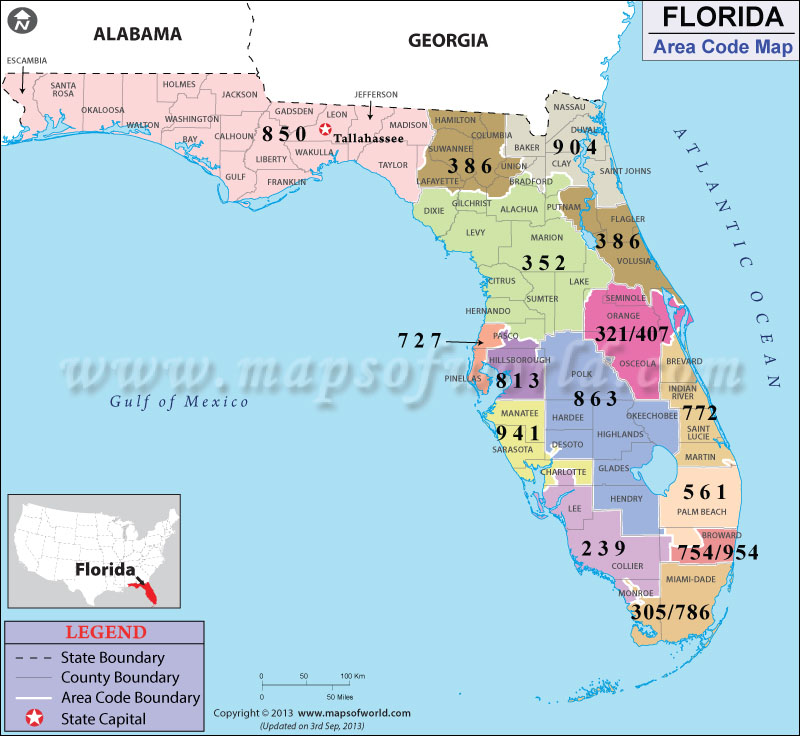
Florida’s area code landscape is quite extensive, reflecting its large population and status as a major travel destination. Key legacy codes include 305 for Miami-Dade County and the Florida Keys, 407 for Orlando and its surrounding areas, and 813 covering Tampa and parts of the Tampa Bay region. These primary codes serve as anchor points, around which many new overlay codes have been introduced to manage demand. As a traveler, familiarity with these central codes provides a quick reference for major metropolitan areas.
Decoding Overlays: What They Mean for Dialing
An “overlay” area code occurs when a new area code is assigned to the same geographic region already served by an existing area code. This means that a single city or county might have multiple area codes. For example, Miami, originally served by 305, now also uses 786. Similarly, the 407 area for Orlando is overlaid with 321 and 689. This system necessitates “10-digit dialing,” meaning you must always dial the full 10-digit number (area code + 7-digit number) even for local calls within the same area code. For visitors, this is a crucial distinction, as attempting to dial just seven digits will result in a failed call. Modern smartphones and mobile networks often simplify this by automatically handling 10-digit dialing, but it’s good practice to be aware of the requirement, especially when dialing from landlines or older devices.
Your Regional Guide to Florida Area Codes for Travelers
Understanding which area codes correspond to specific regions of Florida can significantly enhance your travel experience. It allows for more efficient communication with local businesses and services, helping you to plan and execute your trip with greater ease.
Central Florida: Theme Parks and Beyond
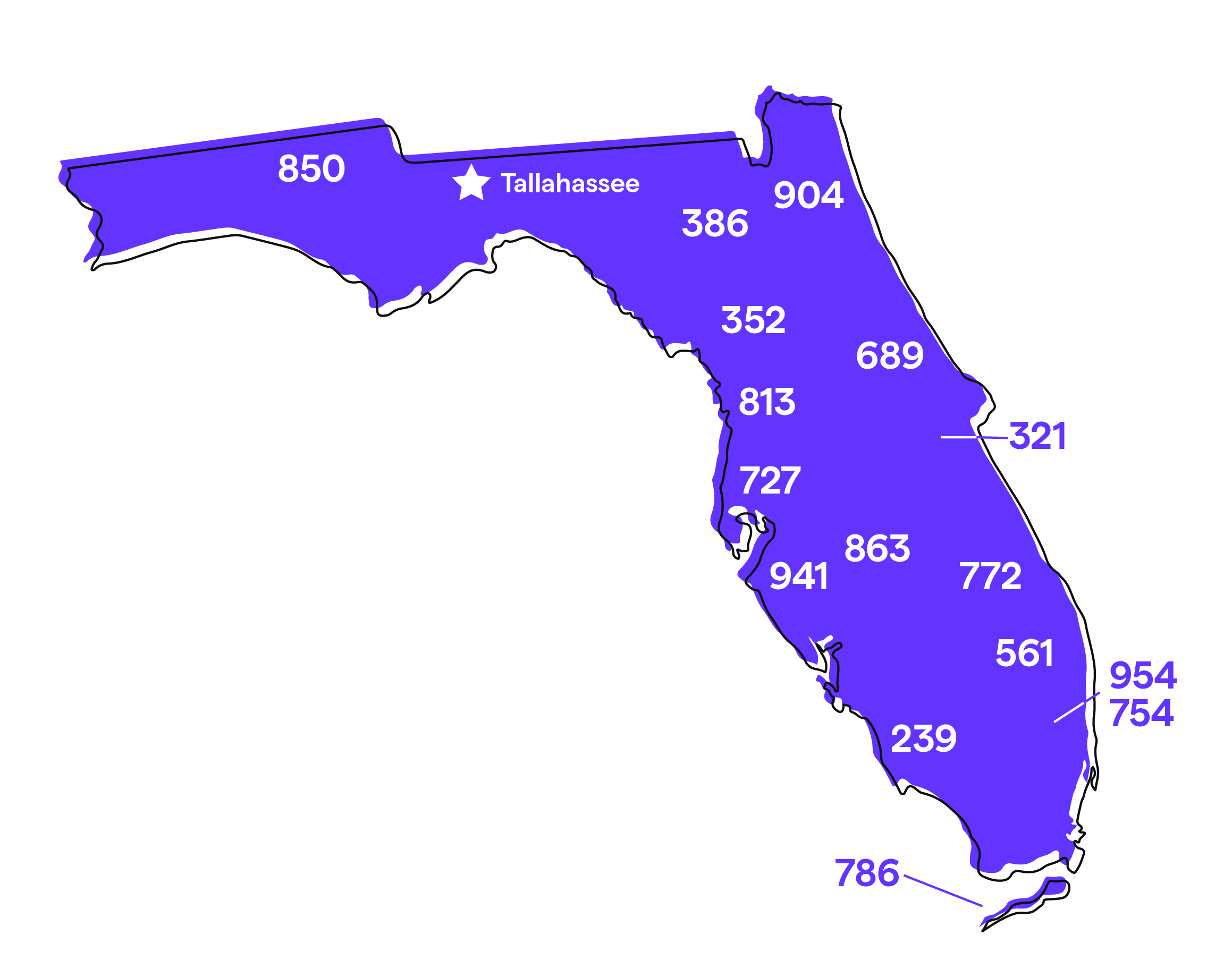
Central Florida is synonymous with world-renowned attractions, primarily in and around Orlando. Here, you’ll encounter a primary cluster of area codes. The original 407 code covers Orlando itself, along with neighboring cities like Kissimmee and Sanford. Due to immense growth, 321 was introduced as an overlay, particularly prominent along the Space Coast (including the Kennedy Space Center Visitor Complex) and also serving parts of Orange, Osceola, and Seminole counties. More recently, 689 was added as another overlay to this bustling region. If you’re booking tickets for Walt Disney World Resort or Universal Orlando Resort, contacting local shuttle services, or making dinner reservations in Downtown Orlando, expect to see numbers with 407, 321, or 689.
South Florida: Beaches, Culture, and Urban Vibrancy
The vibrant tapestry of South Florida is defined by its stunning beaches, dynamic culture, and bustling urban centers like Miami and Fort Lauderdale. The iconic 305 area code has long been associated with Miami-Dade County and the Florida Keys, evoking images of Art Deco architecture and Latin flair. To meet the demands of this densely populated and rapidly growing region, 786 was introduced as an overlay, sharing the same geographical footprint. Further north, in Broward County (home to Fort Lauderdale) and Palm Beach County (including West Palm Beach), you’ll encounter the 954 area code, which is overlaid by 754. These codes are essential for contacting hotels, booking yacht charters, or finding local hotspots in this energetic part of the state.
Southwest Florida & The Gulf Coast: Natural Beauty and Relaxation
Along Florida’s Gulf Coast, Southwest Florida offers a blend of pristine beaches, lush natural preserves, and charming cities. The 813 area code serves the metropolitan hub of Tampa, home to attractions like Busch Gardens Tampa Bay. This code is overlaid by 656. Just across Tampa Bay, the 727 area code covers St. Petersburg and Clearwater, known for their beautiful beaches and vibrant arts scenes. Further south, the 941 area code encompasses Sarasota, Bradenton, and Port Charlotte, while the 239 area code serves Fort Myers, Naples, and Cape Coral. Whether you’re planning a visit to the Ringling Museum or exploring the Ten Thousand Islands, these codes will be your companions.
North Florida & The Panhandle: History, Nature, and Coastal Charms
North Florida offers a different side of the state, rich in history, natural springs, and the beautiful beaches of the Panhandle (often referred to as the Emerald Coast). The largest city in the region, Jacksonville, uses the 904 area code, which is overlaid by 324. To the west, the state capital, Tallahassee, and the surrounding region are covered by 850, which includes coastal gems like Pensacola and Destin. For those venturing to historic St. Augustine Historic District, the oldest continuously inhabited European-established settlement in the United States, the 904 area code applies. These codes are crucial for exploring historical sites, contacting outdoor adventure guides, or arranging accommodation in this charming part of Florida.
The Alluring Florida Keys: An Island Escape
The Florida Keys, a string of tropical islands stretching off the southern tip of Florida, shares the same original 305 area code with Miami-Dade County, with 786 as an overlay. From the lively streets of Key West to the tranquil waters of Islamorada, any calls to local businesses, dive shops, or charter services will utilize these codes. It’s a testament to the strong connection between the mainland’s urban core and this unique island paradise, ensuring consistent communication throughout your island hopping adventure, perhaps even to remote Dry Tortugas National Park.
Essential Dialing Tips for Your Florida Trip
Beyond knowing which codes belong to which regions, a few practical tips can make your phone usage in Florida entirely hassle-free.
Mastering 10-Digit Dialing
As mentioned, due to the prevalence of overlay area codes, 10-digit dialing is mandatory across all of Florida, even for local calls within the same area code. This means you must dial the 3-digit area code followed by the 7-digit telephone number for every call. For instance, to call a number in Orlando (e.g., 555-1234), you’d dial 407-555-1234, regardless of whether your own phone number also has a 407 area code. Always save contact numbers in your phone with the full 10 digits to avoid issues.
International Calls and Mobile Connectivity
If you are calling Florida from outside the United States, you will need to dial your country’s international access code (e.g., 00 from many European countries, 011 from Canada), followed by the United States country code (1), and then the 10-digit Florida number (Area Code + 7-digit number). For travelers within Florida, most modern mobile phones from U.S. carriers handle calls seamlessly. If you’re using an international phone or a prepaid local SIM card, ensure your service plan includes local and long-distance calls within the United States without additional charges. Wi-Fi calling is also an excellent option for staying connected without incurring hefty roaming fees, especially when in areas with good internet access.
Emergency Services: Always Know 911
Regardless of the area code you are in, 911 is the universal emergency number for police, fire, and medical assistance throughout the United States, including all of Florida. This number does not require an area code. Keep this critical information in mind for any unforeseen circumstances during your travels.
In conclusion, while the question “What Florida area code?” might seem straightforward, its implications for travelers are far-reaching. By taking a moment to understand the regional distribution and dialing nuances of Florida’s area codes, you equip yourself with a small but mighty piece of knowledge that contributes to a smoother, more connected, and ultimately more enjoyable travel experience in the Sunshine State. Happy dialing, and safe travels!
LifeOutOfTheBox is a participant in the Amazon Services LLC Associates Program, an affiliate advertising program designed to provide a means for sites to earn advertising fees by advertising and linking to Amazon.com. Amazon, the Amazon logo, AmazonSupply, and the AmazonSupply logo are trademarks of Amazon.com, Inc. or its affiliates. As an Amazon Associate we earn affiliate commissions from qualifying purchases.