
For anyone considering a long-term stay, purchasing property, or investing in the vibrant real estate market of Florida, understanding the intricacies of property assessments is paramount. Among these, the 4-point inspection stands out as a critical, often mandatory, evaluation that directly impacts the insurability and suitability of a dwelling for accommodation. Far from being a mere formality, this specific type of inspection delves into the core systems of a property, providing a snapshot of its current condition and flagging potential risks that could affect safety, habitability, and the overall longevity of your accommodation investment.
In a state like Florida, characterized by its unique climate, age of housing stock, and specific insurance landscape, the 4-point inspection has evolved into a cornerstone of due diligence. It’s not just about what you see on the surface; it’s about the underlying health of the structure that will accommodate you or your tenants. This comprehensive guide will demystify the 4-point inspection, shedding light on its components, its importance for various stakeholders in the accommodation sector, and how it safeguards your interests in the Sunshine State.
The Critical Role of a 4-Point Inspection in Florida Accommodation
When you think about accommodation, whether it’s a temporary rental or a permanent residence, safety, comfort, and peace of mind are non-negotiable. In Florida, where older homes are prevalent and insurance markets can be complex, a 4-point inspection serves as a vital safeguard, directly influencing the viability of a property as suitable accommodation.
Understanding the “Accommodation” Connection
The link between a 4-point inspection and accommodation is fundamental. For insurance companies, the condition of a dwelling’s four main systems—roof, HVAC, plumbing, and electrical—directly correlates with the risk of future claims. A property with outdated or poorly maintained systems presents a higher risk of water damage, electrical fires, or structural failures, all of which could render the accommodation uninhabitable and incur significant repair costs. Consequently, insurers often mandate this inspection for homes typically older than 30 years before they will issue or renew a homeowners insurance policy. Without adequate insurance, securing a mortgage for purchase or even occupying a property becomes exceedingly difficult, thus directly impacting its function as viable accommodation. For renters or long-term visitors, while they might not directly commission the inspection, its outcomes indirectly assure them that the accommodation they choose meets certain safety and structural standards, backed by a current insurance policy.
Why Florida Properties Require This Scrutiny
Florida’s unique environment contributes significantly to the need for rigorous property inspections. The relentless sun, high humidity, and susceptibility to tropical storms and hurricanes place immense stress on building materials and systems. A roof in Florida might degrade faster than in cooler, drier climates. HVAC systems work harder, leading to quicker wear and tear. Plumbing and electrical systems in older homes may not meet current building codes, posing risks that insurers are keen to mitigate. Furthermore, the state has a high percentage of homes built before modern building codes were fully implemented. This historical context, combined with environmental factors, makes a focused assessment of these four critical areas an indispensable part of property transactions and insurance underwriting, ensuring that the accommodation remains safe and insurable.
Deconstructing the Four Pillars of Inspection
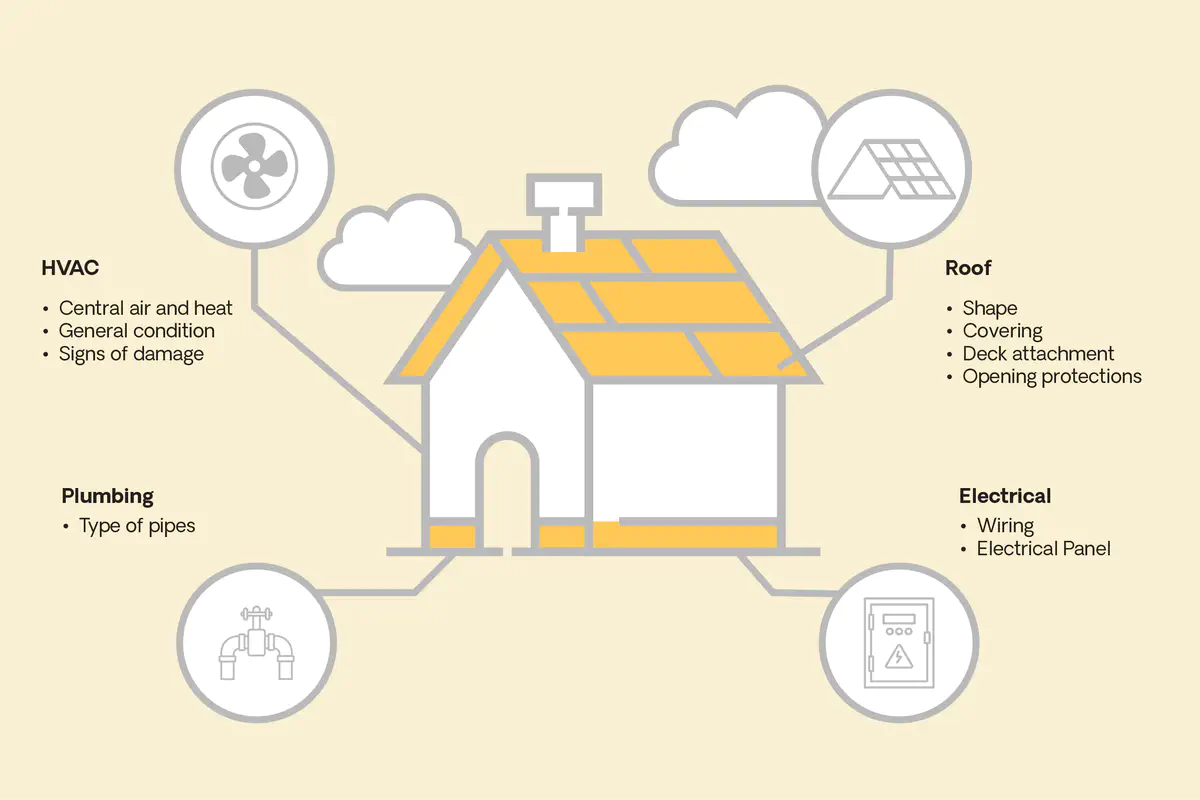
A 4-point inspection specifically zeroes in on four key areas of a dwelling. Unlike a full home inspection, which covers hundreds of items, the 4-point inspection is designed to quickly identify major concerns within these critical systems that could lead to significant insurance claims or safety hazards in any form of accommodation.
The Roof: Your First Line of Defense
The roof is arguably the most crucial component for any accommodation, offering protection from Florida’s intense sun and frequent rainfall. During a 4-point inspection, the inspector evaluates the roof’s overall condition, material, approximate age, and any visible signs of damage, leaks, or significant wear and tear. They look for missing shingles, cracked tiles, sagging sections, or evidence of past repairs. The remaining useful life of the roof is a key factor; if an inspector determines the roof has less than a certain number of years (e.g., three to five) of life left, insurance companies may deny coverage or require replacement before issuing a policy. A sound roof is essential for maintaining a dry, safe, and comfortable interior, directly impacting the quality of the accommodation.
HVAC System: Comfort and Air Quality
Florida’s climate makes a functional heating, ventilation, and air conditioning (HVAC) system not just a luxury but a necessity for comfortable accommodation. The inspection assesses the HVAC unit’s make, model, age, and general operational condition. Inspectors check for obvious signs of malfunction, proper temperature output, and visible leaks or damage. They also note the unit’s estimated lifespan. An old or malfunctioning HVAC system can lead to uncomfortable living conditions, excessive energy bills, and even potential health issues due to poor air quality, all of which detract from the desirability and habitability of the accommodation. Ensuring the HVAC system is in good working order is key to a pleasant stay.
Plumbing System: The Lifelines of a Home
The plumbing system is vital for providing fresh water and safely removing wastewater, making it an indispensable part of any modern accommodation. The 4-point inspection examines the type of plumbing materials used (e.g., copper, PVC, polybutylene), the condition of visible pipes, water heaters, and fixtures, looking for leaks, corrosion, or inadequate drainage. Particular attention is paid to the water heater’s age and condition, as older units can pose a significant flood risk. Certain older piping materials, like polybutylene, are known for their propensity to fail, leading to catastrophic water damage and expensive repairs, which are major red flags for insurers. A robust plumbing system is critical for health, hygiene, and preventing structural damage within the accommodation.
Electrical System: Powering Your Stay
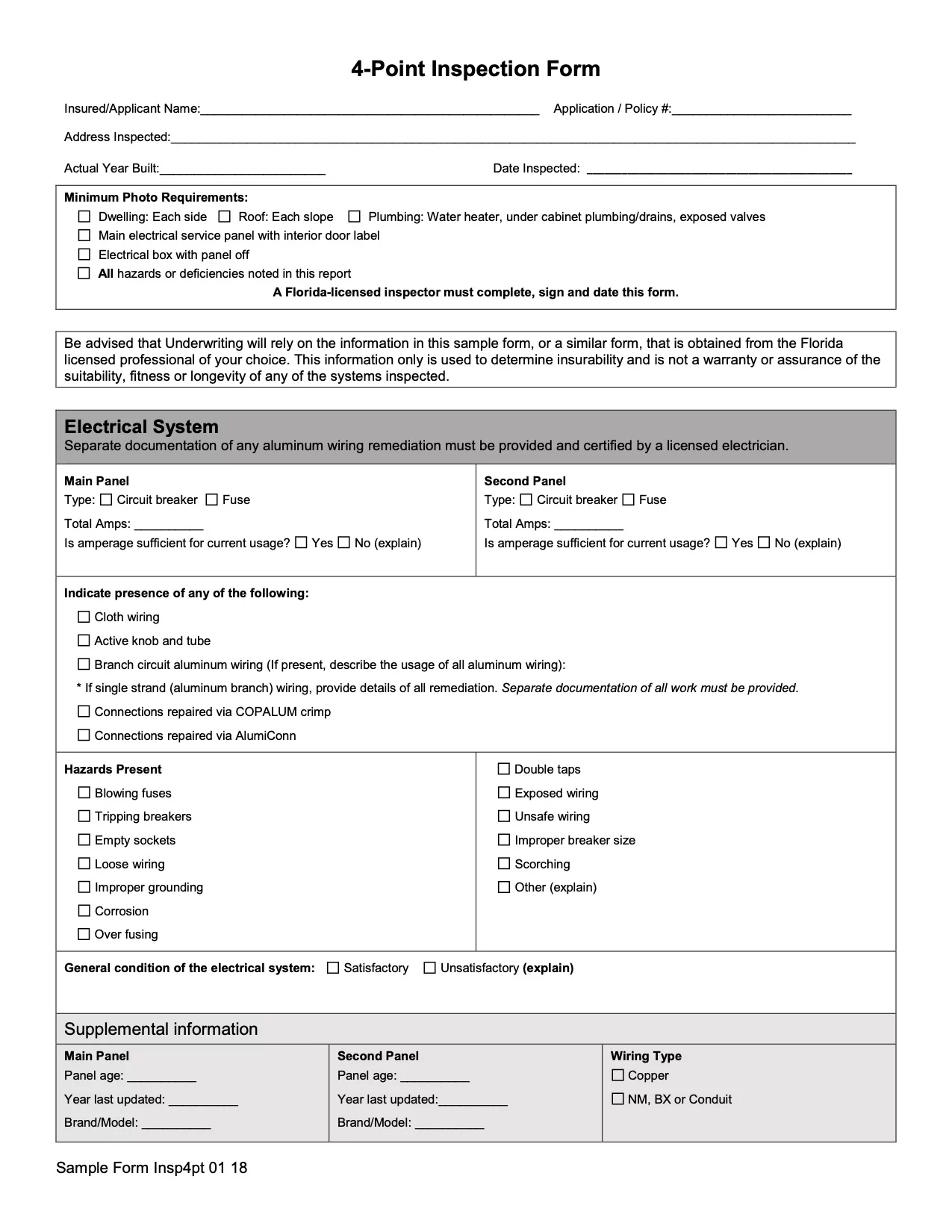
In today’s interconnected world, a safe and reliable electrical system is non-negotiable for any accommodation. The inspection evaluates the electrical panel (breaker box), wiring types (e.g., copper, aluminum, knob and tube), and the presence of any outdated or hazardous systems. Inspectors look for signs of overheating, improper wiring, inadequate grounding, and the general condition of outlets and switches. Older homes in Florida might have outdated wiring systems, like aluminum wiring or fuse boxes, which can pose significant fire hazards and are often a concern for insurance carriers. Ensuring the electrical system is up to current safety standards is paramount for the safety of occupants and the prevention of property damage within the accommodation.
Who Needs a 4-Point Inspection and Why?
The necessity of a 4-point inspection extends across several stakeholder groups within the Florida accommodation ecosystem, each with unique reasons for requiring this specific assessment.

Prospective Homebuyers and Long-Term Renters
For individuals looking to purchase a home in Florida, particularly one that is 30 years old or more, a 4-point inspection is almost always a requirement by their insurance provider. Without a satisfactory inspection report, obtaining homeowners insurance—a prerequisite for most mortgages—becomes challenging or impossible. This directly impacts their ability to secure the accommodation. Even for long-term renters, while they may not directly commission the inspection, understanding its importance can give them confidence that the property owner has taken steps to ensure the dwelling is insurable and, by extension, reasonably safe and well-maintained. It offers an additional layer of due diligence beyond a standard rental walkthrough, ensuring the accommodation they plan to occupy is sound.
Property Owners Seeking Insurance Coverage
Existing property owners in Florida, especially those with older homes, will frequently find themselves needing a 4-point inspection when renewing their insurance policy or switching carriers. Insurers use this report to assess the current risk profile of the property. A favorable report can lead to policy renewal or the ability to secure new coverage, ensuring the continued financial protection of their accommodation asset. Conversely, an unfavorable report might necessitate repairs or upgrades before coverage is granted or renewed, ensuring the property meets minimum safety and structural standards for ongoing accommodation.
The Impact on Investment Properties and Vacation Rentals
For investors eyeing the Florida market for long-term rental properties or short-term vacation rentals (like those in Orlando or Miami Beach), a 4-point inspection is an indispensable tool. It helps evaluate the property’s insurable status, which directly impacts the operational costs and potential profitability of the accommodation. A property with failing systems means immediate capital expenditures, which can erode investment returns. For vacation rentals, a well-maintained property, confirmed by such an inspection, ensures guest safety and comfort, contributing to positive reviews and sustained occupancy rates. It’s about protecting the asset and ensuring it consistently provides reliable accommodation.
Navigating the Inspection Process and Its Outcomes
Understanding how a 4-point inspection is conducted and what to expect from its results is crucial for anyone involved in Florida accommodation.
Finding a Qualified Inspector in Florida
The first step is to engage a qualified, licensed home inspector who has experience with 4-point inspections in Florida. It’s important to choose an inspector recognized by insurance companies, as their report will be the basis for underwriting decisions. Recommendations from real estate agents, insurance agents, or legal professionals are often a good starting point. Ensure the inspector provides a detailed, written report that clearly outlines their findings for each of the four systems, including photographs when necessary. Clarity and professionalism in the report are paramount for insurance approval, securing your accommodation.
What Happens After the Inspection?
Once the inspection is complete, the inspector will issue a report detailing the condition of the roof, HVAC, plumbing, and electrical systems. Each system will typically be described as “satisfactory,” “marginal,” or “unsatisfactory.” If any system is deemed “unsatisfactory” or “marginal,” the report will explain why, often recommending specific repairs or replacements. This report is then submitted to the insurance company. Based on its findings, the insurer will decide whether to offer coverage, deny coverage, or offer conditional coverage pending repairs. This decision directly dictates the insurability of the accommodation.
Addressing Deficiencies and Securing Accommodation
Should the 4-point inspection reveal deficiencies, immediate action is often required to secure insurance coverage and ensure the accommodation is safe. This means budgeting for and undertaking necessary repairs or replacements. For example, if the roof has less than three years of life remaining, a full roof replacement might be mandated. After repairs are completed, a licensed contractor typically provides invoices and permits, which are then submitted to the insurance company, sometimes requiring a follow-up inspection to confirm the work was done to standard. Successfully addressing these issues is key to making the property an insurable and habitable accommodation.
Beyond the Basics: Long-Term Implications for Florida Accommodation
A 4-point inspection offers more than just a snapshot for insurance purposes; it provides long-term benefits for the safety, value, and viability of accommodation in Florida.
Enhancing Safety and Value
By identifying and rectifying issues with critical home systems, a 4-point inspection directly contributes to enhancing the safety of the dwelling for its occupants. Addressing electrical hazards prevents fires, fixing plumbing leaks prevents water damage and mold, and maintaining a sound roof protects the entire structure. These proactive measures not only reduce the risk of accidents and large-scale damage but also significantly preserve and often increase the property’s market value. A well-maintained and insurable property is a more valuable asset in the Florida real estate and accommodation market.
Future-Proofing Your Florida Dwelling
Regular 4-point inspections, or at least being aware of their requirements, encourages property owners to proactively maintain their dwellings. This preventative approach helps future-proof the accommodation against potential breakdowns and costly emergency repairs. By upgrading older systems to modern standards, property owners can improve energy efficiency, reduce utility costs, and comply with evolving building codes. This foresight ensures the accommodation remains attractive, functional, and economically viable for years to come.
Peace of Mind for Residents and Property Managers
Ultimately, a satisfactory 4-point inspection provides peace of mind for everyone involved with Florida accommodation. For residents, it’s the assurance that their living space is safe, properly insured, and maintained to a reasonable standard. For property managers and owners, it’s the confidence that their asset is protected, compliant with insurance requirements, and less likely to incur unforeseen, major expenses. In a state where natural elements and aging infrastructure pose constant challenges, the 4-point inspection serves as a critical tool, ensuring the continued habitability and security of countless Florida accommodations.
LifeOutOfTheBox is a participant in the Amazon Services LLC Associates Program, an affiliate advertising program designed to provide a means for sites to earn advertising fees by advertising and linking to Amazon.com. Amazon, the Amazon logo, AmazonSupply, and the AmazonSupply logo are trademarks of Amazon.com, Inc. or its affiliates. As an Amazon Associate we earn affiliate commissions from qualifying purchases.