
Orlando, often dubbed “The Theme Park Capital of the World,” beckons millions of travelers each year with its promise of magic, adventure, and unforgettable experiences. From the enchanting realms of the Walt Disney World Resort to the thrilling spectacles of the Universal Orlando Resort, and myriad other attractions, this central Florida city offers an unparalleled array of activities. However, for any traveler planning a journey to this vibrant destination, understanding the local weather is paramount. The climate in Orlando can significantly influence everything from your packing choices and daily itinerary to your overall comfort and enjoyment. Far from a uniform experience, Orlando’s weather exhibits distinct seasonal variations, primarily characterized by its subtropical nature, abundant sunshine, and high humidity, punctuated by periods of significant rainfall and the occasional threat of tropical systems. Delving into the nuances of Orlando’s climate will equip you with the insights needed to plan a truly seamless and magical vacation, no matter when you choose to visit this beloved Florida gem.
Orlando’s Subtropical Charm: An Overview of Its Distinct Climate
At its core, Orlando enjoys a humid subtropical climate, a classification that immediately hints at warm temperatures for much of the year and ample moisture. This inland location in central Florida, approximately an hour’s drive from either the Atlantic or Gulf coasts, means it avoids the direct cooling effects of sea breezes that coastal cities might experience. Instead, Orlando is influenced by air masses that typically bring warmth and humidity from the Gulf of Mexico or the Atlantic Ocean. The city’s weather is largely predictable, characterized by long, hot, and humid summers, and short, mild winters. Sunshine is a consistent feature, with Orlando boasting over 230 sunny days per year, making it an ideal destination for outdoor activities and theme park adventures, provided you’re prepared for the accompanying warmth.
Year-Round Sunshine and Humidity
One of the most defining characteristics of Orlando’s weather is its generous allocation of sunshine. Even during its wetter periods, sunny intervals are common, ensuring that bright skies are a frequent sight. This abundant solar radiation contributes to the generally warm temperatures experienced throughout the year. Hand-in-hand with the sunshine, humidity plays a significant role in Orlando’s climate. While present year-round, humidity levels skyrocket during the summer months, often making the already high temperatures feel even more intense. This atmospheric moisture contributes to the lush green landscapes surrounding the city and fuels the frequent afternoon thunderstorms that become a hallmark of the summer season. Travelers should be prepared for this pervasive humidity, particularly if visiting between June and September, as it can affect comfort levels and necessitate hydration and strategic breaks from outdoor activities.
Average Temperatures and Precipitation Patterns
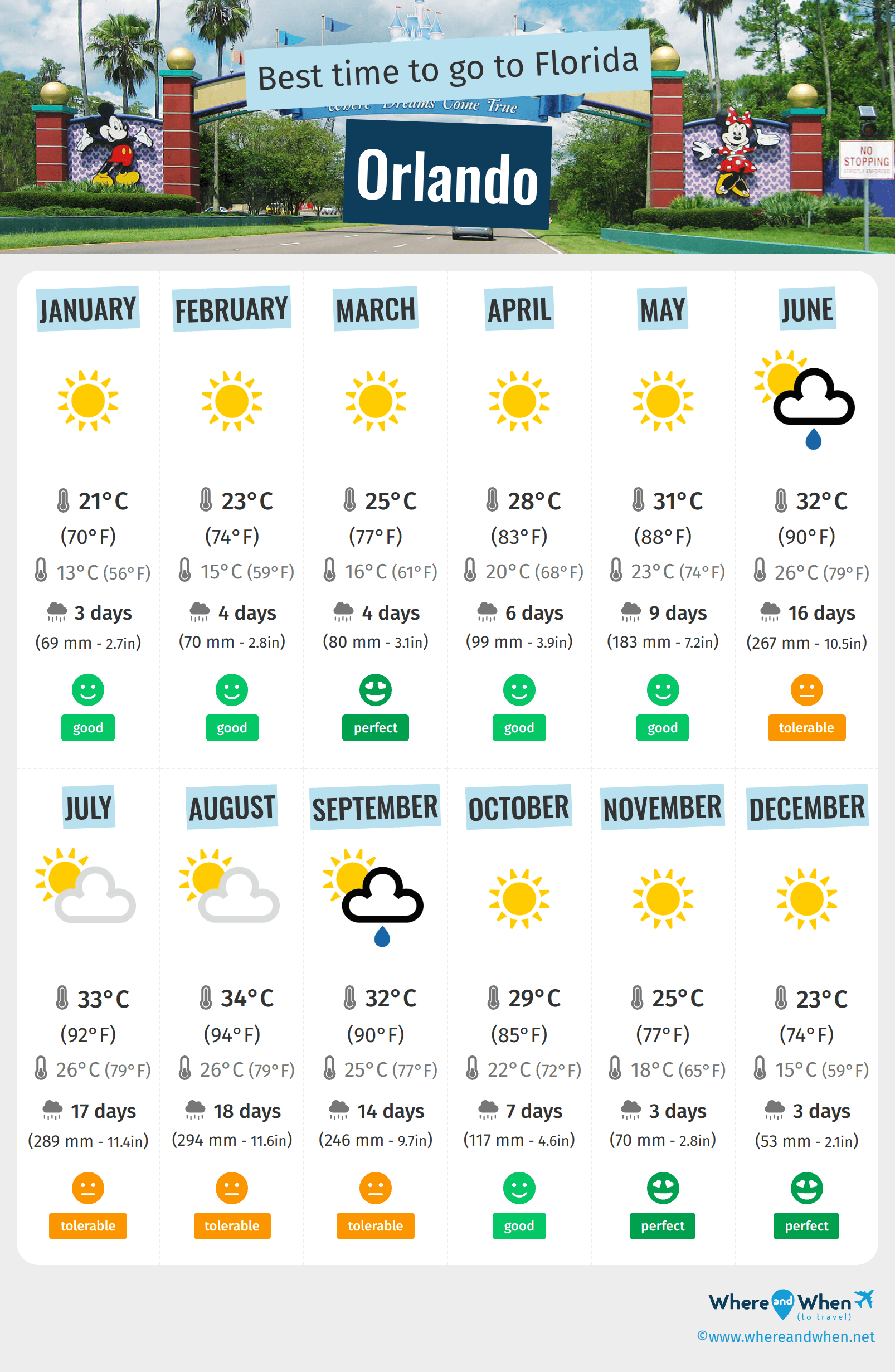
Understanding the typical temperature and rainfall patterns is crucial for planning your trip. Temperatures in Orlando rarely dip below freezing, with average daily highs ranging from the low 70s°F (around 22°C) in winter to the low 90s°F (around 33°C) in summer. Nighttime lows vary from the 50s°F (10-15°C) in winter to the mid-70s°F (24-25°C) in summer. These consistent warm temperatures make Orlando an attractive escape for those fleeing colder climates.
Rainfall, while substantial, follows a distinct pattern. The wettest months are typically June through September, coinciding with the peak of summer and hurricane season. During this period, daily afternoon thunderstorms are a common occurrence, often rolling in quickly, dropping heavy rain for an hour or so, and then clearing to leave clear skies. These showers, while intense, are usually brief and localized, providing a temporary respite from the heat and contributing to over half of Orlando’s annual precipitation. The dry season, stretching from October to May, sees significantly less rainfall, with cooler, more stable conditions prevailing.
The Impact of Geographic Location
Orlando’s inland position, though still within peninsular Florida, means it experiences slightly greater temperature extremes than coastal areas. Without the moderating influence of ocean waters, summer temperatures can soar higher, and winter nights can occasionally feel cooler, although severe freezes are rare. This location also places Orlando squarely in the path of potential tropical systems originating in the Atlantic or the Gulf of Mexico. While direct hurricane landfalls are less frequent compared to coastal cities, the threat of heavy rain, strong winds, and localized flooding from such systems is a consideration during the latter half of the year. Travelers benefit from a robust early warning system and established protocols in the event of severe weather, making informed planning essential for visits during hurricane season.
Navigating Orlando’s Seasons: A Traveler’s Guide
Each season in Orlando offers a unique travel experience, shaped directly by its distinct weather patterns. Understanding these seasonal shifts allows travelers to optimize their trip, from packing the right attire to choosing the best time for specific activities.
Winter Wonderland (December to February): Mild & Delightful
Winter in Orlando is arguably the most pleasant season, attracting visitors seeking refuge from colder climates. Temperatures are wonderfully mild, with average highs in the low to mid-70s°F (21-24°C) and comfortable lows in the 50s°F (10-15°C). Humidity is at its lowest, and rainfall is minimal, making for clear, crisp days. This period is ideal for extensive outdoor exploration, long days at theme parks without oppressive heat, and enjoying outdoor dining or golf. While daytime can be warm enough for short sleeves, evenings and early mornings often require a light jacket or sweater. Crowds can be heavier around holiday periods (Christmas, New Year’s, President’s Day), but generally, this season offers the most comfortable weather for enjoying all that Orlando has to offer.
Spring’s Gentle Embrace (March to May): Warming Up
As winter fades, Orlando transitions into spring, a period characterized by gradually increasing temperatures and humidity. March and April still offer very comfortable conditions, with highs typically in the upper 70s to low 80s°F (25-29°C). By May, the city begins to feel the first hints of summer, with temperatures often climbing into the upper 80s°F (around 31°C) and humidity becoming more noticeable. Rainfall remains relatively low compared to summer, although occasional showers might occur. Spring Break periods and Easter can bring significant crowds, but the weather generally remains fantastic for theme park visits and outdoor activities. It’s a great shoulder season for those who want warmth without the full intensity of summer.
Summer’s Fiery Peak (June to August): Hot, Humid, and Stormy
Summers in Orlando are defined by heat, humidity, and frequent afternoon thunderstorms. Daily highs consistently reach the low 90s°F (32-34°C), with “feels like” temperatures often pushing higher due to the oppressive humidity. Nighttime lows remain warm, in the mid-70s°F (24-25°C). The hallmark of summer is the predictable pattern of short, intense thunderstorms that typically roll in during the afternoon, often between 2 PM and 5 PM. While they can disrupt outdoor plans temporarily, they usually pass quickly, leaving cooler, refreshed air in their wake. This is also the beginning of hurricane season. Travelers visiting during this period should prioritize hydration, sun protection, and plan for indoor activities or water park visits during the hottest parts of the day. Despite the heat, summer is peak season for family travel due to school holidays, making strategic planning for theme parks essential.

Autumn’s Pleasant Retreat (September to November): Cooling Down and Quieter
Autumn in Orlando serves as a welcome transition, offering a gradual cool-down and a decrease in humidity, though it still falls within hurricane season. September and early October can still feel quite summery, with highs in the upper 80s°F (around 31°C) and lingering humidity and afternoon storms. However, by late October and November, conditions become increasingly pleasant. Average highs drop into the low to mid-70s°F (21-24°C), humidity levels fall, and the frequency of rain significantly decreases. This period, especially after the initial hurricane threats subside, offers a fantastic balance of comfortable temperatures, fewer crowds (outside of holiday weekends like Thanksgiving), and a great atmosphere for theme park enjoyment. It’s often considered another prime time to visit, combining good weather with manageable crowds.
Understanding Tropical Systems: Hurricane Season in Focus
While Orlando’s inland location offers some protection, the threat of tropical storms and hurricanes is a real consideration for travelers visiting between June 1st and November 30th – the official Atlantic hurricane season. It’s crucial for travelers to understand what this means for their trip planning.
What is Hurricane Season?
Hurricane season is the period when conditions in the Atlantic Ocean, Caribbean Sea, and Gulf of Mexico are most conducive to the formation of tropical cyclones. These systems range from tropical depressions and storms, which can bring heavy rain and strong winds, to full-blown hurricanes, which pose more severe threats. While Orlando is about an hour’s drive from either coast, it can still experience significant impacts from these storms, including sustained high winds, torrential rainfall leading to flooding, and power outages. The peak of the season typically occurs from mid-August through late October.
Preparedness and Travel Assurance
For travelers, being aware of hurricane season doesn’t mean canceling your trip automatically. Millions visit Florida safely during this period. However, preparedness is key. It’s highly advisable to purchase travel insurance that specifically covers weather-related cancellations or interruptions. Many hotels and theme parks, particularly in Orlando, also have “hurricane policies” that allow for fee-free changes or cancellations if a hurricane warning is issued for the area or your home region. Always monitor official weather forecasts from sources like the National Hurricane Center (NHC) and local news outlets in the days leading up to and during your trip.
Impact on Travel Plans
Should a tropical storm or hurricane threaten Orlando, the most immediate impacts on travel can include flight delays or cancellations, closure of theme parks and attractions, and disrupted ground transportation. If a major storm is imminent, authorities may issue evacuation orders for coastal areas, which could affect travel routes to Orlando. However, the advanced warning systems in place typically provide ample time for travelers to make informed decisions, whether that means adjusting travel dates, securing alternative accommodations, or preparing for temporary closures. Staying informed and flexible are the best defenses against potential disruptions during hurricane season.
Practical Tips for Weather-Proofing Your Orlando Trip
Regardless of when you visit, a few practical tips can ensure that Orlando’s weather enhances, rather than detracts from, your travel experience. Being prepared allows you to focus on the fun and magic.
Packing Essentials for Every Season
Your packing list will be heavily influenced by the time of year you travel:
- Summer (June-August): Lightweight, breathable clothing is a must. Think shorts, t-shirts, sundresses. A reusable water bottle is essential for hydration. Crucially, pack rain gear – a lightweight poncho or compact umbrella is indispensable for afternoon showers. Comfortable, water-resistant shoes are also a good idea.
- Winter (December-February): While days are mild, evenings can be cool. Pack layers: t-shirts for daytime, and a light jacket, sweater, or fleece for mornings and evenings. Long pants are generally comfortable.
- Spring (March-May) & Autumn (September-November): These shoulder seasons call for versatility. Pack a mix of summer wear and light layers. A light jacket might be useful for cooler evenings in spring and early autumn. Rain gear is still a good idea, especially in early autumn.
- Year-Round: Regardless of the season, comfortable walking shoes are paramount for navigating theme parks. Sunscreen, sunglasses, and a wide-brimmed hat are also non-negotiable given Orlando’s abundant sunshine.
Hydration and Sun Protection Strategies
The Florida sun is strong, and dehydration can quickly impact your enjoyment, especially in warmer months.
- Hydrate Constantly: Drink plenty of water throughout the day. Theme parks offer water fountains, and many quick-service restaurants will provide free cups of ice water. Consider bringing a reusable water bottle.
- Sunscreen Application: Apply broad-spectrum sunscreen with an SPF of 30 or higher generously and reapply every two hours, or more often if sweating or after water rides. Don’t forget often-missed spots like ears, neck, and the tops of your feet.
- Seek Shade: Take regular breaks in air-conditioned shops, restaurants, or under shaded areas. This is particularly important during the hottest parts of the day.
- Wear Protective Gear: Hats and sunglasses offer additional protection for your face and eyes. UV-protective clothing can also be a smart investment.
Embracing the Afternoon Shower
For summer visitors, afternoon thunderstorms are a part of the Orlando experience. Instead of letting them dampen your spirits, embrace them as a brief interlude:
- Be Prepared: Always carry a poncho or umbrella. They are much cheaper if purchased before arriving at the theme parks.
- Strategic Planning: Use the time during a downpour for indoor activities – grab a meal, explore a gift shop, or catch an indoor show. Some shorter lines might even form for rides as people scatter for cover.
- Cooling Relief: The rain often brings a temporary drop in temperature and a refreshing break from the heat, making it more comfortable to resume outdoor activities afterward.

Maximizing Theme Park Visits
Weather profoundly impacts the theme park experience.
- Early Mornings/Late Evenings: Utilize the cooler parts of the day for popular outdoor rides and attractions. Crowds also tend to be lighter at opening and closing times.
- Water Parks: If visiting during the hot summer months, incorporating a water park day (e.g., Typhoon Lagoon or Blizzard Beach at Walt Disney World Resort, or Volcano Bay at Universal Orlando Resort) can be a fantastic way to beat the heat.
- Flexibility is Key: Be prepared to adapt your plans if sudden weather changes occur. Orlando parks are excellent at managing weather-related closures and reopenings.
In conclusion, Orlando’s weather is an integral part of its charm and challenge. With its predominantly sunny, warm, and humid climate, distinct seasonal shifts, and the occasional drama of hurricane season, being informed and prepared is the traveler’s best asset. By understanding what to expect and packing accordingly, you can navigate the sunshine, showers, and heat with ease, ensuring your trip to this magical Florida destination is as enchanting as you’ve always dreamed.
LifeOutOfTheBox is a participant in the Amazon Services LLC Associates Program, an affiliate advertising program designed to provide a means for sites to earn advertising fees by advertising and linking to Amazon.com. Amazon, the Amazon logo, AmazonSupply, and the AmazonSupply logo are trademarks of Amazon.com, Inc. or its affiliates. As an Amazon Associate we earn affiliate commissions from qualifying purchases.