
Florida, often affectionately known as the Sunshine State, conjures images of endless beaches, vibrant tropical landscapes, and perpetual warmth. For millions of visitors each year, it’s the ultimate escape from the bitter chill of northern winters, a sanctuary where palm trees sway under azure skies even in January. The idea of snow blanketing its shores seems almost an oxymoron, a meteorological anomaly that defies the very essence of its tropical allure. Yet, despite its reputation, snow has, on rare and memorable occasions, graced parts of Florida, leaving behind fleeting moments of wonder and disbelief. For travelers accustomed to temperate climates, the question “When did it snow last in Florida?” often comes with a mix of curiosity and skepticism, a testament to the state’s powerful brand as a sun-drenched paradise. Delving into the annals of Florida’s weather history reveals a fascinating narrative of rare occurrences, climatic exceptions, and the enduring human fascination with the extraordinary. Understanding these infrequent events not only offers a deeper appreciation of the state’s unique climate but also highlights the sheer unlikelihood, and thus the specialness, of a Florida snowfall. It’s a reminder that even in the most predictable of environments, nature can occasionally deliver a spectacular, albeit temporary, surprise, shaping local lore and creating indelible memories for those fortunate enough to witness such a rare spectacle.

A Rarity in the Sunshine State: The History of Florida Snowfall
The history of snow in Florida is less a chronicle of regular occurrences and more a collection of remarkable anecdotes. Given its geographical position and the prevailing warm currents, Florida is fundamentally unsuited for consistent snowfall. When it does snow, it’s usually in the northernmost parts of the state, often as a light dusting or flurries that melt almost immediately upon contact with the relatively warm ground. True accumulation, where snow settles and remains for any significant period, is an event of such rarity that it often becomes headline news and a treasured memory for those who experience it. These events are typically the result of an unusual confluence of cold air masses plunging deep into the southeastern United States combined with sufficient moisture, a scenario that is infrequent for a subtropical climate. For travelers planning a winter getaway, this historical perspective reaffirms that snow is certainly not something to pack for when visiting Florida; rather, it is a fascinating historical footnote that underscores the state’s exceptional warmth. The historical record, while sparse, paints a vivid picture of how Floridians react to such a foreign phenomenon, often with excitement and wonder, turning rare winter storms into community-wide spectacles.
Early Accounts and Anecdotes
The earliest recorded snowfalls in Florida trace back centuries, with varying degrees of verifiable detail. One of the most often cited early accounts dates back to 1774, when a “great snow” was reported in parts of the state. Another notable historical mention is from January 1800, when a heavy snowfall apparently extended as far south as St. Augustine, though precise measurements are, of course, unavailable from that era. These early accounts, often preserved in diaries or local chronicles, paint a picture of astonishment among residents who were largely unfamiliar with such winter phenomena. Fast forward to the late 19th century, and the records become a little clearer. In February 1899, a historic cold wave gripped much of the United States, bringing snow to nearly all of Florida. This event was particularly significant as it brought measurable snow to cities as far south as Fort Myers and Tampa, with reports of several inches accumulating in parts of North Florida. Such an event was catastrophic for the state’s burgeoning citrus industry but left an indelible mark on its weather history, becoming a benchmark against which all future cold events would be measured. These early narratives serve as a reminder of nature’s unpredictable power and the deep-seated human desire to document and understand extraordinary events, especially those that defy the expected climatic norms of a beloved travel destination.
Notable Snow Events of the 20th Century
The 20th century saw a few more instances of Florida experiencing snow, albeit still very rarely. Perhaps the most widespread and memorable event prior to the late 20th century occurred on February 13, 1899, often referred to as the “Great Blizzard of 1899” or the “Great Arctic Outbreak.” While not a blizzard for Florida, it brought measurable snowfall to the entire state, reaching as far south as Miami where traces were reported. In Jacksonville, several inches accumulated, causing significant disruption. Later, in the 1950s, isolated reports of flurries emerged, but these were typically minor and localized. The 1970s, however, would witness another truly historic snowfall event that remains vivid in the memories of many Floridians. These instances, though few and far between, underscore the point that while snow is almost non-existent in Florida, it is not entirely impossible, adding a unique, albeit remote, chapter to the state’s travel narrative. Each snowfall event, no matter how minor, tends to be etched into the collective memory, often recounted with a sense of wonder and novelty, becoming part of the local lore that characterizes Florida’s unique charm. They are rare gifts from nature, momentary transformations of the familiar into something utterly unexpected and beautiful.
The Most Recent Flurries: A Detailed Look at Modern Snow Events
While snow in Florida is historically infrequent, the memory of modern snow events remains particularly sharp, especially for those who experienced them. These instances are often the result of exceptionally strong cold fronts dipping far south, combining with just enough moisture to create the conditions for precipitation to fall as snow rather than rain. For a state renowned for its warmth, these occurrences are not merely weather phenomena; they are cultural touchstones, moments when the subtropical landscape briefly takes on a Northern veneer, much to the surprise and delight of residents and a few lucky travelers. Each modern snowfall, no matter how light, typically generates immense excitement, proving that even in a place defined by sunshine, the allure of a white landscape holds a special magic. These events serve as a stark reminder of the dynamic nature of global weather patterns and the occasionally surprising ways they can impact even the most climatically consistent destinations, offering a unique perspective on Florida’s typically sunny disposition.
The 1977 Great Florida Snowfall
Without a doubt, the most famous and widespread modern snowfall in Florida’s history occurred on January 19, 1977. This was an unprecedented event that brought measurable snow to parts of the state that had never seen it before, or at least not in living memory. For the first time on record, snow fell in Miami Beach and parts of South Florida. The cold front was so intense that it brought snow flurries and even some accumulation to areas like Homestead and Fort Lauderdale. Further north, cities like Tampa, Orlando, and Jacksonville saw accumulations ranging from trace amounts to a few inches. The sight of snow on palm trees and citrus groves was surreal, generating immense excitement and disbelief across the state. Schools closed, and children, many seeing snow for the very first time, rushed outside to experience the phenomenon. This event is etched into the collective memory of Floridians, often recounted with a sense of wonder and disbelief, serving as a benchmark for extreme cold weather in the Sunshine State. It remains a unique piece of Florida’s travel lore, a truly once-in-a-lifetime experience for many who witnessed it.
Scattered Snow and Ice in the New Millennium
While the 1977 event remains the most significant, the new millennium has also brought a few isolated instances of snow and ice to parts of Florida. These have predominantly occurred in the northern panhandle, the region of the state closest to typical winter weather patterns of the rest of the southeastern United States. In December 2010, for example, a winter storm brought a mix of freezing rain and sleet to the Florida Panhandle, causing travel disruptions, particularly around Pensacola and Tallahassee. While not widespread fluffy snow, it was enough to highlight the vulnerability of infrastructure not designed for icy conditions. Similarly, in January 2014, parts of North Florida and Central Florida experienced freezing rain and sleet, leading to hazardous road conditions and temporary closures. These events, while less dramatic than a widespread snowfall, serve as reminders that winter weather, in its various icy forms, is not entirely alien to the northern reaches of the state, occasionally impacting travel plans for those in the region.
The January 2018 Event: A Glimmer of White
The most recent notable snow event in Florida occurred on January 3, 2018. This particular cold snap brought snow flurries to parts of North Florida, including Tallahassee, the state capital. It was the first time Tallahassee had seen measurable snow in nearly three decades, with reports of up to 0.1 inches accumulating on surfaces. The rare sight caused considerable excitement, with residents flocking outdoors to capture photos of snow dusting streets, cars, and vegetation. While the accumulation was minimal and short-lived, it was undeniably snow, bringing a momentary touch of winter wonderland to a city accustomed to mild winters. The event also impacted nearby areas in the Florida Panhandle, though effects were generally localized. For any traveler in the region at the time, it was a truly unique experience, an unexpected addition to their Florida travelogue, proving that even in the modern era, the Sunshine State can occasionally deliver a genuine winter surprise. This event, like others before it, became a widely shared moment on social media, further cementing its place in the state’s fascinating weather history.
Why So Little Snow? Understanding Florida’s Climate
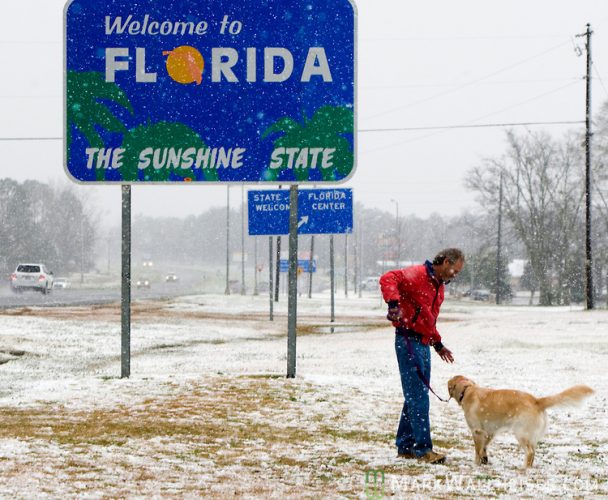
The rarity of snow in Florida is not a matter of chance but a direct consequence of its unique geographical positioning and prevailing meteorological conditions. Florida’s climate is predominantly subtropical, bordering on tropical in its southernmost regions, particularly around Key West. This climate zone is characterized by warm temperatures year-round, high humidity, and abundant rainfall, conditions fundamentally antithetical to the formation and persistence of snow. For travelers seeking reliable warmth, this climatic consistency is precisely Florida’s primary appeal, ensuring that their holiday expectations are almost always met with sunny skies and comfortable temperatures, especially during the northern hemisphere’s winter months. Understanding these climatic factors helps contextualize the infrequency of snow and reinforces why Florida remains a premier travel destination for those looking to escape the cold. It’s a testament to the powerful influence of global weather systems and ocean currents that shape regional climates, creating distinct environmental experiences across the globe.
Geographical Positioning and Warm Currents
Florida’s latitude places it far enough south that it rarely experiences the prolonged periods of frigid air necessary for snow. The state is essentially a peninsula, bordered by the warm waters of the Atlantic Ocean to the east and the Gulf of Mexico to the west. These vast bodies of water act as natural insulators, moderating temperatures and preventing extreme cold from lingering. The powerful Gulf Stream, a warm ocean current flowing from the Gulf of Mexico up the Atlantic coast of North America, further contributes to Florida’s mild winter temperatures, particularly along its eastern coastline. When cold fronts do penetrate the state, they typically lose much of their intensity over these warm waters before reaching the peninsula, and any associated precipitation usually falls as rain. This unique geographic setup is the cornerstone of Florida’s enduring appeal as a winter travel destination, guaranteeing warmth and sunshine when much of the continent is covered in snow.
Atmospheric Conditions Required for Snow
For snow to fall and accumulate, very specific atmospheric conditions must be met: the air temperature from the clouds all the way down to the ground must be at or below freezing (32°F or 0°C), and there must be sufficient moisture in the atmosphere. In Florida, while cold air masses can occasionally push temperatures down to freezing, especially in the northern counties, the crucial second condition—sufficient moisture at these freezing temperatures—is often lacking, or the cold air doesn’t extend consistently through the entire atmospheric column. More often, when temperatures drop low enough, any precipitation falls as sleet or freezing rain rather than actual snowflakes. The tropical moisture that typically defines Florida’s climate usually means that when temperatures approach freezing, the air is not dry enough for the super-cooled water droplets to turn directly into ice crystals that form snowflakes; instead, they often turn into liquid precipitation that freezes upon contact with sub-freezing surfaces (freezing rain) or small ice pellets (sleet). This delicate balance of temperature and moisture is rarely achieved for true snowfall in most parts of the state, further solidifying Florida’s reputation as a snow-free sanctuary.
Experiencing a Florida “Winter”: Beyond the Snow
For the overwhelming majority of visitors, a Florida “winter” is defined not by snow, but by crisp, comfortable temperatures, low humidity, and an abundance of sunshine—a stark contrast to the harsh winters found in many other parts of North America. This period, typically from November through April, is considered peak travel season, and for good reason. It’s when the weather is most pleasant for outdoor activities, offering a refreshing break from the sweltering heat of summer. Tourists flock to the state precisely for this reliable climate, seeking to exchange snow shovels for sandals and winter coats for swimsuits. The notion of a Florida winter, therefore, is an attractive proposition for anyone looking to maximize their outdoor enjoyment and escape the typical trappings of cold weather, making it a prime travel destination during these months.
Cold Snaps and Freezing Temperatures
While snow is almost unheard of, Florida does experience “cold snaps.” These are brief periods where temperatures can drop significantly, especially overnight. In North Florida, nighttime lows can dip into the 20s (°F), occasionally even pushing south into Central Florida, causing concern for agricultural interests like citrus and ornamental plants. However, these cold spells are typically short-lived, with daytime temperatures usually rebounding quickly into the 50s or 60s (°F), bringing back the pleasant, sunny conditions that characterize a Florida winter. Even during these cooler periods, the sun usually shines brightly, making outdoor activities perfectly enjoyable with just a light jacket. Travelers should be aware that while packing a heavy coat is unnecessary, a sweater or light jacket for evenings, particularly in January and February, can be a wise addition to their Florida wardrobe.
Winter Activities and Attractions
The mild Florida winter is ideal for exploring the state’s countless attractions and engaging in outdoor activities. Theme parks like Walt Disney World and Universal Orlando Resort are bustling, offering comfortable temperatures for navigating crowded parks. Golf courses are in prime condition, drawing enthusiasts from around the globe. Beaches, while not always hot enough for swimming, are perfect for sunbathing, walks, and shell collecting. Wildlife viewing is also excellent during winter, as many migratory birds flock to Florida’s wetlands, and manatees gather in warm spring waters. Everglades National Park becomes more accessible with lower humidity and fewer mosquitoes. From airboat rides to visiting the Kennedy Space Center Visitor Complex, the opportunities for adventure and relaxation are boundless, all under the state’s signature sunny skies. This season is truly the sweet spot for travel in Florida, offering optimal conditions for nearly every type of outdoor experience.
The Appeal of a Snowless Winter for Travelers
For countless travelers, the very idea of a snowless winter is the core of Florida’s enduring appeal. It’s not just about avoiding snow; it’s about embracing an entirely different way of experiencing the colder months. The promise of warmth, sunshine, and boundless outdoor activities transforms winter from a period of hibernation into an opportunity for rejuvenation and adventure. This fundamental distinction positions Florida as a top-tier travel destination for those actively seeking to escape traditional winter woes. Its consistent climate allows for reliable planning and minimizes the risk of weather-related disruptions, making it an ideal choice for both spontaneous getaways and meticulously planned vacations. The psychological boost of sunshine during darker months is also a significant draw, contributing to the state’s reputation as a haven of well-being and endless summer.
Escaping the Northern Chill
The primary motivation for many visitors to Florida during winter is the simple desire to escape the cold, ice, and snow that grip much of North America. For residents of colder climates, the thought of trading blizzards for beaches and frostbite for sun-kissed skin is incredibly compelling. Florida offers a respite where heavy coats are replaced by light sweaters, and icy roads are non-existent. This escape from the northern chill isn’t just about comfort; it’s often about maintaining an active lifestyle, enjoying outdoor recreation, and avoiding the seasonal depression that can accompany long, dark winters. The economic impact of “snowbirds” and winter tourists is immense, a testament to the powerful draw of guaranteed warmth. For these travelers, the fact that snow is an almost mythical occurrence in Florida is its greatest selling point, fulfilling the promise of a true winter vacation.

Year-Round Outdoor Adventures
Unlike destinations where winter brings an end to many outdoor activities, Florida’s mild winter means that outdoor adventures are available year-round, often under more comfortable conditions than the summer heat. From pristine golf courses and world-class fishing charters to hiking trails and watersports, the state’s natural beauty and recreational opportunities are fully accessible. Travelers can explore the unique ecosystems of the Everglades, paddle through calm springs, cycle scenic coastal routes, or simply relax on the beach without the oppressive humidity of summer. Theme parks, too, benefit from the cooler temperatures, making it more pleasant to spend full days exploring their expansive grounds. This consistent availability of outdoor experiences solidifies Florida’s status as a premier travel destination, offering endless possibilities for active and leisure pursuits throughout the entire calendar year.
In conclusion, while the question “When did it snow last in Florida?” elicits fascinating historical anecdotes and highlights rare meteorological phenomena, it ultimately underscores the state’s enduring identity as a sun-drenched haven. Snow, in any measurable or lasting form, is a truly extraordinary event in Florida, a fleeting anomaly that momentarily transforms its tropical landscape. For travelers, this rarity is precisely what makes Florida an unparalleled winter travel destination: a guarantee of warmth, sunshine, and year-round opportunities for outdoor enjoyment, far removed from the chilly realities of northern winters. The state’s appeal lies not in the possibility of snow, but in its dependable absence, promising a vibrant and active escape from the cold.
LifeOutOfTheBox is a participant in the Amazon Services LLC Associates Program, an affiliate advertising program designed to provide a means for sites to earn advertising fees by advertising and linking to Amazon.com. Amazon, the Amazon logo, AmazonSupply, and the AmazonSupply logo are trademarks of Amazon.com, Inc. or its affiliates. As an Amazon Associate we earn affiliate commissions from qualifying purchases.