
Florida, often lauded as the Sunshine State, conjures images of endless beaches, swaying palm trees, and a climate that perpetually basks in warmth. It’s a land where winter is a concept rather than a season, typically characterized by pleasant breezes and comfortable temperatures, starkly contrasting with the frigid grip that holds much of North America. Given this tropical perception, the idea of snow gracing Florida’s landscape seems utterly contradictory—a meteorological oxymoron. Yet, against all odds, snow has indeed fallen in various parts of Florida on several rare occasions throughout its recorded history. These events, though infrequent and often fleeting, stand as fascinating anomalies in the state’s natural history, offering unique insights into its climate, geography, and the sheer power of extreme weather systems. Far from being a common occurrence, these snowfalls are etched into local lore, becoming memorable historical footnotes that underscore Florida’s surprising climatic diversity and the occasional defiance of its sunny reputation. Understanding these events requires delving into the historical records and the unique atmospheric conditions that conspired to bring winter’s delicate touch to this subtropical haven.
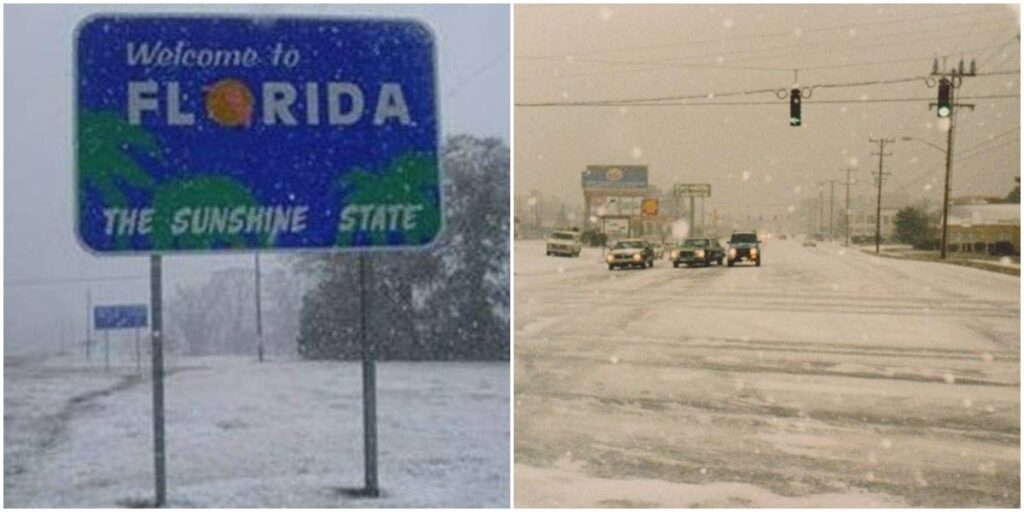
A Historical Anomaly: The Rarity of Snow in the Sunshine State
The very notion of snow in Florida strikes many as unbelievable, a testament to the state’s well-deserved reputation for warmth. However, for a phenomenon to be truly exceptional, it must occur. The infrequency of snowfall across Florida highlights its unique climate profile and the specific, often extreme, atmospheric convergence required to produce even a few flakes. These events are not just weather reports; they are significant historical markers in the natural narrative of the state.
Understanding Florida’s Climate Profile
Florida’s climate is predominantly subtropical, characterized by hot, humid summers and mild, dry winters. Its peninsular shape, flanked by the warm waters of the Atlantic Ocean to the east and the Gulf of Mexico to the west, plays a crucial role in moderating temperatures. The ocean’s thermal mass acts as a natural heater in winter, preventing temperatures from plummeting to freezing levels for extended periods, especially along the coasts. Furthermore, the state’s low latitude means it receives abundant solar radiation year-round. For snow to form and reach the ground, three primary conditions must be met: the air temperature throughout the atmosphere, from the clouds to the surface, must be at or below freezing (32°F or 0°C); there must be sufficient moisture in the air to form precipitation; and a lifting mechanism (like a cold front) is needed to produce clouds and precipitation. In Florida, the most challenging condition to satisfy is the sustained below-freezing temperatures from cloud level down to the ground. While upper-level temperatures can sometimes drop, surface temperatures often remain above freezing, leading to rain, or if precipitation is light, evaporation before reaching the ground.
Defining “Snowfall” in Florida
When discussing snow in Florida, it’s important to distinguish between different types of events. “Snowfall” can range from a few fleeting “flurries” that melt upon contact or even before reaching the ground, to “measurable snow” where accumulation of 0.1 inches or more is recorded, to “significant accumulation” where snow blankets the landscape for a noticeable period. In Florida, most recorded snow events fall into the “flurries” category. These are often brief, localized occurrences that create a momentary stir before vanishing. Measurable snow is far rarer, typically confined to the northern parts of the state, particularly the Panhandle and north-central regions, such as Tallahassee or Jacksonville. Snowfall in central and southern Florida is almost exclusively limited to flurries, making those events particularly noteworthy. The rarity and fleeting nature of these events underscore their status as true natural history landmarks.
Notable Snow Events in Florida’s Past
Despite its reputation, Florida has experienced several memorable snowfalls that have captured the imagination and become part of the state’s unique meteorological lore. These events serve as historical markers of extreme weather patterns.
The Great Snow of 1886
Perhaps the most significant and widespread snow event in Florida’s history occurred on January 10-11, 1886. This powerful Arctic cold front brought measurable snow as far south as Fort Myers and Orlando. In northern cities like Jacksonville and Gainesville, accumulations of several inches were reported, blanketing the landscape in a way few Floridians have ever witnessed since. Accounts from the time describe a stunned populace, with children experiencing snow for the very first time. The agricultural impact was severe, with citrus groves suffering immense damage, a recurring theme with severe cold snaps in Florida. This event stands as a benchmark for extreme cold and snow, defining the upper limit of what the state can experience.
The Mid-20th Century Flurries
The mid-20th century saw several localized and less significant snow events. On February 12, 1958, parts of the Florida Panhandle, including Tallahassee, received several inches of snow. While not as widespread as the 1886 event, it was notable for its localized accumulation. Another instance occurred on December 13, 1962, when flurries were reported in several central Florida cities, including Orlando, causing brief excitement but no accumulation. These events, though minor in terms of impact, served as reminders of the state’s northern reaches occasionally dipping into wintery conditions.
The Iconic 1977 Snowfall
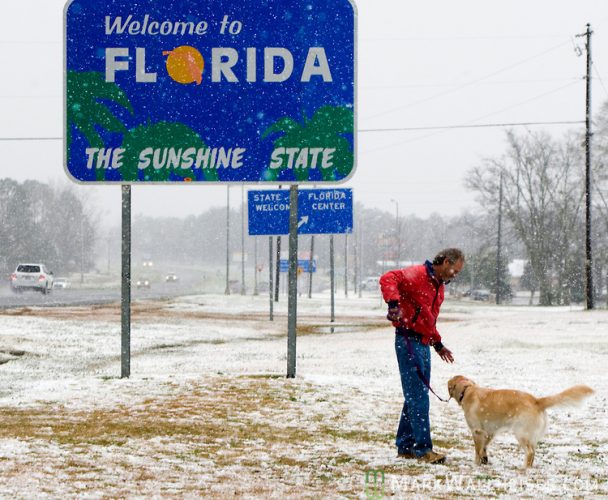
One of the most widely remembered snow events, particularly because of its reach into deep southern Florida, occurred on January 19, 1977. This day became historic as it marked the first (and to date, only) time that snow flurries were observed in Miami, Fort Lauderdale, and other communities as far south as Homestead. While no accumulation occurred, the sight of white flakes dancing in the air over palm trees and beaches was surreal and unforgettable for residents. Schools closed in some northern parts of the state, and television stations famously reported on the unprecedented spectacle. The 1977 snow event remains a powerful cultural touchstone, often referenced as a unique experience in Florida’s collective memory, defining a moment when the state’s natural identity briefly shifted.
21st Century Glimpses: The Exception, Not the Rule
In the 21st century, snow remains an exceedingly rare phenomenon. On January 2, 2010, the Florida Panhandle and parts of north-central Florida saw some snow, with measurable amounts in cities like Pensacola and Tallahassee. The most recent significant event happened on January 3, 2018, when Tallahassee received a rare accumulation of 0.1 to 0.2 inches, leading to school closures and creating a picturesque, albeit temporary, winter scene. While exciting for residents, these instances underscore the extreme meteorological rarity of snow reaching the ground, even in the northernmost reaches of the state.
The Geographical and Meteorological Factors at Play
The ability for snow to fall in Florida is a delicate balance of specific atmospheric conditions, a fascinating interplay of geography and meteorology that rarely aligns. These factors highlight why such events are considered extraordinary in the state’s natural history.
Arctic Blasts and Cold Fronts
The fundamental prerequisite for snow in Florida is the intrusion of exceptionally cold air. This typically occurs when a powerful Arctic air mass plunges southward through the central and eastern United States, unhindered by significant mountain ranges and picking up moisture over the relatively warmer waters of the Gulf of Mexico or the Atlantic Ocean. The trajectory of these cold fronts is crucial; they need to sweep far enough south to bring temperatures below freezing across the entire atmospheric column for an extended period. Usually, the cold air arrives as a dry air mass, leading to cold temperatures but no precipitation. For snow, a secondary moisture-bearing system, often a low-pressure system, needs to develop or track along the leading edge of this cold air, providing the necessary moisture while temperatures remain at or below freezing from the cloud base to the surface. This specific alignment of a deep, cold air mass with sufficient moisture is the primary reason for snow’s extreme rarity in Florida.
Elevation and Proximity to Water
Florida’s geography also plays a critical role. The state is exceptionally flat, with its highest point, Britton Hill, only reaching 345 feet above sea level. This lack of elevation means there’s no topographical lift to help cool air further and enhance precipitation, as seen in mountainous regions. More significantly, Florida’s extensive coastline and the warming influence of the surrounding ocean and gulf waters severely limit the duration and intensity of cold outbreaks. While northern parts of the state, such as the Panhandle and areas around Jacksonville and Gainesville, are more susceptible to reaching freezing temperatures, the thermal buffer provided by the bodies of water quickly warms the atmosphere, especially along coastal strips. This makes sustained freezing temperatures, particularly at the surface, very difficult to maintain in coastal cities like Tampa, St. Petersburg, or Miami, explaining why snow events further south are almost exclusively flurries that quickly melt. Even in 1977, the snow in Miami was a few flakes, not enough to even cover the ground.
The Cultural and Natural Impact of Snow in Florida
When snow does fall in Florida, however brief or minimal, it transcends a mere weather phenomenon to become a cultural event and a natural curiosity. It impacts both the human experience and the delicate ecosystems of the state.
A Moment of Wonder and Disruption
For Floridians, experiencing snow is almost universally met with astonishment and childlike wonder. Many adults have never seen it in their home state, and for children, it’s often a magical, once-in-a-lifetime encounter. News reports from historical snow events describe widespread excitement, people venturing outside to capture photographs, and a general air of disbelief mixed with joy. However, even minimal snow can cause significant disruption. Infrastructure in Florida is not designed for freezing precipitation; roads can become slick, leading to accidents, and local authorities often issue warnings or even close schools as a precautionary measure. For a state accustomed to sunshine and heat, snow, however slight, brings with it a unique blend of fascination and unexpected challenges. It’s a vivid reminder of the diverse capabilities of nature and the adaptability required even in the most predictable climates.
Ecological Effects on Florida’s Unique Ecosystems
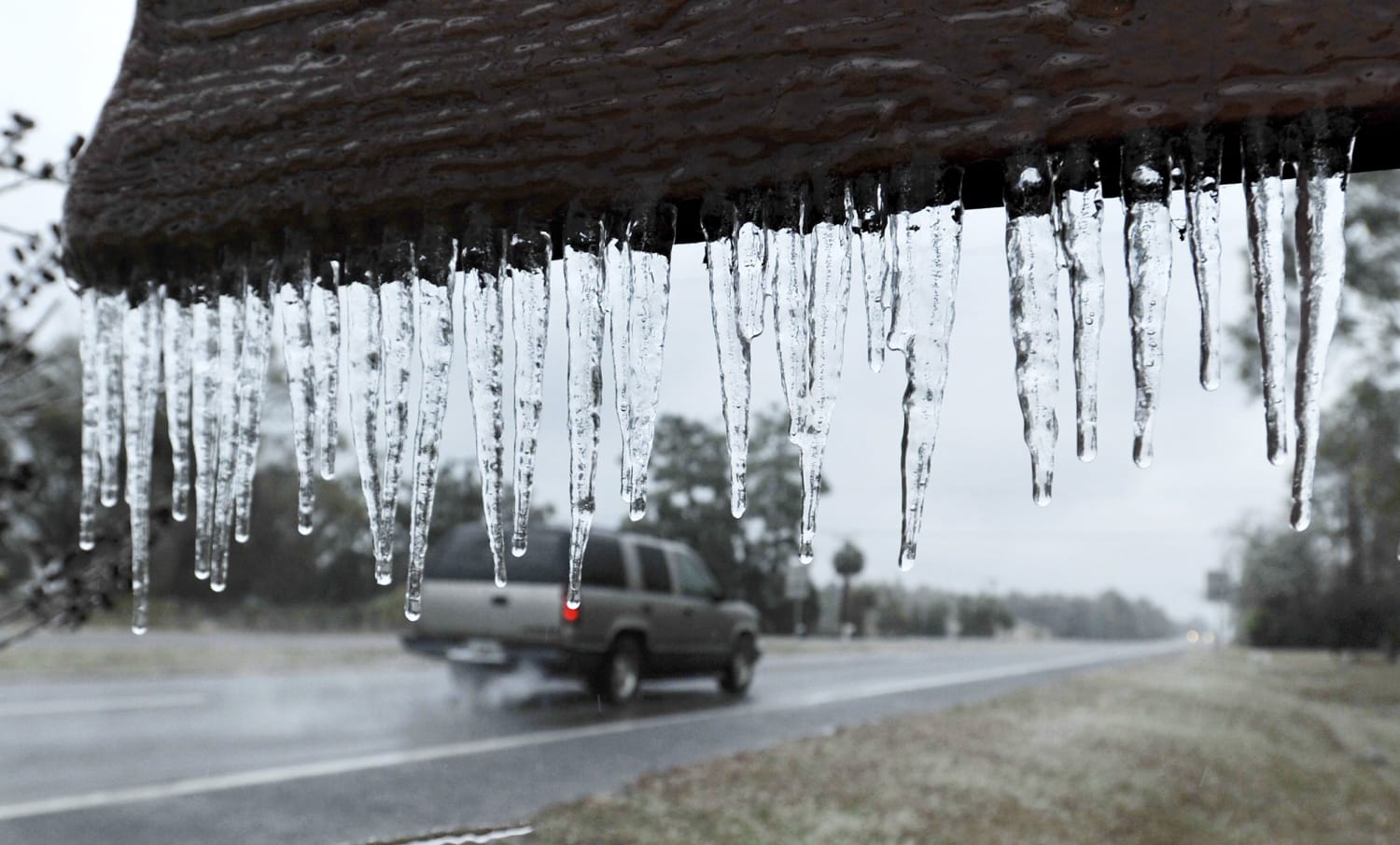
While snow itself is rare, the extreme cold temperatures that precede and accompany it can have profound ecological effects on Florida’s unique and often fragile ecosystems. The state’s agriculture, particularly its iconic citrus industry, is highly vulnerable to prolonged freezes. Farmers take extensive measures, such as spraying water or using wind machines, to protect crops from frost damage. Tropical and subtropical plants, which thrive in Florida’s usual warmth, can suffer severe damage or even die during sustained freezes. The state’s diverse wildlife also feels the impact. Manatees, for instance, seek warmer waters in natural springs or power plant outfalls to escape dangerously cold Gulf of Mexico temperatures. Cold snaps can also stun iguanas, causing them to fall from trees, though they often revive once temperatures rise. These ecological impacts underscore the delicate balance of Florida’s natural environment and how susceptible it is to deviations from its characteristic warmth, even if the “snow” component is fleeting.
In conclusion, the history of snow in Florida is a captivating chapter in the state’s natural history. These rare occurrences, from the widespread fall of 1886 to the memorable flurries of 1977 and beyond, are more than just weather events; they are profound reminders of the powerful and unpredictable forces of nature. Each snowfall stands as a unique landmark in the meteorological narrative of the Sunshine State, defying its warm reputation and offering fleeting glimpses of a winter wonderland in an otherwise perpetually sun-drenched landscape. While truly significant snow accumulation remains an anomaly, the mere potential for it to occur continues to add a layer of intriguing complexity to Florida’s remarkable natural identity.
LifeOutOfTheBox is a participant in the Amazon Services LLC Associates Program, an affiliate advertising program designed to provide a means for sites to earn advertising fees by advertising and linking to Amazon.com. Amazon, the Amazon logo, AmazonSupply, and the AmazonSupply logo are trademarks of Amazon.com, Inc. or its affiliates. As an Amazon Associate we earn affiliate commissions from qualifying purchases.