
The iconic Walt Disney World Resort in Florida, a sprawling kingdom of imagination and entertainment, stands today as one of the world’s most visited and recognizable landmarks. While its gates officially opened on October 1, 1971, the story of its creation is a much longer and more intricate narrative, rooted in a visionary’s dream, strategic land acquisition, and monumental construction efforts that transformed vast tracts of central Florida wilderness into a global phenomenon. Understanding “when” it was built requires delving into the ambitious planning and meticulous execution that predated its grand debut, tracing its origins back to the mid-1960s when the initial concept began to take shape. This monumental undertaking involved years of secret operations, innovative engineering, and an unwavering commitment to realizing a dream far grander than any theme park that had come before it.
The Visionary Behind the Magic: Walt Disney‘s Grand Plan
The inception of what would become Walt Disney World can be attributed almost entirely to the boundless imagination and foresight of Walt Disney himself. Having successfully opened Disneyland in Anaheim, California in 1955, Walt Disney quickly recognized both its triumphs and its limitations. The original park, while revolutionary, was hemmed in by urban development, restricting its ability to expand and evolve into the truly immersive experience he envisioned. This realization spurred his quest for a second, much larger site, where he could control every aspect of the environment, free from external influences.
The Genesis of an Idea
Walt Disney’s experiences with Disneyland taught him invaluable lessons. He saw how surrounding businesses, often capitalizing on the park’s success, could detract from the overall guest experience. His vision for the second park, initially dubbed “Project X” or “The Florida Project,” was not merely for another theme park, but an “Experimental Prototype Community of Tomorrow” – what would later evolve into EPCOT. This ambitious concept encompassed not just attractions, but also transportation systems, hotels, and even a futuristic city where people would live and work, showcasing innovative urban planning and technology. It was a holistic, utopian dream of controlled progress and seamless integration. This comprehensive approach required an immense amount of land and an isolated location, far from the unplanned growth that had constrained Disneyland.
The Search for the Perfect Location
The search for this ideal location was a highly secretive and strategic endeavor. Walt Disney and his team explored several potential sites across the United States, but central Florida ultimately emerged as the frontrunner. Its advantages were manifold: a warm climate conducive to year-round operations, ample undeveloped land at relatively low prices, a burgeoning infrastructure (especially with the completion of Interstate 4), and its position as a growing tourist destination.
Beginning in 1964, a covert operation commenced to acquire land. Using various dummy corporations such as “Compass East Corporation,” “Latin-American Development and Management Corporation,” and “Reedy Creek Ranch Corporation,” Disney representatives quietly bought up vast swaths of swamp and scrubland. These transactions were handled with such discretion that even the local residents were unaware of the true purchaser. By May 1965, the team had amassed approximately 27,400 acres—an area roughly twice the size of Manhattan—spanning parts of Orange County and Osceola County, near the then-sleepy city of Orlando. The total cost for this monumental land acquisition was around $5 million, an astonishingly low price for what would become one of the world’s most valuable real estate parcels. The immense scale of the land ensured Walt Disney’s vision for complete environmental control could be realized.
From Swamp Land to Magic Kingdom: The Construction Phase
With the land secured, the arduous task of transforming the undeveloped Florida landscape began. This was not merely construction; it was an act of terraforming, reshaping the natural environment to suit an imaginative blueprint. The ambitious scope of the project required innovative engineering solutions and a dedicated workforce.
Secret Acquisitions and Early Development
The secrecy surrounding the land purchases was crucial. When the news finally broke in October 1965 that Disney was the true buyer, it sent shockwaves through the real estate market and local government. To maintain control over the future development and infrastructure, Disney petitioned the Florida State Legislature for special administrative powers. In 1967, the state granted the creation of the Reedy Creek Improvement District, a special taxing district that effectively gave Disney near-governmental control over its property. This allowed the company to oversee its own zoning, utilities, emergency services, and infrastructure development, precisely the autonomy Walt Disney had sought. Tragically, Walt Disney passed away in December 1966, before construction on the main park even began. It was his brother, Roy O. Disney, who postponed his retirement to ensure Walt’s dream was fully realized, insisting the entire project be named “Walt Disney World” in his honor.
Breaking Ground and Overcoming Challenges
Actual groundbreaking for Walt Disney World occurred in 1967. The immediate challenges were immense. The site was largely swampland, requiring extensive drainage and earthmoving operations. Millions of cubic yards of soil were moved to create hills, lakes, and elevate the land. The iconic Seven Seas Lagoon and Bay Lake, for instance, were dramatically altered and shaped. This early phase involved massive excavation and dredging, laying the foundation literally and figuratively, for the themed lands and infrastructure that would follow. It was a race against time and nature, transforming a challenging environment into a pristine canvas.
Architectural Prowess and Engineering Marvels
Construction proceeded at a rapid pace through the late 1960s and early 1970s. The initial focus was on the Magic Kingdom theme park, the first phase of the resort, which mirrored much of Disneyland’s beloved layout but on an even grander scale. One of the most significant engineering marvels was the construction of the “Utilidors” beneath the Magic Kingdom. These expansive underground tunnels serve as a logistical network for cast members, waste removal, and utilities, keeping the illusion of the park undisturbed above ground. This innovative solution for operational efficiency and guest experience was a testament to Disney’s commitment to perfection. The Contemporary Resort and Polynesian Village Resort (now Disney’s Polynesian Village Resort), built simultaneously, showcased modular construction techniques, with entire hotel rooms prefabricated off-site and lifted into place by crane. The monorail system, another key element of Walt Disney’s vision for efficient transportation, was also constructed, linking these early resorts to the Magic Kingdom. The architectural plans meticulously detailed every aspect, from the scale of Cinderella Castle to the landscaping, ensuring a cohesive and enchanting experience.
Walt Disney World’s Grand Opening and Initial Expansion
After years of relentless planning and construction, the moment arrived to unveil this unprecedented landmark to the world. The opening was not merely an event; it was the culmination of a dream realized on an epic scale.
October 1, 1971: A Historic Day
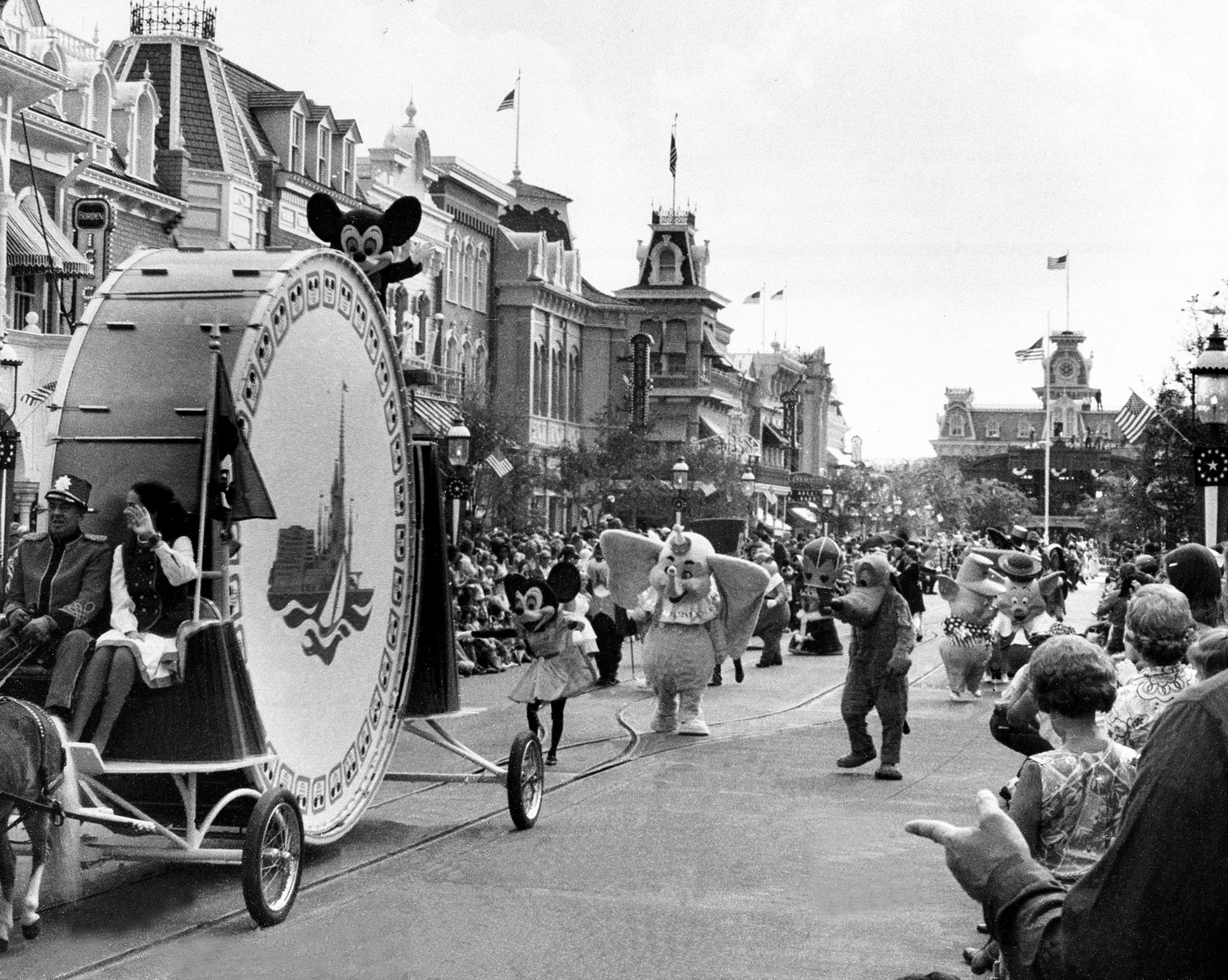
On Friday, October 1, 1971, Walt Disney World officially opened its doors to the public. Despite early concerns about visitor numbers due to its remote location at the time, approximately 10,000 guests passed through the turnstiles on that historic day. The modest opening belied the incredible journey that had led to that point. It was a soft opening, a gentle introduction, rather than a massive spectacle, allowing operations to gradually scale up. The dedication ceremony, held on October 25, 1971, featured Roy O. Disney, delivering a poignant tribute to his late brother: “May Walt Disney World, and all who come to this happy place, be filled with the spirit of joy, fantasy, and adventure, and with the hope that it will always be a source of joy and inspiration to the world.”
The Magic Kingdom Unveiled
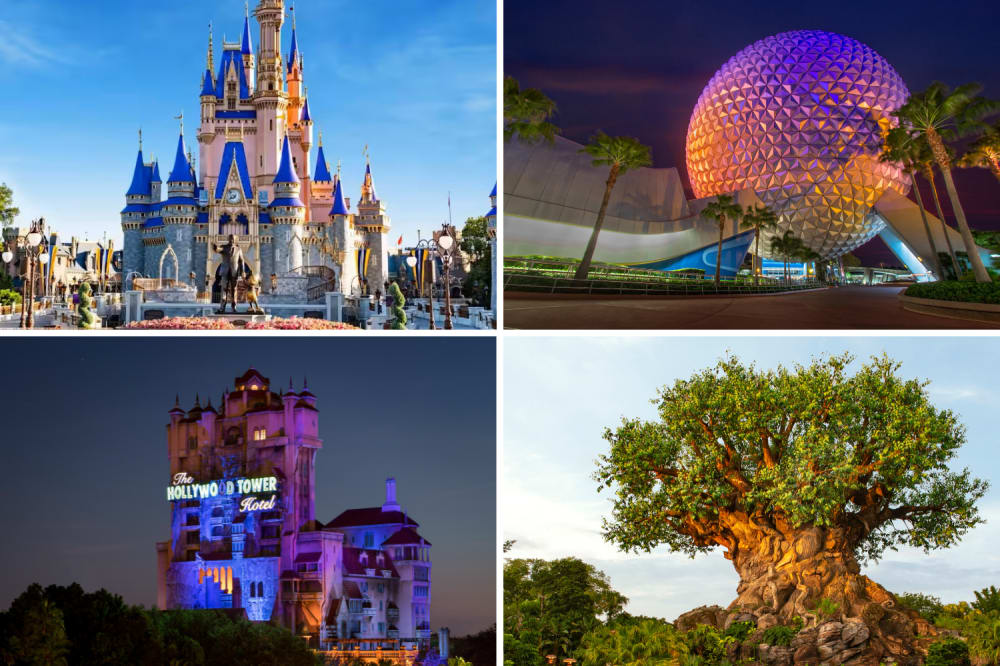
The centerpiece of the initial opening was the Magic Kingdom park, a vibrant realm divided into six themed lands: Main Street, U.S.A., Adventureland, Fantasyland, Frontierland, Liberty Square, and Tomorrowland. Guests were immediately enchanted by iconic attractions like “it’s a small world,” “Haunted Mansion,” “Jungle Cruise,” and “20,000 Leagues Under the Sea.” Cinderella Castle, towering over Fantasyland, quickly became the resort’s enduring symbol. The attention to detail, the immersive storytelling, and the sheer scale of the park captivated visitors, setting a new benchmark for entertainment destinations worldwide. This meticulously crafted environment provided an escape into stories and fantasy, a core characteristic that cemented its status as a landmark.
Initial Offerings and Guest Experience
Beyond the Magic Kingdom itself, the resort’s opening included two themed hotels, the Contemporary Resort and Polynesian Village Resort, providing on-site accommodation and an integrated experience. The Transportation and Ticket Center served as the gateway, offering various modes of transport including the monorail, ferryboats, and buses. The adjacent Lake Buena Vista community, part of Walt Disney’s original vision, offered recreational activities, a golf course, and a preview of the planned urban development. The vision was clear: to create an entire destination, a self-contained world designed for seamless enjoyment and immersion. The careful planning and execution of these elements from day one established Walt Disney World as more than just a theme park; it was a pioneering model for integrated tourism.
Evolution of a Global Landmark: Decades of Growth
The opening of the Magic Kingdom in 1971 was merely the beginning of Walt Disney World’s journey. Over the subsequent decades, the resort underwent continuous expansion, transforming into the multi-park, multi-resort mega-complex it is today, solidifying its place as an unparalleled global landmark.
EPCOT and Beyond: Expanding the Vision
The first major expansion arrived in 1982 with the grand opening of EPCOT Center (later simply EPCOT). This park embodied a significant portion of Walt Disney’s original vision for a futuristic community, albeit adapted into a permanent world’s fair and a showcase of human achievement. It featured Future World, dedicated to technological innovation, and World Showcase, celebrating international cultures. This addition doubled the size and scope of the resort, affirming Disney’s commitment to continuous innovation.
Further expansion continued rapidly. Disney-MGM Studios (now Disney’s Hollywood Studios) opened in 1989, immersing guests in the world of movies and television. Disney’s Animal Kingdom, a park focused on natural environment and animal conservation, debuted in 1998. Alongside these theme parks, numerous water parks, resort hotels, shopping and dining districts (like Disney Springs), and recreational facilities were developed, each adding new layers to the resort’s offerings and reinforcing its status as a perpetually evolving landmark. The sustained investment and growth ensured Walt Disney World remained at the forefront of the leisure and entertainment industry.
A Legacy of Innovation and Imagination
From its secretive beginnings in the mid-1960s to its initial opening in 1971, and through decades of relentless expansion, Walt Disney World represents a monumental achievement in urban planning, engineering, and creative vision. It stands as a testament to the power of imagination and meticulous execution. The resort’s physical construction, from draining swamps to building innovative transportation systems and iconic castles, reflects a deep understanding of architectural impact and guest flow. Its continuous evolution showcases an unwavering dedication to creating immersive environments and unforgettable experiences. The history of its construction is not just a timeline of dates but a narrative of overcoming challenges, pioneering new methods, and staying true to a transformative dream.

Enduring Impact as a Cultural Icon
Today, Walt Disney World is far more than just a collection of theme parks and hotels. It is a cultural institution, a symbol of childhood dreams, and a global economic engine. Its very existence has reshaped the landscape of central Florida, turning Orlando from a relatively small agricultural hub into one of the world’s premier tourist destinations. As a landmark, it is recognized globally for its distinctive architecture, its pioneering design principles, and its enduring message of hope and fantasy. The story of “When was Disney World in Florida built?” is therefore a story of vision, ambition, and the creation of an enduring icon that continues to inspire awe and wonder across generations.
LifeOutOfTheBox is a participant in the Amazon Services LLC Associates Program, an affiliate advertising program designed to provide a means for sites to earn advertising fees by advertising and linking to Amazon.com. Amazon, the Amazon logo, AmazonSupply, and the AmazonSupply logo are trademarks of Amazon.com, Inc. or its affiliates. As an Amazon Associate we earn affiliate commissions from qualifying purchases.