
The question “When was Florida discovered?” might seem straightforward, but its answer unravels a rich tapestry of exploration, ambition, and cultural encounters that shaped one of the United States’ most iconic states. While indigenous peoples had inhabited the peninsula for thousands of years, the concept of its “discovery” typically refers to its first documented encounter by Europeans. This pivotal moment occurred in the early 16th century, marking the beginning of a profound transformation for the land and its inhabitants.
The First European Glimpse: Juan Ponce de León’s Expedition
The story of Florida’s European discovery is inextricably linked with the Age of Exploration, a period characterized by intense maritime ventures and the expansion of European empires. It begins with a figure renowned for both his explorations and the enduring legend associated with his quest.
Columbus’s Legacy and the Quest for New Lands
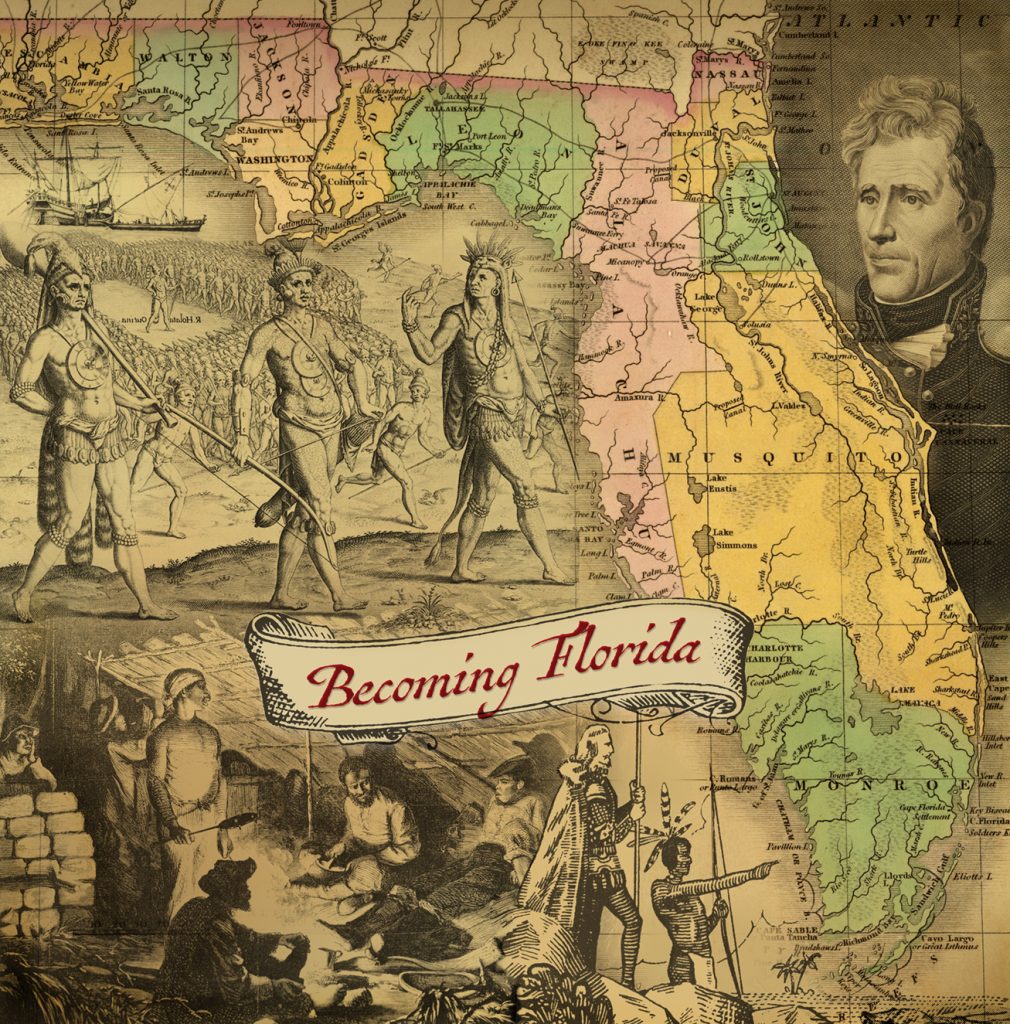
Following Christopher Columbus’s groundbreaking voyages across the Atlantic, the Caribbean became a primary hub for Spanish expansion. Explorers and conquistadors, emboldened by tales of riches and new territories, fanned out from established colonies like Hispaniola and Puerto Rico. Among them was Juan Ponce de León, a veteran of Columbus’s second voyage and a former governor of Puerto Rico. His ambition, fueled by reports of uncharted lands to the north, set the stage for Florida’s entry into the European consciousness. The Spanish Crown, eager to secure new lands and resources, readily granted licenses for such expeditions, viewing them as both opportunities for wealth and extensions of their imperial reach.
Setting Sail from Puerto Rico
In 1513, Ponce de León embarked on his fateful journey. With three ships – the Santiago, the San Cristóbal, and the Santa María de la Consolación – he departed from Puerto Rico on March 4th. His initial course took him northwest through the Bahamas, navigating challenging waters and relying on rudimentary navigational tools. The journey itself was an act of courage and perseverance, pushing the boundaries of known geography and venturing into the vast, unknown expanse of the Atlantic. The crew faced unpredictable weather, strong currents, and the ever-present uncertainty of what lay beyond the horizon.
Sighting La Florida: Easter Sunday, 1513
After weeks at sea, on April 2, 1513, Ponce de León and his crew sighted land. The precise location of this initial landfall is still debated by historians, but it is generally believed to have occurred somewhere near the northeastern coast of what is now Florida, possibly near modern-day St. Augustine. This momentous sighting coincided with the Christian feast of Pascua Florida, or “Festival of Flowers,” a name that would soon be bestowed upon the newly encountered land. This serendipitous timing cemented the association between the vibrant landscape and the religious celebration, giving the peninsula its enduring name.
A Land of Flowers and Further Exploration
The initial “discovery” was just the beginning. Ponce de León’s expedition continued to explore the coastline, attempting to understand the geography and resources of this new territory. Their journey brought them into contact with the land’s original inhabitants and solidified the name that would forever mark the peninsula.
Naming the Peninsula: Pascua Florida
Upon claiming the land for Spain, Ponce de León officially christened it “La Florida” – literally “The Flowery One” or “Flowery Easter.” This name reflected not only the date of its discovery but also the lush, verdant landscape that greeted the Spanish explorers. Unlike the arid lands encountered in other parts of the Americas, Florida presented a striking image of natural abundance, with its dense vegetation, vibrant flora, and diverse wildlife. The name itself captured the essence of what the explorers perceived: a fertile, almost Edenic new world waiting to be explored and exploited.
Early Encounters with Indigenous Peoples
During their circumnavigation of the Florida peninsula, Ponce de León’s expedition inevitably encountered the indigenous populations who had thrived there for millennia. These included groups such as the Timucua, Calusa, Tequesta, and Apalachee, among others. These first interactions were often complex, a mix of curiosity, trade, and sometimes conflict. The Spanish sought to establish their presence and assess the land’s resources, while the native peoples, unfamiliar with these heavily armed newcomers, reacted with caution, defense, or attempts at communication. These initial encounters set a pattern for future interactions, often characterized by misunderstandings and tragic consequences for the native populations.
The Search for the Fountain of Youth (Myth vs. Reality)
While Ponce de León is famously associated with the legend of the Fountain of Youth, historical accounts suggest that his primary objective was actually to find new lands, expand Spanish territory, and potentially discover gold or other valuable resources. The legend of the Fountain of Youth, a spring believed to restore youth to those who drank from it, became intertwined with his name decades after his death, fueled by historical writings and popular imagination. While it adds a romantic allure to his story, it was not the driving force behind his 1513 expedition. However, the myth itself underscores the European fascination with the unknown and the potential for wondrous discoveries in the “New World.”
Subsequent Spanish Expeditions and Colonization Attempts
Ponce de León’s discovery opened the floodgates for further Spanish exploration and attempts at colonization. The vastness of Florida and its strategic location made it a prize for the Spanish Crown, though establishing a permanent foothold proved to be a formidable and often deadly challenge.
Lucas Vázquez de Ayllón and the Attempt at San Miguel de Gualdape
One of the earliest attempts at establishing a colony north of the Caribbean was led by Lucas Vázquez de Ayllón in 1526. He sailed from Hispaniola with hundreds of colonists, including enslaved Africans, aiming to establish a settlement somewhere along the southeastern coast of North America, possibly in what is now Georgia or South Carolina. The short-lived colony, named San Miguel de Gualdape, faced immense hardships: harsh weather, disease, food shortages, and conflict with indigenous peoples. Within a few months, Ayllón himself died, and the surviving colonists abandoned the settlement, marking a disastrous first attempt at sustained European presence in the region.
Pánfilo de Narváez’s Disastrous Journey
In 1528, Pánfilo de Narváez led another ambitious expedition to Florida, aiming to colonize the Gulf Coast. Landing near Tampa Bay, Narváez made the ill-fated decision to split his forces, sending his ships to meet him further down the coast while he marched inland with a detachment of men. This proved to be a catastrophic error. The expedition encountered fierce resistance from indigenous tribes, struggled with disease and starvation, and lost its way. The survivors, including Álvar Núñez Cabeza de Vaca, constructed crude rafts and attempted to sail west along the Gulf Coast, only to be shipwrecked and enslaved by various native groups for years. Only a handful of men survived, providing invaluable but harrowing accounts of their ordeal and the interior of the North American continent.
Hernando de Soto’s Inland Odyssey
The legacy of these early failures did not deter subsequent explorers. In 1539, Hernando de Soto, a veteran conquistador who had served with Francisco Pizarro in Peru, landed near Bradenton, Florida, with a massive expedition. His primary goal was to find gold and silver, mirroring the success of other Spanish conquests. For four years, De Soto and his men traversed much of the southeastern United States, including what is now Florida, Georgia, South Carolina, North Carolina, Tennessee, Alabama, Mississippi, and Arkansas. His expedition was marked by brutal encounters with indigenous tribes, the introduction of European diseases that devastated native populations, and ultimately, the failure to find the immense wealth they sought. De Soto himself died of fever on the Mississippi River in 1542, and his remaining men eventually made their way back to Mexico, having explored vast new territories but failed in their primary objective of colonization and wealth extraction.
Establishing a Permanent Foothold: St. Augustine
Despite the numerous failed attempts and high costs in human lives and resources, Spain’s strategic interest in Florida remained strong, primarily due to its position along the lucrative sea lanes used by Spanish treasure fleets returning from Mexico and South America. The turning point for Spanish colonization came with the arrival of a new European rival.
French Presence and the Threat to Spanish Claims
By the mid-16th century, France began to challenge Spain’s claims in the “New World.” In 1564, a French Huguenot expedition led by René Goulaine de Laudonnière established Fort Caroline near present-day Jacksonville, Florida. This Protestant settlement posed a direct threat to Spanish dominance, not only militarily but also ideologically. The presence of a French base along the critical shipping routes for Spanish treasure fleets was deemed intolerable by the Spanish Crown. This encroachment galvanized Spain into decisive action, recognizing that if they did not secure Florida soon, another European power would.
Pedro Menéndez de Avilés and the Founding of St. Augustine
In response to the French challenge, King Philip II of Spain dispatched Pedro Menéndez de Avilés, an experienced admiral and conquistador, with orders to expel the French and establish a permanent Spanish colony. Menéndez arrived off the coast of Florida in August 1565. On September 8, 1565, he founded St. Augustine, naming it after the saint whose feast day coincided with his first sighting of the land. Shortly thereafter, his forces launched a brutal attack on Fort Caroline, massacring most of the French colonists and solidifying Spanish control over the region. This decisive action marked the true beginning of sustained European presence in Florida.
A Lasting Legacy: The Oldest Continuously Inhabited European Settlement
The founding of St. Augustine by Pedro Menéndez de Avilés holds profound historical significance. It is recognized as the oldest continuously inhabited European-established settlement in the United States. For centuries, St. Augustine served as a strategic military outpost, a center for missionary efforts among indigenous peoples, and a vital port for Spanish shipping. Its enduring presence, despite numerous attacks by rival European powers and native tribes, stands as a testament to Spain’s resolve to maintain its claim on Florida. Today, the city is a living museum, offering visitors a tangible connection to the early days of European colonization in North America, with its historic fort, narrow streets, and preserved architecture telling tales of its resilience.
Florida’s Evolving Identity: From Spanish Colony to American State
From its “discovery” by Ponce de León to its eventual integration into the United States, Florida’s history is one of shifting allegiances, geopolitical maneuvering, and the gradual shaping of its unique identity.
Shifting Powers: British and Second Spanish Rule
After nearly two centuries of Spanish rule, Florida briefly came under British control. Following the Seven Years’ War (also known as the French and Indian War), Spain ceded Florida to Great Britain in 1763 in exchange for Havana, Cuba. The British divided the territory into East Florida (with its capital at St. Augustine) and West Florida (with its capital at Pensacola). British rule spurred some economic development and population growth, particularly by loyalists during the American Revolutionary War. However, this period was short-lived. In 1783, after the American colonies gained independence, Great Britain returned Florida to Spain as part of the Treaty of Paris. This ushered in a second period of Spanish governance, which was marked by increasing instability, border disputes with the expanding United States, and continued conflicts with indigenous groups and escaped slaves.
The Adams-Onís Treaty and Cession to the United States
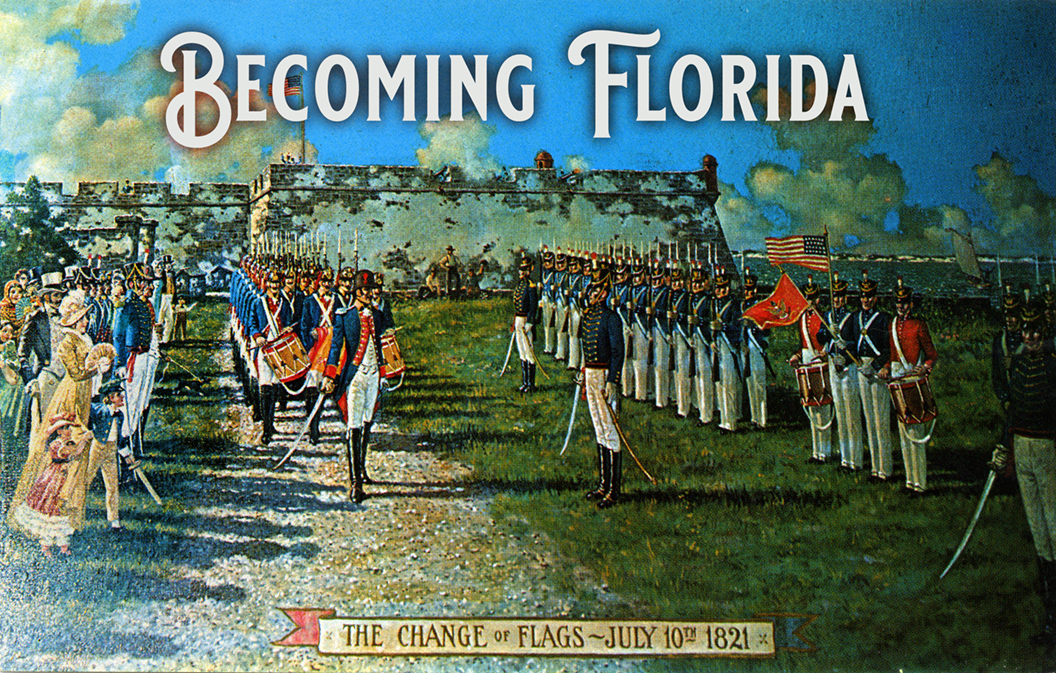
The second Spanish period of rule in Florida was fraught with challenges. The remote and lightly populated territory proved difficult for Spain to control, especially with the growing power and expansionist ambitions of its American neighbor. American military incursions, particularly those led by Andrew Jackson, demonstrated Spain’s weakening grip. Recognizing the impracticality of holding onto Florida and needing to resolve outstanding border disputes, Spain agreed to cede the territory to the United States. This was formalized by the Adams-Onís Treaty (also known as the Transcontinental Treaty) in 1819, which was ratified in 1821. With this treaty, Florida officially became a U.S. territory, paving the way for its eventual statehood in 1845.
Florida Today: A Tapestry of History, Nature, and Culture
From the initial sighting by Ponce de León to its current status as a vibrant American state, Florida’s history is a compelling narrative of exploration, conflict, and cultural fusion. Today, Florida is renowned for its diverse landmarks, which tell stories of its layered past. Historic sites like the Castillo de San Marcos in St. Augustine, colonial architecture in Pensacola and Key West, and the remnants of indigenous settlements across the state stand as tangible reminders of its long and complex journey. Beyond its human history, Florida’s natural landmarks, such as the unique ecosystems of the Everglades National Park, the pristine beaches of its extensive coastline, and its abundant springs, continue to define its character. The state is a remarkable testament to the intertwining of human endeavor and natural splendor, making it a living museum of American and global history.
In conclusion, while indigenous peoples had “discovered” Florida millennia ago, its discovery in the European context occurred on April 2, 1513, by Juan Ponce de León. This event initiated a centuries-long process of exploration, attempted colonization, and geopolitical struggle that ultimately transformed the peninsula from an unknown frontier into a diverse and historically rich part of the United States, a land of both ancient heritage and modern marvels.
LifeOutOfTheBox is a participant in the Amazon Services LLC Associates Program, an affiliate advertising program designed to provide a means for sites to earn advertising fees by advertising and linking to Amazon.com. Amazon, the Amazon logo, AmazonSupply, and the AmazonSupply logo are trademarks of Amazon.com, Inc. or its affiliates. As an Amazon Associate we earn affiliate commissions from qualifying purchases.