
Florida, often celebrated for its sun-drenched beaches and vibrant cities, harbors a lesser-known, yet profoundly captivating, treasure beneath its clear, spring-fed waters and coastal estuaries: the gentle West Indian Manatee. These colossal, slow-moving marine mammals, often referred to as “sea cows,” epitomize tranquility and grace, making an encounter with them an unforgettable experience for any nature enthusiast or curious traveler. Their placid demeanor and often curious nature make them a unique focal point for eco-tourism, drawing visitors from across the globe keen to witness these magnificent creatures in their natural habitat.
The quest to find manatees in Florida is more than just a wildlife sighting; it’s an immersion into a delicate ecosystem and an opportunity to connect with nature on a profound level. Understanding their behavior, preferred environments, and the best times to observe them is crucial for a successful and responsible encounter. This guide will illuminate the prime locations and provide essential insights for discovering Florida’s gentle giants, ensuring your visit is both magical and mindful.

Understanding Manatee Behavior and Habitats
To truly appreciate and locate manatees, one must first understand their unique biology and ecological needs. These herbivorous mammals are highly dependent on warm water, a critical factor influencing their migratory patterns and preferred habitats throughout the year.
The Allure of Florida’s Gentle Giants
Manatees are primarily aquatic, spending most of their lives in shallow, slow-moving rivers, estuaries, saltwater bays, and coastal areas. Their diet consists almost entirely of seagrasses and other aquatic vegetation, which they consume in vast quantities. What makes manatees particularly endearing is their gentle, slow-paced existence. They move deliberately, often cruising at speeds of 3-5 miles per hour, making them relatively easy to spot and observe, provided you are in the right place at the right time. Their playful interactions, often involving rolling, snuggling, and calf-rearing, add to their undeniable charm, transforming a simple sighting into a heartwarming spectacle.
Seasonal Migrations and Preferred Waters
The most significant factor dictating manatee locations in Florida is water temperature. Manatees cannot tolerate water temperatures below 68°F (20°C) for extended periods. As a result, during the cooler winter months (typically November through March), they aggregate in large numbers in natural warm-water springs, power plant discharge canals, and other thermally stable locations. These “warm water refugia” become critical sanctuaries for their survival.
Conversely, during the warmer spring and summer months (April through October), manatees disperse throughout Florida’s coastal waters, rivers, and estuaries, seeking out ample food sources in seagrass beds and freshwater vegetation. This seasonal migration means that while manatees can be found year-round in Florida, the best and most reliable viewing opportunities occur during winter concentrations.
Top Manatee Viewing Destinations in Florida
Florida boasts several exceptional locations where manatee encounters are highly probable, each offering a distinct experience.
The Iconic Crystal River Area
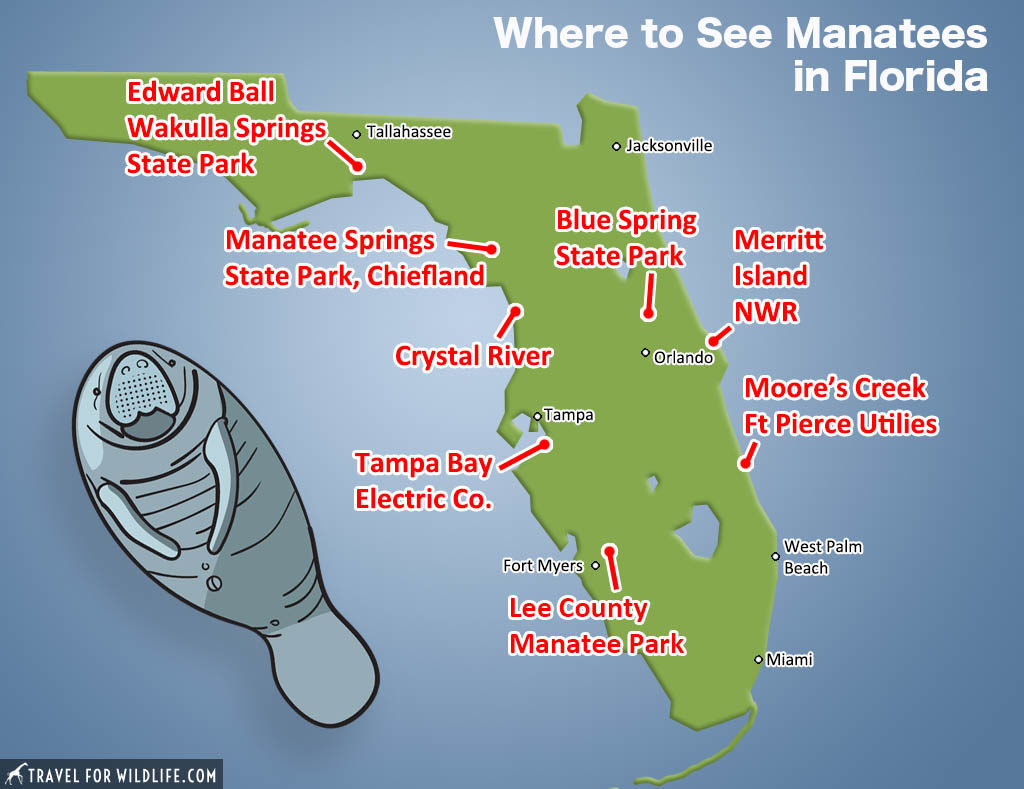
Often hailed as the “Manatee Capital of the World,” the Crystal River area in Citrus County offers unparalleled opportunities to see manatees. Its network of spring-fed rivers, particularly Kings Bay, maintains a constant 72°F (22°C) temperature, making it an irresistible magnet for manatees seeking refuge from the cold Gulf of Mexico waters during winter.
Three Sisters Springs
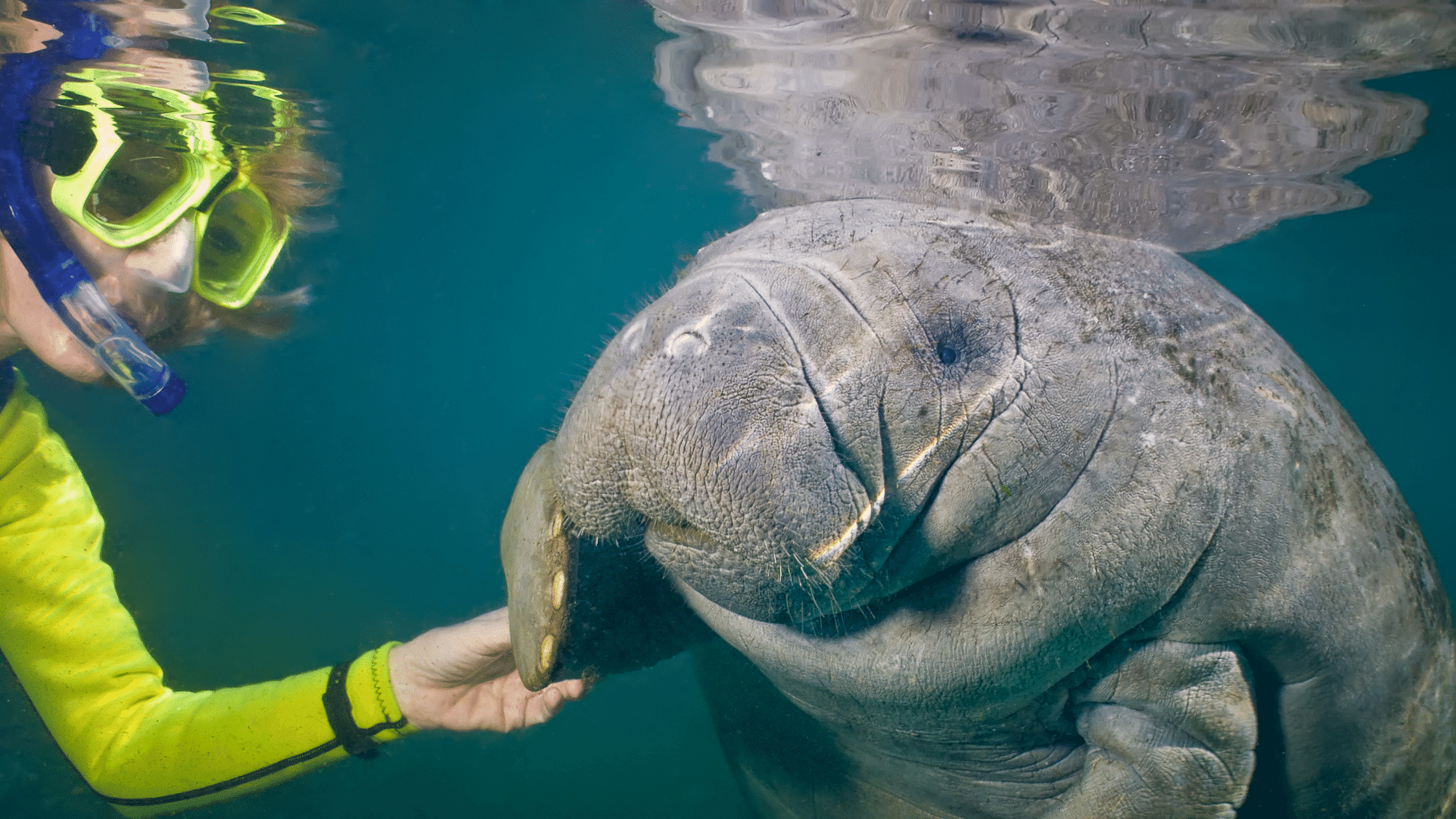
Within Crystal River, Three Sisters Springs is perhaps the most famous and picturesque manatee sanctuary. Accessible primarily by kayak, paddleboard, or guided boat tours from November to March, visitors can view dozens, sometimes hundreds, of manatees congregating in its crystal-clear waters. It’s one of the few places where regulated, passive swimming with manatees is permitted, offering an incredibly intimate and respectful encounter.
Crystal River National Wildlife Refuge
The Crystal River National Wildlife Refuge was established specifically to protect the West Indian Manatee. It encompasses the waters of Kings Bay and its associated springs. While direct access to some areas is restricted to protect the manatees, observation points and guided tours provide excellent viewing opportunities from a distance.
Blue Spring State Park: A Winter Haven
Located in Orange City near the St. Johns River, Blue Spring State Park is another premier winter sanctuary for manatees. From mid-November to March, hundreds of manatees flock to the spring run, which maintains a consistent 72°F (22°C). The park offers excellent boardwalks and viewing platforms that provide spectacular, close-up views of the manatees resting and playing in the clear blue water. Swimming, snorkeling, and diving are prohibited in the spring run during manatee season to ensure their undisturbed rest, but visitors can still enjoy kayaking or canoeing in the St. Johns River and potentially spot manatees there.
Homosassa Springs Wildlife State Park: Guaranteed Sightings
For a guaranteed manatee sighting any time of year, Ellie Schiller Homosassa Springs Wildlife State Park in Homosassa is an excellent choice. This state park serves as a rehabilitation center for injured manatees that cannot be released back into the wild. The park features an underwater observatory, the “Fish Bowl,” where visitors can watch manatees (and various fish species) in their natural spring environment from beneath the surface, offering a unique perspective. While these are captive rehabilitation animals, their presence allows for educational and up-close viewing regardless of the season or wild manatee migration patterns.
Other Notable Locations
Beyond these major hubs, several other locations offer great manatee viewing opportunities, particularly during winter.
Merritt Island National Wildlife Refuge
Near Titusville on Florida’s Atlantic Ocean coast, the Merritt Island National Wildlife Refuge provides excellent opportunities for spotting manatees, especially in the warm waters around the Haulover Canal and within the Indian River Lagoon. It’s a vast refuge known for its diverse wildlife, so you might also spot various bird species and other marine life.
Manatee Lagoon
Located in West Palm Beach, Manatee Lagoon is an educational center and a popular spot to observe manatees. It’s situated next to a Florida Power & Light power plant, whose warm water discharge attracts manatees during cooler months. The center offers free admission, interactive exhibits, and observation decks.
TECO Big Bend Manatee Viewing Center
In Apollo Beach near Tampa, the TECO Big Bend Manatee Viewing Center is another excellent winter destination. The warm water discharged from the Tampa Electric power plant draws hundreds of manatees to its canal system. The center features observation platforms, an environmental education building, and a stingray touch tank.
Best Ways to Experience Manatees Responsibly
Engaging with manatees in their natural environment is a privilege, and doing so responsibly is paramount to their well-being and the sustainability of their populations.
Guided Tours: Snorkeling and Kayaking
For the most immersive experience, particularly in Crystal River, guided snorkeling or kayaking tours are highly recommended. Reputable tour operators are well-versed in manatee etiquette and local regulations, ensuring a safe and respectful encounter for both visitors and wildlife. They provide wetsuits, gear, and expert guidance, taking you to prime viewing spots while adhering to strict “passive observation” rules. Kayaking or paddleboarding also offers a quiet, non-invasive way to glide through manatee habitats, allowing for peaceful observation from a distance.
Observation Decks and Viewing Centers
If getting into the water isn’t your preference, numerous locations offer excellent dry-land viewing. Boardwalks, observation decks, and dedicated viewing centers, like those at Blue Spring State Park, Manatee Lagoon, and the TECO Big Bend Manatee Viewing Center, provide fantastic opportunities to watch manatees from a safe and respectful distance. These facilities often have interpretive signs, educational exhibits, and knowledgeable staff or volunteers who can answer questions and enhance your understanding of these fascinating creatures.
Ethical Wildlife Viewing Practices
The cardinal rule of manatee viewing is “look, but don’t touch.” Manatees are protected by federal and state laws, including the Marine Mammal Protection Act and Florida’s Manatee Sanctuary Act. It is illegal to harass, feed, or otherwise disturb manatees. When in proximity to manatees, whether in water or from a boat:
- Maintain Distance: Give them space and avoid actively pursuing them.
- Be Quiet: Sudden movements or loud noises can startle them.
- Never Feed Them: Feeding manatees can alter their natural behavior and make them dependent on humans.
- Slow Down: If boating, observe posted “no wake” or “slow speed” zones and be vigilant for manatees, especially in shallow waters. Boat strikes are a significant threat to manatees.
- Report Injured or Distressed Manatees: Contact the Florida Fish and Wildlife Conservation Commission (FWC) hotline if you see a sick, injured, or orphaned manatee.
Planning Your Manatee Encounter Trip
A well-planned trip maximizes your chances of a magical manatee encounter.
When to Visit for Optimal Sightings
The absolute best time to find large concentrations of manatees in Florida is during the winter months, from November through March. This is when cold fronts push water temperatures down in the Gulf of Mexico and Atlantic Ocean, driving manatees to seek refuge in the warmer inland springs and power plant discharge canals. Outside of these months, manatees are more dispersed, making sightings less predictable but still possible in various coastal areas.
Essential Gear and Preparations
Depending on how you plan to view manatees, some essential items include:
- Camera: A waterproof camera or a reliable camera with a good zoom lens is invaluable for capturing memories.
- Binoculars: Enhance your viewing experience from observation decks.
- Sun Protection: Sunscreen, hats, and sunglasses are crucial in Florida’s intense sun.
- Wetsuit (if snorkeling/swimming): While some tour operators provide them, having your own can be comfortable.
- Reusable Water Bottle: Stay hydrated.
- Comfortable Walking Shoes: For exploring parks and boardwalks.
Nearby Attractions and Accommodation
While manatee viewing is the primary draw, many manatee-rich areas also offer a wealth of other attractions. In Crystal River, you can explore the Crystal River Archeological State Park or enjoy fishing. Near Blue Spring State Park, you can explore other sections of the St. Johns River or visit nearby charming towns. When planning your trip, consider staying in accommodations in the vicinity of your chosen manatee viewing site. Many towns like Crystal River, Orange City, and Homosassa offer a range of lodging options, from cozy inns to waterfront resorts, providing convenient access to your daily adventures.
Contributing to Manatee Conservation
Every visitor has a role to play in the long-term survival of the Florida manatee, which, while no longer endangered, remains a threatened species facing numerous challenges.
Supporting Local Efforts
By choosing reputable tour operators who prioritize manatee welfare and adhere to strict guidelines, you directly support sustainable tourism practices. Many viewing centers and state parks also rely on visitor fees and donations to fund their conservation efforts and provide essential rehabilitation services. Consider donating to organizations dedicated to manatee protection, such as the Save the Manatee Club.
Raising Awareness
Educating yourself and others about manatees, their habitats, and the threats they face (such as habitat loss, red tide, and boat strikes) is a powerful way to contribute to their conservation. Share your positive, respectful manatee experiences with friends and family, encouraging others to visit responsibly and become advocates for these beloved marine mammals.
Finding manatees in Florida is more than just a sightseeing excursion; it’s an opportunity to connect with nature’s gentle giants, witness their peaceful existence, and play a part in their continued protection. By choosing the right time and place, adhering to ethical viewing practices, and supporting conservation, your manatee encounter will be an enriching and unforgettable chapter in your Florida travel story.
LifeOutOfTheBox is a participant in the Amazon Services LLC Associates Program, an affiliate advertising program designed to provide a means for sites to earn advertising fees by advertising and linking to Amazon.com. Amazon, the Amazon logo, AmazonSupply, and the AmazonSupply logo are trademarks of Amazon.com, Inc. or its affiliates. As an Amazon Associate we earn affiliate commissions from qualifying purchases.