
Embarking on a journey to the sun-drenched shores of Guam is an exciting prospect for any traveler. This beautiful island, nestled in the western Pacific Ocean, offers a captivating blend of stunning natural beauty, rich history, and vibrant culture. However, before you can dive into its crystal-clear waters or explore its ancient caves, one crucial question often arises: “Do I need a passport for [Guam]?” The answer, while seemingly straightforward, depends largely on your citizenship and the specifics of your travel plans. For citizens of the United States, the immediate response is often “no,” but this blanket statement carries important nuances and recommendations that every traveler should understand. For international visitors, the requirements are much clearer and align with standard international travel protocols. This comprehensive guide will dissect the entry requirements for [Guam], providing clarity and insights to ensure your trip preparation is as smooth as possible, enabling you to focus on the adventure that awaits.

Understanding Guam’s Unique Status
To fully grasp the passport requirements for [Guam], it’s essential to first understand its political status and geographical location. This island’s unique position in the world shapes its travel regulations, especially for U.S. citizens.
A U.S. Territory in the Pacific
[Guam] is an organized, unincorporated territory of the United States. This designation means that while [Guam] is under U.S. sovereignty, it is not an integral part of the [United States] itself, nor is it a U.S. state. However, its inhabitants are U.S. citizens by birth. Geographically, it is the largest and southernmost island of the Mariana Islands archipelago and the largest island in Micronesia. Situated strategically in the western [Pacific Ocean], approximately three-quarters of the way from Hawaii to the Philippines, [Guam]’s location has made it a significant geopolitical hub for centuries. Its capital city, Hagåtña, serves as the administrative center, but the island’s allure extends to its pristine beaches, world-class diving sites, and lush tropical landscapes. Understanding [Guam]’s territorial status is the key to unraveling its travel documentation requirements, as it dictates how U.S. domestic travel rules intersect with international norms for non-U.S. citizens.Implications for U.S. Citizens
For citizens of the [United States], traveling to [Guam] is akin to domestic travel within the mainland or to other U.S. territories like Puerto Rico or the U.S. Virgin Islands. This means that a U.S. passport is not legally required for entry or exit when traveling directly from the [United States] or its other territories. The freedom of movement for U.S. citizens extends to [Guam] without the need for international travel documents. However, while not legally mandated, the recommendation to carry a passport remains strong for several practical reasons we will explore. The primary reason for this exemption lies in the fact that travel between the [United States] and [Guam] is considered an internal journey within the U.S. border protection system. Therefore, U.S. citizens generally encounter the same identification requirements they would for domestic flights, rather than the stricter passport controls typical of international border crossings. This unique relationship simplifies travel for many, yet it also creates a common misconception about the absolute necessity of a passport.
Entry Requirements for U.S. Citizens
While [Guam] is a tropical paradise far from the continental [United States], its status as a U.S. territory greatly simplifies travel for American citizens. The key takeaway is that a passport is not strictly required, but proper identification is always necessary.
Air Travel Documentation
For U.S. citizens flying directly from the [United States] (including Alaska, Hawaii, and other U.S. territories) to [Guam], a passport is not legally mandated for entry or exit. Instead, you will need to present a government-issued photo identification document. The most common and accepted forms of ID include:
- A valid state-issued driver’s license.
- A state-issued identification card.
- A U.S. military ID.
- A permanent resident card (Green Card).
- A U.S. passport card.
- Other federally recognized identification.
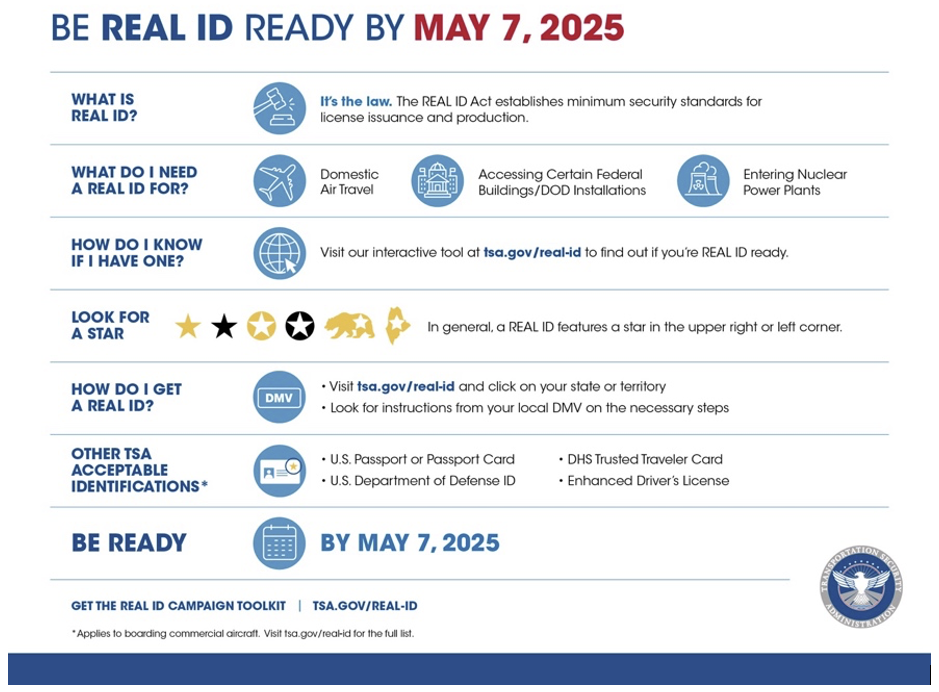
In addition to a photo ID, travelers may also be asked to show proof of U.S. citizenship, such as a certified copy of their birth certificate. While airport security, managed by the TSA (Transportation Security Administration), will primarily focus on your photo ID, the airline or U.S. Customs and Border Protection at your point of departure or arrival in [Guam] may request further proof of citizenship, especially if your photo ID is not federally compliant. It is critical to note the ongoing implementation of the REAL ID Act. Starting in May 2025, U.S. citizens will need a [REAL ID]-compliant driver’s license or another acceptable form of identification (like a passport) to board domestic flights. While [Guam] is a U.S. territory, this act will apply, making it even more prudent to either obtain a [REAL ID]-compliant driver’s license or simply carry a passport. Even without a passport, ensuring your identification meets current [TSA] and airline standards is paramount to avoid travel disruptions.
Sea Travel Documentation
Traveling to [Guam] by sea, particularly on a cruise, often introduces slightly different documentation requirements compared to air travel, though the principle for U.S. citizens largely remains the same. For “closed-loop” cruises—those that begin and end in the same U.S. port—U.S. citizens typically do not need a passport. Instead, they can often use a combination of a government-issued photo ID (like a driver’s license) and proof of citizenship (such as an original or certified copy of a birth certificate or a U.S. Passport Card). This rule generally applies because the cruise technically never enters a foreign port where a passport would be universally required for re-entry into the [United States].
However, if your cruise is an “open-ended” itinerary, meaning it begins in one port and ends in another, or if it includes stops in non-U.S. foreign ports before or after [Guam], a U.S. passport is almost always required. The cruise line itself will be the definitive source for precise documentation needs, as their policies can sometimes be more stringent than government regulations to facilitate passenger embarkation and disembarkation in various ports. Even for closed-loop cruises, carrying a passport is strongly recommended. In the event of an emergency that necessitates an unexpected disembarkation in a foreign port, or if you need to fly home from a non-U.S. location, a passport will be indispensable for your return. Without it, you could face significant delays and bureaucratic hurdles, turning a leisurely cruise into a stressful ordeal. Therefore, while not strictly necessary for all sea travel to [Guam], the passport remains the most universally accepted and trouble-free travel document.
Why a Passport is Still Highly Recommended for U.S. Citizens
Despite the official stance that a passport is not required for U.S. citizens traveling to [Guam], its importance cannot be overstated. A passport is more than just an entry document; it’s a critical tool for navigating the unexpected and ensuring peace of mind.
Unforeseen Circumstances
Life is unpredictable, and travel plans, however meticulously laid out, can change in an instant. This is where a passport proves its invaluable worth, even for a domestic-style journey to [Guam]. Imagine a medical emergency necessitating an evacuation to a nearby foreign country for specialized treatment, or a flight diversion due to severe weather or technical issues that lands you in a non-U.S. territory. In such scenarios, without a passport, you could find yourself in a challenging predicament, unable to legally enter or exit a foreign nation. Repatriation to the [United States] without a passport can be a lengthy and complicated process, involving consular services and emergency travel documents that take time to issue. A passport provides immediate proof of citizenship and identity, significantly streamlining any required international travel or border crossing. It acts as a universal key, unlocking passage through foreign customs and enabling access to consular assistance, minimizing stress and delay during already difficult times.
Expedited Travel & Identification
Beyond emergencies, carrying a passport simply makes travel smoother and more efficient. At U.S. airports, including those serving flights to [Guam], presenting a passport can often expedite the check-in and security screening process. While other forms of ID are accepted, a passport is universally recognized by airline staff and [TSA] agents as a primary travel document, often leading to quicker verification. Furthermore, a passport serves as the most robust form of personal identification available. Whether you need to rent a car, check into a hotel, or conduct any transaction requiring official ID, a passport is almost always accepted without question. It eliminates any potential confusion or scrutiny that might arise from presenting a state-issued driver’s license, especially if traveling from a state different from where the ID was issued. This ease of use extends beyond the airport to various aspects of your trip, ensuring that your identification needs are met seamlessly and professionally throughout your stay in [Guam], allowing you to enjoy your vacation without unnecessary administrative hurdles.
Travel Insurance and Other Services
The benefits of carrying a passport extend to practical matters like securing travel insurance and accessing various services abroad. While it might not be a direct requirement for purchasing travel insurance for a trip to [Guam], many international travel insurance policies are designed with international travel in mind. In the event of a claim – whether for lost luggage, medical emergencies, or trip cancellations – having a passport readily available can often simplify the claims process, as it serves as a globally recognized form of identification and proof of your travel itinerary. Some insurance providers or medical facilities, especially if an emergency dictates interaction with international entities, may prefer or even require passport details for verification. Moreover, when engaging with certain tour operators, specialized activity providers (like diving certifications, for example), or even some financial institutions while abroad, a passport can be the preferred or only accepted form of identification. Its international recognition ensures a consistent standard of proof that other domestic IDs might lack, preventing potential delays or complications when trying to access services that contribute to a comprehensive and secure travel experience.
Entry Requirements for Non-U.S. Citizens
For individuals who are not citizens of the [United States], the rules for entering [Guam] are significantly different and align with standard international travel protocols. [Guam], despite its territorial status, is part of the U.S. border for international travelers.
International Travelers and Visa Requirements
Non-U.S. citizens planning to visit [Guam] are required to possess a valid passport from their country of citizenship. Furthermore, depending on their nationality, they may also need a U.S. visa. The visa requirement for [Guam] is the same as for entering the continental [United States]. This means that if a traveler requires a visa to visit the mainland U.S., they will also require one to enter [Guam]. Common types of U.S. visas include tourist visas (B-2), business visas (B-1), or combined B1/B2 visas. Travelers from countries participating in the Visa Waiver Program (VWP) may be eligible to visit [Guam] for tourism or business for up to 90 days without obtaining a visa. However, VWP travelers must first obtain an approved Electronic System for Travel Authorization (ESTA) before boarding a U.S.-bound aircraft or ship. It’s crucial for international visitors to apply for their visa or [ESTA] well in advance of their travel dates, as processing times can vary. All non-U.S. citizens arriving in [Guam] will undergo inspection by U.S. Customs and Border Protection officers, who will verify their identity, passport, and visa or [ESTA] status. Ensuring all documentation is current and correct is paramount for a smooth entry into this U.S. territory.
Specific Regional Agreements (e.g., CNMI Visa Waiver Program)
While the general rule for international travelers to [Guam] mirrors that of the mainland [United States], there are specific regional agreements that can impact entry requirements, particularly for visitors from certain neighboring countries. The most notable example is the Commonwealth of the Northern Mariana Islands (CNMI) Visa Waiver Program. This program allows eligible visitors from a specific list of countries (primarily Asian nations like China, Russia, and others) to enter the [CNMI] and [Guam] without a U.S. visa, for stays of up to 45 days. The intent of this program is to promote tourism to these specific U.S. insular areas in the [Pacific Ocean].
However, it’s vital to understand the nuances of this program. Travelers entering under the [CNMI] Visa Waiver must meet specific criteria, including holding a valid passport and typically having a confirmed onward or return ticket. The eligibility list of countries can change, and travelers should always consult the latest information from the U.S. Department of Homeland Security or [U.S. Customs and Border Protection]. For all other international travelers not covered by such specific regional agreements or the broader [Visa Waiver Program], a valid passport and a U.S. visa remain the fundamental requirements for entry into [Guam]. These agreements are exceptions rather than the norm, underscoring the importance for all non-U.S. citizens to thoroughly research and secure the correct documentation for their nationality before planning a trip to this beautiful island.
Preparing for Your Trip to Guam
Once you’ve clarified your passport needs, the next step is to ensure all other aspects of your trip to [Guam] are in order. Proper preparation can significantly enhance your travel experience, allowing you to fully immerse yourself in the island’s charm.
Essential Documents Checklist
Beyond your passport or alternative identification, having a comprehensive checklist of essential documents will prevent last-minute stress. For U.S. citizens, even if you’re not carrying a passport, ensure you have:
- Government-issued photo ID: A [REAL ID]-compliant driver’s license or state ID.
- Proof of U.S. citizenship: An original or certified copy of your birth certificate, especially if you’re not traveling with a passport.
- Flight tickets and itinerary: Digital and/or printed copies of your round-trip air travel details.
- Accommodation reservations: Confirmation of your hotel, resort, or other lodging arrangements.
- Travel insurance information: Policy details and emergency contact numbers, particularly if traveling internationally.
- Copies of all important documents: Keep digital copies on your phone or in a cloud service, and a separate physical copy in a different bag, in case of loss or theft of originals.
For non-U.S. citizens, this checklist would additionally include your valid passport, U.S. visa (if required), or approved [ESTA] (for [Visa Waiver Program] participants) or appropriate regional visa waiver documentation (e.g., [CNMI] Visa Waiver). Always confirm the validity of your documents well in advance of your departure date to avoid any issues.

Other Travel Tips
To make your trip to [Guam] as enjoyable as possible, consider these additional travel tips:
- Currency: The official currency of [Guam] is the [United States] Dollar (USD).
- Language: English is the official language, alongside Chamorro, the indigenous language. You’ll find that English is widely spoken throughout the island.
- Climate: [Guam] enjoys a tropical climate year-round. Pack light, breathable clothing, swimwear, and sun protection (hat, sunglasses, reef-safe sunscreen). A light rain jacket can be useful during the rainy season (July to November).
- Getting Around: Renting a car is often the most convenient way to explore the island at your own pace. Taxis and ride-sharing services are also available, particularly in the more developed tourist areas like Tumon.
- Local Culture: Embrace the vibrant [Chamorro] culture. Visit historical sites, try local cuisine like red rice and kelaguen, and engage respectfully with the local community.
- Connectivity: Wi-Fi is widely available in hotels and many public areas. Consider purchasing a local SIM card if you need consistent mobile data.
- Health and Safety: While [Guam] is generally safe, it’s always wise to be aware of your surroundings, especially at night. Stay hydrated and protect yourself from the sun. Mosquito repellent is also recommended.
By taking these preparations seriously, you set the stage for an unforgettable adventure in [Guam], allowing you to fully appreciate its unique blend of American familiarity and distinct Pacific island charm.
In conclusion, for [United States] citizens, a passport is not a legal necessity for travel to [Guam], thanks to its status as a U.S. territory. However, it is overwhelmingly recommended due to its universal recognition, its ability to streamline travel processes, and its crucial role in navigating unforeseen circumstances. For international travelers, a valid passport and the appropriate U.S. visa or visa waiver ([ESTA] or [CNMI] Visa Waiver) are standard requirements. Regardless of your citizenship, thorough preparation, including a check of all required identification and travel documents, is the cornerstone of a smooth and enjoyable journey to the beautiful island of [Guam]. Always consult the latest guidelines from official government sources like the [U.S. Department of Homeland Security] or [U.S. Customs and Border Protection] to ensure you have the most up-to-date information before your trip.
LifeOutOfTheBox is a participant in the Amazon Services LLC Associates Program, an affiliate advertising program designed to provide a means for sites to earn advertising fees by advertising and linking to Amazon.com. Amazon, the Amazon logo, AmazonSupply, and the AmazonSupply logo are trademarks of Amazon.com, Inc. or its affiliates. As an Amazon Associate we earn affiliate commissions from qualifying purchases.